

Over 85 percent of working women will become pregnant at some point during their careers. Supporting pregnant employees is more than a legal requirement in Santa Ana’s tech industry. It is a sign of a committed and forward-thinking workplace. As more companies focus on attracting and retaining top tech talent, practical pregnancy accommodations are shaping what it means to offer genuine care and equality on the job.
Table of Contents
- Defining Pregnancy Accommodations In Tech Workplaces
- Types Of Reasonable Accommodations Provided
- Legal Framework Under California And Federal Law
- Employer Responsibilities And Documentation Processes
- Employee Rights And Common Challenges Faced
Key Takeaways
| Point | Details |
|---|---|
| Legal Obligations | Employers must adhere to the Pregnant Workers Fairness Act (PWFA) and provide reasonable accommodations for known pregnancy-related limitations. |
| Types of Accommodations | Accommodations can include ergonomic seating, flexible scheduling, and more frequent breaks to maintain employee productivity and health. |
| Employer Responsibilities | Employers should establish clear protocols for accommodation requests, ensuring a collaborative process with kind and respectful engagement. |
| Employee Rights | Pregnant employees have the right to request accommodations without fear of retaliation and must actively communicate their needs to HR. |
Defining Pregnancy Accommodations in Tech Workplaces
Pregnancy accommodations represent critical workplace protections designed to support employees during significant life transitions while maintaining professional productivity. In the fast-paced Santa Ana tech sector, these accommodations go beyond simple legal requirements—they reflect a progressive approach to supporting diverse talent and maintaining inclusive workplace environments.
According to the Equal Employment Opportunity Commission, the Pregnant Workers Fairness Act (PWFA) mandates that employers provide reasonable adjustments for known pregnancy-related limitations. These accommodations can include multiple workplace modifications such as:
- Allowing more frequent breaks
- Providing ergonomic seating
- Modifying work duties to reduce physical strain
- Offering flexible scheduling options
- Permitting water bottle access during work hours
As Greenberg Traurig LLP explains, these workplace adjustments aim to enable pregnant employees to continue performing essential job functions without compromising their health or professional standing. Tech companies in Santa Ana are increasingly recognizing that supporting pregnant workers isn’t just a legal obligation—it’s a strategic approach to retaining top talent and demonstrating organizational commitment to employee well-being.
The goal of pregnancy accommodations extends beyond immediate medical needs. By creating supportive environments that recognize and adapt to employees’ changing physical requirements, tech organizations can foster greater employee loyalty, reduce turnover, and signal a progressive, empathetic workplace culture. Reasonable accommodations are not about creating special treatment, but about ensuring equal opportunity and maintaining professional dignity during a significant personal transition.
Types of Reasonable Accommodations Provided
In the dynamic Santa Ana tech sector, reasonable accommodations for pregnant employees encompass a wide range of workplace modifications designed to support employee health, comfort, and continued professional effectiveness. These accommodations are not one-size-fits-all but tailored to individual needs and job requirements.
According to the American Civil Liberties Union, pregnancy accommodations can include several key workplace adjustments:
- Providing ergonomic chairs at workstations
- Allowing employees to carry water bottles
- Permitting more frequent restroom or rest breaks
- Offering appropriately sized uniforms or work attire
- Modifying work schedules to accommodate prenatal appointments
The Equal Employment Opportunity Commission expands on these accommodations, highlighting additional critical support mechanisms such as adjusting work hours, enabling later start times, and providing leave for medical appointments or postpartum recovery. These adaptations recognize that pregnancy is a unique physical experience that may require temporary workplace modifications.

For tech companies in Santa Ana, implementing these accommodations goes beyond legal compliance—it represents a commitment to creating inclusive, supportive work environments. By proactively addressing the physical challenges pregnant employees may encounter, organizations can demonstrate genuine respect for workforce diversity, ultimately improving employee morale, retention, and organizational reputation.
Reasonable accommodations are not about creating special advantages, but about ensuring every employee can perform their professional responsibilities with dignity and support.
Legal Framework Under California and Federal Law
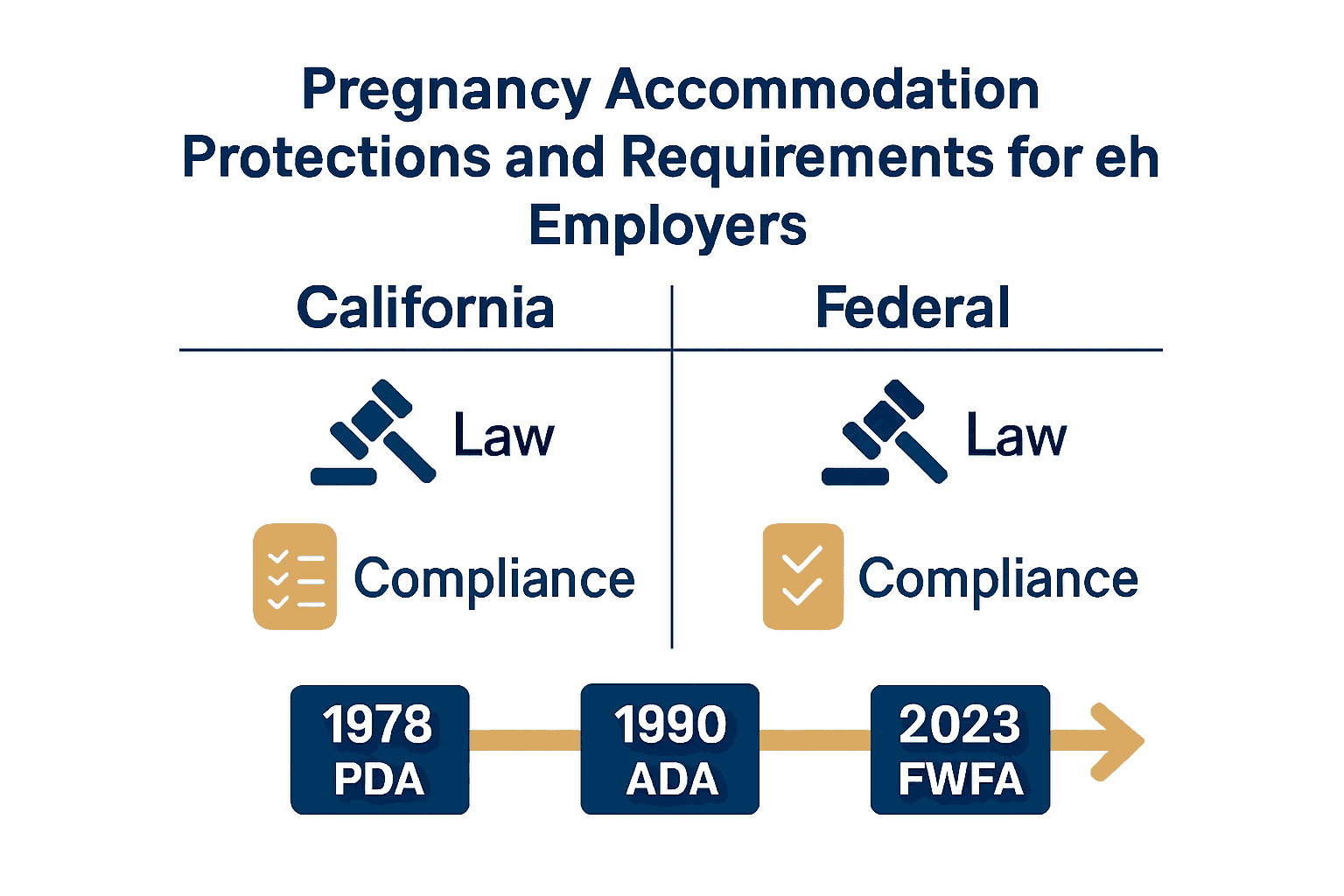
The legal landscape for pregnancy accommodations in Santa Ana’s tech sector is complex, involving a comprehensive interplay between federal regulations and California’s robust employee protection statutes. These laws collectively ensure that pregnant employees receive fair treatment and necessary workplace support.
According to the Equal Employment Opportunity Commission, the Pregnant Workers Fairness Act (PWFA) represents a significant milestone in federal workplace protection. This legislation requires covered employers to provide reasonable accommodations for known limitations related to pregnancy, childbirth, or related medical conditions, unless such accommodations would cause undue hardship to the organization. The PWFA complements existing protections under Title VII and the Americans with Disabilities Act (ADA), creating a more comprehensive shield for pregnant workers.
As Wikipedia highlights, the PWFA became effective on June 27, 2023, and applies to employers with 15 or more employees. This means tech companies in Santa Ana must carefully evaluate and implement workplace modifications that support pregnant employees without imposing significant operational challenges. Key considerations include:
- Assessing individual employee needs
- Developing flexible accommodation strategies
- Maintaining open communication with pregnant workers
- Documenting accommodation requests and implementations
- Training management on legal requirements
California’s state laws often provide even more extensive protections than federal regulations. The California Fair Employment and Housing Act (FEHA) goes beyond federal standards, requiring employers to provide reasonable accommodations and prohibiting discrimination based on pregnancy, childbirth, or related medical conditions. This dual-layer legal framework ensures that pregnant tech workers in Santa Ana have robust legal recourse if their workplace rights are violated, creating a supportive environment that values employee health and professional development.
Employer Responsibilities and Documentation Processes
Navigating pregnancy accommodations requires a structured, empathetic approach from Santa Ana tech employers, balancing legal compliance with meaningful support for pregnant employees. The documentation and accommodation process is a critical pathway for ensuring both workplace productivity and employee well-being.
According to the Equal Employment Opportunity Commission, employers must individually review accommodation requests with a collaborative mindset. This means engaging directly with employees to determine effective workplace modifications and exploring alternative solutions when initial requests might pose operational challenges.
Key documentation and procedural steps for tech companies include:
- Establishing a clear accommodation request protocol
- Creating standardized documentation forms
- Maintaining confidential medical information records
- Tracking accommodation implementation and effectiveness
- Developing transparent communication channels
As Greenberg Traurig LLP emphasizes, employers must avoid critical missteps in the accommodation process. This includes not mandating leave when other reasonable workplace adjustments are possible, preventing discrimination based on accommodation needs, and ensuring an interactive, collaborative approach to identifying suitable workplace modifications.
The documentation process should be viewed as a partnership between employer and employee. By maintaining detailed, confidential records and approaching each request with flexibility and respect, tech companies in Santa Ana can create supportive environments that protect both employee rights and organizational interests. Experienced Orange Employment Law Attorneys can provide critical guidance in developing robust accommodation frameworks that meet both legal requirements and employee needs.
Employee Rights and Common Challenges Faced
Pregnant employees in Santa Ana’s tech sector face a complex landscape of rights and potential workplace challenges that require careful navigation and proactive communication. Understanding these rights is crucial for maintaining professional dignity and ensuring fair treatment during a significant life transition.
According to the Equal Employment Opportunity Commission, employees have fundamental legal protections regarding pregnancy accommodations. These rights include the ability to request reasonable modifications for pregnancy-related limitations without fear of retaliation, and employers are explicitly prohibited from denying employment opportunities based on accommodation needs.
Common challenges pregnant tech workers may encounter include:
- Subtle workplace discrimination
- Hesitation in requesting necessary accommodations
- Concerns about career progression
- Inadequate understanding of legal protections
- Potential stigma surrounding pregnancy-related workplace modifications
The stark reality of workplace discrimination is illustrated by recent legal actions, such as the Reuters report highlighting a lawsuit against Amazon for allegedly discriminating against pregnant warehouse workers. Such cases underscore the critical importance of understanding and asserting one’s employee rights list to prevent systemic workplace inequities.
Navigating these challenges requires a combination of self-advocacy, clear communication, and a comprehensive understanding of legal protections. Pregnant tech workers should document all accommodation requests, maintain open dialogues with HR, and seek legal counsel if they encounter resistance or discrimination. By being informed and proactive, employees can protect their rights and ensure a supportive, inclusive workplace environment during their pregnancy journey.
Protect Your Rights with Expert Pregnancy Accommodation Legal Support
Pregnancy accommodations in the Santa Ana tech sector require careful attention to both legal rights and workplace challenges. If you are facing difficulties securing reasonable adjustments like flexible schedules or ergonomic workstations, you are not alone. Many employees struggle with subtle discrimination and unclear employer obligations related to pregnancy, childbirth, or related medical conditions. Understanding your rights under laws such as the Pregnant Workers Fairness Act can feel overwhelming without trusted guidance.
At Serendib Law Firm, we are dedicated to helping you navigate these complex issues. Our experienced team provides personalized support in pregnancy discrimination and accommodation cases to ensure your workplace respects your needs while protecting your professional standing. Don’t let uncertainty or unfair treatment stand in the way of a healthy pregnancy and career. Explore more about pregnancy discrimination in California through our Pregnancy Discrimination Archives and learn how we advocate tirelessly for pregnant workers in Santa Ana by visiting our Santa Ana Archives.
Take the first step towards securing the accommodations you deserve and safeguarding your rights today. Contact us now at https://serendiblaw.com for a free consultation and empower yourself with expert legal support tailored to your unique situation.
Frequently Asked Questions
What are pregnancy accommodations in the tech workplace?
Pregnancy accommodations are workplace modifications designed to support employees during pregnancy, allowing them to maintain productivity while ensuring their health and well-being. These can include ergonomic seating, flexible scheduling, and frequent breaks.
What does the Pregnant Workers Fairness Act (PWFA) require from employers?
The PWFA mandates that employers provide reasonable accommodations for known pregnancy-related limitations unless it causes undue hardship to the organization, ensuring that pregnant employees can continue their work effectively.
What types of reasonable accommodations can pregnant employees request?
Pregnant employees may request accommodations such as ergonomic chairs, flexible work schedules, additional breaks, modified duties, and appropriate uniforms to help them perform their roles comfortably and healthily.
How can pregnant employees ensure their rights are protected in the workplace?
Pregnant employees should document all accommodation requests, communicate openly with HR, and familiarize themselves with their legal protections. Seeking legal counsel can also help them navigate any resistance or discrimination they may face.