

More than 60 percent of delivery workers nationwide are at risk of being misclassified according to recent legal studies. When companies label drivers as contractors instead of employees, it can lead to lost wages, missing benefits, and complex legal battles for everyone involved. Understanding the rules behind classification helps workers protect their rights while also guiding businesses to avoid costly mistakes that could disrupt their operations.
Table of Contents
- Defining Misclassification In Delivery Services
- Key Worker Classification Tests In California
- Legal Standards Impacting Gig Workers
- Rights And Remedies For Misclassified Workers
- Risks For Employers And Gig Companies
Key Takeaways
| Point | Details |
|---|---|
| Worker Misclassification | Companies must accurately classify workers to avoid legal and financial penalties associated with misclassifying employees as independent contractors. |
| ABC Test Significance | The ABC Test is crucial in determining worker classification, requiring companies to assess control, work nature, and business independence. |
| Legal Protections for Gig Workers | Recent legislation like AB-5 enhances legal protections for gig workers, ensuring access to essential benefits and employment rights. |
| Employer Risks | Misclassification exposes employers to significant liabilities, including back wages, legal fines, and heightened regulatory scrutiny. |
Defining Misclassification in Delivery Services
Worker misclassification is a critical issue in delivery services that occurs when companies incorrectly categorize employees as independent contractors. According to California Labor, this classification has significant legal and financial implications for workers and businesses alike.
The primary distinguishing factor in worker classification revolves around control and independence. California Department of Industrial Relations outlines the ABC test, which helps determine whether a worker is truly an independent contractor or should be classified as an employee. This test considers three key criteria:
- Degree of Control: Does the company direct and control how the worker performs tasks?
- Work Performance: Is the work performed outside the company’s typical business operations?
- Independent Business: Does the worker independently operate a similar business?
In delivery services, misclassification often happens when companies treat workers like traditional employees but classify them as contractors to avoid providing benefits, minimum wage protections, and other legal obligations. These workers might use company-branded vehicles, follow strict delivery schedules, and adhere to company protocols, which strongly suggests an employment relationship rather than true independent contractor status.
The consequences of misclassification can be severe. Delivery workers improperly labeled as independent contractors may lose access to critical protections like overtime pay, workers’ compensation, unemployment insurance, and healthcare benefits. Gig Workers Misclassification highlights that companies found guilty of misclassification can face significant legal penalties, back wage payments, and potential class-action lawsuits.
Key Worker Classification Tests in California
California employs two primary worker classification tests to determine whether a worker should be classified as an employee or an independent contractor. California Franchise Tax Board provides comprehensive guidance on these critical legal frameworks that significantly impact delivery workers’ rights and employer obligations.
The most prominent of these is the ABC Test, introduced by California Assembly Bill 5 (AB-5). California Department of Industrial Relations outlines this test’s three stringent criteria for classifying workers as independent contractors:
- A: The worker is free from the company’s control and direction in performing work
- B: The work performed is outside the company’s usual business operations
- C: The worker is customarily engaged in an independently established trade or business similar to the work performed
Before the ABC Test, California used the Borello Test, a more flexible multi-factor assessment that considered various elements of the working relationship. This older standard evaluated factors like:
- The degree of control the company exercised
- Whether the worker could earn a profit or suffer a loss
- The worker’s investment in equipment or materials
- The permanence of the working relationship
- The skill required for the job
For delivery workers, these tests are crucial.
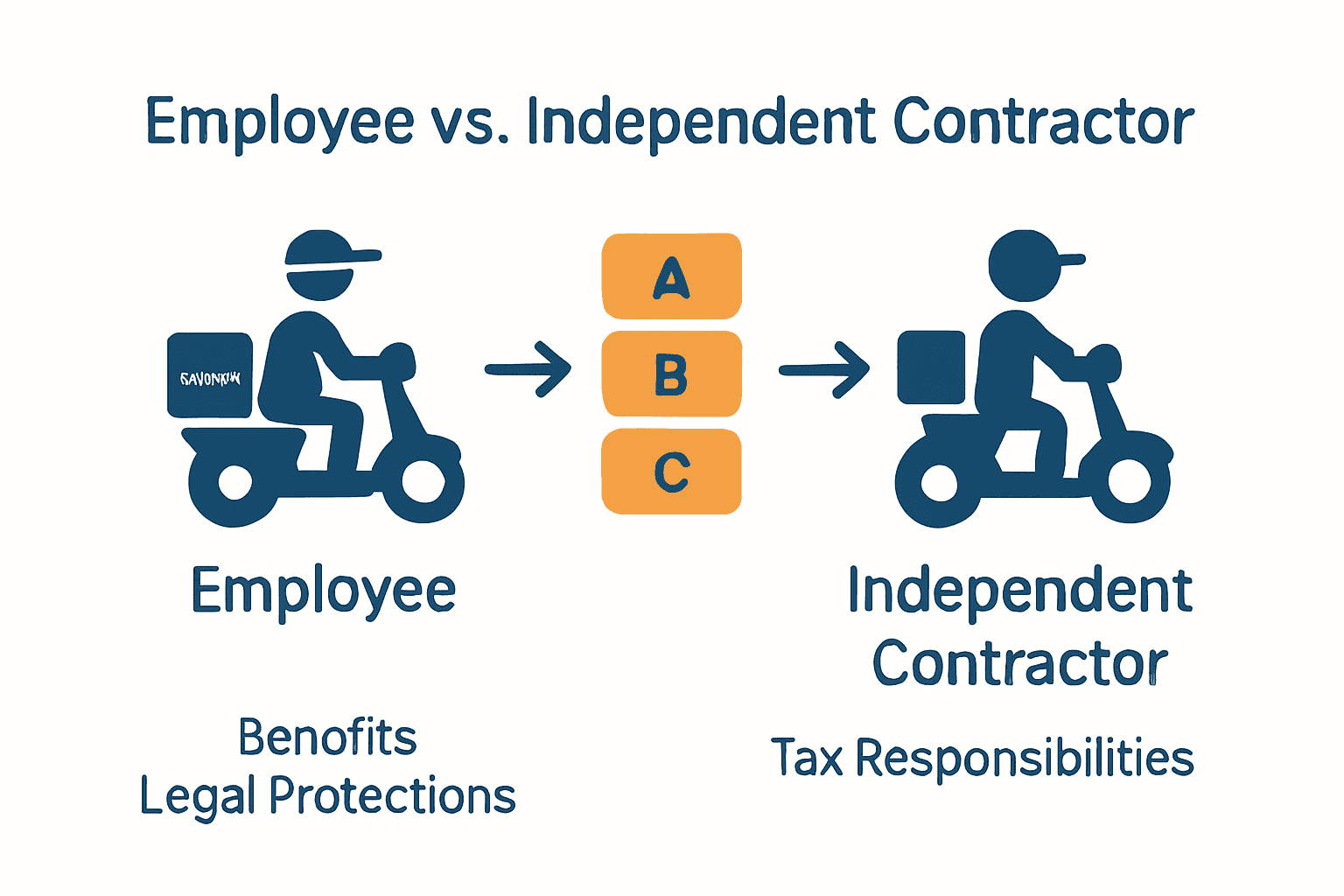 Failing to meet the ABC Test’s requirements means a worker must be classified as an employee, entitling them to minimum wage, overtime pay, workers’ compensation, and other critical protections. Understanding Misclassification of Gig Workers demonstrates how these tests protect workers from potential exploitation in the gig economy.
Legal Standards Impacting Gig Workers
The landscape of gig worker protections has undergone significant transformation in recent years, with legal standards emerging to address the complex nature of modern employment relationships. Minnesota House of Representatives highlights how evolving legislation has dramatically reshaped the rights and classifications of workers in the gig economy.
California’s groundbreaking Assembly Bill 5 (AB-5) represents a pivotal moment in gig worker legal protection. The Regulatory Review examines the nuanced interpretations of worker classification that challenge traditional employment models. The key implications of these legal standards include:
- Employee Benefits: Mandatory access to minimum wage, overtime, and workers’ compensation
- Employment Protections: Legal safeguards against arbitrary dismissal
- Tax Responsibilities: Clearer guidelines on employer tax obligations
- Healthcare Access: Potential pathways to employer-provided health insurance
The practical impact of these legal standards extends far beyond paperwork. Delivery workers, rideshare drivers, and other gig economy professionals now have stronger legal ground to challenge misclassification. Companies must now carefully evaluate their worker relationships, considering factors like control, integration, and the fundamental nature of the work performed.
Moreover, these evolving standards create a ripple effect across industries. Gig Workers Misclassification under California Law Updates demonstrates how legal challenges are reshaping the entire gig economy, forcing companies to reconsider their employment practices and worker relationships.
Rights and Remedies for Misclassified Workers
Misclassified workers have powerful legal protections and multiple avenues to challenge their employment status and recover lost compensation. California Department of Industrial Relations outlines several critical remedies available to workers who suspect they have been incorrectly classified as independent contractors.
Workers can pursue multiple strategies to address misclassification, including:
- Administrative Claims: Filing wage claims with state labor boards
- Civil Lawsuits: Pursuing legal action to recover unpaid wages and benefits
- Tax Reimbursement: Seeking compensation for incorrectly paid self-employment taxes
- Back Benefits: Recovering lost overtime, healthcare, and retirement contributions
California Labor and Workforce Development Agency emphasizes that workers have the right to challenge their classification through formal complaint processes. These processes typically involve detailed investigations that examine the actual working relationship, looking beyond job titles to the practical realities of employment.
The potential financial implications are significant. Misclassified workers can potentially recover years of back wages, benefits, and damages.
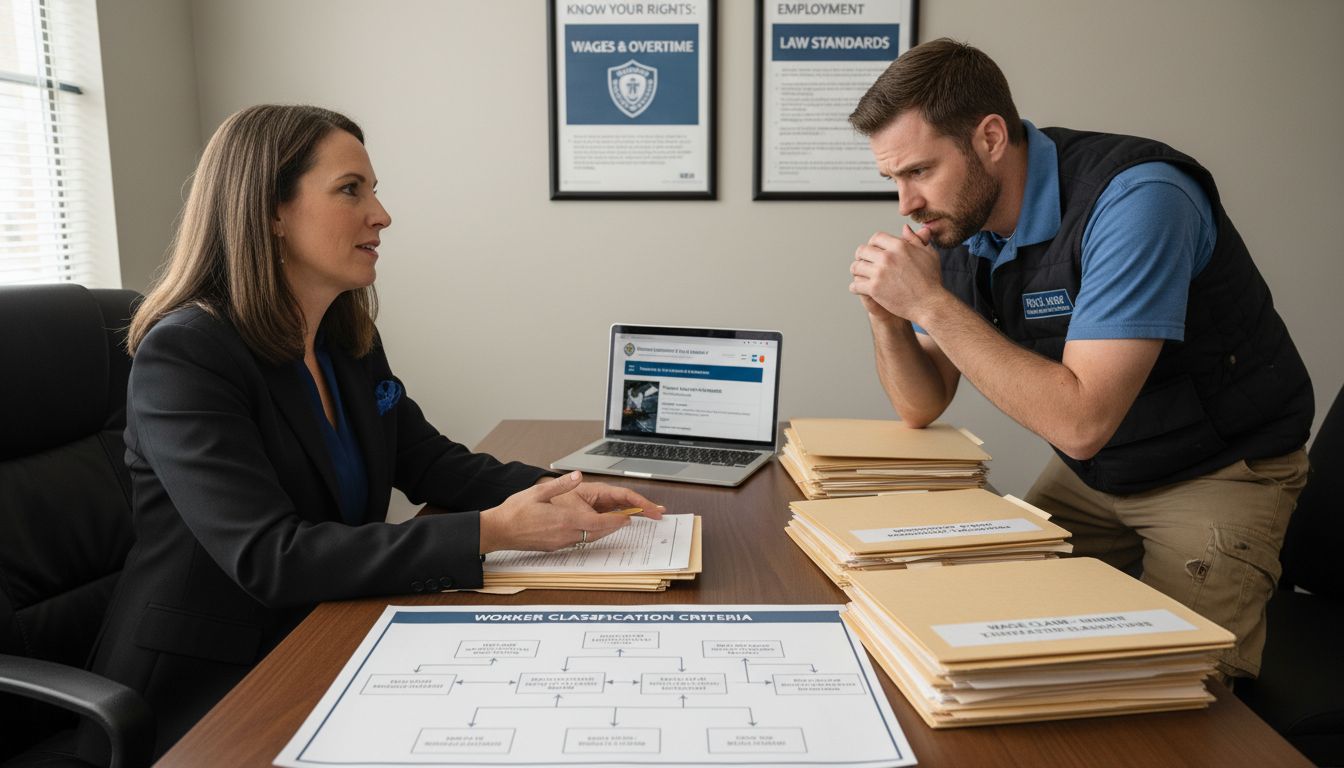 Misclassification Lawsuits vs Companies Like Amazon Flex demonstrates how collective legal actions can result in substantial compensation for workers who have been systematically denied their rightful employment status and associated protections.
Risks for Employers and Gig Companies
Worker misclassification represents a significant legal and financial minefield for employers, with potentially devastating consequences. California Franchise Tax Board highlights the complex risks companies face when incorrectly categorizing their workforce.
The financial and legal risks for employers are substantial and multifaceted:
- Massive Back Wage Penalties: Potential liability for unpaid wages, overtime, and benefits
- Tax Reassessments: Significant tax re-calculations and potential back tax payments
- Legal Compliance Fines: Substantial monetary penalties for regulatory violations
- Potential Class Action Lawsuits: Expensive collective legal actions by misclassified workers
California Department of Industrial Relations emphasizes that misclassification is not merely an administrative error, but a serious legal violation with far-reaching consequences. Companies can face retrospective financial assessments that potentially stretch back several years, threatening their entire operational financial structure.
The ripple effects extend beyond immediate financial penalties.
Repeated misclassification can trigger heightened regulatory scrutiny, damage corporate reputation, and create long-term challenges in workforce recruitment and retention. Complete Guide to Misclassification in Logistics Law demonstrates how systematic misclassification can ultimately undermine a company’s fundamental business model and legal standing.
Protect Your Rights Against Delivery Worker Misclassification in Villa Park
Misclassification of delivery workers can leave you without critical benefits like minimum wage, overtime, and workers’ compensation. If you have been wrongly labeled as an independent contractor instead of an employee, you may be facing unjust legal and financial challenges. Understanding the ABC Test and other classification standards is essential, but navigating these issues alone can be overwhelming and stressful.
Don’t wait to secure the protections and compensation you deserve. Our experienced team at Serendib Law Firm is dedicated to advocating for workers like you who are caught in misclassification disputes. Learn more about your rights and how to challenge wage and hour violations through our detailed resources on Misclassification Archives and Wage Violations Archives.
Take the first step to reclaim your rightful status and benefits by contacting us today at Serendib Law Firm. Free consultations are available so you can get personalized advice tailored to your situation. Act now to protect yourself against ongoing misclassification and secure the justice you deserve.
Frequently Asked Questions
What is worker misclassification in delivery services?
Worker misclassification occurs when delivery companies incorrectly categorize employees as independent contractors, avoiding legal responsibilities like benefits and minimum wage protections.
How can delivery workers challenge their misclassification?
Delivery workers can challenge their misclassification through administrative claims, civil lawsuits, or by filing formal complaints with state labor boards seeking compensation for lost wages and benefits.
What are the consequences of worker misclassification for delivery companies?
Companies risk facing massive back wage penalties, tax reassessments, fines for regulatory violations, and potential class action lawsuits if they misclassify their workers.
What tests are used to determine worker classification in California?
California primarily uses the ABC test and the Borello test to determine if a worker is an independent contractor or an employee, focusing on control, work performance, and the worker’s independent business activities.