
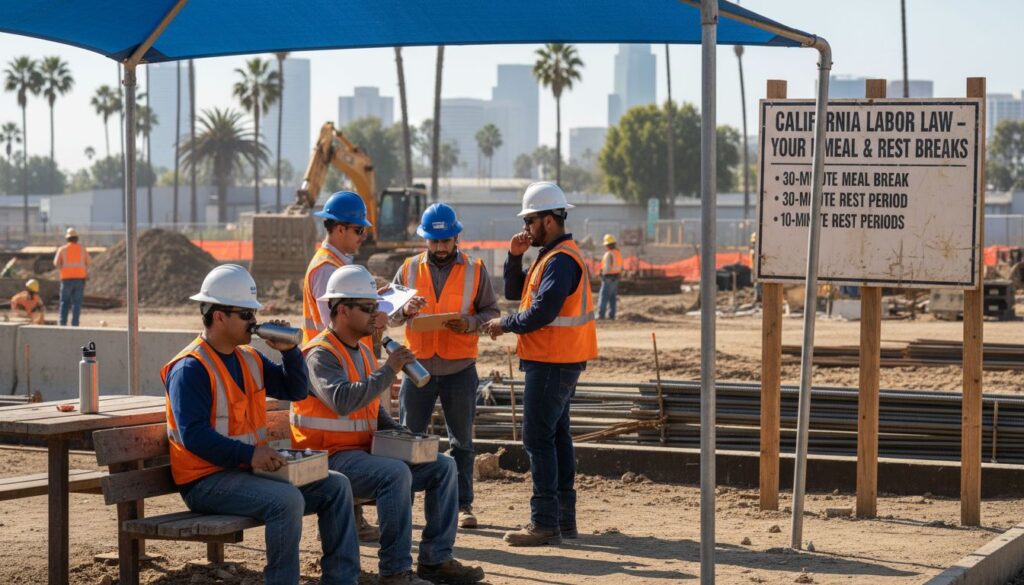
More than 60 percent of construction workers report missed or interrupted breaks on job sites each year, putting safety and health at risk. In Santa Ana, these violations can lead to serious legal consequences for employers while leaving workers fatigued and vulnerable. Understanding meal and rest break laws helps both employees and construction firms protect rights, avoid costly penalties, and create safer working environments.
Table of Contents
- Defining Meal and Rest Break Violations
- California Meal and Rest Break Laws
- Common Violations in Construction Firms
- Employee Rights and Legal Remedies
- Employer Liabilities and Compliance Steps
Key Takeaways
| Point | Details |
|---|---|
| Meal and Rest Break Rights | Construction workers in California are entitled to a 30-minute unpaid meal break after five hours and a 10-minute paid rest after four hours of work. |
| Consequences for Violations | Employers may face significant penalties, including paying an additional hour of wages for each missed break. |
| Documentation is Essential | Workers should document any denied or interrupted breaks to support potential legal claims. |
| Employer Compliance Strategies | Construction firms must establish clear break policies and ensure that management is trained on legal requirements to avoid violations. |
Defining Meal and Rest Break Violations
In the construction industry of Santa Ana, meal and rest break violations represent serious legal infractions that compromise worker safety and rights. According to the California Department of Industrial Relations, employers are legally required to provide specific break periods during work shifts to ensure employee well-being and prevent workplace exhaustion.
Under California law, construction workers are entitled to precise break protections. Specifically, employees must receive a 30-minute duty-free meal period for every five consecutive hours worked and a 10-minute paid rest period for every four hours of work. These mandated breaks are not optional suggestions but legally enforceable worker rights. Violations occur when employers either deny these breaks, interrupt their full duration, or require employees to remain on duty during designated break times.
The consequences of meal and rest break violations can be significant for construction workers in Santa Ana. Employers who fail to comply with these regulations may be required to provide additional compensation, including paying one extra hour of regular wages for each day a proper meal or rest break is denied. This penalty serves as a critical deterrent, encouraging employers to respect worker protections and maintain safe, lawful workplace practices. Missed Rest Breaks in Santa Ana can result in substantial financial penalties and potential legal action for non-compliant employers.
Recognizing these violations requires understanding the nuanced legal standards. Construction workers should carefully document instances of denied or interrupted breaks, noting specific dates, times, and circumstances. By maintaining detailed records, employees can build a strong foundation for potential legal claims and protect their fundamental workplace rights.
California Meal and Rest Break Laws
Construction industry workers in California are protected by stringent meal and rest break regulations that ensure fair treatment and worker well-being. According to the California Department of Industrial Relations, Wage Order 16 provides specific guidelines for break entitlements in the construction sector, establishing clear standards for employee rest periods.
The law mandates precise break requirements for construction workers. Key provisions include:
- A 30-minute unpaid meal break after five consecutive hours of work
- A 10-minute paid rest break for every four hours worked
- Breaks must be uninterrupted and duty-free
These regulations are designed to protect workers from exhaustion and potential workplace safety risks.
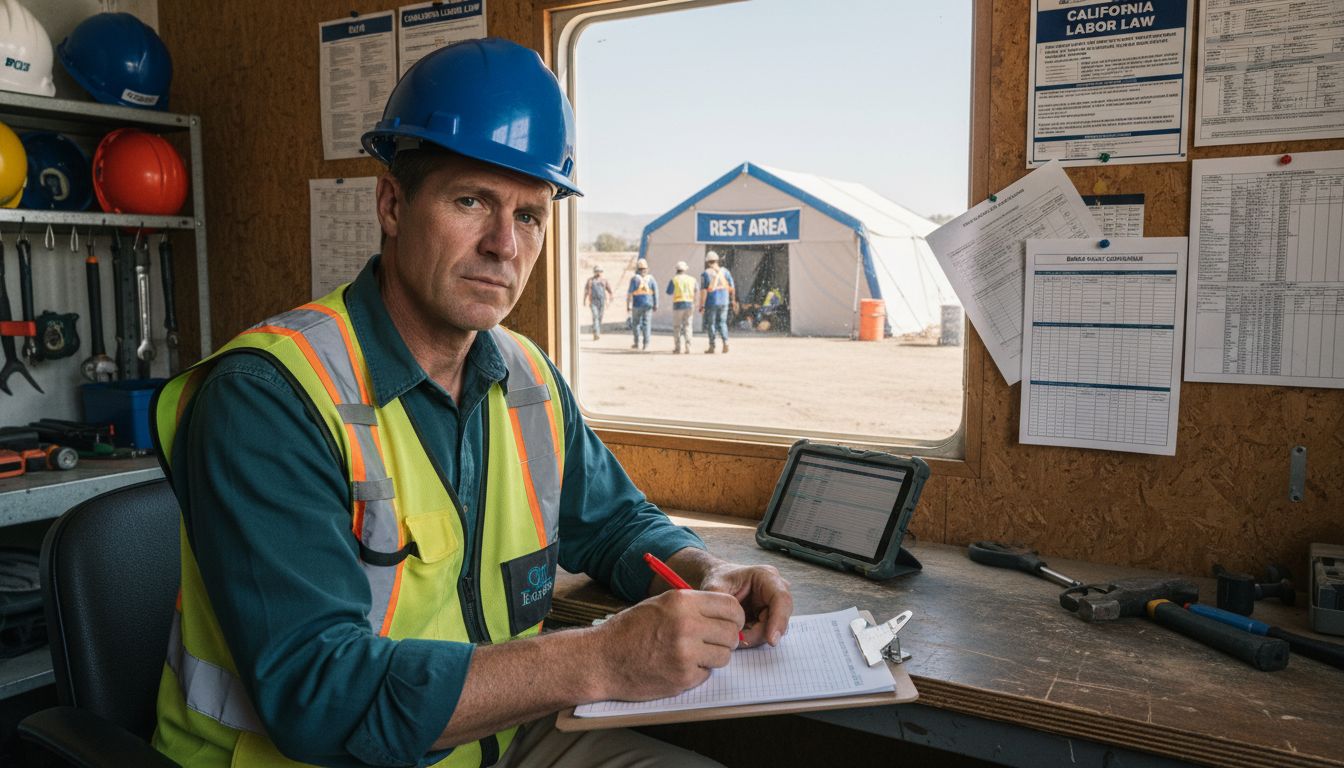 Meal and Rest Breaks Archives highlight that employers who fail to comply with these standards can face significant legal consequences. The Division of Apprenticeship Standards emphasizes that these break requirements are not optional but legally mandated protections for workers in physically demanding industries like construction.
Understanding the nuances of these laws is crucial for both employers and employees. Construction workers should be aware that these break provisions are non-negotiable rights, designed to ensure adequate rest, maintain workplace safety, and prevent potential health risks associated with prolonged physical labor. Employers must proactively implement these break policies, creating a work environment that prioritizes worker health and legal compliance.
Common Violations in Construction Firms
In the high-pressure world of construction, meal and rest break violations are more prevalent than many workers realize. Wage Theft and Break Laws in Construction Jobs highlights the systemic challenges workers face when project deadlines clash with legal worker protections. According to Construction Worker Lawyer, common violations frequently emerge from project urgency and workplace culture that prioritizes completion over worker well-being.
The most frequent meal and rest break violations in construction firms include:
- Skipping mandated breaks to maintain project momentum
- Pressuring workers to take abbreviated or combined break periods
- Failing to provide suitable rest areas on job sites
- Requiring workers to remain on-call during designated break times
- Implementing informal “work through lunch” expectations
Field environments present unique challenges for break compliance. WorkMax notes that construction crews often face intense pressure to meet project deadlines, which can lead to systematic break violations. These practices not only compromise worker safety but also expose employers to significant legal and financial risks, including potential penalties, wage claims, and potential litigation.
Recognizing these violations requires vigilance from both workers and management. Construction firms must proactively develop break management strategies that balance project needs with legal requirements. Workers should document any instances of denied or interrupted breaks, noting specific dates, times, and circumstances. By understanding their rights and maintaining detailed records, employees can protect themselves and hold employers accountable for maintaining safe, legally compliant work environments.
Employee Rights and Legal Remedies
Construction workers in Santa Ana have robust legal protections when it comes to meal and rest break violations. Experienced Orange Employment Law Attorneys understand the critical importance of defending workers’ fundamental rights in high-stakes workplace environments. According to Shouse Law, employees have powerful legal recourse when employers systematically deny mandated breaks.
Key legal remedies for meal and rest break violations include:
- Financial compensation of one additional hour of pay for each denied break
- Potential individual liability for company owners and managing agents
- Filing formal wage claims with California Labor Commissioner
- Pursuing civil lawsuits for repeated or egregious violations
- Seeking court-ordered compliance with break regulations
Constructing a successful legal claim requires meticulous documentation and strategic evidence gathering. Workers should maintain detailed records of:
- Specific dates and times of denied breaks
- Names of supervisors or managers involved
- Witness statements from coworkers
- Any communication demonstrating break violation patterns
- Potential financial losses resulting from denied rest periods
The legal landscape for break violations is complex, but workers are not without powerful protections. By understanding their rights and working with experienced employment attorneys, construction workers can hold employers accountable and secure the workplace justice they deserve. The law provides meaningful mechanisms to challenge unfair labor practices and ensure workers receive their legally mandated rest and meal breaks.
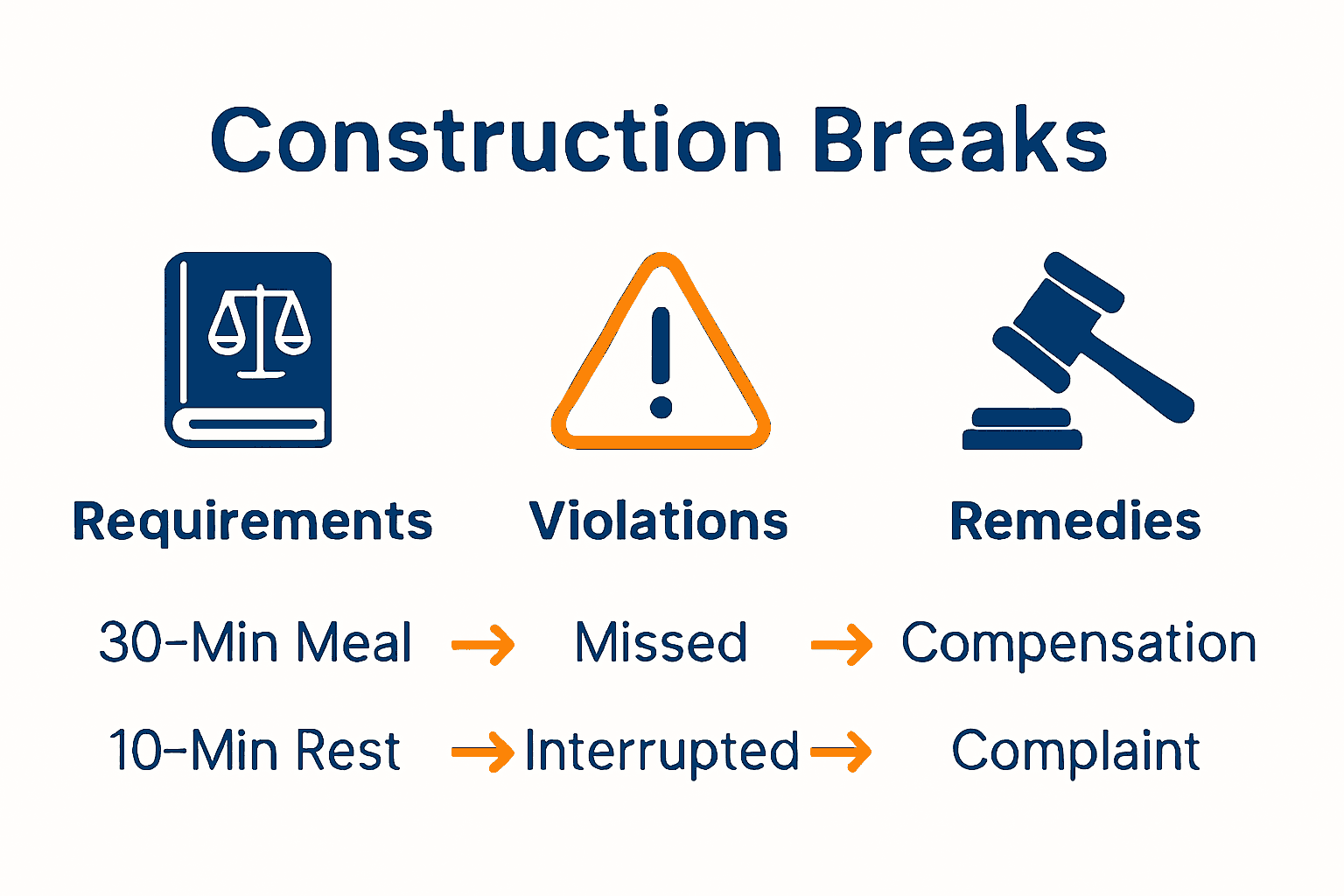
Employer Liabilities and Compliance Steps
Construction firms in Santa Ana face substantial financial and legal risks when failing to comply with meal and rest break regulations. Workplace Disability Discrimination- Common Violations by Employers underscores the critical importance of understanding and implementing proper workplace compliance strategies. According to ClockShark, employers can incur significant financial penalties, including one hour of premium pay for each missed meal or rest break.
Key compliance steps for construction employers include:
- Developing clear, written break policy documentation
- Training managers on precise legal break requirements
- Implementing robust tracking systems for employee breaks
- Creating designated, accessible rest areas on job sites
- Establishing consistent enforcement mechanisms
Under the Private Attorneys General Act (PAGA), Timeero emphasizes that employers face potential litigation if they systematically violate break regulations. The financial consequences can be severe, with penalties potentially stacking if multiple breaks are missed on the same day. Proactive management requires more than simply understanding the law – it demands consistent implementation and genuine commitment to worker well-being.
Construction firms must recognize that break compliance is not just a legal requirement but a fundamental aspect of workplace safety and employee respect. By creating a culture that prioritizes proper rest periods, employers can reduce potential litigation risks, improve worker productivity, and demonstrate a genuine commitment to their employees’ health and rights.
Protect Your Rights Against Meal and Rest Break Violations in Santa Ana Construction
Facing denied or interrupted meal and rest breaks at your construction job in Santa Ana can leave you feeling powerless and exhausted. The law clearly requires employers to provide these essential breaks to safeguard your health and safety. If your rights have been violated, you deserve to understand your options and get the compensation you are owed for missed breaks and lost wages.
At Serendib Law Firm, we specialize in defending workers like you who experience illegal break practices. Explore our Meal and Rest Breaks Archives and Wage Violations Archives to learn more about your rights. Do not wait until these violations impact your health or finances further. Contact us today through our website for a free consultation. Act now to hold your employer accountable and secure the justice you deserve.
Frequently Asked Questions
What are meal and rest break violations in construction?
Meal and rest break violations occur when employers deny or interrupt legally mandated break periods for workers, compromising their safety and rights.
What are the specific break requirements for construction workers?
Construction workers are entitled to a 30-minute unpaid meal break after five hours of work and a 10-minute paid rest break for every four hours worked, according to California law.
What legal remedies do workers have for meal and rest break violations?
Workers may seek financial compensation of one extra hour of pay for each denied break, file formal wage claims, pursue civil lawsuits, and hold employers accountable for compliance.
How can construction firms ensure compliance with meal and rest break laws?
Construction firms can ensure compliance by developing clear break policies, training managers on legal requirements, implementing tracking systems for breaks, creating accessible rest areas, and consistently enforcing these practices.