

Religious discrimination remains a real concern for american food service workers, with the EEOC reporting that claims over faith-based bias have risen in recent years. Facing unfair treatment at work because of religious beliefs can impact job security, morale, and even financial stability. Understanding the types of discrimination and knowing the rights and responsibilities involved helps both employees and employers create fair, respectful workplaces.
Table of Contents
- Defining Religious Discrimination In Food Service
- Common Religious Holiday Conflicts At Work
- Federal, State, And Local Legal Protections
- Employer Responsibilities For Religious Accommodation
- Employee Rights And Legal Remedies
Key Takeaways
| Point | Details |
|---|---|
| Understanding Religious Discrimination | Religious discrimination in food service violates employment rights, impacting hiring, scheduling, and workplace conditions based on faith. |
| Employer Responsibilities | Employers must provide reasonable accommodations for employees’ religious practices unless it causes undue hardship to the business. |
| Employee Protections | Employees have legal rights to be free from discrimination and to file complaints against unfair practices regarding their religious beliefs. |
| Navigating Holiday Conflicts | Employers should proactively manage scheduling around religious holidays to prevent conflicts and support employee rights. |
Defining Religious Discrimination in Food Service
Religious discrimination in food service represents a serious violation of employment rights that can create hostile work environments and unfairly impact workers based on their faith. According to the EEOC, religious discrimination occurs when an individual is treated unfavorably due to their religious beliefs, which encompasses all aspects of employment from hiring to workplace conditions.
In the context of food service, religious discrimination might manifest through several problematic scenarios. An employer could potentially discriminate by refusing to hire someone wearing religious attire, scheduling shifts that conflict with religious observances, or creating workplace policies that prevent employees from practicing fundamental aspects of their faith. The Department of Labor mandates that employers must reasonably accommodate religious practices unless such accommodations would impose an undue hardship on business operations.
Key Examples of Religious Discrimination in Food Service:
- Refusing to hire candidates wearing religious head coverings
- Scheduling mandatory shifts during important religious holidays
- Preventing employees from taking prayer breaks
- Making derogatory comments about an employee’s religious beliefs
- Forcing employees to violate dietary restrictions connected to their faith

Understanding these nuanced forms of discrimination is crucial for both employers and employees in the food service industry. Workers have legal protections that safeguard their right to practice their faith without fear of professional repercussions. For more detailed insights into religious discrimination issues, our religious dress code discrimination guide provides comprehensive information about worker rights and legal protections.
Common Religious Holiday Conflicts at Work
Religious holiday conflicts represent significant challenges in workplace environments, particularly in industries like food service where scheduling and shift work are critical. University at Buffalo emphasizes the importance of proactively identifying and addressing potential scheduling conflicts related to religious observances before they create workplace tensions.
In food service settings, religious holiday conflicts often emerge when work schedules intersect with important religious celebrations. Some common scenarios include mandatory shifts during Sabbath observances, required work during major religious festivals, or scheduling practices that do not accommodate prayer times or dietary restrictions. As University of Michigan-Dearborn recommends, employers should make every reasonable effort to help employees avoid negative professional consequences when their religious obligations conflict with work requirements.
Typical Religious Holiday Workplace Conflicts:
- Scheduling shifts during Sabbath or holy days
- Requiring work during major religious festivals
- Denying time off for religious observances
- Failing to accommodate prayer breaks
- Forcing employees to work during religious fasting periods
Navigating these conflicts requires mutual understanding and proactive communication. Employers in Garden Grove’s food service industry must balance operational needs with respect for diverse religious practices. For more comprehensive guidance on handling these sensitive workplace interactions, explore our religious holiday PTO conflicts guide that provides detailed strategies for creating inclusive workplace environments.
Federal, State, and Local Legal Protections
Religious discrimination protections in the workplace are comprehensive, with multiple layers of legal safeguards designed to protect employees from unfair treatment based on their religious beliefs. EEOC guidelines establish a critical foundation through Title VII of the Civil Rights Act, which explicitly prohibits employers from discriminating against individuals because of their religion in all employment-related decisions, including hiring, firing, promotions, and workplace conditions.
At the federal level, the legal framework provides robust protections that extend beyond traditional religious practices. The Department of Labor mandates that employers must provide reasonable accommodations for employees’ religious beliefs and practices, unless such accommodations would create an undue hardship for the business. This requirement is particularly significant in service industries like food service, where scheduling and workplace interactions can potentially conflict with religious observances.
Key Legal Protections for Religious Freedom:
- Prohibition of employment discrimination based on religious beliefs
- Requirement for reasonable workplace accommodations
- Protection for both traditional and non-traditional religious practices
- Legal recourse for employees experiencing religious discrimination
- Mandatory considerations for religious dress, grooming, and observance
While federal protections provide a fundamental framework, California and local Garden Grove ordinances often offer additional layers of protection for workers. For employees seeking detailed guidance on navigating these complex legal landscapes, our experienced Orange employment law attorneys can provide personalized insights into protecting religious rights in the workplace.
Employer Responsibilities for Religious Accommodation
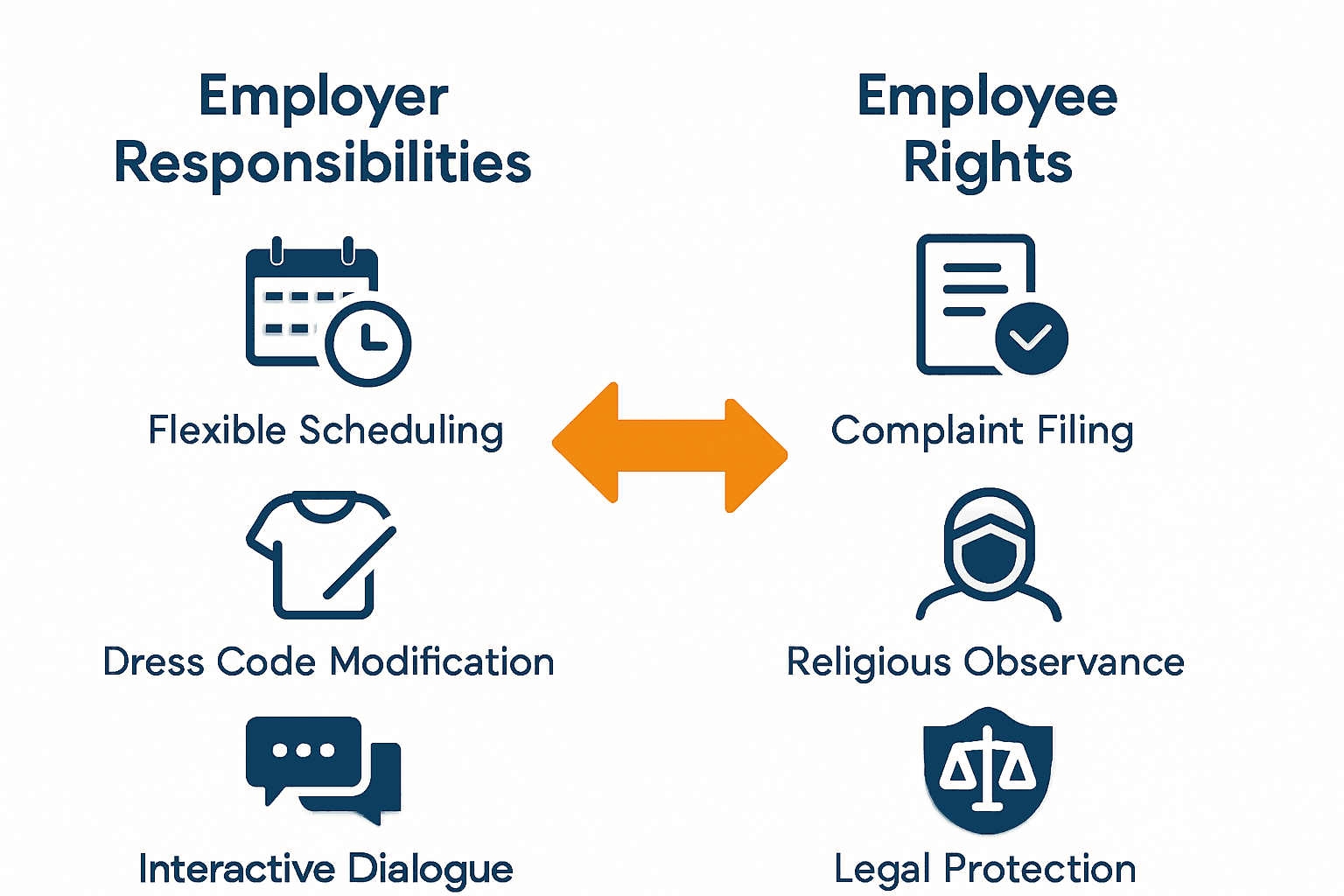
In the food service industry, employers have critical legal obligations to accommodate employees’ religious practices. EEOC guidelines mandate that employers must provide reasonable accommodations for religious beliefs and practices, unless doing so would create an undue hardship for the business. These accommodations can range from flexible scheduling and voluntary shift substitutions to modifying workplace policies that might conflict with religious observances.
The Department of Labor emphasizes that reasonable accommodation is not just a suggestion, but a legal requirement. In practice, this means Garden Grove food service employers must proactively work with employees to find solutions that respect their religious practices while maintaining operational effectiveness. This might involve adjusting break times for prayer, allowing religious dress or grooming practices, or creating scheduling flexibility during religious holidays.
Key Employer Accommodation Responsibilities:
- Engage in an interactive process with employees about religious needs
- Provide flexible scheduling options
- Allow reasonable modifications to dress codes
- Permit voluntary shift exchanges
- Avoid scheduling conflicts with religious observances
Navigating these accommodations requires careful communication and a genuine commitment to workplace diversity. Employers who struggle with understanding their precise legal obligations can benefit from professional guidance.
 For comprehensive insights into managing religious accommodation challenges, explore our religious accommodation disputes guide that offers detailed strategies for creating inclusive workplace environments.
Employee Rights and Legal Remedies
Food service employees in Garden Grove have robust legal protections against religious discrimination, with multiple avenues for addressing workplace violations. EEOC guidelines explicitly state that workers have the fundamental right to be free from discrimination based on religion in all aspects of employment, including hiring, scheduling, workplace interactions, and career advancement opportunities.
When religious discrimination occurs, employees have several critical legal remedies at their disposal. The Department of Labor provides multiple channels for seeking assistance, including filing formal complaints with the Civil Rights Center and pursuing legal action to challenge discriminatory practices. Workers can seek remedies such as job reinstatement, back pay, compensation for emotional distress, and mandatory workplace policy changes.
Key Employee Rights in Religious Discrimination Cases:
- Right to reasonable religious accommodations
- Protection from discriminatory hiring and firing practices
- Ability to file formal complaints with government agencies
- Legal recourse for workplace harassment
- Protection from retaliatory actions after reporting discrimination
Navigating these complex legal landscapes requires strategic understanding and professional guidance. For workers seeking comprehensive insights into their workplace rights, our employee rights list provides a detailed overview of protections available to workers facing potential discrimination.
Protect Your Rights Against Religious Discrimination in Garden Grove Food Service
Facing religious discrimination at work can be overwhelming when your faith clashes with scheduling, dress codes, or breaks. If you feel unfairly treated for practicing your religion or dealing with holiday conflicts, you deserve strong legal support that understands these specific challenges and your rights under federal and state laws. The struggle to secure reasonable accommodations and respect at the workplace can create real stress, but help is available.
Explore how our skilled attorneys at Serendib Law Firm passionately advocate for workers in the Garden Grove area with expertise in employment law and religious discrimination cases. Learn more about cases like yours in our Garden Grove Archives. Don’t wait for discrimination to escalate. Take the first step now to protect your religious freedom and workplace dignity by contacting us for a free consultation tailored to your needs.
Frequently Asked Questions
What is religious discrimination in the food service industry?
Religious discrimination in food service refers to unfair treatment of employees based on their religious beliefs, including actions like refusing to accommodate religious dress, scheduling conflicts with religious observances, or creating a hostile work environment.
What are some examples of religious discrimination in food service?
Examples include employers refusing to hire someone wearing religious attire, scheduling mandatory shifts during important religious holidays, preventing prayer breaks, or making derogatory comments about an employee’s faith.
What legal protections exist for employees facing religious discrimination?
Employees are protected under Title VII of the Civil Rights Act, which prohibits discrimination based on religion, and mandates reasonable accommodations for religious practices unless it imposes undue hardship on employers.
How can employees address religious discrimination in the workplace?
Employees can address religious discrimination by filing formal complaints with agencies like the EEOC, seeking legal recourse for unfair treatment, and requesting reasonable accommodations related to their religious practices.