

Almost one in four american adults experiences a disability, yet many face hidden barriers at work despite strong legal protections. Understanding the Fair Employment and Housing Act matters because it shapes the accommodations and safeguards employees rely on in California workplaces. If you want clear guidance on disability accommodations, legal standards, and your specific rights, this article will help you navigate the rules and spot common mistakes that impact american workers and employers alike.
Table of Contents
- Feha And Disability Accommodations Defined
- Types Of Mental-Health Leaves Covered By Feha
- Feha Legal Standards For Tustin Professionals
- Employer Responsibilities And Compliance Steps
- Employee Rights And Common Pitfalls To Avoid
Key Takeaways
| Point | Details |
|---|---|
| Legal Protections Under FEHA | The California Fair Employment and Housing Act prohibits discrimination against workers with disabilities and requires reasonable accommodations for them. |
| Types of Accommodations | Employers must provide various accommodations, including schedule adjustments and modified equipment, as long as they do not cause undue hardship. |
| Employee Rights | Employees have the right to request accommodations, maintain confidentiality of medical information, and engage in an interactive process with employers. |
| Employer Responsibilities | Employers are obligated to document accommodation requests and create policies that support employees with disabilities consistently. |
FEHA and Disability Accommodations Defined
The California Fair Employment and Housing Act (FEHA) represents a critical legal framework protecting workers with disabilities from discrimination in the workplace. According to California Bar, this legislation prohibits employment discrimination based on physical or mental disabilities and mandates that employers provide reasonable accommodations to qualified individuals.
Under FEHA, reasonable accommodations are adjustments or modifications enabling employees with disabilities to perform essential job functions. These accommodations might include workplace modifications like ergonomic equipment, schedule adjustments, auxiliary aids, or job restructuring. The key requirement is that such accommodations must not impose undue hardship on the employer, which means they should not create significant operational or financial challenges.
The legal protections extend beyond mere workplace adjustments. Department of Rehabilitation guidelines emphasize that FEHA guarantees equal employment opportunities by preventing harassment or discrimination related to an individual’s physical or mental disability. This means employers cannot refuse to hire, promote, or provide training based on an employee’s disability status, provided the individual can perform core job functions with reasonable accommodations.

For employees navigating disability accommodations, understanding your rights is crucial. Key protections include:
- Right to request workplace modifications
- Protection from discriminatory employment practices
- Confidentiality of medical information
- Opportunity to engage in an interactive process with employers
If you believe your disability accommodation rights have been violated, exploring workplace disability discrimination resources can provide additional insights into potential legal recourse.
Types of Mental-Health Leaves Covered by FEHA
According to California Bar, mental health leaves under the Fair Employment and Housing Act (FEHA) encompass a broad range of accommodations for employees experiencing emotional or mental health challenges. These protections recognize that mental disabilities can significantly impact an individual’s ability to perform work functions and require comprehensive support.
The types of mental health leaves typically covered by FEHA include:
- Short-term medical leave for acute mental health treatment
- Intermittent leave for managing ongoing mental health conditions
- Therapeutic treatment absences
- Stress and burnout recovery periods
- Counseling and therapy appointment leaves
Department of Rehabilitation guidelines emphasize that these accommodations must be reasonable and not create undue hardship for the employer. This means the leave must be proportionate to the employee’s needs and the organization’s operational capabilities. Employers are required to engage in an interactive process with employees to determine appropriate accommodations.
Specific mental health conditions often covered include clinical depression, anxiety disorders, post-traumatic stress disorder (PTSD), bipolar disorder, and other clinically recognized psychological conditions that substantially limit major life activities. For employees seeking to understand their rights and explore potential disability accommodation options for mental health in Tustin firms, consulting with an employment law specialist can provide crucial guidance through this complex legal landscape.
FEHA Legal Standards for Tustin Professionals
California Bar establishes comprehensive legal standards that Tustin professionals must follow to ensure workplace disability accommodations are implemented fairly and legally. These standards mandate that employers provide equal opportunities and reasonable modifications for employees with disabilities, creating a framework that protects workers from discriminatory practices.
Key legal standards for Tustin professionals include:
- Mandatory non-discrimination in hiring, promotion, and employment practices
- Requirement to provide reasonable accommodations without undue hardship
- Prohibition of adverse employment actions based on disability status
- Obligation to engage in an interactive accommodation process
- Protection of employee medical information confidentiality
Department of Rehabilitation guidelines emphasize that these legal standards apply to all aspects of employment, from recruitment to termination. Employers must demonstrate a proactive approach to understanding and implementing disability accommodations, which includes individualized assessment of each employee’s specific needs and potential workplace modifications.
For Tustin professionals navigating these complex legal requirements, understanding the nuanced implementation of FEHA standards is crucial. When challenges arise, consulting experienced Tustin workplace discrimination lawyers can provide critical guidance in interpreting and applying these essential legal protections, ensuring both employers and employees understand their rights and responsibilities under California law.
Employer Responsibilities and Compliance Steps
According to California Bar, employers have critical legal obligations in providing disability accommodations. These responsibilities extend beyond mere compliance, requiring a proactive and comprehensive approach to supporting employees with disabilities through meaningful workplace modifications and non-discriminatory practices.
Key employer responsibilities include:
- Conducting a good faith interactive process with employees requesting accommodations
- Documenting accommodation requests and responses
- Evaluating each accommodation request individually
- Maintaining strict confidentiality of medical information
- Implementing workplace modifications without imposing undue hardship
Department of Rehabilitation guidelines emphasize that compliance is not a one-time event but an ongoing commitment. Employers must develop robust policies, train management on disability accommodation protocols, and continuously assess workplace accessibility.
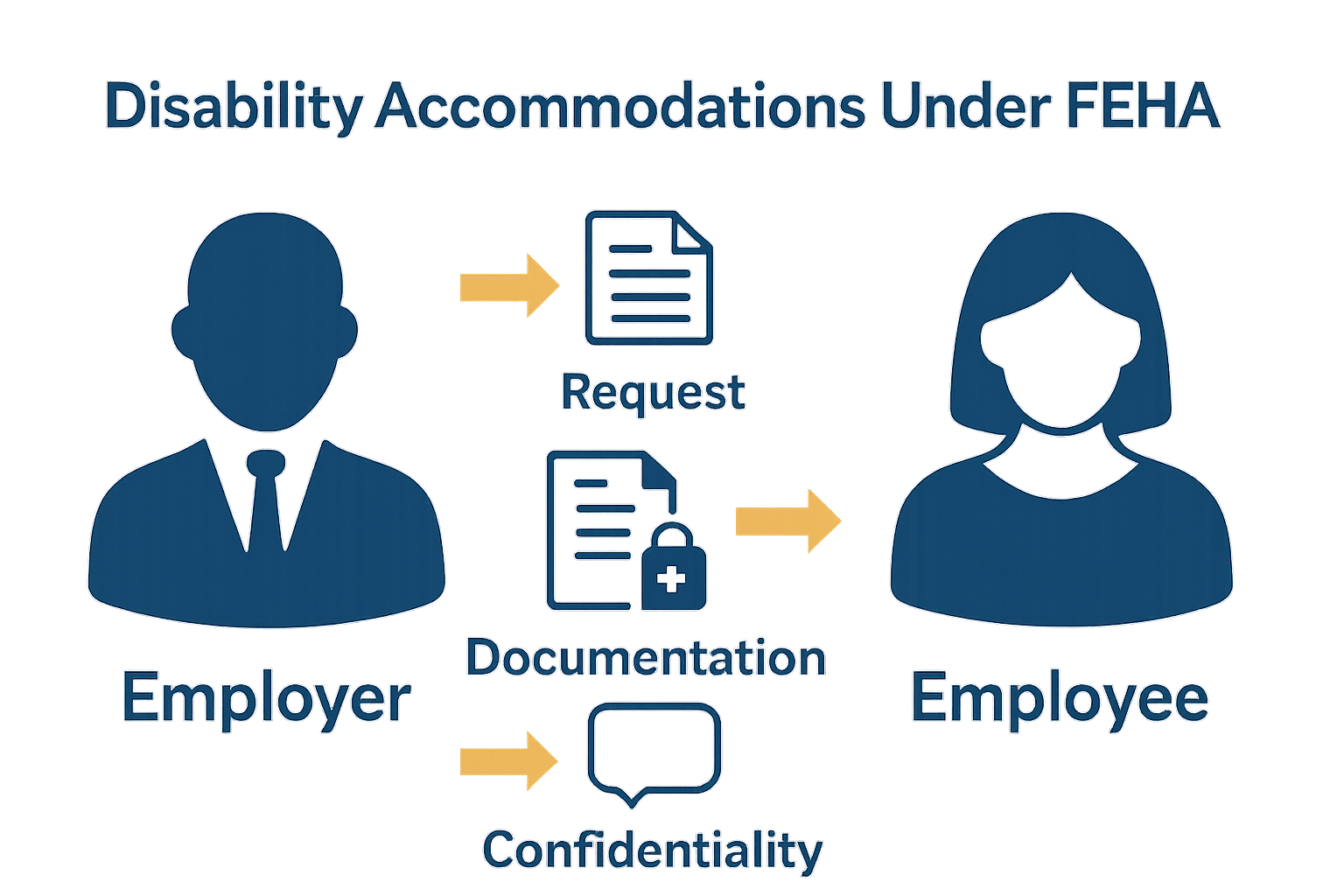 This includes creating clear communication channels, establishing formal procedures for accommodation requests, and ensuring that employees understand their rights.
Navigating these complex legal requirements can be challenging, which is why consulting experienced Orange employment law attorneys can provide critical guidance in developing comprehensive disability accommodation strategies that protect both employee rights and employer interests.
Employee Rights and Common Pitfalls to Avoid
According to California Bar, employees with disabilities possess critical legal rights that protect them from workplace discrimination and ensure fair treatment. Understanding these rights is essential for navigating potential challenges and maintaining a supportive work environment.
Common pitfalls employees should be aware of include:
- Failing to formally document accommodation requests
- Hesitating to communicate specific disability needs
- Not understanding the interactive accommodation process
- Overlooking confidentiality protections
- Accepting discriminatory treatment without legal recourse
Department of Rehabilitation guidelines emphasize the importance of proactive communication and understanding one’s legal protections. Employees must be prepared to articulate their specific needs, provide necessary medical documentation, and engage constructively with employers to find reasonable workplace modifications.
For workers encountering complex disability accommodation challenges, exploring workplace disability discrimination resources can provide critical insights into recognizing and addressing potential violations of their fundamental employment rights.
Protect Your Rights with Expert Disability Accommodation Support in Tustin
Navigating disability accommodations in the workplace can feel overwhelming, especially when dealing with complex mental health leaves or understanding your rights under FEHA. If you are facing challenges such as denied accommodation requests, lack of employer cooperation, or discrimination, you are not alone. Key obstacles include securing reasonable accommodations without undue hardship, ensuring confidentiality, and engaging in the interactive process effectively.
At Serendib Law Firm, we specialize in guiding Tustin employees and employers through these difficult situations. Explore our Disability Accommodation Archives for detailed insights, and see how local case law informs your options through the Tustin Archives. Don’t wait until your rights are compromised. Contact us today via https://serendiblaw.com for a free consultation and take the first step towards securing the fair treatment you deserve.
Frequently Asked Questions
What is the California Fair Employment and Housing Act (FEHA) concerning disability accommodations?
FEHA protects workers with disabilities from discrimination and mandates that employers provide reasonable accommodations to qualified individuals to perform essential job functions.
What types of mental health leaves are covered by FEHA?
FEHA covers various types of mental health leaves, including short-term medical leave for treatment, intermittent leave for ongoing conditions, and leave for counseling appointments or stress recovery.
What are the key responsibilities of employers regarding disability accommodations?
Employers must engage in a good faith interactive process with employees requesting accommodations, document requests, evaluate them individually, maintain confidentiality of medical information, and implement reasonable modifications without causing undue hardship.
What rights do employees have under FEHA related to disability accommodations?
Employees have the right to request workplace modifications, protection from discriminatory practices, confidentiality of medical information, and the opportunity to engage in an interactive process to discuss their accommodation needs.
2 Responses