

Nearly one in five american women faces pregnancy discrimination during her career, highlighting a major issue for employees in Villa Park’s small businesses. Such unfair treatment can mean lost wages, stalled careers, and emotional stress at a vulnerable time. Knowing how protections apply and recognizing subtle forms of discrimination empowers both workers and business owners to foster fairness. This guide helps you understand key signs, rights, and solutions if pregnancy discrimination becomes a reality.
Table of Contents
- Defining Pregnancy Discrimination In Small Businesses
- Legal Protections For Pregnant Workers In Villa Park
- Types Of Discriminatory Practices: Leave And Light Duty
- Employer Obligations And Employee Rights Explained
- Filing Complaints And Legal Remedies Available
Key Takeaways
| Point | Details |
|---|---|
| Understanding Pregnancy Discrimination | Pregnancy discrimination occurs when employers treat women unfairly due to pregnancy or related conditions. This can happen through various actions in small business environments. |
| Legal Protections in Villa Park | Pregnant workers are protected by federal and state laws that require equitable treatment and reasonable accommodations in the workplace. Employers must comply or face legal consequences. |
| Employer Responsibilities | Employers must provide the same work opportunities to pregnant employees as they do to others, including accommodations and protection from discrimination. |
| Filing Complaints | Employees facing discrimination can file complaints with the EEOC within 180 days to initiate investigations and seek remedies, reinforcing their rights in the workplace. |
Defining Pregnancy Discrimination in Small Businesses
Pregnancy discrimination represents a serious legal violation that impacts working women in small businesses across Villa Park and beyond. According to the EEOC, pregnancy discrimination occurs when an employer treats a woman unfavorably due to pregnancy, childbirth, or related medical conditions. This means any negative employment action specifically tied to a woman’s pregnant status constitutes illegal workplace discrimination.
In small business contexts, pregnancy discrimination can manifest through various subtle and overt practices. These might include refusing to hire a qualified candidate because she is pregnant, denying promotions, reducing work hours, excluding pregnant employees from key assignments, or creating a hostile work environment. The EEOC’s guidelines are clear: employers with 15 or more employees must treat pregnant workers the same as other employees with similar work capabilities.
Key indicators of pregnancy discrimination in small businesses include:

- Sudden changes in job responsibilities after pregnancy announcement
- Unwarranted performance critiques
- Exclusion from training or professional development opportunities
- Reduction in work hours or pay
- Forced unpaid leave or premature job termination
Understanding these nuanced forms of discrimination is crucial for both employers and employees. Workers should recognize their rights, while businesses must proactively create inclusive environments that support pregnant employees. For a comprehensive overview of pregnancy discrimination regulations, our pregnancy discrimination guide provides detailed insights into legal protections and employee rights.
Legal Protections for Pregnant Workers in Villa Park
Pregnant workers in Villa Park are safeguarded by robust legal protections designed to prevent workplace discrimination. The EEOC provides comprehensive federal guidelines that prohibit employers from discriminating against employees based on pregnancy, childbirth, or related medical conditions. These protections ensure that pregnant workers receive fair treatment across all aspects of employment, including hiring, promotions, job assignments, and benefits.
California offers even stronger protections through the California Fair Employment and Housing Act (FEHA).
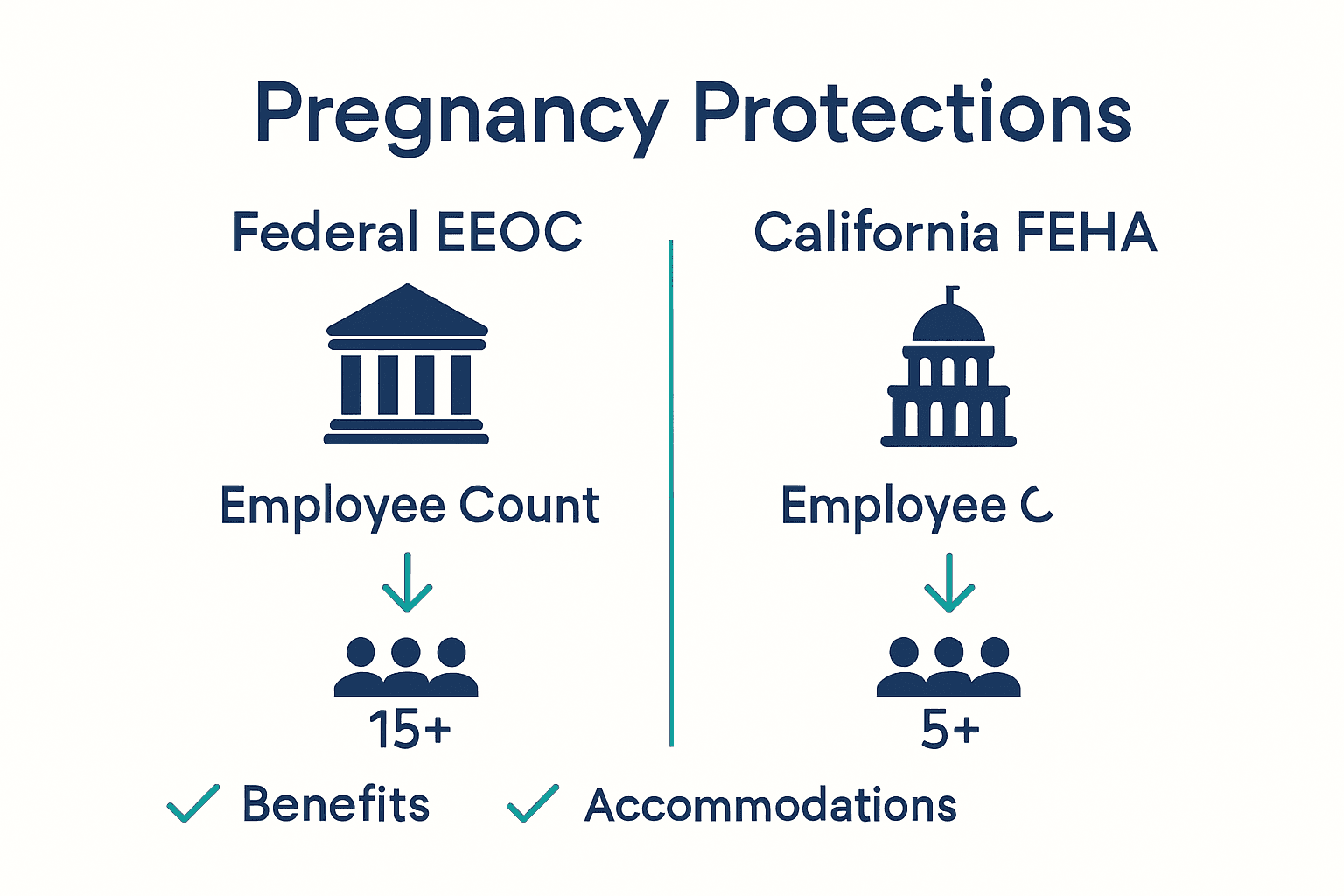 According to Wikipedia, FEHA applies to employers with five or more employees, providing broader coverage than federal laws. This means that even smaller businesses in Villa Park are required to maintain equitable treatment of pregnant workers, offering significant legal safeguards that extend beyond national standards.
Key legal protections for pregnant workers include:
- Right to reasonable workplace accommodations
- Protection from termination or demotion due to pregnancy
- Maintenance of health insurance and other employment benefits
- Access to unpaid medical leave without job loss
- Protection from harassment or hostile work environments
Navigating these legal protections can be complex, which is why understanding your rights is crucial. For detailed insights into pregnancy-related workplace regulations and your legal options, our guide on pregnancy discrimination and related leaves provides comprehensive information to help Villa Park workers protect their employment rights.
Types of Discriminatory Practices: Leave and Light Duty
Pregnancy-related leave and light duty accommodations represent critical areas where workplace discrimination frequently occurs in Villa Park businesses. The EEOC emphasizes that employers must provide identical leave and light duty opportunities to pregnant employees as they do to other workers with comparable work capabilities or limitations. This means a pregnant worker cannot be treated differently when requesting accommodations or time off related to her pregnancy.
Discriminatory practices in leave and light duty can manifest through several specific actions. According to EEOC guidelines, employers cannot force a pregnant employee to take mandatory leave if she remains capable of performing her job duties. Conversely, if an employer offers light duty assignments to employees with non-pregnancy-related work restrictions, they must extend the same opportunities to pregnant workers experiencing similar work limitations.
Common discriminatory leave and light duty practices include:
- Denying light duty assignments available to non-pregnant employees
- Forcing mandatory leave without medical necessity
- Reducing work hours or pay during pregnancy
- Refusing reasonable workplace accommodations
- Creating barriers to returning to work after pregnancy-related leave
Navigating these complex workplace regulations requires understanding your rights and potential legal protections.
For specialized insights into pregnancy discrimination related to leave and light duty assignments, our pregnancy discrimination and light duty guide offers comprehensive information to help Villa Park workers identify and challenge unlawful employment practices.
Employer Obligations and Employee Rights Explained
The EEOC establishes clear guidelines that define the critical balance between employer obligations and employee rights in pregnancy-related workplace scenarios. Employers in Villa Park must treat pregnant employees with the same respect and opportunities afforded to other workers with comparable job capabilities. This means making employment decisions based solely on job performance and ability, not pregnancy status.
Employer obligations encompass a comprehensive set of legal requirements designed to protect pregnant workers. According to EEOC guidelines, businesses must provide reasonable accommodations that enable pregnant employees to continue working effectively. This includes potential modifications to work duties, schedules, or physical workspace to support the employee’s health and job performance. The EEOC emphasizes that employers cannot compel pregnant workers to take leave if they remain capable of performing their essential job functions.
Key employer obligations and employee rights include:
- Maintaining health insurance coverage for pregnancy-related conditions
- Providing equal opportunities for promotions and professional development
- Offering reasonable workplace accommodations
- Protecting against discriminatory termination or demotion
- Ensuring a harassment-free work environment
Understanding these complex workplace dynamics can be challenging, which is why consulting comprehensive legal resources is crucial. For a detailed breakdown of employee rights across various employment scenarios, our employee rights guide offers in-depth insights to help Villa Park workers navigate their legal protections effectively.
Filing Complaints and Legal Remedies Available
The EEOC provides clear pathways for employees experiencing pregnancy discrimination in Villa Park to seek justice and protect their workplace rights. Individuals who believe they have been unfairly treated can file formal complaints that trigger comprehensive investigations into potential discriminatory practices. The complaint process serves as a critical mechanism for holding employers accountable and securing legal remedies for affected workers.
The complaint filing process involves several strategic steps that require careful documentation and timely action. According to EEOC guidelines, employees must file their discrimination charge within 180 days of the discriminatory incident. The EEOC outlines potential legal remedies that can include job reinstatement, back pay, compensatory damages, and potential punitive damages depending on the severity of the discrimination.
Key steps in filing a pregnancy discrimination complaint include:
- Documenting specific instances of discriminatory treatment
- Gathering supporting evidence and witness statements
- Filing a formal charge with the EEOC within the prescribed time frame
- Participating in investigation and mediation processes
- Consulting with an employment law attorney for comprehensive guidance
Navigation of these complex legal processes can be challenging, which is why seeking professional legal support is crucial. Our guide on filing claims against public entities offers additional insights to help Villa Park workers understand their rights and effectively pursue justice in workplace discrimination cases.
Protect Your Rights Against Pregnancy Discrimination in Villa Park Businesses
Facing pregnancy discrimination at work can feel overwhelming and unfair. This article highlights critical challenges pregnant employees face such as denial of promotions, forced unpaid leave, or refusal of reasonable accommodations. If you have experienced sudden job changes or hostile treatment simply because of your pregnancy you have legal protections under federal and California laws that must be enforced.
At Serendib Law Firm we understand how deeply these issues affect you and your family. Our experienced attorneys specialize in pregnancy discrimination cases and are dedicated to helping pregnant workers in Villa Park stand up for their rights. If you want to learn more about your options or need support to challenge unlawful workplace practices visit our Villa Park archives for local insights and contact us through our website.
Do not wait until your rights are compromised further. Act now to secure the fair treatment you deserve. Reach out today for a free consultation and take the first step toward making your workplace safe and respectful.
Frequently Asked Questions
What constitutes pregnancy discrimination in the workplace?
Pregnancy discrimination occurs when an employer treats a woman unfavorably due to pregnancy, childbirth, or related medical conditions. This includes negative employment actions specifically tied to a woman’s pregnant status, such as denial of promotions or job assignments.
What legal protections exist for pregnant workers?
Pregnant workers are protected by federal guidelines from the EEOC, which mandate fair treatment in hiring, promotions, and benefits. Additionally, California’s Fair Employment and Housing Act offers broader protections, requiring reasonable accommodations and prohibiting termination based on pregnancy.
How can I recognize signs of pregnancy discrimination at work?
Key indicators include sudden job responsibility changes after announcing a pregnancy, unwarranted performance evaluations, exclusion from training opportunities, and reduced work hours or pay specifically due to your pregnancy status.
What steps should I take if I experience pregnancy discrimination?
You should document specific instances of discriminatory treatment, gather evidence, and file a formal complaint with the EEOC within 180 days of the incident. Consulting with an employment law attorney can also provide important guidance and support throughout the process.