
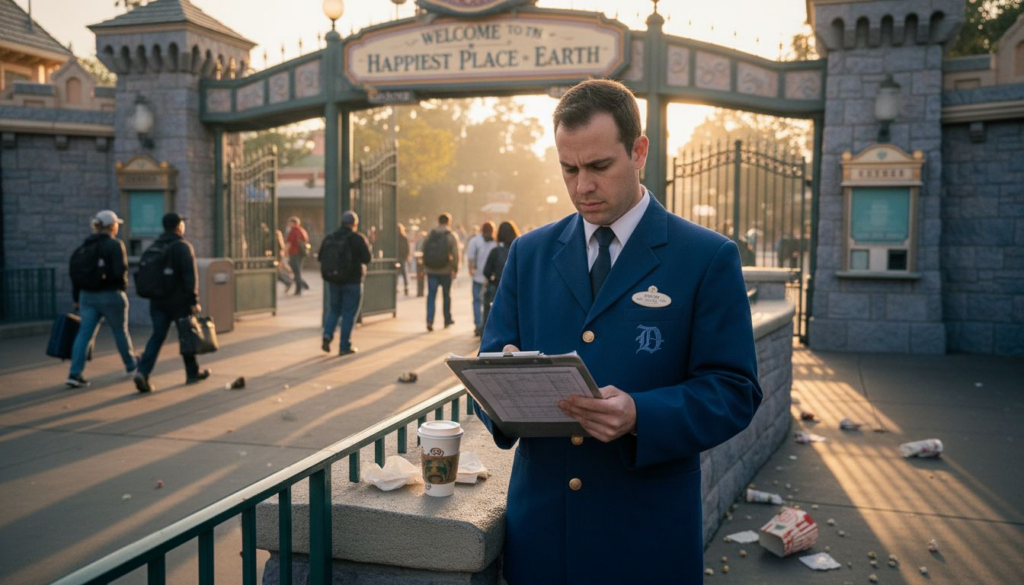
Why should you care about Disneyland shift scheduling lawsuits? Over $233 million in wage settlements have transformed the conversation about fair pay for American hourly workers at Disneyland. For those living and working in Anaheim, missed breaks, unpredictable schedules, and underpaid hours are not just rumors—they have been proven violations. Knowing your rights under California employment law could be the key to recovering lost wages and ensuring workplace respect.
Table of Contents
- Shift‑Scheduling Lawsuits Defined
- Measure L Wage Violations At Disneyland
- Scheduling And Tool Reimbursement Claims
- Impacts On Overtime And Break Rights
- Legal Remedies And Settlement Outcomes
- What Anaheim Workers Can Do
Key Takeaways
| Point | Details |
|---|---|
| Shift-Scheduling Lawsuits | Employees can challenge unpredictable scheduling practices and seek remedies such as compensation for lost wages and policy changes. |
| Measure L Implications | Disneyland must comply with local wage laws, potentially increasing worker wages significantly and providing stronger legal protections. |
| Documentation is Crucial | Workers should meticulously document hours, wages, and scheduling changes to support potential legal claims effectively. |
| Class Action Settlements | Collective legal actions can lead to substantial settlements for wage violations, emphasizing the value of worker solidarity in enforcing rights. |
Shift‑Scheduling Lawsuits Defined
Shift‑scheduling lawsuits represent complex legal actions where employees challenge workplace scheduling practices that potentially violate labor regulations. These lawsuits typically emerge when workers experience unpredictable work hours, last‑minute scheduling changes, or inadequate compensation for rapid schedule shifts.
Shift Scheduling Violations often involve specific labor code infractions, particularly in industries with hourly workers like retail, hospitality, and service sectors. Workers may file claims when employers engage in practices such as:
- Changing work schedules with minimal notice
- Requiring employees to be “on call” without guaranteed compensation
- Implementing inconsistent scheduling that prevents financial planning
- Failing to provide adequate rest periods between scheduled shifts
The legal landscape for these lawsuits has been significantly shaped by recent California labor regulations, which provide stronger protections for workers facing unstable scheduling practices. California Labor Code Sections 226.7 and 510 specifically address scheduling and overtime regulations that form the basis for many shift‑scheduling legal challenges.
Employees experiencing scheduling issues should document all instances of irregular work assignments, track actual hours worked, and maintain records of communication with management. Potential legal remedies might include compensation for lost wages, penalties against the employer, and mandated changes to scheduling practices.
Pro Tip: Schedule Documentation: Consistently record your actual work hours, shift changes, and any verbal or written communication about scheduling to build a strong potential legal case if violations occur.
Measure L Wage Violations At Disneyland
Measure L represents a groundbreaking local ordinance in Anaheim that directly challenges wage practices for large hospitality and tourism employers, with Disneyland as its primary target. Disney’s wage violations under this measure have resulted in a substantial $233 million settlement, highlighting the significant legal implications for workers’ compensation rights.
Measure L Requirements mandate that qualifying businesses in Anaheim pay higher minimum wages, specifically targeting companies receiving municipal subsidies or operating in tourist districts. For Disneyland, this means substantially higher wage standards compared to standard California minimum wage regulations. The key provisions include:
- Establishing a higher baseline wage for hospitality workers
- Requiring immediate wage adjustments for affected employees
- Implementing protections against wage theft and compensation manipulation
- Ensuring consistent wage increases tied to local economic conditions
The legal battle surrounding Measure L has been complex, with California appellate courts confirming Disneyland’s obligation to comply with the local wage ordinance. This judicial decision potentially increases worker compensation to nearly $20 per hour, representing a significant victory for Anaheim hospitality employees.
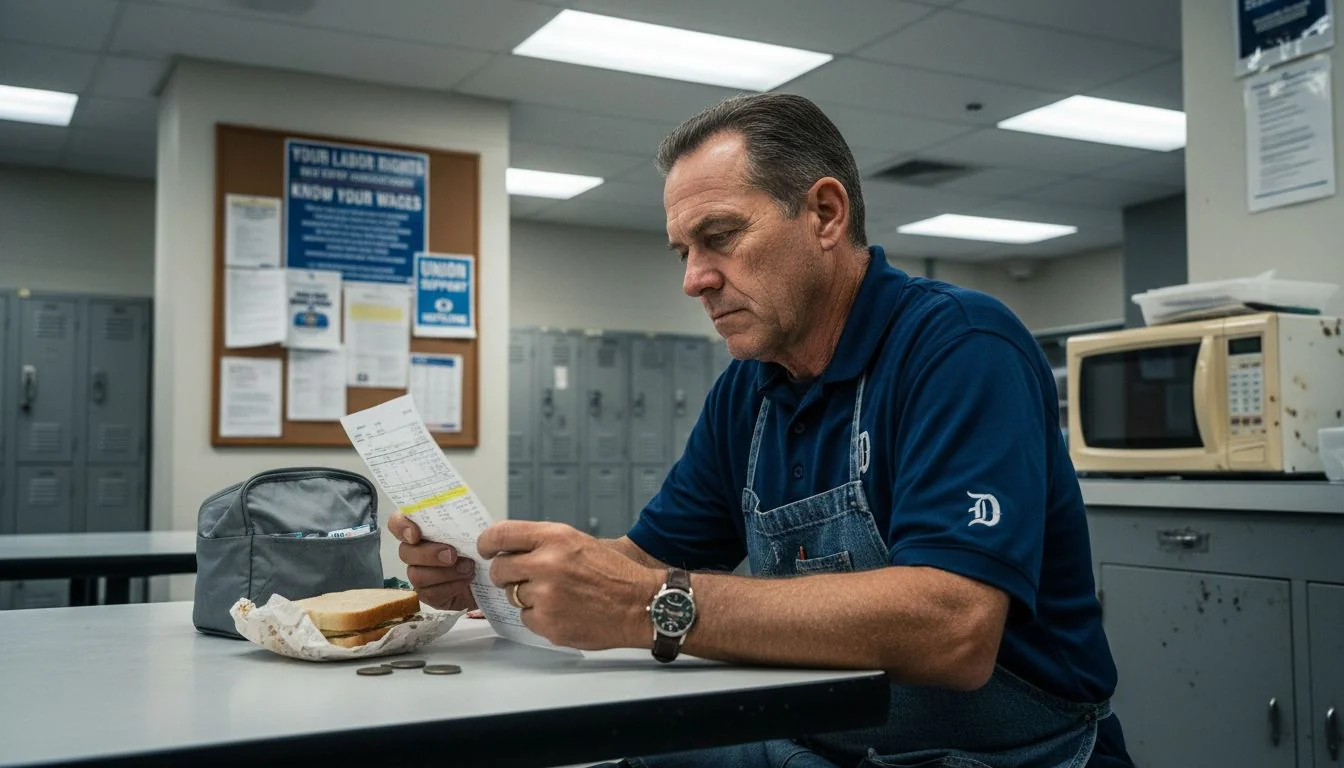
Employees impacted by Measure L should carefully document their work hours, wage rates, and any discrepancies in compensation. Potential legal remedies might include back pay, penalties, and mandated wage adjustments. Workers have multiple avenues to challenge potential violations, including filing complaints with local labor authorities or pursuing individual and class action lawsuits.
Pro Tip: Wage Compliance Check: Regularly compare your actual wages against Measure L standards, maintain detailed employment records, and consult with employment law professionals if you suspect wage violations.
This table compares key California and Measure L protections for Disneyland employees:
| Protection Category | California Law | Anaheim Measure L |
|---|---|---|
| Minimum Wage | State-mandated baseline | Significantly higher local minimum |
| Scheduling Requirements | Notice and rest period rules | Stricter local enforcement |
| Overtime Pay | 1.5x rate after 8 hours | Mirrors or exceeds state guidelines |
| Reimbursement Rights | Required for job expenses | Emphasized for hospitality workers |
Scheduling And Tool Reimbursement Claims
Scheduling and tool reimbursement claims represent critical legal protections for Disneyland workers, addressing complex issues of compensation and workplace equipment expenses. Union settlements have outlined specific compensation structures that protect workers’ financial interests beyond standard wage considerations.
Workplace Equipment Reimbursement is a crucial aspect of these legal claims, involving several key components that Disneyland employees should understand:
- Mandatory reimbursement for required work tools and equipment
- Compensation for personal equipment used in job performance
- Potential recovery of expenses related to uniform maintenance
- Calculation of indirect costs associated with job-specific requirements
Scheduling claims often intersect with reimbursement issues, particularly when irregular work hours impact employee expenses. Workers may seek compensation for:
- Unpredictable shift changes
- Last‑minute schedule modifications
- Mandatory training or preparation time
- On‑call periods without guaranteed compensation
Legal strategies for addressing these claims typically involve documenting precise work hours, equipment expenses, and demonstrating financial impact. Potential remedies can include monetary compensation, retroactive payments, and mandated changes to scheduling and reimbursement practices.
Employees should maintain meticulous records of work schedules, equipment purchases, and related expenses. This documentation serves as critical evidence when pursuing reimbursement or challenging unfair workplace practices.
Here’s a summary of common workplace legal claims Disneyland workers may encounter:
| Claim Type | Main Issue Addressed | Typical Evidence Needed | Potential Legal Outcome |
|---|---|---|---|
| Shift Scheduling Lawsuit | Unpredictable work hours | Work schedules, management emails | Back pay, policy changes |
| Wage Violation (Measure L) | Underpayment vs. city law | Pay stubs, wage statements | Wage hikes, retroactive payments |
| Tool Reimbursement Claim | Equipment expense | Receipts, expense logs | Reimbursement for costs |
| Overtime/Break Rights Claim | Unpaid extra hours, no breaks | Timesheets, shift logs | Overtime pay, fines, policy reform |
Pro Tip: Expense Documentation: Create a dedicated digital folder to track all work‑related expenses, photograph receipts immediately, and maintain a detailed log of scheduling changes and associated costs.
Impacts On Overtime And Break Rights
Overtime and Break Rights are fundamental protections for Disneyland workers, addressing critical compensation and workplace welfare concerns. The $233 million settlement highlights systemic issues of unpaid wages and overtime violations, revealing significant challenges in workplace compensation practices.
The legal landscape for overtime compensation involves several key considerations:
- Calculating overtime rates for hours worked beyond standard shifts
- Tracking and compensating for off‑the‑clock work activities
- Ensuring proper meal and rest break provisions
- Addressing irregular scheduling that impacts overtime calculations
Disneyland workers face unique challenges with break rights, particularly given the complex nature of theme park employment. Judicial interpretations have complicated the application of local wage laws, creating additional barriers for employees seeking fair compensation.
Key overtime violations often include:
- Failing to pay proper overtime rates
- Preventing workers from taking mandatory rest breaks
- Manipulating scheduling to avoid overtime compensation
- Requiring unpaid work during preparation or closing periods
Employees should meticulously document their work hours, break times, and any instances of unpaid work. This documentation becomes critical evidence when pursuing legal claims for overtime and break right violations.
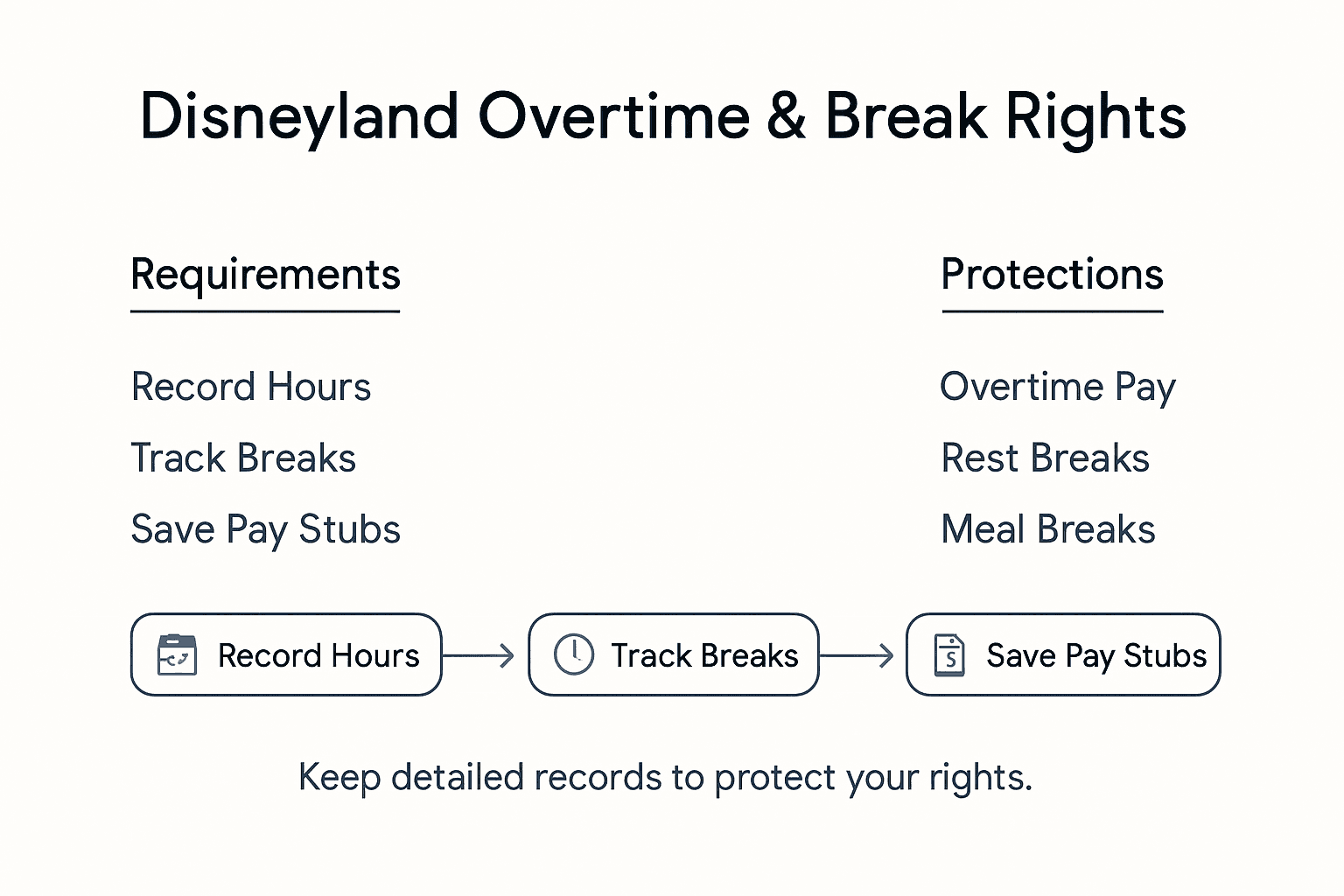
Companies like Disneyland must comply with California labor laws, which mandate specific protections for workers. This includes providing appropriate rest periods, tracking accurate work hours, and ensuring fair compensation for all time worked.
Pro Tip: Overtime Tracking: Maintain a detailed personal log of all work hours, including start and end times, break periods, and any additional work‑related activities performed outside scheduled shifts.
Legal Remedies And Settlement Outcomes
Class Action Settlements represent a critical mechanism for addressing systematic workplace violations, with Disneyland workers achieving a landmark legal victory. The record $233 million settlement provides comprehensive compensation for wage theft claims dating back to 2019, demonstrating the power of collective legal action.
Key components of the settlement include:
- Back pay for affected employees
- Interest on unpaid wages
- Retroactive compensation dating to 2019
- Mandated changes to scheduling and compensation practices
Legal Remedies available to Disneyland workers encompass multiple strategic approaches:
- Filing individual wage claims
- Participating in class action lawsuits
- Pursuing administrative complaints with labor boards
- Negotiating direct settlements with employer
The comprehensive settlement addresses Measure L wage violations across the Disneyland Resort, representing a significant victory for workers’ rights. The legal outcome not only provides financial compensation but also establishes important precedents for future workplace protection claims.
Employees considering legal action should carefully document all work‑related expenses, hours worked, and potential violations. Evidence gathering is crucial in building a successful wage claim, including maintaining detailed records of schedules, communications, and financial impacts.
The settlement demonstrates that collective legal action can effectively challenge systemic workplace compensation issues, providing meaningful financial recovery and institutional accountability for workers.
Pro Tip: Evidence Collection: Maintain a comprehensive digital folder with all employment documents, including pay stubs, schedules, communication records, and detailed logs of work hours and expenses.
What Anaheim Workers Can Do
Worker Empowerment begins with understanding your legal rights and taking strategic actions to protect your workplace interests. Anaheim workers can access comprehensive information about wage settlement claims through dedicated resources, enabling them to navigate complex legal landscapes effectively.
Key steps for Anaheim workers include:
- Documenting all work‑related expenses and hours
- Verifying eligibility for the wage settlement
- Maintaining detailed employment records
- Understanding your rights under local labor laws
Legal Action Strategies for Disneyland workers involve multiple approaches:
- Joining existing class action settlements
- Filing individual wage claims
- Consulting with employment law specialists
- Connecting with worker advocacy groups
Unionization efforts provide additional protection for Anaheim workers seeking to address workplace compensation challenges. Workers can leverage collective bargaining power to negotiate better working conditions and enforce their legal rights.
Critical documentation for potential claims should include:
- Complete employment history
- Pay stubs and wage records
- Scheduling documentation
- Communication records with management
Employees should act proactively by seeking legal consultations, understanding their rights, and maintaining comprehensive records of their employment experiences. Timely action can significantly impact the potential success of wage claims and workplace protection efforts.
Pro Tip: Evidence Preservation: Create a secure digital folder with chronological employment documents, screenshots of communications, and detailed work logs to support potential legal claims.
Protect Your Rights Against Unfair Shift Scheduling at Disneyland
If you are an Anaheim worker facing unpredictable schedules, unpaid wages, or other workplace challenges discussed in the article “Disneyland Shift Scheduling Lawsuits: Why Anaheim Workers Should Care”, you are not alone. Issues like last-minute schedule changes, inadequate compensation, and wage violations under Measure L significantly affect your financial stability and daily life. Understanding your rights around shift scheduling, breaks, and wage protections is critical to gaining the justice you deserve.
At Serendib Law Firm, we specialize in advocating for workers in Anaheim facing these complex employment law issues. Our team is dedicated to delivering personalized legal support tailored to your situation. Learn more about your rights and legal options through our Anaheim Archives and explore detailed insights on wage protections in our Wage Violations Archives. Do not wait for injustice to worsen. Contact us today at Serendib Law Firm for a free consultation and start building your case with experienced legal advocates by your side.
Frequently Asked Questions
What are shift-scheduling lawsuits?
Shift-scheduling lawsuits are legal actions taken by employees against employers for unstable workplace scheduling practices that may violate labor regulations. These practices include last-minute scheduling changes and inadequate compensation for on-call periods.
How can Disneyland employees document scheduling violations?
Disneyland employees should maintain detailed records of their actual work hours, shift changes, management communications, and any irregular scheduling to support potential legal claims related to scheduling violations.
What remedies are available for workers experiencing wage violations?
Workers can pursue multiple remedies for wage violations, including back pay, penalty payments, and mandated wage adjustments through direct claims, class action lawsuits, or complaints filed with labor authorities.
How does Measure L impact Disneyland workers’ wages?
Measure L requires Disneyland to pay higher minimum wages to hospitality workers in Anaheim, significantly exceeding the standard state-mandated minimum wage. It also includes protections against wage theft and mandates consistent wage increases tied to local economic conditions.