

Every year, thousands of American retail workers encounter unfair treatment simply because they are over 40. For employees in La Habra, the reality of age discrimination often feels isolating and undermines years of hard-earned experience. With recent cases and evolving employment laws, understanding your legal rights has never mattered more. This guide unpacks the protections and practical steps that empower seasoned staff to assert their value while holding employers accountable.
Table of Contents
- Defining Age Discrimination In Retail Chains
- Types And Patterns Of Age-Biased Practices
- California Law And Federal Protections For Workers
- Recent Lawsuits And EEOC Claims In La Habra
- Employee Rights, Evidence And Reporting Procedures
- How Retail Employers Minimize Legal Risks
Key Takeaways
| Point | Details |
|---|---|
| Age Discrimination Awareness | Age discrimination affects workers over 40, leading to unfair treatment in hiring, promotion, and retention. |
| Legal Protections | The Age Discrimination in Employment Act (ADEA) and California Fair Employment and Housing Act (FEHA) provide robust legal frameworks against age-based discrimination. |
| Documentation is Essential | Workers should document instances of discrimination meticulously to strengthen legal claims and ensure their rights are protected. |
| Proactive Employer Strategies | Retail employers must implement bias training and objective evaluation systems to minimize the risk of age discrimination claims. |
Defining Age Discrimination in Retail Chains
Age discrimination in retail represents a systematic challenge where workers over 40 experience unfair treatment based solely on their age. Research from employment studies reveals that older retail employees frequently encounter barriers in hiring, promotion, and job retention that younger workers do not experience.
Under the Age Discrimination in Employment Act (ADEA), legal protections explicitly prohibit employment practices that disadvantage workers aged 40 and older. This federal legislation ensures that retail chains cannot make employment decisions based on age bias, covering critical aspects like hiring, compensation, job assignments, and termination. The law recognizes that age discrimination can manifest through subtle and overt practices that systematically marginalize experienced workers.
Typical examples of age discrimination in retail settings include:
- Preferential hiring of younger workers
- Excluding older employees from training opportunities
- Targeting older workers for layoffs during restructuring
- Making derogatory comments about an employee’s age
- Creating work environments that feel unwelcoming to older staff
Retail environments often prioritize youth and energy, which can inadvertently create toxic workplace cultures that devalue the expertise and reliability of seasoned employees. Understanding these dynamics is crucial for recognizing and challenging discriminatory practices that undermine professional dignity and career progression.
The following table highlights subtle versus overt forms of age discrimination in retail settings:
| Discrimination Type | How It Appears | Workplace Effect |
|---|---|---|
| Subtle Bias | Job ads using coded language | Older applicants discouraged |
| Overt Bias | Direct negative age comments | Damaged morale and legal risk |
| Systemic Patterns | Promotion barriers for older workers | Stifled career advancement |
Pro tip: Document every instance of potential age discrimination, including dates, witnesses, and specific interactions, which can provide critical evidence if you need to file a formal complaint.
Types and Patterns of Age-Biased Practices
Research demonstrates that age discrimination in retail environments emerges through sophisticated and multifaceted patterns that systematically marginalize workers over 40. These discriminatory practices are rarely overt, instead manifesting through subtle yet pervasive mechanisms that undermine older employees’ professional opportunities and workplace standing.
One prominent manifestation involves recruitment strategies that strategically exclude older workers. Job advertisements frequently contain coded language designed to discourage mature applicants, utilizing phrases that implicitly signal a preference for younger candidates. These tactics can include:
- Requesting “recent graduates”
- Emphasizing “high energy” environments
- Using generational terminology like “digital native”
- Requiring technical skills with implicit youth-oriented assumptions
Another critical pattern involves performance evaluation and career progression. Older retail workers often encounter systemic barriers where their extensive experience becomes paradoxically viewed as a liability rather than an asset. Managers might subtly:
- Limit challenging assignment opportunities
- Provide fewer professional development resources
- Create performance metrics that disadvantage seasoned employees
- Promote younger workers at disproportionately higher rates
These discriminatory practices collectively create workplace environments that psychologically discourage and professionally constrain older retail workers, effectively pushing them toward early retirement or involuntary career transitions. Understanding these intricate patterns helps workers recognize and potentially challenge age-based workplace discrimination.
Pro tip: Maintain comprehensive documentation of your professional achievements, performance metrics, and any instances of differential treatment to build a strong evidential foundation if you need to challenge age discrimination.
California Law and Federal Protections for Workers
Federal workplace discrimination regulations provide comprehensive protections for workers over 40, establishing robust legal frameworks that shield employees from age-based employment discrimination. The Age Discrimination in Employment Act (ADEA) represents a critical foundation for these protections, ensuring that retail workers in La Habra and across the United States receive fair treatment regardless of their age.
California’s state laws actually extend beyond federal protections, offering even more comprehensive safeguards for older workers. The California Fair Employment and Housing Act (FEHA) provides additional layers of protection that complement federal statutes, creating a more stringent legal environment for addressing age discrimination. These protections cover multiple aspects of employment, including:
- Hiring practices
- Promotion opportunities
- Compensation structures
- Training and development access
- Termination decisions
Key differences between federal and California state protections include broader definitions of discriminatory practices and lower thresholds for filing complaints. While the federal ADEA applies to employers with 20 or more employees, California’s FEHA covers businesses with five or more employees, significantly expanding legal recourse for workers in smaller retail environments. This means that even small retail chains in La Habra are legally accountable for maintaining age-neutral workplace practices.
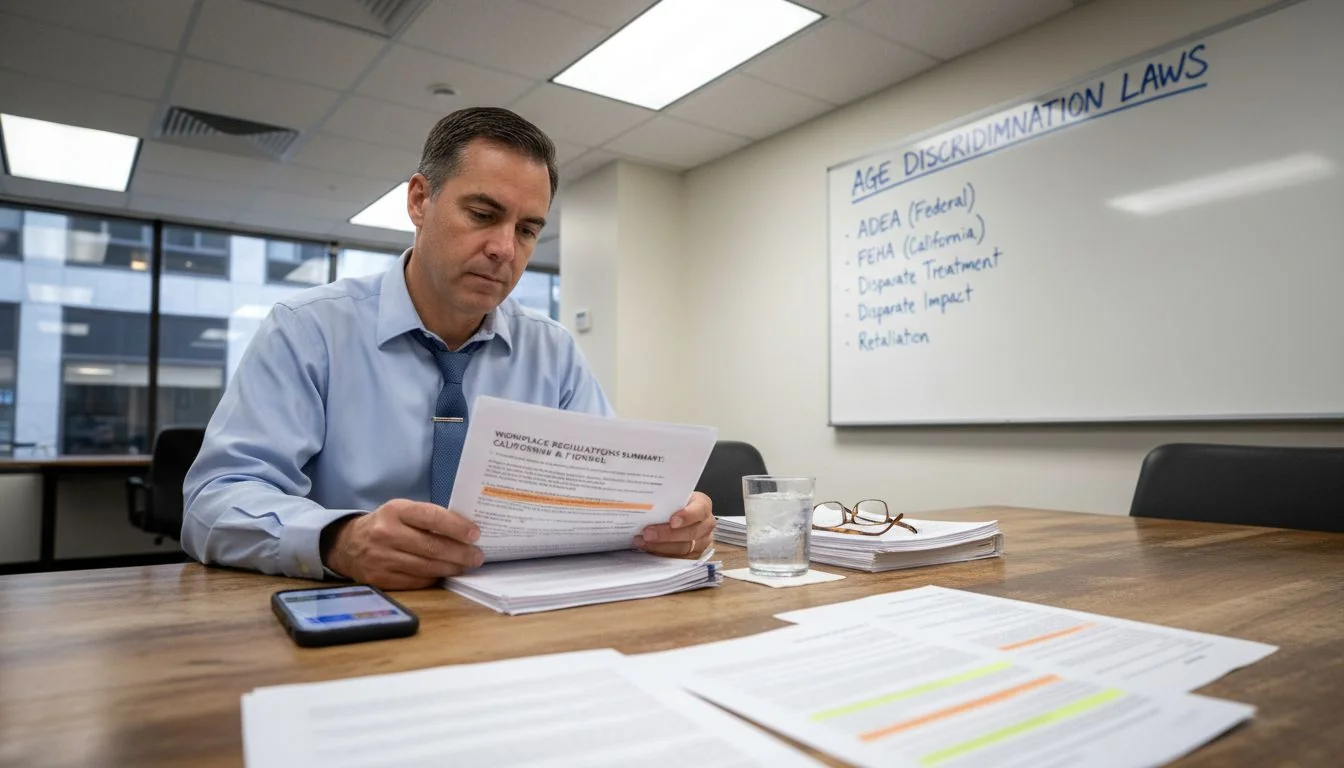
Here’s a quick reference comparing federal and California state protections for older retail workers:
| Protection Area | Federal (ADEA) | California (FEHA) |
|---|---|---|
| Employer Coverage | 20+ employees required | 5+ employees required |
| Complaint Deadlines | 180-300 days | Up to 3 years |
| Scope of Protection | Focused on age bias | Broader definition, more claims allowed |
Pro tip: Consult with an employment law specialist who understands both federal and California state regulations to fully understand the nuanced protections available in your specific workplace situation.
Recent Lawsuits and EEOC Claims in La Habra
Age discrimination claims in retail sectors have been steadily increasing, with La Habra emerging as a significant focal point for workplace bias litigation. The local retail employment landscape reveals a troubling pattern of systemic age-related employment challenges that frequently escalate into formal legal proceedings.
The Equal Employment Opportunity Commission (EEOC) has documented a substantial volume of complaints specifically targeting retail employers in the region. Workplace age bias statistics demonstrate consistent patterns of discrimination that manifest through various employment practices, including:
- Systematic exclusion from promotional opportunities
- Targeted layoffs of workers over 40
- Deliberate reduction of work hours
- Creating hostile work environments
- Implementing age-coded hiring practices
While individual lawsuit details remain confidential, emerging trends indicate that many La Habra retail workers are successfully challenging discriminatory practices. Settlements and legal interventions have increasingly forced local employers to reassess their workplace policies, creating incremental but meaningful progress in addressing age-based employment discrimination. These legal actions serve not just as individual remedies but as broader deterrents against systemic workplace bias.
Pro tip: Carefully document every instance of potential age discrimination, including specific dates, conversations, and personnel involved, to strengthen any future legal claims.
Employee Rights, Evidence and Reporting Procedures
Employee rights against age discrimination encompass a comprehensive set of legal protections designed to safeguard workers aged 40 and older from unfair workplace treatment. These rights extend across all aspects of employment, including hiring, promotion, compensation, training, and termination, ensuring that retail workers in La Habra have robust legal recourse against discriminatory practices.
Documenting potential age discrimination requires meticulous attention to detail and strategic evidence collection. Legal procedures for filing age discrimination claims mandate specific steps and strict documentation standards. Critical evidence should include:
- Dated written communications
- Performance reviews
- Witness statements
- Comparative employment records
- Detailed logs of discriminatory incidents
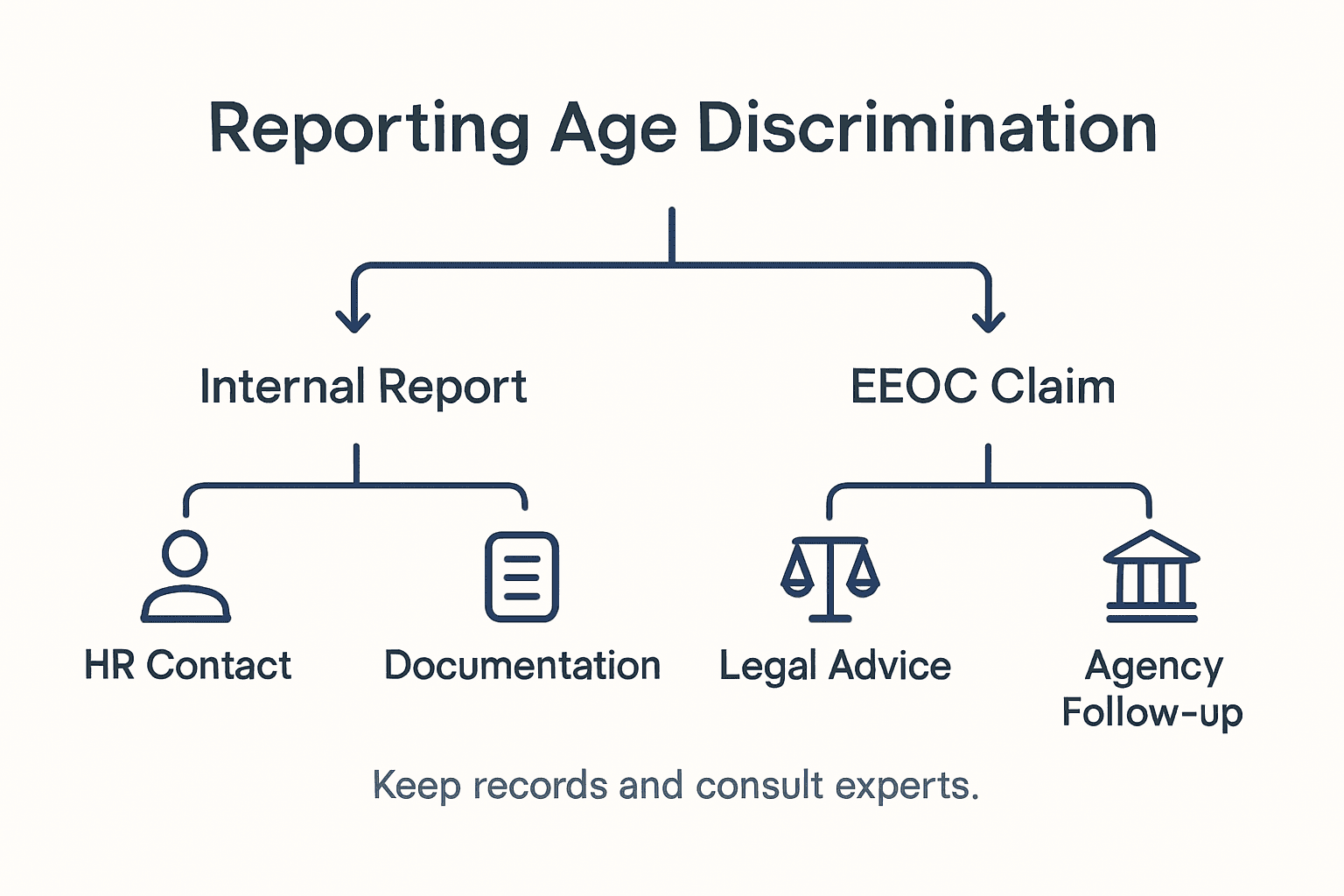
The reporting process involves multiple potential avenues, including filing complaints with:
- Equal Employment Opportunity Commission (EEOC)
- California Department of Fair Employment and Housing
- Internal company human resources departments
- Potential legal consultation with employment discrimination attorneys
Each reporting channel has unique requirements and potential outcomes, making it crucial for workers to understand their specific rights and the most appropriate mechanism for addressing their particular situation. Timing is critical, with most agencies requiring complaints to be filed within specific statutory deadlines.
Pro tip: Preserve all original documentation, create secure digital and physical backups, and avoid discussing potential legal claims with current employers before consulting an employment law professional.
How Retail Employers Minimize Legal Risks
Legal strategies for preventing age discrimination require comprehensive and proactive approaches by retail employers. Sophisticated organizations understand that minimizing potential litigation involves creating systemic safeguards that protect both employees and the company’s legal interests, particularly in complex employment environments like La Habra’s retail sector.
Effective risk mitigation strategies typically involve multiple layers of organizational protection. Comprehensive workplace policies designed to prevent age discrimination focus on several critical areas:
- Implementing unconscious bias training
- Developing transparent hiring protocols
- Creating objective performance evaluation systems
- Establishing clear complaint resolution procedures
- Documenting employment decisions with precision
Retail employers must remain vigilant about evolving legal standards, particularly in California, where state regulations often exceed federal requirements. This means regularly updating hiring practices, ensuring job descriptions use neutral language, and training management teams to recognize and prevent potential discriminatory behaviors. Proactive documentation of employment decisions, including detailed performance assessments and objective rationales for promotions or terminations, provides critical protection against potential legal challenges.
Pro tip: Develop a standardized review process that focuses exclusively on job-related performance metrics, eliminating any language or evaluation criteria that could be interpreted as age-related.
Protect Your Rights Against Age Discrimination in Retail
If you are facing age discrimination in La Habra retail workplaces, you are not alone. The challenges of unfair hiring practices, limited promotion opportunities, and hostile environments based solely on age require strong legal support. Understanding your rights under California and federal laws is essential to fighting back against these damaging practices.
At Serendib Law Firm, we specialize in employment law to help you navigate complex discrimination issues. Our experienced team offers personalized advocacy to protect your job, compensation, and dignity. We encourage you to explore our CA Employment Law Archives | Serendib Law Firm for more insights into your rights and the protections you deserve. Don’t wait while unlawful workplace bias affects your career. Contact us through our website today to schedule a free consultation and take the first step toward justice. Learn more about how the law safeguards you in California by visiting California Archives | Serendib Law Firm.
Empower yourself with trusted legal representation now so you can focus on what matters most—your career and future.
Frequently Asked Questions
What is age discrimination in retail?
Age discrimination in retail occurs when workers over 40 face unfair treatment based solely on their age, impacting their opportunities for hiring, promotion, and job retention.
What protections do workers have against age discrimination?
Workers over 40 are protected under the Age Discrimination in Employment Act (ADEA), which prohibits age-based employment discrimination in hiring, compensation, job assignments, and termination.
How can employees document instances of age discrimination?
Employees should document potential age discrimination by noting the dates, witnesses, specific comments, and interactions that demonstrate discriminatory behavior, thereby creating vital evidence for any formal complaints.
What should an employee do if they believe they have faced age discrimination?
If an employee believes they have faced age discrimination, they should gather evidence, consult with an employment law specialist, and consider filing a complaint with the Equal Employment Opportunity Commission (EEOC) or relevant state agencies.