

Facing unwanted advances or hostile behavior in a Newport Beach workplace can leave financial and real estate professionals feeling uncertain about their next steps. These environments should foster respect but sexual harassment disrupts trust and productivity. Understanding the legal definition of sexual harassment empowers you to recognize your rights and take informed action. This guide provides clarity on workplace violations, reporting protocols, and protections designed to support you in resolving workplace claims confidently.
Table of Contents
- Defining Sexual Harassment In Financial Firms
- Types Of Harassment In Real Estate Workplaces
- Laws Governing Sexual Harassment In Newport Beach
- Reporting Procedures And Documentation Essentials
- Employee Rights, Employer Duties, And Liability
- Risks Of Retaliation And How To Respond
Key Takeaways
| Point | Details |
|---|---|
| Definition of Sexual Harassment | Sexual harassment includes unwelcome sexual advances, inappropriate comments, and behaviors that create a hostile work environment in both financial and real estate sectors. |
| Legal Framework | Various laws, including federal, state, and local regulations, provide protections against harassment and mandate employer responsibilities to address and prevent such behaviors. |
| Documentation Importance | Accurately documenting incidents is critical for substantiating claims and can significantly impact the effectiveness of legal recourse. |
| Retaliation Risks | Employees are protected against retaliation for reporting harassment, but they must meticulously record any retaliatory actions encountered following their complaints. |
Defining Sexual Harassment in Financial Firms
Sexual harassment represents a serious workplace violation that can profoundly impact professionals in financial firms. Sexual harassment legally encompasses unwelcome sexual advances, inappropriate verbal comments, and physical conduct that creates a hostile work environment.
In financial settings, sexual harassment can manifest through multiple complex dynamics:
- Quid pro quo harassment where employment benefits are contingent upon sexual cooperation
- Creating intimidating work environments through persistent sexual comments or behaviors
- Unwanted sexual advances from colleagues or supervisors
- Inappropriate physical touching or suggestive gestures
- Digital harassment through emails, messages, or workplace communication platforms
The legal definition distinguishes between two primary categories of sexual harassment. First, quid pro quo harassment occurs when employment decisions like promotions, assignments, or job security are explicitly or implicitly tied to sexual cooperation. Second, hostile work environment harassment emerges when pervasive sexual conduct substantially interferes with an individual’s professional performance.
Sexual harassment statutes apply broadly across workplace environments, protecting employees regardless of gender. These protections ensure that no financial professional should endure inappropriate sexual conduct as a condition of employment.
Key Legal Considerations:
- Harassment can involve individuals of any gender
- Single severe incidents or persistent pattern can constitute harassment
- Applies to employers with 15 or more employees
- Covers verbal, physical, and digital interactions
Pro tip: Document every incident of inappropriate behavior with specific dates, times, and potential witnesses to strengthen potential legal claims.
Types of Harassment in Real Estate Workplaces
Workplace harassment in real estate encompasses multiple complex behavioral patterns that can create toxic professional environments. These harassment types extend beyond simple interpersonal conflicts, representing serious violations of professional conduct and personal dignity.
The primary categories of harassment in real estate workplaces include:
- Sexual Harassment
- Unwanted sexual advances
- Inappropriate physical contact
- Sexual comments or jokes
- Discriminatory Harassment
- Race-based remarks
- Age-related discrimination
- Gender-based negative treatment
- Verbal Harassment
- Persistent insulting language
- Threatening communications
- Derogatory comments
- Digital Harassment
- Inappropriate emails
- Offensive text messages
- Social media bullying
Contextual Dynamics in real estate settings make harassment particularly complex. Professionals often work in high-stress environments with frequent client interactions, creating multiple opportunities for inappropriate conduct. Workplace harassment statutes recognize that these behaviors can originate from supervisors, colleagues, clients, or other industry professionals.

Understanding the nuanced manifestations of harassment is crucial. Some behaviors might seem subtle but can constitute legally actionable offenses when they create persistent, intimidating work environments. Real estate professionals must recognize that harassment is not just about overt actions, but also about creating environments that systematically undermine an individual’s professional dignity and psychological safety.
Key Characteristics of Workplace Harassment:
- Conduct must be severe or pervasive
- Impact is judged from a reasonable person’s perspective
- Can involve verbal, physical, or digital interactions
- Applies across gender, rank, and professional roles
Pro tip: Maintain a confidential, detailed record of any harassment incidents, including dates, witnesses, and specific behaviors to support potential legal actions.
Here’s a concise comparison of how workplace harassment appears in financial firms versus real estate settings:
| Aspect | Financial Firms | Real Estate Workplaces |
|---|---|---|
| Common Harassment Themes | Power dynamics, quid pro quo | Client interactions, diverse perpetrators |
| Workplace Structure | Hierarchical office environment | High mobility, decentralized roles |
| Unique Risks | Digital platform misuse, policy gaps | Offsite meetings, external client abuse |
| Prevention Focus | Compliance training, formal procedures | Adaptable reporting, situational awareness |
Laws Governing Sexual Harassment in Newport Beach
Sexual harassment laws in Newport Beach create a comprehensive legal framework designed to protect employees from discriminatory workplace behaviors. These regulations establish clear standards for professional conduct and provide robust mechanisms for addressing inappropriate workplace interactions.
The legal landscape for sexual harassment protection encompasses multiple critical layers:
- Federal Protections
- Title VII of the Civil Rights Act
- Prohibits workplace discrimination
- Applies to employers with 15+ employees
- California State Laws
- Fair Employment and Housing Act (FEHA)
- Broader protection than federal standards
- Covers smaller employers
- Local Newport Beach Regulations
- Reinforces state and federal mandates
- Provides additional employee safeguards
Specific Legal Requirements mandate that California employers prevent harassment through comprehensive strategies. These include mandatory harassment prevention training, establishing clear reporting mechanisms, and taking immediate corrective action when harassment is reported.
The legal framework distinguishes between two primary types of sexual harassment: quid pro quo harassment, where employment benefits are contingent on sexual cooperation, and hostile work environment harassment, characterized by persistent, severe, or pervasive conduct that creates an intimidating workplace atmosphere.
Key Legal Protections:
- Victims can file complaints within specified timeframes
- Employers must investigate all harassment claims
- Retaliation against reporting employees is strictly prohibited
- Potential remedies include monetary compensation and policy changes
Pro tip: Consult with an employment law specialist to understand the full scope of your legal rights and potential recourse in sexual harassment situations.
The following summary table clarifies the differences between federal, California, and Newport Beach harassment laws:
| Legal Level | Coverage Scope | Unique Protections | Enforcement Mechanisms |
|---|---|---|---|
| Federal | Employers with 15+ staff | Title VII safeguards nationwide | EEOC investigations, litigation |
| California State | All employers | Broader coverage, FEHA provisions | Civil Rights Department actions |
| Newport Beach | All employees in city | Local reporting, extra support | City-level complaints, resources |
Reporting Procedures and Documentation Essentials
Sexual harassment reporting strategies require meticulous documentation and strategic communication to protect employees’ rights and professional integrity. Understanding the nuanced process can significantly impact the effectiveness of addressing workplace harassment.
Critical documentation for sexual harassment claims should include:
- Detailed Incident Logs
- Exact dates and times of incidents
- Specific descriptions of inappropriate behaviors
- Location and context of each occurrence
- Supporting Evidence
- Email or digital communication screenshots
- Witness contact information
- Any corroborating communication records
- Personal Impact Assessment
- Emotional and professional consequences
- Documentation of performance changes
- Psychological or medical documentation
Formal Reporting Protocols mandate comprehensive complaint procedures that protect employees while ensuring thorough investigation. Most organizations require written documentation detailing the specific nature of harassment, including explicit behaviors, dates, locations, and potential witnesses.
Navigating the reporting process requires strategic preparation. Victims should understand that confidentiality protections exist to prevent retaliation, and multiple reporting channels are typically available, including human resources departments, direct supervisors, and external governmental agencies.
Recommended Reporting Steps:
- Document incidents immediately
- Review company harassment policies
- Gather supporting evidence
- Submit formal written complaint
- Follow up with documentation requests
Pro tip: Create a secure, timestamped digital folder to store all harassment-related documentation, ensuring evidence remains intact and confidential.
Employee Rights, Employer Duties, and Liability
Workplace sexual harassment protections create a complex legal framework defining clear responsibilities for both employees and employers. Understanding these intricate dynamics is crucial for maintaining professional workplace environments and protecting individual rights.
Employee rights in sexual harassment cases encompass multiple critical protections:
- Fundamental Employee Rights
- Right to a harassment-free workplace
- Protection against retaliatory actions
- Confidential reporting mechanisms
- Legal recourse for violations
- Reporting Protections
- File complaints without fear
- Seek external governmental intervention
- Request comprehensive investigations
- Legal Remedies
- Monetary compensation
- Workplace policy changes
- Potential reinstatement
Employer Obligations require proactive workplace management that prevents, identifies, and addresses potential harassment. This involves implementing comprehensive training programs, establishing clear reporting procedures, and taking immediate corrective actions when inappropriate behaviors are identified.
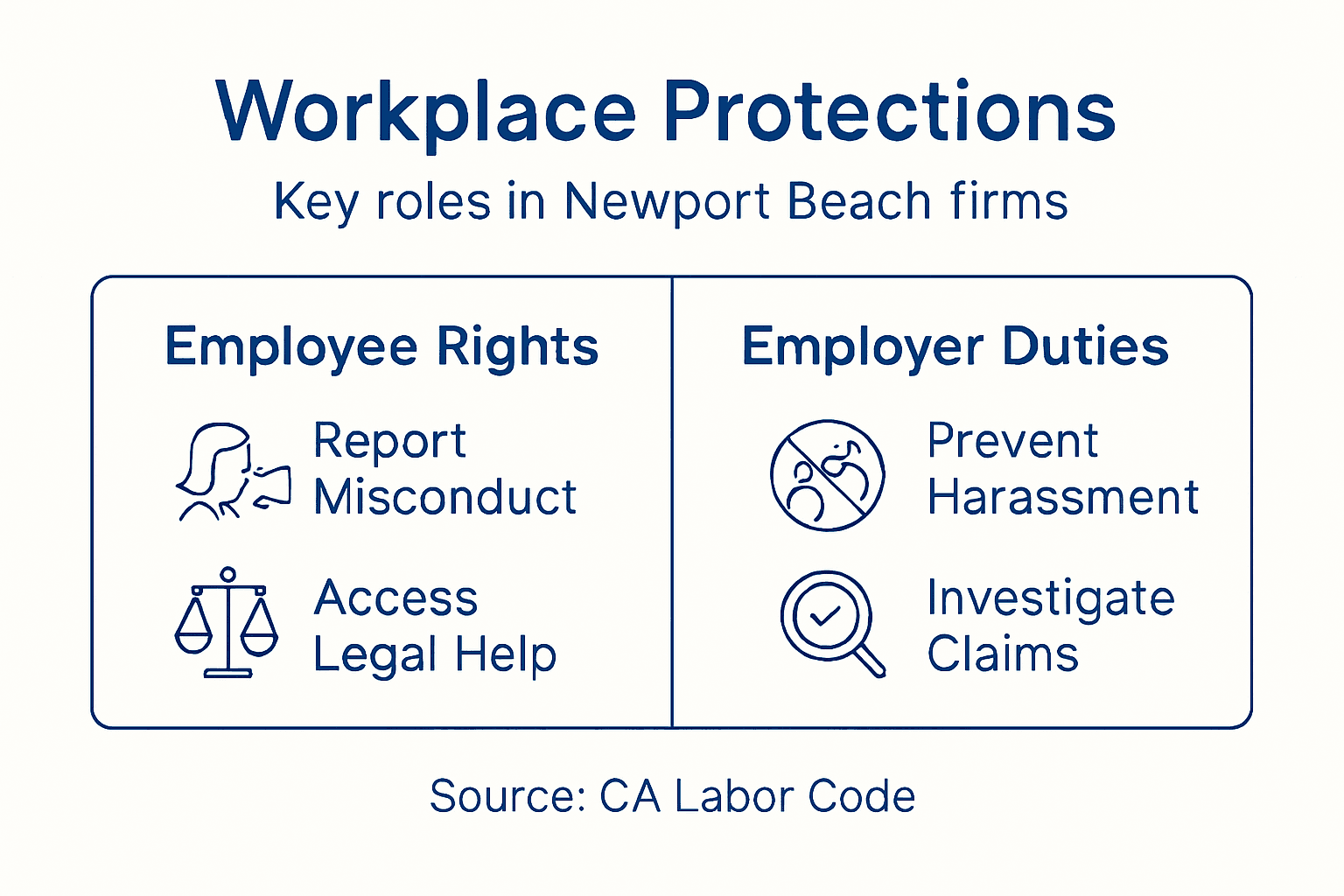
Employer liability extends beyond simple policy creation. Organizations can be held legally responsible for harassment perpetrated by supervisors, and they bear significant responsibility for creating and maintaining workplace environments that systematically prevent discriminatory behaviors.
Key Liability Considerations:
- Direct supervisor harassment creates automatic employer liability
- Failure to investigate complaints can increase legal exposure
- Retaliation against complainants is strictly prohibited
- Comprehensive documentation is crucial for legal defense
Pro tip: Maintain detailed, contemporaneous records of all workplace interactions and potential harassment incidents to strengthen potential legal protections.
Risks of Retaliation and How to Respond
Workplace retaliation represents a serious legal violation that can profoundly impact an employee’s professional and personal life. Understanding the nuanced forms of retaliatory actions is crucial for protecting one’s rights and maintaining workplace integrity.
Retaliation can manifest through multiple sophisticated mechanisms:
- Professional Retaliation
- Unexpected job termination
- Sudden performance improvement plans
- Denial of promotions
- Unwarranted negative performance reviews
- Psychological Retaliation
- Social isolation at work
- Exclusion from meetings
- Undermining professional reputation
- Creating hostile work environments
- Subtle Retaliatory Tactics
- Reducing work assignments
- Changing work schedules
- Removing professional responsibilities
- Minimizing communication
Legal Protections prohibit employers from retaliating against employees who report harassment or participate in workplace investigations. Protected activities include filing formal complaints, providing witness statements, or supporting colleagues experiencing discriminatory treatment.
Employees confronting potential retaliation must document every interaction meticulously. This includes preserving emails, recording dates of incidents, and maintaining a comprehensive timeline of events that demonstrate potential retaliatory patterns.
Strategic Response Steps:
- Document all interactions
- Report concerns to human resources
- Preserve communication evidence
- Seek external legal consultation
- File formal complaints if necessary
Pro tip: Create a secure, confidential digital file documenting potential retaliatory actions, including dates, specific incidents, and potential witnesses to strengthen potential legal claims.
Protect Your Rights Against Sexual Harassment in Newport Beach Workplaces
Sexual harassment in Newport Beach firms creates serious challenges that no employee should face alone. When unwelcome advances, hostile work environments, or retaliation threaten your professional dignity and wellbeing you need clear legal guidance tailored to your situation. Understanding your rights under federal, California, and local Newport Beach laws is essential for effective protection and meaningful resolution.
At Serendib Law Firm we specialize in addressing these exact issues with personalized and zealous advocacy. Our experienced team helps clients navigate complex harassment claims and employer obligations to stop harassment and prevent retaliation. Explore our Sexual Harassment Archives and Harassment Archives for detailed insights. When you are ready take the first step toward justice by contacting us directly through our Newport Beach Archives page or visit https://www.serendiblaw.com/ for a free consultation. Act now to protect your rights and secure the workplace respect you deserve.
Frequently Asked Questions
What are the legal steps to take if I experience sexual harassment at work?
If you experience sexual harassment at work, document each incident with specific details, report the behavior to your HR department, and consider filing a formal complaint. You may also seek legal advice to understand your rights and options.
How can I prove that I was sexually harassed in the workplace?
To prove sexual harassment, maintain detailed documentation that includes dates, times, and descriptions of incidents, along with any supporting evidence such as emails or witness information that corroborates your claims.
What protections do employees have against retaliation after reporting sexual harassment?
Employees are legally protected from retaliation after reporting sexual harassment. This includes protection against termination, demotion, or any negative performance reviews related to the reporting of harassment.
What types of behaviors constitute sexual harassment?
Sexual harassment can include unwanted sexual advances, inappropriate touching, suggestive comments, and creating a hostile work environment through persistent sexual behavior. Both overt and subtle actions can fall under this category.
Recommended
- Orange County Sexual Harassment | Serendib Law Firm
- Sexual Harassment FAQs | Serendib Law Firm
- Understanding Sexual Harassment Claims in Hospitality Post-#MeToo | Serendib Law Firm
- How to Prove Workplace Harassment in California: A Legal Guide for Employees – Los Angeles Employment Lawyers | California United Law Group, P.C.