

Few fruits carry as much cultural weight, nutritional density, and culinary versatility as the orange. Residents of Orange, California know this better than most. The city itself was named in part because of the sprawling citrus groves that once defined the region’s identity. Yet most people still reduce this fruit to a glass of morning juice and move on. That undersells what oranges actually offer, from their remarkable vitamin C content to their role in heart health, cognitive function, and everyday cooking.
Table of Contents
- Key takeaways
- What’s actually in an orange
- Health benefits backed by research
- Cooking and eating oranges every day
- Orange juice: the trade-offs you should know
- Oranges and their roots in Orange, California
- My take on oranges after years of watching people get this wrong
- Living in Orange, CA? Your rights matter too
- FAQ
Key takeaways
| Point | Details |
|---|---|
| Vitamin C powerhouse | A medium orange delivers over 80 mg of vitamin C, well above the average adult’s daily requirement. |
| Whole fruit beats juice | Whole oranges retain fiber, flavonoids, and better sugar balance compared to processed juice. |
| Heat destroys nutrients | Thermal pasteurization reduces vitamin C in juice by up to 70%; freshly squeezed is far superior. |
| Hesperidin supports heart health | Orange bioactives like hesperidin can reduce insulin resistance and support cardiovascular function. |
| Local roots run deep | Orange, CA has a direct agricultural and cultural connection to citrus that still shapes the community today. |
What’s actually in an orange
Most people know oranges contain vitamin C. Few realize just how much. A 140g navel orange delivers 82.7 mg of vitamin C, 47.6 mcg of folate, 232 mg of potassium, and meaningful amounts of dietary fiber. That single piece of fruit covers the basics of what your body needs to maintain blood vessels, support nerve function, and regulate fluid balance.
Here is what you get in a standard medium orange:
- Vitamin C: Over 80 mg, exceeding the average adult daily recommendation of 40 mg
- Folate: Critical for cell division and especially important during pregnancy
- Potassium: Supports heart rhythm and blood pressure regulation
- Dietary fiber: Roughly 3 grams, which slows sugar absorption and feeds gut bacteria
- Flavonoids: Plant compounds including hesperidin and naringenin that act as antioxidants
The difference between eating a whole orange and drinking a glass of commercial orange juice is larger than most people expect. Heat processing reduces vitamin C in orange juice by 50 to 70%, while non-thermal methods retain over 90%. That means a pasteurized carton of OJ from the grocery store delivers a fraction of the vitamin C you would get from peeling the actual fruit.
Pro Tip: Store whole oranges at room temperature if you plan to eat them within a week. Refrigeration extends shelf life but slightly mutes flavor. Either way, eat the whole fruit rather than juicing it to keep the fiber and flavonoids intact.
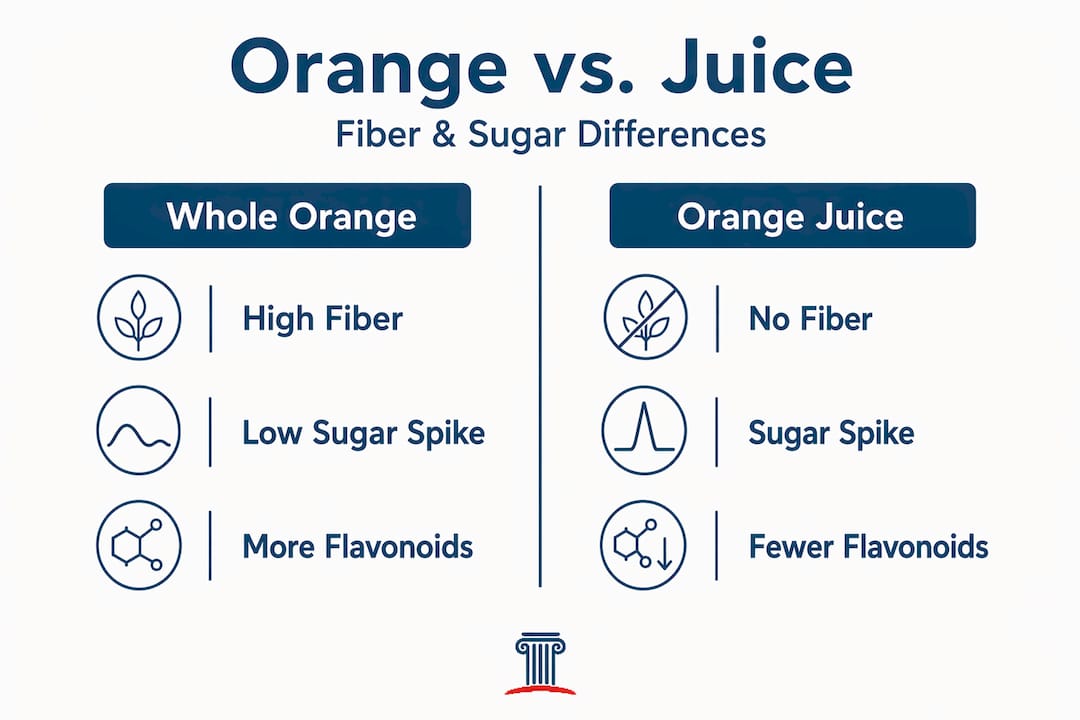
The fiber in whole oranges also plays a role that juice simply cannot replicate. Fiber slows the release of natural sugars into the bloodstream, which matters enormously for people managing blood sugar levels. The pulp that most juice manufacturers filter out is precisely where a significant portion of the flavonoids live.

Health benefits backed by research
The health benefits of oranges go well beyond preventing colds. Vitamin C’s role in the body is far broader than immune support. Mayo Clinic confirms that vitamin C supports wound healing, blood vessel integrity, and the metabolism of carbohydrates, fats, and proteins. A deficiency leads to scurvy, but even sub-optimal intake affects how efficiently your body repairs tissue and maintains collagen.
Orange bioactives, particularly hesperidin, have drawn serious scientific attention. A systematic review found that hesperidin reduces insulin resistance at doses over 500 mg daily, which has real implications for people at risk of type 2 diabetes. Hesperidin also appears to support arterial flexibility and reduce LDL cholesterol oxidation, both of which matter for long-term heart health.
What about orange juice specifically? The research is more nuanced than headlines suggest. A meta-analysis of 10 randomized controlled trials found that daily intake of 500 ml orange juice was linked to lower blood glucose, improved insulin function, and lower LDL cholesterol. That is a meaningful finding, even accounting for the sugar content.
The key distinctions worth understanding:
- Whole fruit provides fiber, which blunts the glycemic impact of natural sugars
- Fresh-squeezed juice retains more vitamin C and flavonoids than pasteurized commercial products
- Commercial pasteurized juice loses significant antioxidant activity due to heat
- Isolated hesperidin supplements show specific cardiometabolic effects but lack the synergy of whole food
There is also emerging evidence linking regular citrus consumption to cognitive benefits. The flavonoids in oranges appear to cross the blood-brain barrier and reduce neuroinflammation, which researchers associate with lower risk of age-related cognitive decline. This is not a claim that oranges prevent dementia, but the pattern in population studies is consistent enough to take seriously.
Cooking and eating oranges every day
You do not need elaborate recipes to get the most from oranges. The simplest approach is often the best. Peel and eat a whole orange as a snack. Add orange segments to a salad with arugula, walnuts, and a light vinaigrette. Zest the peel into oatmeal or yogurt for a concentrated burst of flavor and bioactives.
For those who enjoy cooking, here are practical ways to work oranges into daily meals:
- Morning smoothie with pulp: Blend a whole peeled orange (not juice) with banana, Greek yogurt, and a handful of spinach. Keeping the pulp preserves fiber and the natural sugar profile stays balanced.
- Orange-glazed salmon: Reduce fresh orange juice with a little honey and soy sauce. The natural acids tenderize the fish while the sugars caramelize into a light glaze.
- Citrus vinaigrette: Whisk fresh orange juice with olive oil, Dijon mustard, and a pinch of salt. This works on grain bowls, roasted vegetables, and grilled chicken.
- Orange zest in baking: The zest contains concentrated essential oils and flavonoids. Adding it to muffins, pancakes, or banana bread adds depth without adding sugar.
- Infused water: Drop orange slices into a pitcher of cold water for a subtle flavor that makes it easier to hit daily hydration goals.
Pro Tip: When squeezing oranges for juice at home, leave as much pulp in the glass as possible. Pulp retains flavonoids and fiber that a strainer removes. Freshly squeezed juice with pulp is nutritionally closer to eating the whole fruit than any commercial product.
Recipes that retain pulp preserve fiber and flavonoids, contributing to satiety and a better sugar profile than clear juice. That is the practical takeaway for anyone trying to eat smarter without overhauling their entire diet.
Orange juice: the trade-offs you should know
Orange juice occupies a strange space in nutrition. It is marketed as healthy, criticized for sugar content, and defended by research showing genuine cardiometabolic benefits. The truth sits in the middle, and understanding the trade-offs helps you make smarter choices.
| Factor | Whole orange | Fresh-squeezed juice | Commercial pasteurized juice |
|---|---|---|---|
| Vitamin C | High | High | Reduced by 50 to 70% |
| Fiber | 3g per fruit | Minimal | Minimal |
| Sugar impact | Low glycemic | Moderate | Moderate to high |
| Flavonoids | High | Moderate | Lower due to heat |
| Satiety | High | Low | Low |
Harvard Health recommends prioritizing whole fruit over juice and limiting juice intake to 4 to 8 ounces daily. For most healthy adults, a small glass of 100% orange juice is not a problem. For people managing diabetes or insulin resistance, the fiber-free sugar load of juice deserves more caution.
“When we talk about the health benefits of oranges, the form matters as much as the fruit itself. Whole fruit, fresh juice, and commercial juice are not interchangeable.” — BBC Future
The processing method also matters more than most consumers realize. Non-thermal processing methods like pulsed light retain over 90% of vitamin C, compared to 41% after standard thermal pasteurization. If you are buying juice specifically for its nutritional value, cold-pressed or freshly squeezed is the only version that delivers what the label implies.
Oranges and their roots in Orange, California
The city of Orange, California did not get its name by accident. In the late 1800s and early 1900s, the entire region was blanketed with citrus groves. Orange County was one of the most productive citrus-growing areas in the United States, and the fruit shaped the local economy, architecture, and identity for generations.
Today, the agricultural footprint has shrunk significantly as development replaced groves. But the cultural connection remains strong. Local farmers markets in Orange, CA still feature fresh citrus from nearby growers. Community health programs in the city actively promote fruit consumption as part of broader wellness initiatives. Schools in the area incorporate local food history into curriculum, keeping the citrus legacy alive for younger generations.
For residents of Orange looking to source fresh, locally grown citrus:
- The Orange Home Grown Farmers and Artisans Market runs weekly and regularly features citrus vendors from nearby farms
- Several community gardens in the city maintain citrus trees that residents can access through membership programs
- Local co-ops and health-focused grocers in the area often stock fruit from farms in the Inland Empire and Ventura County
The connection between local food culture and community health is not just sentimental. Access to fresh, affordable produce directly affects how well people eat. When oranges are part of the local identity, they are also more likely to be part of the local diet.
My take on oranges after years of watching people get this wrong
I have spent years watching people make the same mistake with oranges. They pour a large glass of commercial orange juice every morning, feel virtuous about it, and then wonder why their blood sugar is inconsistent or their weight is not moving. The juice is not the villain, but it is not the hero either.
What I have learned is that the whole orange is genuinely underrated. Not because it is a superfood or a cure for anything, but because it delivers a package of nutrients, fiber, and bioactives that no processed version can fully replicate. The hesperidin in the pith, the fiber in the pulp, the vitamin C that degrades the moment you apply heat. These things matter, and they are only present in the whole fruit.
In Orange, California specifically, there is something worth reclaiming here. The city grew up around citrus. That agricultural heritage is not just history. It is a reminder that fresh, whole fruit was once the default, not the premium option. Eating a whole orange instead of reaching for a carton of juice is not a sacrifice. It is actually getting more out of the fruit.
The cognitive and cardiovascular research on orange bioactives is still developing, but the direction is consistent. People who eat whole citrus regularly tend to do better on a range of health markers. That is not a coincidence.
Living in Orange, CA? Your rights matter too
Orange, California has deep roots in agriculture and community, and the people who live and work here deserve strong advocacy on every front, including in the workplace. At Serendib law, our Orange employment law attorneys represent employees facing wrongful termination, workplace discrimination, harassment, and retaliation. We serve the Orange community with the same dedication that has defined this city for generations. If you are dealing with a workplace issue and are unsure of your rights under California law, you can explore the types of employment claims available to workers in this state. Free consultations are available, and we handle select cases on contingency so that cost is never a barrier to getting the help you need.
FAQ
How much vitamin C does one orange contain?
A medium navel orange contains approximately 82 to 83 mg of vitamin C, which exceeds the average adult daily recommendation of 40 mg. Eating one orange per day covers your baseline vitamin C needs from a single food source.
Is orange juice as healthy as eating a whole orange?
No. Whole oranges retain fiber, flavonoids, and more vitamin C than processed juice. Commercial pasteurized juice loses 50 to 70% of its vitamin C due to heat, and the absence of fiber means the natural sugars absorb faster into the bloodstream.
What are the main health benefits of oranges?
Oranges support wound healing, blood vessel integrity, and immune function through vitamin C. The flavonoid hesperidin has been shown to reduce insulin resistance and support heart health, while regular citrus consumption is associated with improved cognitive markers over time.
How much orange juice is safe to drink daily?
Harvard Health recommends limiting juice intake to 4 to 8 ounces per day for most healthy adults. People managing diabetes or blood sugar concerns should be more cautious and prioritize whole fruit over juice to avoid the glycemic impact of fiber-free sugar.
Can you cook with oranges without losing nutrients?
Yes, though heat does degrade some vitamin C. Using orange zest in cooking preserves flavonoids and essential oils without significant nutrient loss. For maximum nutritional benefit, add fresh orange juice or segments at the end of cooking rather than at the start.