
Audio summary
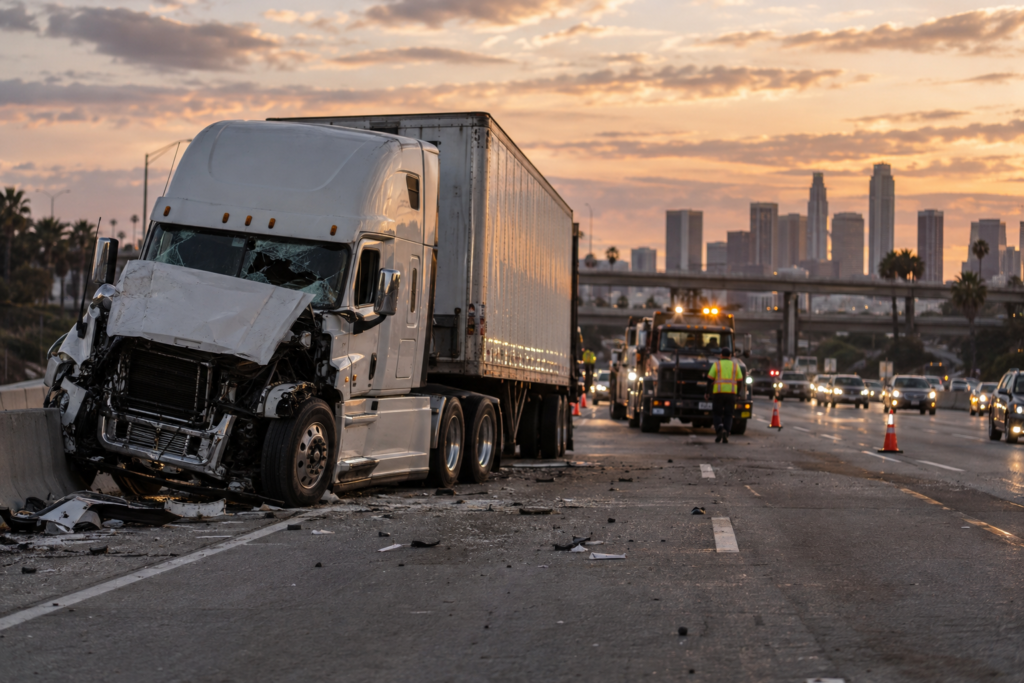
Truck crashes around Orange, CA are very different from typical fender-benders. When a semi or delivery truck collides with a car near the I-5/57/22 interchange by The Outlets at Orange or on routes feeding Old Towne and Chapman University, injuries are often severe and multiple companies and insurance policies may be involved. Understanding fault, insurance, damages, and deadlines can help you make informed decisions after a collision. For general background on Orange, see the Wikipedia article about Orange.
How Fault Works in California Truck Accident Cases
California is a fault-based state for motor vehicle collisions, including truck crashes. After a wreck in Orange, the focus is on who was negligent and how responsibility is divided among the people and businesses involved.
Most injured people seek compensation from the at-fault party’s liability insurance. Optional coverages on your own policy—such as medical payments coverage (med-pay) or uninsured/underinsured motorist coverage (UM/UIM)—can help when the trucking insurer disputes liability or policy limits are too low.
Pure Comparative Negligence
California follows pure comparative negligence. Your compensation is reduced by your percentage of fault but is not eliminated unless you are found 100% responsible.
Example: if a jury finds you 20% at fault for a crash with a tractor-trailer during an unsafe lane change near the 57/22 junction, a $200,000 damages award would be reduced by 20%, leaving $160,000.
This system makes evidence critical. Photos, witness statements, logbooks, and electronic data that show how the truck crash occurred can limit an insurer’s ability to push more blame onto you.
Who May Be Liable After a Truck Accident
Unlike a simple car-versus-car crash, a truck accident often involves several potentially liable parties. Trucks are usually part of a commercial operation, with responsibility spread across drivers, carriers, and other businesses.
The Truck Driver
The driver may be negligent for speeding, tailgating, distraction, fatigue, or violating trucking rules on rest breaks, inspections, and cargo securement. A driver rushing to complete deliveries near The Outlets at Orange or commercial properties off Anita Drive may cut corners on rest or inspection, increasing the risk of a serious collision.
The Trucking Company (Motor Carrier)
Employers are generally liable for employees acting within the course and scope of their employment under California’s respondeat superior doctrine. That usually includes a commercial driver hauling freight, making local deliveries, or repositioning equipment.
A motor carrier can also be directly liable if it:
- Fails to train or supervise drivers adequately
- Imposes unrealistic delivery schedules that encourage unsafe driving
- Ignores safety red flags in a driver’s record
- Skips or skimps on inspections and maintenance
In serious Orange-area crashes, the carrier’s commercial liability coverage often provides the main source of compensation.
Independent Contractors and Owner-Operators
Many carriers classify drivers as independent contractors or use owner-operators who lease their trucks. Whether that classification shields the company from liability depends on how much control the company exerts, how California’s employment tests apply, and how federal trucking rules assign responsibility to the carrier operating under its USDOT authority.
Even when a driver is labeled an independent contractor, regulations can still make the motor carrier responsible. Injured people should not assume that contractor status blocks claims against the carrier.
Shippers, Brokers, and Maintenance Contractors
Other businesses can share fault when their negligence contributes to a crash, such as freight brokers or shippers that negligently hire unsafe carriers or fail to vet safety records; maintenance shops that perform poor brake work, tire service, or inspections; and trailer owners whose defective equipment (lights, tires, brakes) plays a role in the collision.
Identifying all negligent entities can be crucial when a crash near CHOC’s main campus or the streets around Old Towne Orange causes catastrophic injuries that exceed a single policy’s limits.
Public Entities and Road Conditions
Sometimes roadway design or maintenance contributes to a truck crash. Inadequate signage, poor drainage, or visibility problems on ramps or arterials can increase collision risk for heavy trucks mixing with commuter traffic headed toward Plaza Park, Chapman University, or the Orange station area.
Claims involving dangerous road conditions or government-owned vehicles trigger special government-claim procedures and shorter deadlines, discussed below.
Insurance Layers in Truck Accident Claims
Truck crashes usually involve higher policy limits and more complex insurance structures than ordinary auto collisions. Because heavy commercial vehicles can cause devastating harm, state and federal rules require substantial liability coverage.
Federal Minimum Insurance Requirements
Most for-hire interstate motor carriers operating vehicles over 10,000 pounds must maintain at least $750,000 in liability insurance. Carriers hauling certain hazardous materials must carry higher minimums, often $1 million or more. These are minimums only; many carriers purchase higher limits or excess coverage above the primary policy.
Common Insurance Layers in a Truck Case
A single tractor-trailer crash can implicate multiple policies, including:
The motor carrier’s primary liability policy on the tractor
Excess or umbrella policies that activate after the primary limits are exhausted
Separate liability coverage for the trailer’s owner if different from the carrier
Policies held by shippers, brokers, or maintenance companies that were negligent
Your own med-pay, health insurance, and UM/UIM coverage when at-fault insurance is contested or insufficient
Policy language and coverage triggers are technical, and the primary trucking insurer has no duty to explain all available coverage to you.
Comparing Insurance in Truck vs. Car Crashes
| Aspect | Typical Car Accident | Truck Accident |
|---|---|---|
| Main Liability Coverage | Individual driver’s auto policy, often modest limits | Commercial motor carrier policy, usually higher limits with regulatory requirements |
| Additional Insurance Layers | Occasional umbrella policy; often none | Excess/umbrella coverage, trailer owner policies, broker/shipper coverage |
| Own Policy Involvement | Med-pay and UM/UIM sometimes used | Med-pay, health insurance, UM/UIM often critical if liability or limits are disputed |
| Claims Handling | Standard auto adjuster | Trucking insurers with rapid-response teams and aggressive defense |
Damages You May Seek After a Truck Crash
California law allows injured people to seek compensatory damages for losses caused by another party’s negligence, including both economic and non-economic harm. In fatal cases, specific wrongful death and survival remedies may be available.
Economic Damages
Economic damages are financial losses proven with bills, records, and expert projections, such as past and future medical expenses, lost wages during recovery, diminished earning capacity if injuries limit future work, and property damage, including repair or replacement of your vehicle and other items.
A crash on I-5 near Orange that sends a commuter to a trauma center and then to ongoing care at facilities near CHOC can generate extensive medical expenses, all potentially recoverable as economic damages.
Non-Economic Damages
Non-economic damages compensate for harms without a fixed price tag, including pain and suffering; emotional distress; loss of enjoyment of life when you cannot return to activities you value; and, in some cases, harm to close family relationships.
For people who regularly walk in Old Towne, attend events around Plaza Park, or participate in campus life at Chapman University, lasting limitations on mobility or stamina after a truck crash can significantly change daily life. Non-economic damages address these losses.
Wrongful Death and Survival Actions
When a truck collision is fatal, surviving family members may pursue wrongful death claims for funeral and burial expenses, loss of financial support, and loss of the decedent’s love, companionship, and guidance. Survival actions can allow recovery for certain losses the decedent suffered between injury and death.
Punitive Damages in Limited Circumstances
Punitive damages are only available in cases involving oppression, fraud, or malice. In the trucking context, that can include conduct such as intoxicated driving or knowingly putting unsafe trucks on the road. Patterns of ignoring serious maintenance issues or falsifying driver logs can become relevant when evaluating potential punitive claims.
Strict Deadlines and Special Rules in Truck Cases
Time limits are critical in California truck cases. Missing a deadline can bar recovery regardless of how strong the liability evidence is.
Two-Year Personal Injury Statute of Limitations
For most personal injury claims from a truck crash, the statute of limitations is two years from the collision date. If you were struck by a box truck while driving toward Old Towne on Chapman Avenue, you generally have two years from that date to file a lawsuit against responsible parties.
Waiting can be harmful even before the deadline: witnesses’ memories fade, vehicles are repaired or destroyed, and electronic data (like logs and telematics) may be overwritten. Early investigation helps preserve critical trucking-specific evidence.
Six-Month Deadline for Government Claims
When a public entity may share fault—for example, due to a dangerous city-maintained road or a government-operated vehicle—California’s government claims process usually applies. In many such cases, you must file a written claim with the entity within six months of the crash. Only after the claim is resolved or deemed rejected can you file a lawsuit, which has its own deadlines.
Exceptions and Special Situations
Limited exceptions can extend or alter deadlines in situations such as certain claims by minors or some delayed-discovery scenarios. These exceptions are narrow and fact-specific and should not be assumed without individualized legal guidance.

Step-by-Step Actions After a Truck Accident in Orange
The following general steps are based on safety and consumer guidance and are not legal advice, but they can help protect your health and potential claim.
- Prioritize safety and medical care. Move to a safer location if you can do so without worsening injuries. Call 911 so law enforcement and medical responders can assist. Even if you feel “okay,” consider prompt medical evaluation because some injuries appear later.
- Gather information if it is safe. Obtain the truck driver’s name, contact information, driver’s license number, employer, and insurance details. Note the truck’s license plate, any USDOT or company numbers, and trailer markings. Photograph vehicle positions, damage, skid marks, and nearby signs or intersections.
- Identify witnesses. Ask bystanders or other drivers for contact information. Independent witnesses can be critical when liability is disputed, especially at complex interchanges near The Outlets at Orange.
- Report the collision to your insurer. Most policies require prompt notice. Provide basic facts without speculating about fault. Be cautious about giving recorded statements to the trucking company’s insurer before understanding your rights.
- Track medical care and limitations. Keep discharge papers, prescriptions, and follow-up instructions from emergency departments and clinics in Orange and surrounding areas. Note how pain, mobility issues, or emotional symptoms affect work, school, and daily activities.
- Preserve evidence and be wary of quick settlements. Avoid authorizing destruction of your vehicle or other key evidence before considering how it may affect your claim. Be cautious with early settlement offers that arrive before your long-term prognosis and needs are clear.
- Consider legal guidance. Because truck crashes frequently involve multiple defendants, regulatory issues, and layered insurance, many people consult a lawyer experienced in truck cases before dealing extensively with insurers.
Why Truck Cases Around Orange Are Especially Complex
Truck accident litigation is more complex than typical car crash claims, and Orange’s location at the convergence of several freeways adds to the challenges.
Heavier Vehicles and Stricter Safety Rules
Large trucks weigh far more than passenger vehicles, increasing crash forces. Federal and state regulations impose detailed safety standards on carriers, including driver qualifications and commercial licensing, hours-of-service limits to reduce fatigue, inspection duties, maintenance and repair requirements, and rules on loading and securing cargo.
After a crash, attorneys and experts may analyze logbooks, electronic logging device data, GPS records, and maintenance files to determine whether these rules were followed, going beyond the evidence typical in a car-only claim.
Rapid-Response Teams and Aggressive Defense
Because policy limits are high and potential exposure is significant, many trucking insurers respond aggressively. They may send rapid-response teams to the scene of a major collision, hire experts immediately, and begin building a defense while injured people are still receiving treatment.
For example, after a serious crash near the I-5/57/22 interchange that backs up traffic toward Old Towne and Chapman University, the trucking company’s representatives may be on-site documenting evidence with the goal of reducing or disputing liability.
Impact on the Local Community
Orange is at the junction of major freeways, including State Route 57, State Route 22, Interstate 5, and nearby State Route 55. The Old Towne Historic District, Chapman University, Plaza Park, and the Children’s Hospital of Orange County (CHOC) sit near these corridors. Traffic from neighborhoods and institutions funnels through a limited number of major arteries toward the freeway network, so a single truck collision near key junctions can disrupt access to Old Towne, CHOC, and other local hubs, affecting students, commuters, and families.
How an Orange-Based Firm Can Help
Truck accidents sit at the intersection of personal injury law, employment and agency principles, and transportation regulations, and local context can matter.
Serendib Law Firm, located at 333 S Anita Dr in Orange, is minutes from the freeways and commercial corridors where many regional truck routes converge. Its personal injury practice includes a focus on truck accidents, as well as related matters such as car accidents, pedestrian accidents, and motorcycle accidents.
Because the firm also handles employment-law issues for local workers, its attorneys are familiar with employer control, independent contractor classifications, and corporate structures—topics that frequently arise when determining whether a trucking company, broker, or shipper can be held liable for a driver’s conduct.
Even if your crash occurred outside Orange but within the broader region, the same core principles apply: carefully analyzing comparative negligence, identifying all viable defendants, and coordinating multiple insurance layers can be crucial to pursuing full compensation.
Disclaimer
This article provides general information about truck accidents, liability, insurance, and compensation in California, with examples drawn from Orange and surrounding areas. It is not legal advice for any particular situation and does not create an attorney-client relationship with Serendib Law Firm or any other lawyer. Outcomes depend on the specific facts of each case, and laws or interpretations may change. If you have been involved in a truck crash, consult a qualified attorney about your circumstances before making decisions about insurance, settlement, or litigation.
FAQ: Truck Accidents in Orange, CA
Do I sue the truck driver or the trucking company after a crash?
Often both. Under California’s respondeat superior doctrine, an employer is generally liable for an employee’s negligence within the scope of employment, which usually includes on-duty truck driving. Depending on the facts, other entities—such as shippers, brokers, maintenance companies, and trailer owners—may also share liability. Identifying proper defendants requires reviewing contracts, safety practices, and regulatory status.
What if I was partly at fault for the truck accident?
Because California follows pure comparative negligence, you can usually still recover damages even if you were partly to blame. Your recovery is reduced by your percentage of fault. A driver found 30% responsible for a collision could still recover 70% of proven damages from other negligent parties. Insurers may try to exaggerate your share of fault, so evidence and early investigation are important.
How do commercial insurance policies affect my claim?
Commercial motor carriers must carry higher liability limits than ordinary drivers, and many have excess or umbrella policies. This can mean more coverage for serious injuries than in a typical car crash. At the same time, trucking insurers often use rapid-response investigations and experienced defense teams to limit payouts. Understanding primary and excess policies, limits, and exclusions is key when evaluating settlement offers and litigation options.
What kinds of compensation are available in a truck accident case?
Potential compensation includes economic damages such as past and future medical expenses, lost income, and reduced earning capacity, as well as non-economic damages for pain, suffering, and loss of enjoyment of life. When a truck crash is fatal, wrongful death and survival remedies can provide compensation for funeral and burial expenses, loss of financial support, and loss of companionship. In rare cases involving especially egregious conduct, punitive damages may be considered.
How long do I have to file a truck accident lawsuit in California?
Most personal injury claims must be filed within two years of the collision. If a public entity may be responsible—for example, due to a dangerous road condition or a government-operated truck—a written government claim is often required within six months, followed by separate lawsuit deadlines. Exceptions exist but are narrow and fact-dependent. Because evidence can disappear quickly, it is prudent to explore your options well before any deadline approaches.
Should I talk to the trucking company’s insurance adjuster?
You typically must give your own insurer basic information about the crash to comply with your policy. You are not required, however, to provide a recorded statement to the trucking company’s insurer. Doing so before you understand your rights can be risky, because questions may be framed to shift blame or minimize your injuries. Many people choose to consult a lawyer first, who can manage communications and help ensure preservation of key evidence such as logs, electronic data, and maintenance records.
Where can I learn more about Orange, CA and its road network?
Public sources such as the Wikipedia entry for Orange, California describe the Old Towne Historic District, landmarks like Chapman University and CHOC, and the nearby freeway network, including State Routes 22, 55, 57, and Interstate 5. This general context can help you understand where and how serious truck crashes intersect with daily travel in the community.