Facing sudden changes at work after joining union efforts can leave any Anaheim hospitality worker feeling isolated and unsure. The push for better wages, hours, and safety conditions is strong, especially as seen with recent actions at West Anaheim Medical Center. Understanding your rights to protected union activity is key to navigating retaliation risks and safeguarding your employment under California law.
Table of Contents
- Union Activity In Anaheim Hospitality Jobs
- Types Of Protected Union Activity At Work
- Employer Retaliation: Forms And Red Flags
- California And Federal Worker Protection Laws
- Filing Retaliation Claims And Legal Remedies
Key Takeaways
| Point | Details |
|---|---|
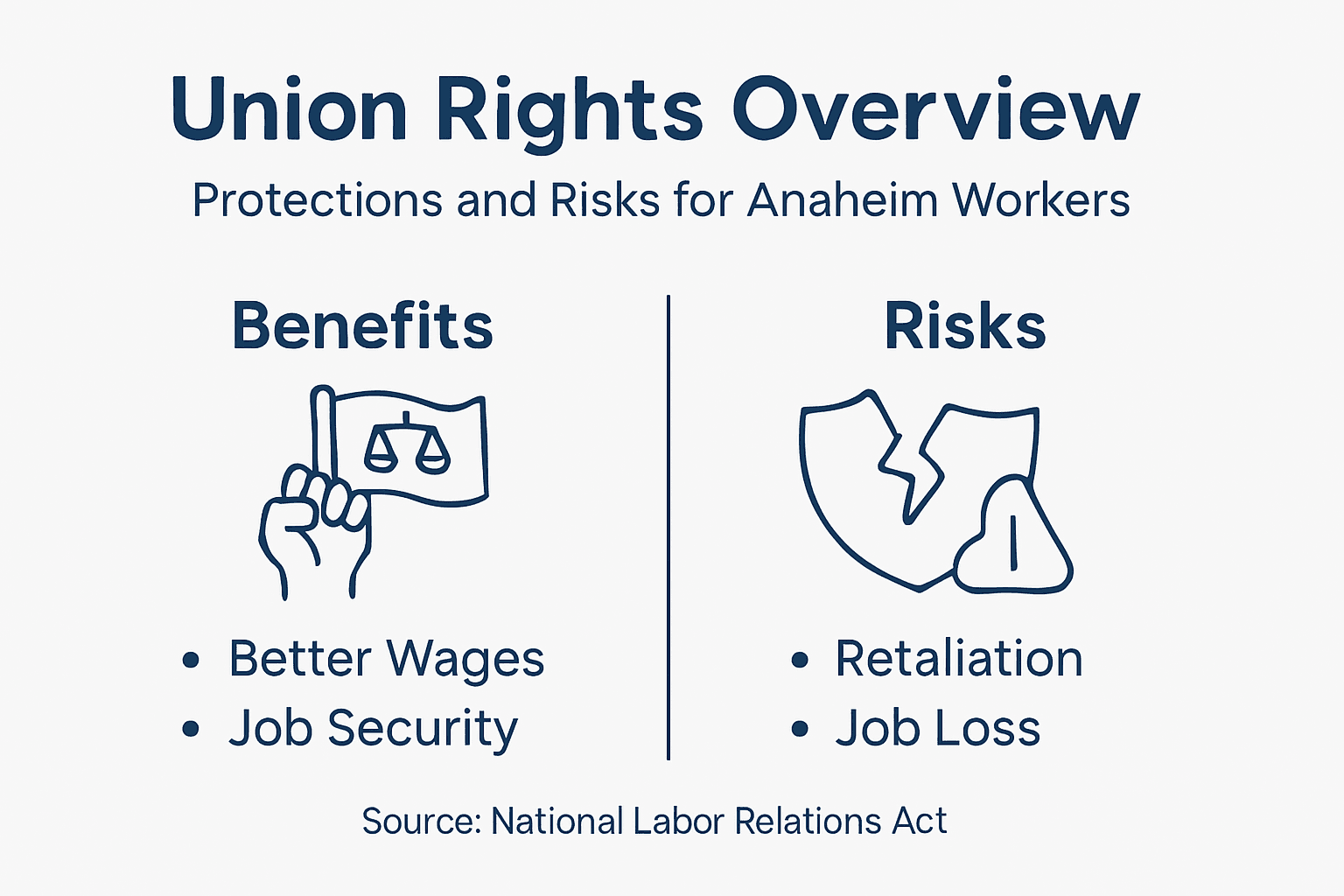
| Union Activity Benefits | Collective bargaining empowers hospitality workers to negotiate better wages, job security, and working conditions. |
| Protected Rights | Workers can engage in protected union activities, such as discussing wages and filing grievances without fear of retaliation. |
| Recognition of Retaliation | Employees must recognize forms of employer retaliation, such as sudden terminations and hostile environments, to protect their rights. |
| Legal Avenues for Claims | Workers in Anaheim can file complaints with various agencies for retaliation, discrimination, or workplace safety violations, leveraging legal protections. |
Union Activity in Anaheim Hospitality Jobs
Union activity in Anaheim’s hospitality sector represents a critical effort by workers to secure better working conditions, fair compensation, and workplace protections. Nurses at West Anaheim Medical Center have exemplified this trend by staging strikes to address staffing and safety concerns, demonstrating the active labor organizing happening across service industries.
Hospitality workers in Anaheim face unique challenges that make union representation particularly important. These challenges include:
- Inconsistent scheduling practices
- Low base wages
- Limited healthcare benefits
- Minimal job security
- Workplace safety concerns
The statistical backdrop reveals significant trends in union membership across service occupations. According to the U.S. Bureau of Labor Statistics, service sector workers continue to recognize collective bargaining as a powerful mechanism for improving workplace standards. Union representation allows employees to negotiate more effectively with management, creating structured channels for addressing workplace grievances.
Collective bargaining gives hospitality workers a unified voice in discussing critical employment issues. By organizing, workers can collectively negotiate contracts that provide more comprehensive protections and benefits than individual employees could achieve independently.
Pro tip: Document every workplace interaction and potential labor violation meticulously, as these records can become crucial evidence if you need to file a formal complaint or seek legal representation.
Types of Protected Union Activity at Work
Under federal labor law, employees have critical protections when engaging in union activities. Protected concerted activities encompass a wide range of actions workers can take to improve workplace conditions without fear of employer retaliation.
These protected activities include several key actions:
- Discussing wages and working conditions with coworkers
- Filing workplace grievances collectively
- Signing petitions about workplace issues
- Participating in strike activities
- Distributing union literature
- Wearing union insignia or buttons
- Attending union meetings
- Requesting workplace investigations
The National Labor Relations Act ensures workers can engage in these activities to promote their collective interests. Concerted actions are particularly important because they allow employees to act together in addressing workplace concerns, creating a unified approach to negotiating with management.
Workplace protections extend beyond traditional union membership. Even non-unionized workers have rights to engage in collective actions that seek to improve working conditions. This means hospitality workers in Anaheim can collaborate to address issues like scheduling, compensation, and workplace safety without risking termination or professional retaliation.
Pro tip: Keep detailed documentation of any workplace interactions related to collective workplace concerns, as these records can provide crucial evidence if legal protection becomes necessary.
Employer Retaliation: Forms and Red Flags
Employer retaliation represents a serious violation of workers’ rights in the hospitality industry. Adverse employment actions can take many subtle and direct forms that workers must recognize and understand to protect themselves.
Common forms of employer retaliation include:
- Sudden unexplained termination
- Unexpected demotion or reduction in job responsibilities
- Significant cuts in work hours or scheduling
- Negative performance evaluations without substantive basis
- Creating a hostile work environment
- Excluding employee from meetings or professional opportunities
- Increased workplace surveillance
- Spreading rumors or damaging professional reputation
Workplace intimidation frequently manifests through psychological and professional manipulation. Employers might attempt to disguise retaliatory actions as legitimate business decisions, making it crucial for workers to document interactions and track potential patterns of discriminatory behavior.

The legal landscape provides critical protections for workers who experience retaliation after engaging in protected activities. Hospitality employees in Anaheim have robust legal mechanisms to challenge unfair treatment, including filing complaints with government agencies and pursuing potential legal action against employers who violate their workplace rights.
Here’s how union activity and employer retaliation impacts hospitality workers in Anaheim:
| Aspect | Union Activity Benefit | Retaliation Risk | Legal Protection Scope |
|---|---|---|---|
| Wages & Benefits | Enables collective bargaining for better pay | Risk of wage cuts | Wage standards enforced by law |
| Job Security | Negotiated contracts increase stability | Sudden termination potential | Right to challenge unfair firing |
| Workplace Safety | Unions advocate for improved safety | Possible hostile conditions | Safety laws support worker claims |
| Voice & Representation | Offers structured grievance mechanism | Exclusion from key meetings | Legal right to organize and petition |
Pro tip: Maintain a confidential, dated record of all workplace interactions and potential retaliatory actions, including witnesses, specific incidents, and any supporting documentation.
California and Federal Worker Protection Laws
Worker protection laws create a comprehensive shield for employees in the hospitality industry, providing critical safeguards against workplace discrimination and unfair treatment. California’s Workplace Know Your Rights Act represents a powerful state-level complement to federal employment regulations, ensuring robust protections for workers.
Key protections under these laws include:
- Right to organize and form labor unions
- Protection from discriminatory retaliation
- Guaranteed minimum wage standards
- Safe working environment requirements
- Equal employment opportunity protections
- Whistleblower safeguards
- Protection regardless of immigration status
- Mandatory workplace rights notifications
Federal laws like the National Labor Relations Act (NLRA) and Title VII of the Civil Rights Act provide foundational protections that apply across all states. These federal regulations establish minimum standards for workplace treatment, preventing employers from engaging in discriminatory or retaliatory practices against workers who assert their legal rights.
California’s additional state-level protections often extend beyond federal minimums, creating a more comprehensive legal framework for employee rights. This multilayered approach ensures that hospitality workers in Anaheim have multiple legal mechanisms to challenge workplace misconduct and protect their professional interests.
Pro tip: Familiarize yourself with both federal and state worker protection laws, as understanding your comprehensive rights can provide multiple avenues for addressing workplace challenges.
Filing Retaliation Claims and Legal Remedies
Navigating workplace retaliation claims requires understanding the specific legal procedures and timelines for seeking justice. Employees can file retaliation complaints with various government agencies, each offering distinct pathways for addressing workplace misconduct.
The primary steps for filing a retaliation claim include:
- Document all instances of retaliatory behavior
- Gather supporting evidence and witness statements
- Identify the specific protected activity that triggered retaliation
- Determine the appropriate filing agency
- Prepare detailed written documentation
- File the complaint within required time frames
- Maintain copies of all submitted materials
- Follow up consistently with investigating agencies
Legal remedies for retaliation can encompass multiple forms of compensation and correction. Potential outcomes might include reinstatement to a previous position, back pay, compensation for emotional distress, and potential punitive damages against the employer.
Hospitality workers in Anaheim have multiple legal avenues, including filing complaints with the Department of Labor, the Equal Employment Opportunity Commission (EEOC), or pursuing direct civil litigation. Each pathway offers different potential outcomes, making it crucial to understand the specific strengths and limitations of each approach.
Below is a quick reference to where Anaheim hospitality workers can seek support for workplace issues:
| Issue Type | Primary Filing Agency | Example Outcome |
|---|---|---|
| Retaliation after union activity | National Labor Relations Board (NLRB) | Job reinstatement, back pay |
| Discrimination claims | Equal Employment Opportunity Commission (EEOC) | Compensation, policy changes |
| Wage or overtime violations | Department of Labor (DOL) | Recovered unpaid wages |
| Unsafe working conditions | California Division of Occupational Safety and Health | Workplace inspections, corrective orders |
Pro tip: Consult with an employment law specialist who can help you navigate the complex legal landscape and determine the most strategic approach for your specific retaliation claim.
Protect Your Rights in Anaheim Hospitality Workplace Challenges
Workers in the Anaheim hospitality sector often face serious issues like retaliation, unfair dismissal, and threats to job security when engaging in union activity or asserting workplace rights. This article highlights critical concerns such as employer retaliation tactics, the importance of protected concerted activities, and the complex legal protections available under both California and federal law. If you are navigating hostile work environments, sudden changes in job conditions, or threats linked to union involvement, you are not alone.
At Serendib Law Firm, we understand how overwhelming retaliation and unfair labor practices can feel. Our experienced attorneys offer dedicated support to Anaheim workers facing retaliation or seeking to assert their legal rights in demanding hospitality environments. Learn more about how we can help by exploring our Anaheim Archives or find focused insights in our Retaliation Archives. Do not wait to safeguard your career and well-being. Contact us at Serendib Law Firm today for a free consultation and personalized guidance tailored to your situation.
Frequently Asked Questions
What are the benefits of union activity for hospitality workers?
Union activity provides hospitality workers with a unified voice to negotiate better wages, benefits, and working conditions through collective bargaining, allowing them to achieve more than they could individually.
What should I do if I experience employer retaliation after engaging in union activity?
If you experience retaliation, document all relevant incidents, gather evidence, identify the protected activity that triggered the retaliation, and file a complaint with the appropriate agency, such as the National Labor Relations Board (NLRB), within the required timeframe.
What legal protections do hospitality workers have against retaliation?
Under federal and state laws, hospitality workers are protected from retaliatory actions for engaging in union activities or asserting their rights. This includes protection from unjust termination, demotion, and discriminatory treatment.
How can I file a retaliation claim related to workplace issues?
To file a retaliation claim, document instances of retaliatory behavior, collect supporting evidence, determine the relevant agency, and submit your complaint, ensuring to adhere to their filing deadlines.
Recommended
- Union Activity and Retaliation in Anaheim Hotels
- Experienced Anaheim Workplace Retaliation Lawyers
- Unpaid Overtime Claims in Anaheim Hospitality – Employee Rights and Employer Duties | Serendib Law Firm
- AB 1512’s Impact on Anaheim Security Officers | Serendib Law Firm
- Retaliation in Charter Oak: What You Need to Know