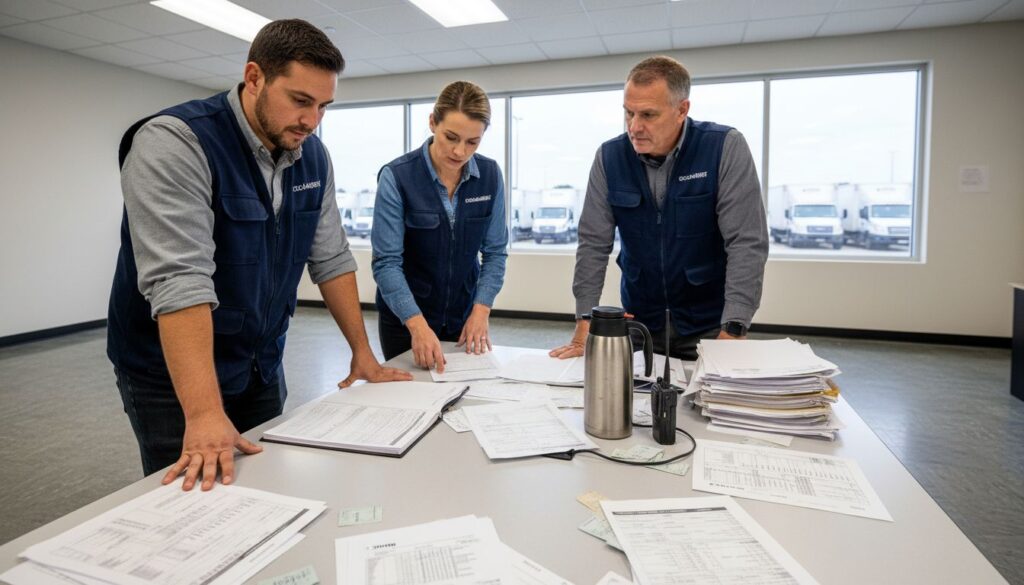
More than 21 percent of American workers in transportation and logistics have experienced a wage violation in the past year. For those relying on consistent pay, issues like unpaid overtime or misclassification can disrupt entire households. Understanding how wage-and-hour class actions work gives American employees and employers crucial insight into protecting rights and avoiding costly compliance mistakes in this high-risk sector.
Table of Contents
- Defining Wage-and-Hour Class Actions
- Types of Wage Violations in Logistics Firms
- Legal Standards for Delivery Companies
- Employee Rights and Firm Obligations
- Risks and Consequences for Fountain Valley Employers
Key Takeaways
| Point | Details |
|---|---|
| Wage-and-hour Class Actions | These actions empower workers to collectively address employer violations, seeking compensation for systemic labor law infringements. |
| Types of Wage Violations | Common violations in logistics include unpaid overtime, misclassification, and failure to compensate for all work activities. |
| Legal Standards for Compliance | Delivery companies must navigate complex regulations regarding worker classification and compensation to avoid legal repercussions. |
| Employer Responsibilities | Logistics firms must ensure transparent compensation practices and maintain accurate records to protect against potential legal risks. |
Defining Wage-and-Hour Class Actions
Wage-and-hour class actions represent critical legal mechanisms that empower workers to collectively challenge employer wage violations. These complex legal proceedings allow employees to pursue compensation for systematic labor law infractions affecting multiple workers simultaneously. Procedural rules in these cases can significantly impact workers’ substantive rights, making understanding their structure essential for workers seeking fair compensation.
At their core, wage-and-hour class actions enable workers to file lawsuits on behalf of themselves and similarly situated colleagues who have experienced comparable workplace compensation violations. Workers sue employers to recover unpaid wages, particularly focusing on overtime compensation, addressing systemic issues like minimum wage violations, missed break periods, misclassification of employees, and improper overtime calculations.
The mechanics of these class actions are complex. Typically, one or several employees initiate legal proceedings representing a larger group experiencing comparable workplace treatment. To qualify, workers must demonstrate common employment conditions, shared legal claims, and that individual litigation would be impractical. By consolidating multiple claims, these actions create powerful accountability mechanisms that can compel employers to rectify widespread compensation practices.
Understanding wage-and-hour class actions requires recognizing their potential impact. These legal strategies not only seek financial recovery for affected workers but also serve as critical deterrents against ongoing labor law violations. By illuminating and challenging unfair compensation practices, class actions create systemic pressure for workplace fairness and compliance with established labor regulations.
Types of Wage Violations in Logistics Firms
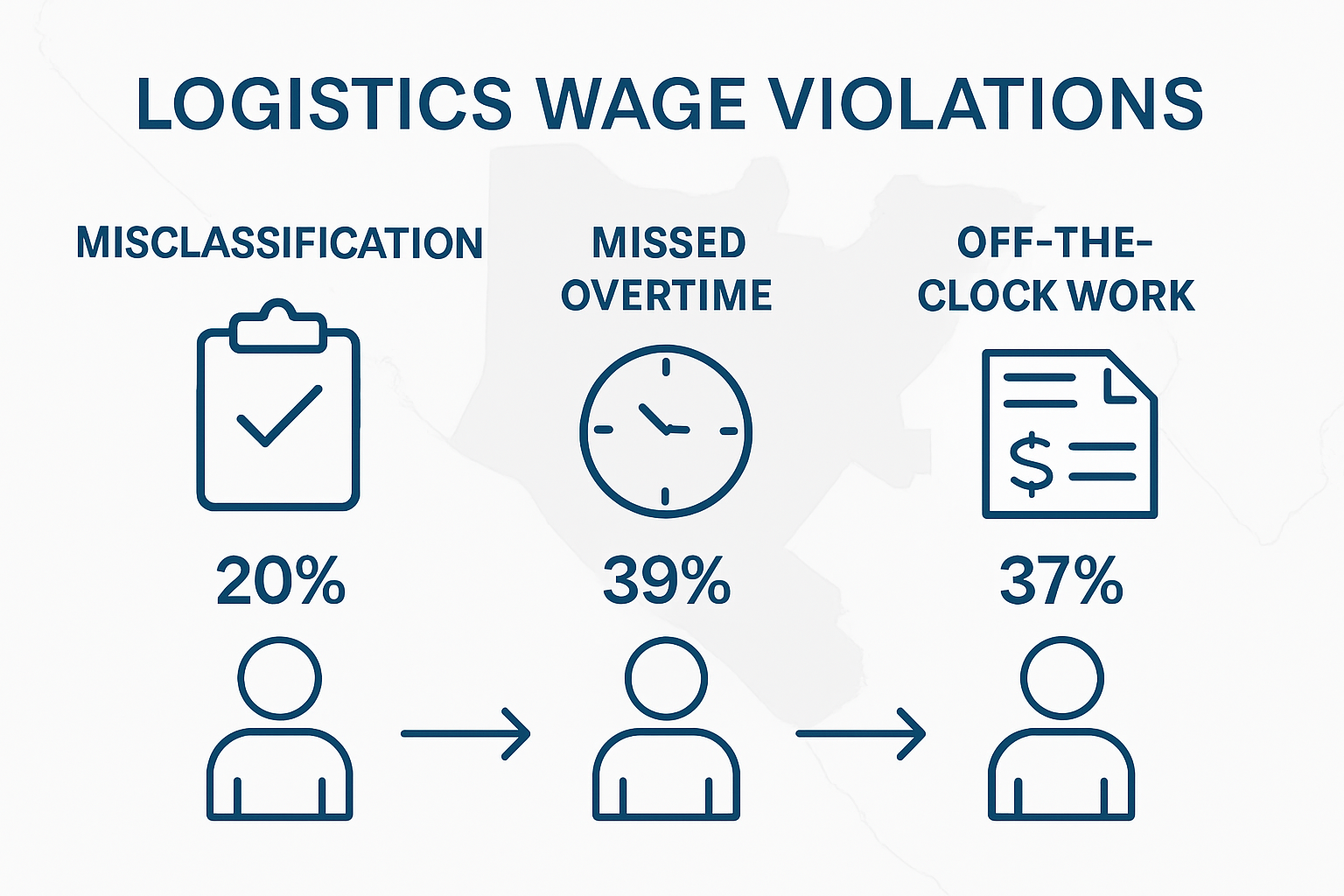
Logistics firms frequently engage in complex wage violations that systematically undermine workers’ compensation rights. Research indicates that lower wages are directly associated with higher rates of labor rights violations, creating a particularly challenging environment for workers in transportation and logistics industries. These violations manifest through various mechanisms that exploit legal gray areas and worker vulnerabilities.
Wage violations in logistics typically encompass several critical categories. Trucking industry studies reveal significant issues with unpaid working time and compensatory practices, including:
- Failure to pay overtime compensation
- Misclassifying employees as independent contractors
- Not compensating for pre-shift and post-shift work activities
- Meal and rest break violations
- Improper calculation of hourly rates
- Systematic underpayment of minimum wage
These violations often result from deliberate corporate strategies designed to minimize labor costs. Complex payment structures, such as per-mile compensation for truck drivers, can mask significant wage theft by obscuring actual hours worked. Workers frequently find themselves performing unpaid labor, including vehicle inspections, loading and unloading, and administrative tasks that fall outside official compensation calculations.
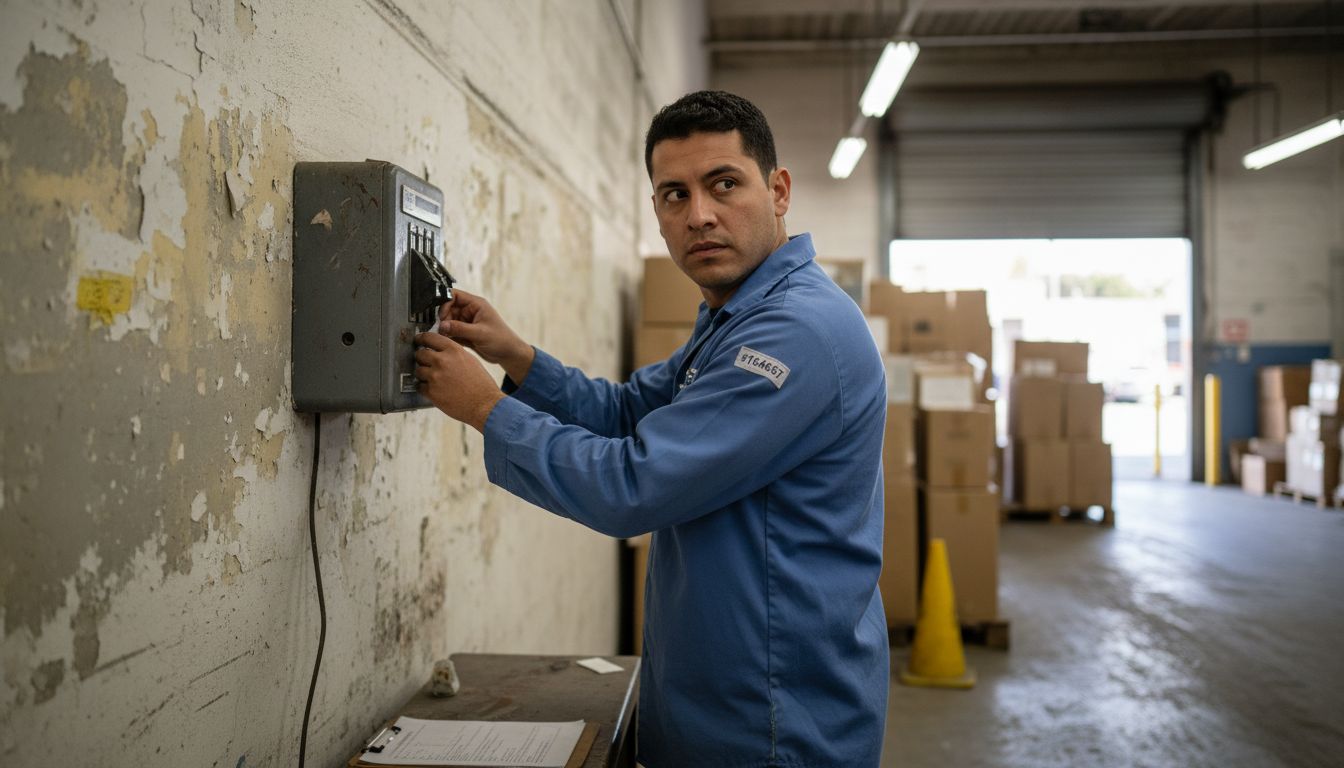
Ultimately, wage violations in logistics represent more than financial misconduct – they reflect systemic challenges in labor protections. By understanding these patterns, workers can better recognize their rights and pursue appropriate legal remedies through wage-and-hour class actions that hold employers accountable for persistent compensation violations.
Legal Standards for Delivery Companies
Delivery companies operate within a complex legal landscape governed by intricate wage and hour regulations. Federal and state laws create a comprehensive framework for determining worker classification, overtime compensation, and labor standards, establishing critical guidelines that impact how delivery businesses structure their workforce and compensation practices.
Legal standards for delivery companies primarily focus on three key areas of compliance:
- Worker Classification
- Overtime Compensation
- Minimum Wage Requirements
Wage and hour litigation reveals multiple nuanced considerations for determining worker rights in delivery services, including evaluating the degree of worker control, economic dependence, and the nature of employment relationships. Independent contractor status remains particularly contentious, with courts examining factors like scheduling flexibility, equipment ownership, and the level of supervision.
The Fair Labor Standards Act (FLSA) serves as the primary federal guideline, establishing baseline protections for workers. Companies must carefully navigate these regulations, considering both federal mandates and state-specific labor laws. Delivery companies face unique challenges in maintaining compliance, especially with the rise of gig economy platforms that blur traditional employment boundaries.
Ultimately, legal standards demand that delivery companies implement transparent compensation practices, accurately classify workers, and provide appropriate wage protections. Failure to meet these requirements can result in significant financial penalties, class action lawsuits, and potential reputational damage, making rigorous compliance an essential business strategy in the modern logistics landscape.
Employee Rights and Firm Obligations
The relationship between employees and logistics firms is governed by a complex framework of legal protections and responsibilities. Research reveals significant variations in how wage and hour laws effectively protect employee rights across different workplace environments, highlighting the critical need for comprehensive understanding of worker protections.
Employee rights in logistics firms encompass several fundamental protections:
- Guaranteed minimum wage
- Overtime compensation
- Safe working conditions
- Protection against workplace discrimination
- Accurate time tracking and compensation
- Right to breaks and rest periods
Worker power dynamics significantly influence work hour stability and compensation structures, demonstrating that employee rights are not static but require continuous negotiation and enforcement. Firms must proactively establish transparent compensation practices that go beyond minimum legal requirements, recognizing that worker satisfaction directly impacts operational efficiency.
Firm obligations extend far beyond simple monetary compensation. Logistics companies must implement robust systems for tracking work hours, ensuring proper classification of workers, and maintaining clear communication about compensation policies. This includes providing detailed wage statements, respecting agreed-upon work schedules, and creating mechanisms for workers to report potential violations without fear of retaliation.
Ultimately, the most successful logistics firms understand that employee rights and firm obligations are not adversarial concepts, but interconnected principles that drive organizational success. By fostering a culture of mutual respect, transparency, and fair compensation, companies can create workplace environments that protect worker interests while maintaining operational excellence.
Risks and Consequences for Fountain Valley Employers
Fountain Valley logistics employers face increasingly complex legal landscapes with substantial financial and reputational risks associated with wage-and-hour violations. Emerging trends in labor law enforcement demonstrate escalating litigation risks and regulatory scrutiny, compelling businesses to adopt proactive compliance strategies.
Potential consequences for wage-and-hour violations include:
- Substantial monetary penalties
- Mandatory back wage payments
- Significant legal defense costs
- Potential class action lawsuits
- Damage to company reputation
- Potential loss of business licenses
- Individual executive liability
Developing effective discovery and settlement strategies becomes critical for mitigating potential legal challenges, requiring employers to maintain meticulous employment records and implement robust compliance protocols. Failure to address potential violations can transform minor infractions into catastrophic financial burdens.
The financial implications extend beyond immediate legal expenses. Class action lawsuits can result in millions of dollars in settlements, potentially threatening a company’s operational stability. Moreover, regulatory agencies increasingly prioritize wage-and-hour enforcement, conducting more frequent audits and imposing stricter penalties for non-compliance.
Ultimately, Fountain Valley employers must view legal compliance not as an optional expense, but as a fundamental business strategy. Proactive investment in comprehensive workforce management, regular legal consultations, and transparent employment practices can significantly reduce litigation risks and protect the long-term sustainability of logistics operations.
Protect Your Rights in Fountain Valley Logistics Wage Disputes
If you are facing unpaid wages or suspect wage-and-hour violations in the logistics industry, understanding your rights and options is essential. Complex issues like worker misclassification, unpaid overtime, and break time violations can impact your livelihood and lead to costly legal challenges for employers. At Serendib Law Firm, we specialize in navigating these challenges with personalized and zealous advocacy for employees in Fountain Valley and throughout Orange County. Learn more about these concerns in our Wage Violations Archives and see how these issues specifically affect Fountain Valley workers in our Fountain Valley Archives.
Do not wait until wage violations worsen. Connect with experienced attorneys who fight diligently to recover unpaid wages and hold employers accountable. Explore how we can assist you by visiting Serendib Law Firm. Take the first step toward securing the workplace fairness you deserve by contacting us today for a free consultation.
Frequently Asked Questions
What are wage-and-hour class actions?
Wage-and-hour class actions are legal mechanisms that allow workers to collectively challenge employer violations of wage and hour laws. They enable employees to sue for compensation when multiple workers are affected by similar labor law infractions.
What types of wage violations are common in logistics firms?
Common wage violations in logistics firms include failure to pay overtime, misclassification of employees as independent contractors, not compensating for pre-shift and post-shift work, meal and rest break violations, and improper calculation of hourly wages.
What are the legal standards that delivery companies must follow?
Delivery companies must comply with federal and state labor laws regarding worker classification, overtime compensation, and minimum wage requirements. These standards help ensure that workers are correctly classified and compensated for their labor.
What risks do employers face for wage-and-hour violations?
Employers face several risks, including substantial monetary penalties, mandatory back wage payments, legal defense costs, potential class action lawsuits, damage to company reputation, and possible loss of business licenses.