Facing constant disrespect, hostility, or targeted mistreatment at work can leave employees in Costa Mesa feeling trapped and powerless. When a workplace becomes so intolerable that resignation feels like the only option, understanding constructive discharge becomes crucial. Knowing your rights and the signs of a legally actionable environment empowers you to make informed decisions and protect your well-being while considering your next steps.
Table of Contents
- Defining Constructive Discharge In Employment Law
- Identifying Toxic Work Environments In Costa Mesa
- Legal Standards For Constructive Discharge Claims
- Protected Employee Rights And Employer Duties
- Risks, Mistakes, And Navigating The Claims Process
Key Takeaways
| Point | Details |
|---|---|
| Constructive Discharge Defined | Constructive discharge occurs when an employee resigns due to unbearable workplace conditions. It is treated as wrongful termination under the law. |
| Identifying Toxic Environments | Recognizing signs of a toxic workplace is essential for employee well-being and legal protection. Key indicators include disrespectful communication and systemic exclusion. |
| Legal Standards for Claims | To pursue a constructive discharge claim, employees must document intolerable conditions and establish a direct connection between these environments and their resignation. |
| Navigating Legal Challenges | Successful claims require meticulous documentation and understanding of both federal and state regulations, along with awareness of potential risks in the claims process. |
Defining Constructive Discharge in Employment Law
Constructive discharge represents a complex legal concept in employment law where an employee feels compelled to resign due to intolerable workplace conditions. Defining workplace harassment dynamics involves understanding how employers create environments so hostile that reasonable workers cannot continue working.
Under legal standards, constructive discharge occurs when working conditions become so unbearable that a rational employee would have no reasonable choice except to resign. This legal mechanism protects workers from toxic workplace environments by treating such resignations as de facto terminations. Key characteristics include:
- Extreme workplace harassment
- Deliberate employer actions designed to force resignation
- Working conditions that violate fundamental employment standards
- Systematic patterns of discrimination or mistreatment
Involuntary resignation distinguishes constructive discharge from voluntary employment termination. Legal interpretations of workplace conditions require demonstrating that an employer intentionally created or knowingly permitted intolerable circumstances.
The severity of workplace conditions matters significantly in constructive discharge claims. Courts typically evaluate whether the working environment would cause a reasonable person in similar circumstances to feel they have no choice but to resign. This standard protects employees from unreasonable workplace abuse while preventing frivolous claims.
The following table highlights the differences between constructive discharge and voluntary resignation for clearer understanding:
| Aspect | Constructive Discharge | Voluntary Resignation |
|---|---|---|
| Employee Intent | Forced by intolerable conditions | Based on personal decision |
| Legal Treatment | Treated as wrongful termination | Usually not actionable legally |
| Common Triggers | Harassment, discrimination, retaliation | Career change, better offer |
| Burden of Proof | High—must show hostile environment | Low—no legal burden |
Pro tip: Document every incident of workplace harassment, communication, and uncomfortable interactions as potential evidence for a potential constructive discharge claim.
Identifying Toxic Work Environments in Costa Mesa
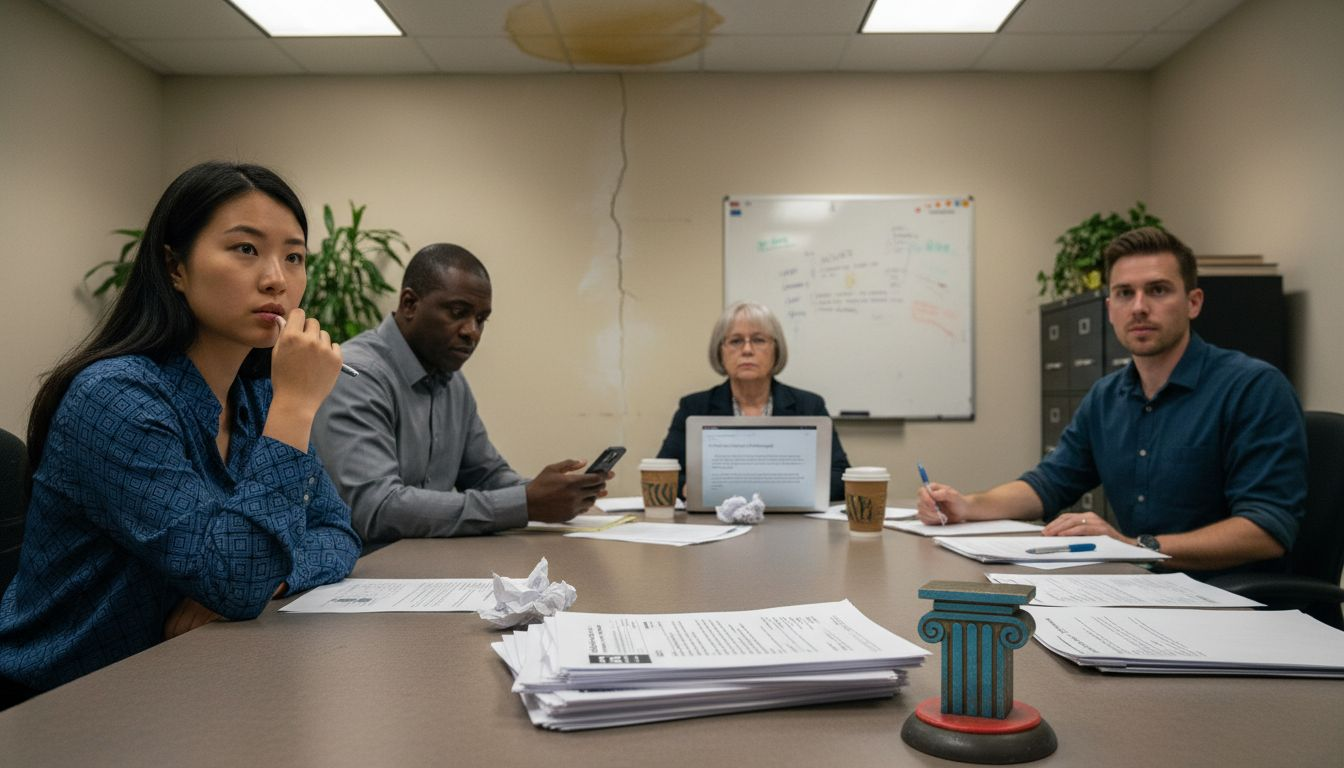
Recognizing a toxic workplace requires understanding the subtle yet destructive dynamics that undermine employee well-being and organizational effectiveness. Workplace psychological harm patterns reveal complex interactions that gradually erode professional environments, creating conditions of chronic stress and potential legal liability.
Toxic work environments in Costa Mesa typically manifest through several distinctive characteristics that signal systemic dysfunction. These warning signs include:
- Persistent patterns of disrespectful communication
- Systematic exclusion of certain employees
- Inconsistent application of workplace policies
- Frequent public humiliation or aggressive behavior
- Unexplained or frequent employee turnover
Psychological manipulation and emotional abuse represent critical indicators of workplace toxicity. Workplace culture degradation signals often emerge through subtle but corrosive behaviors that gradually undermine employee dignity and organizational health.
Employees experiencing toxic work environments frequently encounter multiple interconnected challenges, including diminished mental health, reduced professional performance, and increased likelihood of experiencing stress-related medical conditions. Understanding these dynamics empowers workers to recognize problematic workplace cultures and take appropriate protective actions.
Pro tip: Create a confidential documentation log of specific incidents, including dates, times, and witnesses, which can serve as critical evidence if you need to pursue legal recourse.
Legal Standards for Constructive Discharge Claims
Constructive discharge claims require sophisticated legal analysis and precise documentation to demonstrate workplace conditions that effectively force an employee’s resignation. Constructive discharge legal standards establish a nuanced framework for evaluating whether workplace environments have become genuinely intolerable.
To successfully pursue a constructive discharge claim, employees must prove several critical elements:
- The working conditions were objectively unbearable
- A reasonable person would feel compelled to resign
- The employer intentionally created or permitted hostile conditions
- Discrimination or harassment motivated the workplace environment
- Direct connection between workplace conditions and resignation
Evidentiary requirements play a crucial role in substantiating constructive discharge claims. Legal criteria for workplace discrimination emphasize the need for comprehensive documentation demonstrating systematic mistreatment or deliberate efforts to force an employee’s departure.
Courts typically apply a comprehensive three-pronged evaluation to assess constructive discharge claims, examining the severity of workplace conditions, the employer’s intent, and the direct causal relationship between workplace environment and involuntary resignation. This rigorous standard ensures that only legitimate cases of workplace abuse receive legal recognition and potential compensation.
Pro tip: Maintain a detailed, contemporaneous record of workplace incidents, including specific dates, witnesses, and verbatim descriptions of harassing or discriminatory behaviors.
Protected Employee Rights and Employer Duties
Employees in Costa Mesa are protected by a comprehensive framework of federal and state labor regulations designed to safeguard workplace dignity and fundamental worker protections. Labor rights enforcement mechanisms establish clear standards that delineate both employee entitlements and employer responsibilities across multiple dimensions of workplace interactions.
Critical employee rights encompass several fundamental protections:
- Protection from workplace discrimination
- Right to safe and healthy working conditions
- Guaranteed minimum wage and overtime compensation
- Protection against harassment and retaliation
- Reasonable workplace accommodations for disabilities
- Family and medical leave entitlements
- Right to file workplace complaints without fear of reprisal
Employer legal obligations represent the counterbalance to these employee rights. California labor standard requirements mandate that employers maintain transparent, fair, and legally compliant workplace environments that respect individual worker dignity and protect against systemic mistreatment.
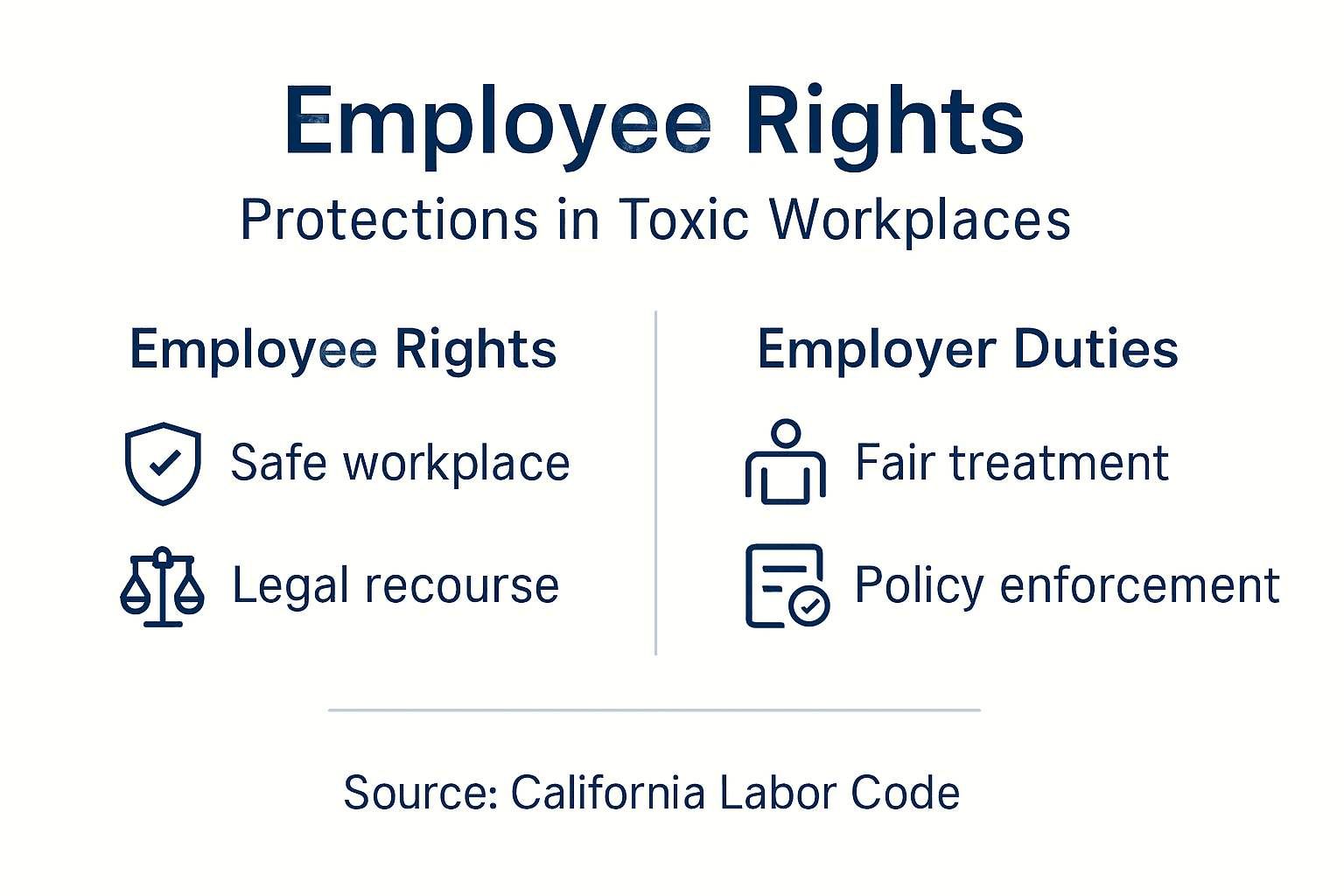
Both federal statutes like Title VII, the Americans with Disabilities Act (ADA), and the Family and Medical Leave Act (FMLA), along with California state regulations, create a robust legal infrastructure that empowers employees to challenge workplace misconduct and seek remediation for violations of their fundamental workplace rights.
Here is a quick comparison of federal and California state worker protections relevant to constructive discharge:
| Protection Area | Federal Law Example | California Law Example |
|---|---|---|
| Discrimination | Title VII of Civil Rights | Fair Employment and Housing Act |
| Medical Leave | Family and Medical Leave Act | California Family Rights Act |
| Wage and Hour | Fair Labor Standards Act | California Labor Code |
| Disability Rights | Americans with Disabilities Act | FEHA disability provisions |
Pro tip: Familiarize yourself with your workplace rights by requesting an official employee rights notice and maintaining a personal record of any potential workplace violations.
Risks, Mistakes, and Navigating the Claims Process
Constructive discharge claims require meticulous preparation and strategic navigation to overcome significant legal challenges. Constructive discharge claim strategies emphasize the critical importance of comprehensive documentation and precise legal procedural compliance.
Common risks and potential mistakes in pursuing constructive discharge claims include:
- Failing to document specific workplace incidents
- Missing critical reporting deadlines
- Inadequate internal complaint procedures
- Insufficient evidence of intolerable working conditions
- Overlooking potential employer retaliation risks
- Underestimating the complexity of legal proceedings
- Neglecting to seek professional legal consultation
Legal procedural pitfalls can significantly undermine an otherwise valid constructive discharge claim. Workplace rights protection strategies highlight the importance of understanding complex legal protections and potential vulnerabilities throughout the claims process.
Successful navigation of constructive discharge claims demands a systematic approach that balances careful documentation, strategic communication, and thorough understanding of both federal and California state employment regulations. Employees must remain vigilant, methodical, and prepared to substantiate their experiences with concrete evidence.
Pro tip: Create a comprehensive, chronological record of workplace incidents, including dates, specific descriptions, potential witnesses, and any communication related to the hostile work environment.
Protect Your Rights Against Constructive Discharge in Costa Mesa
Facing unbearable workplace conditions can leave you feeling trapped and uncertain about your next move. If you are experiencing harassment, discrimination, or retaliation that forces you to consider resignation, you need to understand your rights and options clearly. The legal concept of constructive discharge means your resignation might be treated as wrongful termination if your employer created a hostile environment. Do not let toxic workplace practices ruin your career without accountability.
At Serendib Law Firm, we specialize in Employment Law cases in Orange County and understand the complexities of claims involving constructive discharge and toxic work environments. Our dedicated team is ready to fight for your rights with personalized, zealous advocacy tailored to your situation. Visit our Orange County Archives to learn more about how we support employees just like you. Do not wait until the situation worsens. Contact us today at Serendib Law Firm for a free consultation and take the first step toward reclaiming your professional dignity and peace of mind.
Explore resources and find support for workplace disputes on our Newport Beach Archives page and understand the wider California labor protections that safeguard you. You do not have to face this challenge alone. Act now to protect your future.
Frequently Asked Questions
What is constructive discharge in employment law?
Constructive discharge occurs when an employee resigns due to unbearable workplace conditions, which are created or permitted by the employer. It is treated as a wrongful termination.
How can I identify a toxic work environment?
A toxic work environment may include patterns of disrespectful communication, systematic exclusion of employees, frequent humiliation, and high employee turnover.
What are the legal standards for proving constructive discharge?
To prove constructive discharge, an employee must demonstrate that the working conditions were objectively unbearable, the employer intended to create a hostile environment, and there is a direct connection between these conditions and the resignation.
What protections do employees have against constructive discharge?
Employees are protected by laws that prohibit discrimination, ensure safe working conditions, guarantee minimum wage and overtime, and allow for medical leave, among other rights. Employers have a duty to maintain a respectful and legally compliant workplace.