Nearly every American tech professional in California encounters the challenge of balancing career growth with the legal boundaries set by noncompete agreements and trade secret protections. The stakes are especially high for Cypress Tech employees, where restrictive contracts can threaten your ability to pursue new opportunities. With over 30 percent of California’s technology workforce affected by these issues, this guide helps you understand your options and safeguard your rights through informed legal strategies.
Table of Contents
- Non-compete And Trade Secrets Defined
- California Laws On Employee Mobility
- Types Of Agreements Affecting Tech Workers
- Rights And Risks For Cypress Employees
- Protecting Trade Secrets Without Non-competes
- Best Practices For Dispute Resolution
Key Takeaways
| Point | Details |
|---|---|
| Legal Protections | Non-compete agreements and trade secrets are vital for protecting company interests but can restrict employee mobility. |
| California Legislation | New laws in California ban non-compete agreements, enhancing employee rights and mobility across industries. |
| Contractual Complexity | Tech workers face multiple restrictive agreements that may hinder career progression; review these with legal counsel. |
| Trade Secret Strategies | Companies should implement diverse strategies for protecting trade secrets without relying on non-compete agreements. |
Non-compete and trade secrets defined
Non-compete agreements and trade secrets represent critical legal mechanisms that protect a company’s competitive advantages in the business landscape. These legal tools help organizations safeguard their proprietary information and maintain strategic boundaries for employees during and after their employment.
A non-compete clause restricts workers from joining competing firms by contractually preventing them from engaging in activities that could harm their original employer’s business interests. Typically, these agreements cover specific timeframes and geographic regions, aiming to protect legitimate business concerns such as trade secrets, client relationships, and specialized training investments.
Trade secrets represent confidential business information that provides competitive economic value precisely because it is not generally known. This can include manufacturing processes, customer lists, financial strategies, algorithms, formulas, or technological designs that give a company unique market positioning. Legal disputes over trade secrets involve protecting confidential company information and preventing unauthorized disclosure or misappropriation by current or former employees.
Pro tip: Before signing any employment contract with non-compete provisions, carefully review the specific language, geographic scope, and duration to understand your future professional mobility limitations.
California laws on employee mobility
California stands at the forefront of protecting employee mobility, implementing some of the most progressive legal frameworks in the United States that prioritize workers’ rights to career freedom. California has expressly banned noncompete agreements with landmark legislation that provides unprecedented protections for workers across multiple industries.
Two key legislative actions, Senate Bill 699 (SB 699) and Assembly Bill 1076 (AB 1076), effective January 2024, have dramatically reshaped the landscape of employment agreements. These laws prohibit employers from enforcing noncompete agreements against California employees, regardless of where the original agreement was signed or where the employment was conducted. This means that even if an employee signed a noncompete agreement in another state, California law renders such agreements unenforceable.
The legislative approach in California fundamentally differs from many other states by prioritizing worker mobility and preventing employers from restricting employees’ professional opportunities. Under these new laws, employers cannot create, enforce, or attempt to enforce noncompete agreements, with potential legal consequences for violations. The statutes explicitly enable private enforcement actions, allowing employees to challenge restrictive employment contracts and seek legal remedies if their professional mobility is impeded.
Pro tip: Consult with an employment attorney to review any existing noncompete agreements and understand your rights under California’s progressive mobility laws.
Types of agreements affecting tech workers
Tech workers encounter multiple complex contractual agreements that can significantly impact their professional mobility and career trajectories. Confidentiality agreements often function beyond traditional trade secret protection, creating intricate legal landscapes that employees must carefully navigate.
Noncompete agreements represent one of the most prevalent contractual mechanisms in the technology sector. These agreements restrict job mobility across different employment types, typically requiring employees to refrain from working with competing organizations for a specified period after leaving their current employer. Tech companies frequently use these contracts to protect proprietary information, technological innovations, and strategic business relationships.
Other critical agreement types include nondisclosure agreements (NDAs), intellectual property assignment agreements, and employment contracts with embedded restrictive clauses. These documents collectively define the boundaries of an employee’s professional conduct, intellectual property ownership, and potential future employment opportunities. Each agreement type carries unique implications for tech workers, potentially limiting their ability to leverage their skills, knowledge, and professional network in subsequent career moves.
Pro tip: Always carefully review employment agreements with an experienced employment attorney before signing, paying close attention to clauses that might restrict your future career opportunities.
Here’s a comparison of agreements commonly affecting tech workers:
| Agreement Type | Primary Purpose | Typical Restriction | Impact on Career |
|---|---|---|---|
| Noncompete Clause | Prevent competition | Time and geography-based | Limits job mobility |
| Nondisclosure (NDA) | Protect confidential info | Disclosure of secrets | Constrains communication |
| IP Assignment | Establish ownership | All inventions created | Limits personal IP claims |
| Restrictive Contract | Control post-employment actions | Specific activities post-exit | May reduce future opportunities |
Rights and risks for Cypress employees
Cypress Tech employees face a complex landscape of legal protections and potential professional restrictions. Antitrust laws protect workers’ rights to pursue employment freely, ensuring that employers cannot implement unreasonable constraints on job mobility and career advancement.

The primary risks for employees stem from overly restrictive employment agreements that can limit their future professional opportunities. Confidentiality agreements often extend beyond protecting legitimate trade secrets, potentially creating invisible barriers to career progression. These agreements can unexpectedly restrict an employee’s ability to use their professional skills and knowledge, effectively functioning as de facto noncompete clauses that constrain job market participation.
Specifically for Cypress Tech employees, understanding the nuanced legal landscape is crucial. This means carefully examining employment contracts for clauses that might inappropriately limit future employment, potentially violating California’s robust worker protection laws. Employees should be particularly vigilant about agreements that attempt to restrict their professional mobility, technological skill application, or ability to leverage their accumulated expertise in future roles.
Pro tip: Request a comprehensive review of your employment contract by an experienced employment attorney who specializes in technology sector agreements.
Protecting trade secrets without non-competes
With the potential nationwide ban on noncompete agreements, companies must develop more sophisticated strategies for protecting their intellectual property and confidential information. Companies must rely on alternative legal mechanisms to safeguard trade secrets, focusing on precise and legally defensible approaches.
Confidentiality agreements emerge as a primary mechanism for protecting sensitive business information. These agreements are increasingly scrutinized to ensure they do not overly restrict employee mobility, requiring companies to craft more targeted and reasonable provisions that genuinely protect legitimate business interests without unduly constraining workers.
Effective trade secret protection now demands a multifaceted approach. This includes implementing robust internal security protocols, establishing clear information classification systems, limiting access to sensitive data, utilizing technological safeguards like encryption and access controls, and creating comprehensive employee training programs about confidentiality obligations. Companies must demonstrate reasonable efforts to maintain the secrecy of their proprietary information, which involves systematic documentation, controlled information dissemination, and proactive monitoring of potential disclosure risks.
Pro tip: Develop a comprehensive trade secret protection strategy that balances robust security measures with respect for employee professional mobility and career development.
Below is a summary of effective trade secret protection methods:
| Method | Key Benefit | Common Practice | Risk Reduction |
|---|---|---|---|
| Internal Security | Limits unauthorized access | Restricted data systems | Reduces leakage risk |
| Employee Training | Reinforces compliance | Mandatory sessions | Prevents accidental disclosure |
| Encryption | Secures information | Protected communication | Blocks external threats |
| Access Control | Defines user permissions | Role-based policies | Isolates critical data |
Best practices for dispute resolution
Navigating noncompete and trade secret disputes requires a strategic approach that balances legal protections with fair employment practices. Courts and policymakers are refining approaches to noncompete agreement enforceability, creating evolving standards that prioritize worker mobility and legitimate business interests.
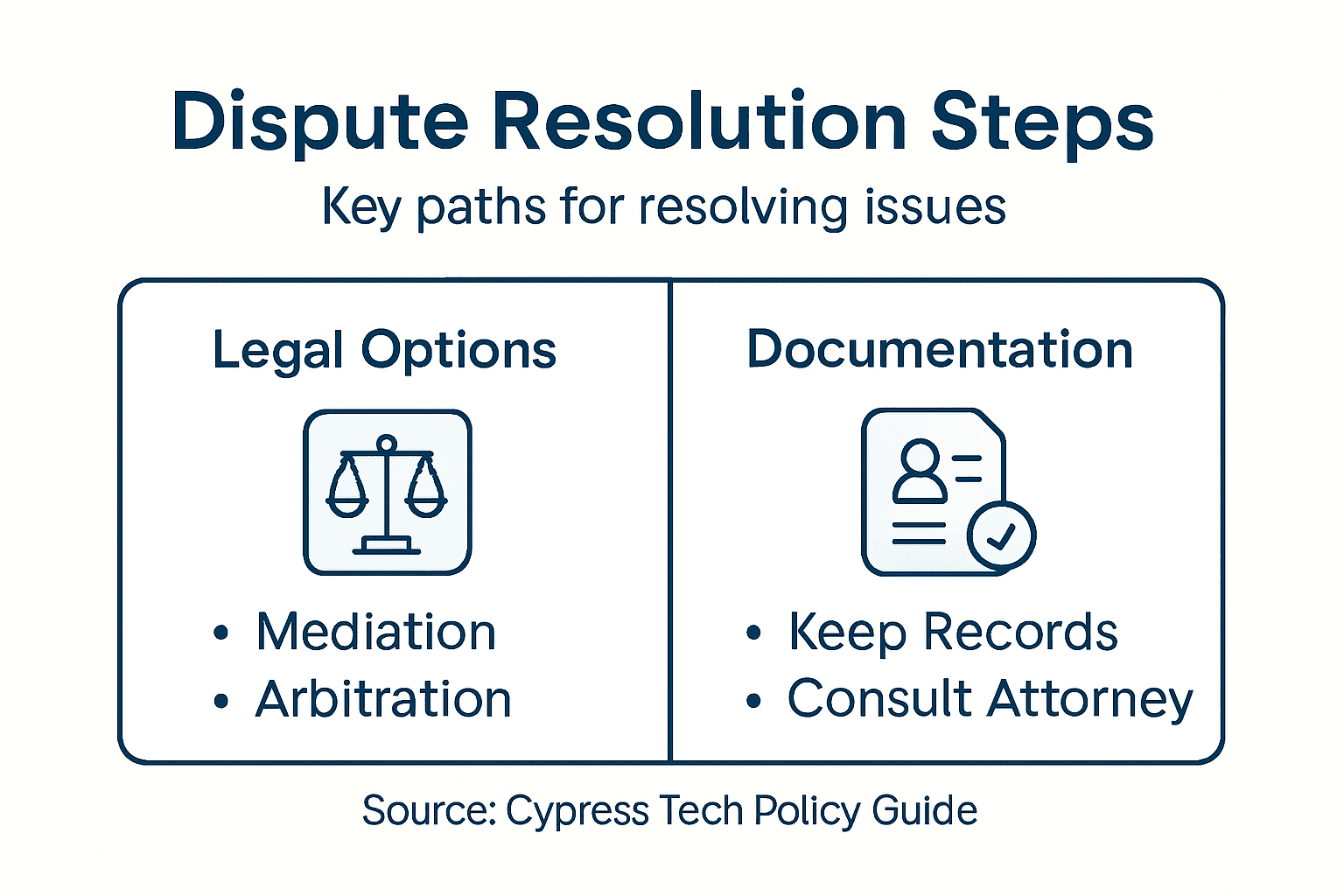
Dispute resolution strategies should focus on alternative approaches that minimize legal confrontation. The Federal Trade Commission recommends exploring contract terms that protect business interests without restricting employee mobility, suggesting methods like narrowly defined confidentiality agreements, targeted protection of specific trade secrets, and more precise contractual language.
Effective dispute resolution typically involves multiple potential pathways. These include mediation, arbitration, negotiated settlements, and carefully structured legal consultations. Parties should prioritize understanding the specific concerns driving the dispute, whether they relate to protection of intellectual property, competitive advantages, or legitimate business interests. This approach requires detailed documentation, clear communication, and a willingness to find mutually acceptable solutions that respect both the employer’s need to protect sensitive information and the employee’s right to professional mobility.
Pro tip: Document all interactions, communications, and potential trade secret information meticulously to strengthen your position in potential dispute resolution scenarios.
Protect Your Career from Unlawful Non-Compete and Trade Secret Disputes
Facing restrictive non-compete clauses or unclear trade secret agreements can feel overwhelming and unfair, especially if you work in the competitive tech industry. Many Cypress Tech employees struggle with contracts that may limit their future job opportunities or threaten their professional freedom. Understanding your rights under California employment laws is essential to protect your career and avoid costly legal battles.
At Serendib Law Firm, we specialize in employment law and are dedicated to fighting for your rights against unfair restrictions. Whether you need help interpreting non-compete provisions or defending against trade secret claims, our experienced attorneys provide personalized guidance tailored to your situation. Learn more about how California’s progressive worker protections can help you by visiting our California Employment Law Archives | Serendib Law Firm. Do not wait for a dispute to arise. Take control of your professional future today by contacting us through Serendib Law Firm for a free consultation and secure the freedom you deserve.
Frequently Asked Questions
What are non-compete agreements and how do they affect employees in tech?
Non-compete agreements restrict employees from joining competing firms or starting similar businesses for a specified time and geographic area. In the tech industry, these agreements can severely limit job mobility and career opportunities for employees.
How does California’s legislation impact non-compete agreements?
California has banned non-compete agreements altogether, meaning employers cannot enforce these contracts against employees, even if the agreements were signed in other states. This prioritizes employee mobility and career freedom.
What should I look for in my employment contract regarding trade secrets?
When reviewing your employment contract, pay attention to confidentiality clauses and agreements protecting trade secrets. Ensure that these provisions do not overly restrict your ability to use your skills and knowledge in future jobs.
How can employees protect their rights regarding trade secrets and non-compete clauses?
Employees should consult with an experienced attorney to review their employment agreements. Understanding California’s labor laws allows employees to challenge restrictive clauses that could impede their career advancement.
Recommended
- Age Discrimination in Irvine Tech Layoffs: Broadcom and Google | Serendib Law Firm
- Sexual Harassment Risk in Tech Startups: Key Lessons | Serendib Law Firm
- Experienced Irvine Employment Law Attorneys
- Experienced Costa Mesa Employment Law Attorneys
- Οδηγός νέας εταιρείας ΟΕ ή ΕΕ – Χρήστος Καβαλλάρης – Λογιστής
- IT & IoT Solutions