Nearly half of American workers with disabilities encounter challenges when requesting workplace accommodations. For manufacturing employees in Lake Forest, California, these disputes can impact job security and daily work life. When conversations with your employer stall or your needs are misunderstood, understanding your legal rights and options becomes crucial. This article highlights essential facts, laws, and practical tips to help you make informed decisions about disability accommodation disputes in the manufacturing sector.
Table of Contents
- Defining Disability Accommodation Disputes
- Types of Workplace Disabilities Recognized
- Legal Framework: FEHA, ADA, and Local Law
- Reasonable Accommodation Processes in Practice
- Employee Rights and Employer Obligations
- Common Risks, Mistakes, and Dispute Resolution Options
Key Takeaways
| Point | Details |
|---|---|
| Disability Accommodation Disputes Are Complex | These disputes often arise from conflicts between employee needs and employer resources, necessitating an interactive dialogue under the ADA. |
| Workplace Disabilities Are Diverse | Understanding the range of recognized disabilities is crucial for effective accommodation strategies tailored to individual needs. |
| Clear Legal Framework Exists | The ADA and FEHA provide essential guidelines about employer obligations and employee rights regarding reasonable accommodations. |
| Documentation Is Critical | Maintaining detailed records of all accommodation requests and communications can protect legal rights and enhance transparency. |
Defining Disability Accommodation Disputes
Disability accommodation disputes represent complex legal challenges arising when employees with disabilities require modifications to their work environment or job duties. These disputes fundamentally center on the critical process of making reasonable adjustments that enable qualified workers to perform essential job functions. Reasonable accommodations are legal protections designed to ensure workplace inclusivity and equal opportunity for individuals with physical or mental impairments.
Typically, these disputes emerge when significant differences occur between an employee’s disability-related needs and an employer’s willingness or perceived ability to provide necessary workplace modifications. Common scenarios include disagreements about the feasibility of specific accommodations, interpretation of job essential functions, and challenges in determining what constitutes an “undue hardship” for the employer. The Americans with Disabilities Act (ADA) provides the primary legal framework governing these interactions, mandating that employers engage in an interactive dialogue to identify appropriate workplace adjustments.
The core elements of disability accommodation disputes often involve complex negotiations around job restructuring, equipment modifications, policy adjustments, and work schedule adaptations. Employees must demonstrate that the requested accommodation allows them to perform their primary job responsibilities, while employers must evaluate these requests through the lens of operational practicality and financial reasonableness. Workplace accessibility guidelines emphasize the importance of individualized assessment, recognizing that disability accommodations are not one-size-fits-all solutions but tailored interventions designed to support each worker’s unique circumstances.
Pro tip: Document every accommodation request and employer response in writing to create a clear record that can be crucial if legal disputes arise later.
Types of Workplace Disabilities Recognized
Workplace disabilities encompass a diverse range of physical, sensory, mental, and cognitive impairments that can significantly impact an employee’s ability to perform job functions. Comprehensive workplace disability classifications recognize multiple categories that extend far beyond traditional perceptions of disability, highlighting the importance of understanding the complex spectrum of employee capabilities and potential workplace accommodations.
Physical disabilities represent one prominent category, including mobility impairments such as conditions requiring wheelchair use, limb differences, or chronic conditions like arthritis that affect movement and dexterity. Sensory disabilities encompass hearing and vision impairments, which may require specialized communication tools or workplace adjustments. Mental health conditions, including anxiety, depression, and post-traumatic stress disorder, are increasingly acknowledged as critical disability categories that demand nuanced workplace support strategies.
Neurological and chronic health conditions further expand the understanding of workplace disabilities. Recognized workplace disabilities now include complex conditions such as autism spectrum disorder, multiple sclerosis, epilepsy, and diabetes. These conditions often require individualized accommodations that enable employees to effectively manage their health while maintaining full professional functionality. The evolving landscape of workplace disability recognition emphasizes a holistic approach that values employee potential and creates inclusive environments that support diverse neurological and physiological experiences.
Pro tip: Maintain open communication with human resources and document specific accommodation needs to ensure comprehensive workplace support for your individual disability requirements.
Legal Framework: FEHA, ADA, and Local Law
The legal landscape for disability accommodations in California is governed by a complex interplay of federal and state regulations, with the Americans with Disabilities Act (ADA) and the California Fair Employment and Housing Act (FEHA) serving as the primary legal foundations. Comprehensive disability accommodation statutes mandate that employers provide reasonable workplace modifications to qualified employees with disabilities, ensuring equal opportunities and protecting against discriminatory practices.
The ADA establishes federal standards that require employers with 15 or more employees to provide reasonable accommodations, protecting individuals with documented disabilities that substantially limit major life activities. FEHA, however, often provides more expansive protections for California workers, applying to employers with five or more employees and featuring broader definitions of disability. These legal frameworks require employers to engage in a good-faith interactive process, carefully evaluating each accommodation request and demonstrating that any denial is based on legitimate business necessity or would cause undue hardship.
Workplace disability accommodation policies necessitate a nuanced approach to implementation. Local jurisdictions may supplement these state and federal regulations with additional protections, creating a layered legal environment that demands careful navigation. Employers must document accommodation requests, maintain confidentiality, and provide individualized assessments that balance employee needs with operational requirements. The legal framework emphasizes collaboration, requiring transparent communication and a genuine effort to find mutually acceptable workplace solutions that enable employees with disabilities to perform essential job functions.
Pro tip: Maintain detailed documentation of all disability accommodation requests and employer responses to protect your legal rights and establish a clear record of communication.
To distinguish the major laws governing workplace disability accommodations, see this comparison table:
| Law/Act | Coverage Threshold | Scope of Protections | Notable Differences |
|---|---|---|---|
| ADA (Federal) | 15+ employees | National standard for reasonable accommodation | Applies across the United States |
| FEHA (California) | 5+ employees | Broader definition of disability | Expands protections beyond federal law |
| Local Ordinances | Varies by jurisdiction | Additional rights for employees | May surpass state and federal standards |
Reasonable Accommodation Processes in Practice
The reasonable accommodation process is a structured approach designed to support employees with disabilities in performing essential job functions. Comprehensive accommodation procedures require employers to engage in an interactive dialogue that systematically addresses workplace modification needs while balancing operational requirements.
Typically, the process begins when an employee communicates a specific disability-related workplace limitation. Employers must respond promptly, requesting relevant medical documentation when necessary and exploring multiple potential accommodations. Critical steps include conducting a detailed assessment of job functions, identifying specific workplace barriers, and developing targeted modifications that enable the employee to perform core job responsibilities effectively. This may involve adjusting work schedules, modifying equipment, restructuring job duties, or providing auxiliary support systems.
Workplace accommodation implementation strategies emphasize ongoing communication and flexibility. Employers must document each stage of the accommodation request, maintain strict confidentiality, and periodically review the effectiveness of implemented modifications. The process requires a collaborative approach, with both employer and employee actively participating in finding practical solutions that meet legal requirements while maintaining workplace productivity and individual dignity.
Pro tip: Always document accommodation requests in writing and keep detailed records of all communications to protect your legal rights and ensure transparent workplace interactions.
Employee Rights and Employer Obligations
Legal protections for employees with disabilities establish a critical framework of rights and responsibilities in the workplace. Employees are guaranteed fundamental protections that ensure they can perform job functions without facing discrimination, while employers must proactively create inclusive environments that accommodate individual needs without imposing undue hardship.
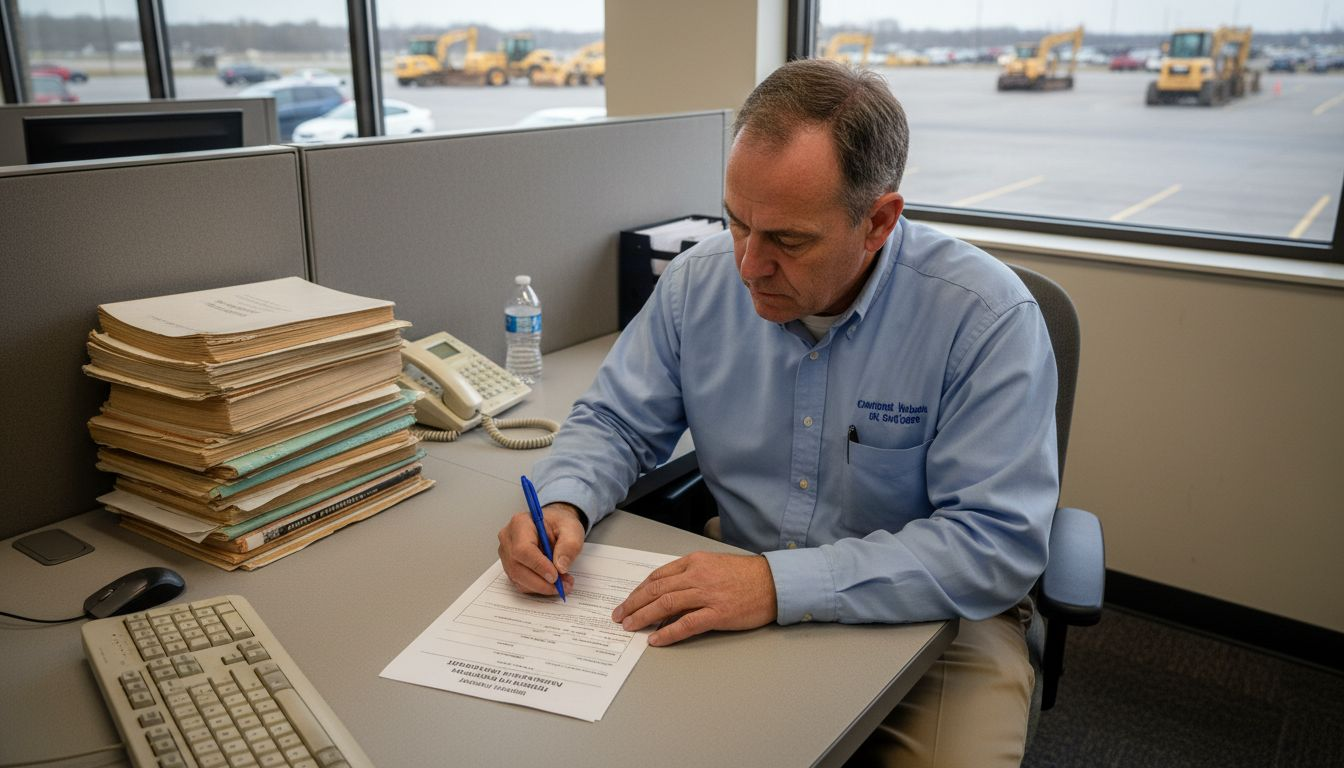
Employees with disabilities have specific rights that protect their professional opportunities. These include the right to request reasonable accommodations, receive confidential consideration of those requests, and continue performing essential job functions with appropriate workplace modifications. Employers are legally obligated to engage in an interactive dialogue, evaluate accommodation requests objectively, and implement feasible solutions that enable employees to contribute effectively. This process requires employers to maintain strict confidentiality, avoid retaliatory actions, and demonstrate a good-faith effort to support workers with disabilities.
Workplace disability accommodation standards mandate comprehensive employer responsibilities beyond simple compliance. Organizations must develop systematic approaches to evaluating and implementing accommodations, which may include modifying work environments, adjusting job responsibilities, providing specialized equipment, or restructuring work schedules. The legal framework emphasizes that these accommodations should be individualized, practical, and designed to support the employee’s ability to perform core job functions while maintaining workplace productivity and professional dignity.
Pro tip: Maintain a written record of all accommodation requests and employer communications to protect your legal rights and create a clear documentation trail.
Common Risks, Mistakes, and Dispute Resolution Options
Workplace disability accommodation disputes present complex challenges that can emerge from miscommunication, misunderstanding, and inadequate procedural approaches. Common risks include employers failing to engage in meaningful interactive processes, inappropriately denying accommodation requests, breaching employee confidentiality, or misinterpreting what constitutes undue hardship.
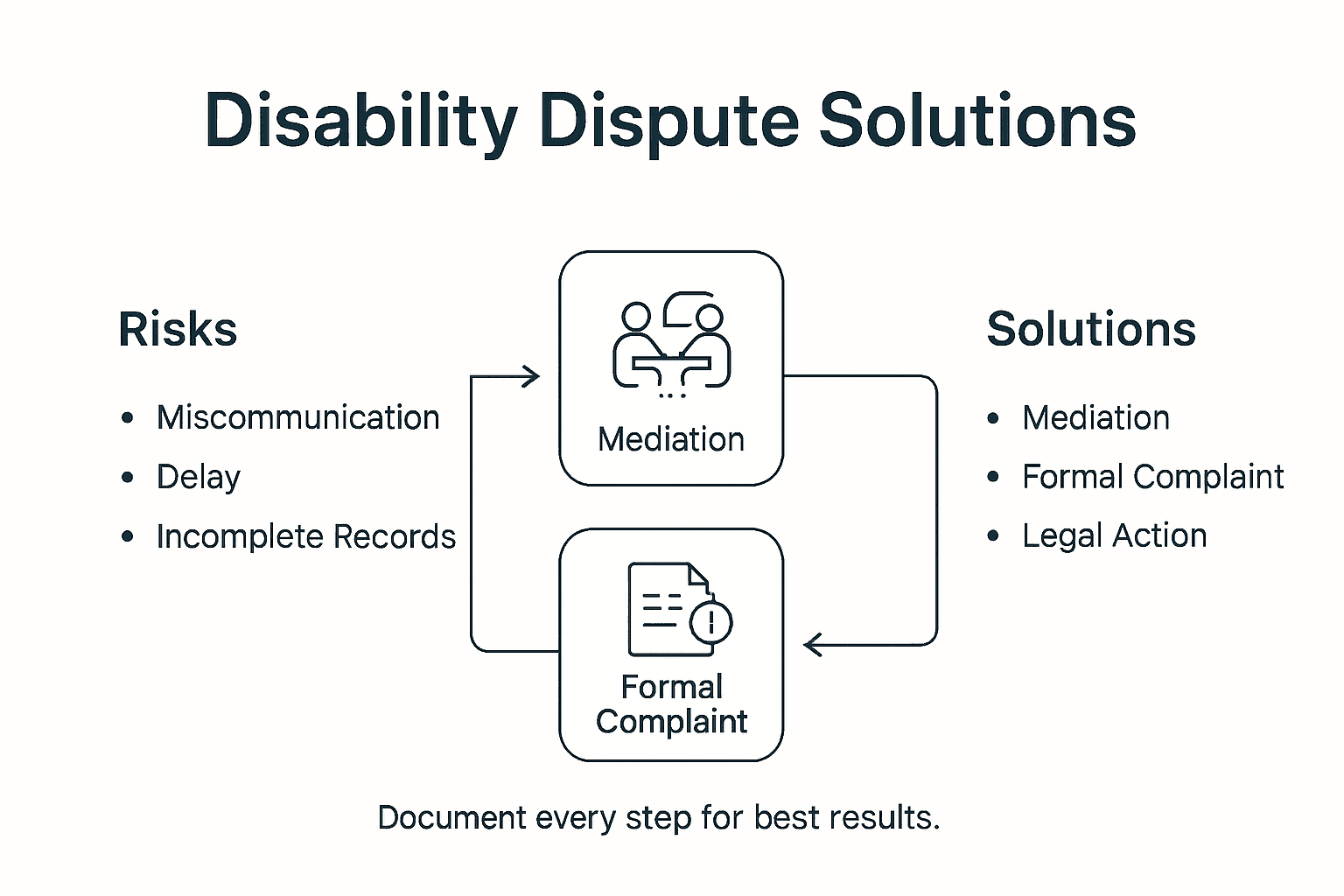
Employers frequently make critical mistakes that escalate potential conflicts, such as delaying response times to accommodation requests, applying inconsistent evaluation standards, or lacking comprehensive documentation of the interactive process. These errors can transform minor disagreements into significant legal challenges. Typical missteps include making subjective determinations about accommodation feasibility, lacking transparency in decision-making, and failing to provide clear rationales for accommodation denials.
Dispute resolution strategies offer multiple pathways for addressing workplace accommodation conflicts. Mediation represents a collaborative approach that allows both parties to explore mutually acceptable solutions with the help of a neutral facilitator. Arbitration provides a more structured process where a third-party arbitrator renders a binding decision. Formal litigation remains a final recourse when alternative methods fail, though it typically involves higher costs and longer resolution timelines. Proactive organizations increasingly develop internal dispute resolution systems that emphasize early intervention, clear communication, and maintaining positive workplace relationships.
Here is a summary of common dispute resolution options for workplace disability accommodation conflicts:
| Method | Process Description | Typical Cost | Speed of Resolution |
|---|---|---|---|
| Mediation | Facilitated negotiation by neutral third party | Moderate | Relatively quick |
| Arbitration | Binding decision by arbitrator | Higher | Moderate to fast |
| Litigation | Court-based legal process | Most expensive | Slowest—can take years |
Pro tip: Document every interaction, request, and response regarding disability accommodations to create a comprehensive record that can protect your legal interests and demonstrate good-faith communication efforts.
Protect Your Rights in Disability Accommodation Disputes in Lake Forest Manufacturing
Navigating disability accommodation disputes in Lake Forest manufacturing settings can feel overwhelming when your rights as an employee are at stake. You may be struggling with questions about reasonable accommodations, employer obligations, or how to handle disputes over workplace modifications. These challenges often involve complex legal standards under the ADA and FEHA that require careful documentation and a clear interactive process. If you are facing resistance or uncertainty from your employer about accommodating your disability, you are not alone.
At Serendib Law Firm, we understand the emotional and professional toll such conflicts take. Our experienced team is dedicated to representing employees like you, ensuring your voice is heard and your legal rights are fully protected. Explore our Disability Accommodation Archives and Disability Discrimination Archives to learn more about how we approach these complex issues. Take the first step toward resolution by contacting us at https://www.serendiblaw.com/. Don’t wait—assert your right to a fair and accessible workplace today.
Frequently Asked Questions
What are reasonable accommodations in the workplace?
Reasonable accommodations are modifications or adjustments made to enable individuals with disabilities to perform their essential job functions. Examples include altering work schedules, modifying equipment, or providing additional support.
What should I do if my accommodation request is denied?
If your accommodation request is denied, you should first seek clarification from your employer about the reasons for the denial. Document your communication and consider engaging in a discussion to explore alternative solutions. If necessary, you may pursue dispute resolution options.
How can I document my disability accommodation requests?
To document your disability accommodation requests, keep written records of all communications with your employer, including the details of your requests, responses received, and any discussions related to your needs. This will create a clear record that may be important if disputes arise.
What legal protections do I have regarding disability accommodations?
Employees with disabilities are protected under laws such as the Americans with Disabilities Act (ADA) and the California Fair Employment and Housing Act (FEHA). These laws require employers to provide reasonable accommodations and engage in an interactive dialogue to support employees with disabilities.
Recommended
- Disability Accommodation Issues at Orange CA Plants: Guide | Serendib Law Firm
- Disability Accommodation Disputes for Long COVID: Complete Guide | Serendib Law Firm
- Disability Accommodations in Tustin Firms: Complete Guide | Serendib Law Firm
- Long COVID Discrimination in Garden Grove Plants | Serendib Law Firm