Nearly one in five adults in the United States experience a mental health condition every year, yet many struggle to find the support they need at work. Understanding mental-health disability accommodation is key for employees and employers seeking to create inclusive, legally compliant workplaces. This guide breaks down what reasonable workplace accommodations look like, the conditions they address, and how both parties can work together to foster healthier, more productive environments.
Table of Contents
- Defining Mental-Health Disability Accommodation
- Common Mental-Health Conditions in Workplaces
- Legal Framework: ADA, FEHA, and State Laws
- Requesting and Providing Reasonable Accommodations
- Employer Responsibilities and Compliance Risks
Key Takeaways
| Point | Details |
|---|---|
| Mental-health accommodations are essential legal protections | They enable employees with psychiatric conditions to perform their job duties effectively and are required under the ADA. |
| Personalized adjustments are crucial | Accommodations must cater to individual needs, such as flexible schedules or modified responsibilities, rather than being one-size-fits-all solutions. |
| Employers must engage in interactive dialogue | The accommodation request process involves open communication between employees and employers to identify reasonable solutions. |
| Compliance is vital to avoid legal risks | Employers must proactively ensure that they follow legal requirements to prevent discrimination claims, facing significant penalties if they fail. |
Defining Mental-Health Disability Accommodation
Mental-health disability accommodation represents a critical legal protection ensuring employees with psychiatric conditions can perform their job duties effectively. According to the U.S. Department of Labor, reasonable accommodations are specific workplace adjustments that enable qualified employees with mental health disabilities to successfully complete essential job functions.
These accommodations are not one-size-fits-all solutions. They are personalized adaptations designed to support individual employee needs. The Equal Employment Opportunity Commission (EEOC) emphasizes that under the Americans with Disabilities Act (ADA), individuals experiencing mental health conditions have legal rights to workplace modifications. Such accommodations might include:
- Flexible work scheduling
- Ability to telecommute
- Modified job responsibilities
- Quiet workspace arrangements
- Permission for periodic mental health breaks
- Additional supervisory support
Understanding mental-health disability accommodation requires recognizing that these adjustments are not special privileges but essential supports that enable talented professionals to contribute meaningfully. Employers are legally obligated to provide reasonable accommodations that do not create undue hardship for the organization. The goal is creating an inclusive workplace where individuals with mental health conditions can leverage their skills and expertise without unnecessary barriers.
For more comprehensive insights into navigating disability accommodation disputes, see our guide on disability discrimination lawsuits involving mental health.
Common Mental-Health Conditions in Workplaces
Workplace mental health challenges are more prevalent than many realize. According to Texas Christian University, certain mental health conditions significantly impact employee performance and workplace interactions. Depression, anxiety, and post-traumatic stress disorder (PTSD) emerge as the most common mental health challenges professionals encounter.
Depression represents a serious condition affecting workplace productivity. Employees experiencing depression might struggle with persistent low energy, difficulty concentrating, and reduced motivation. These symptoms can manifest through decreased work output, increased absenteeism, and challenges in maintaining consistent performance levels. Anxiety disorders similarly create workplace complications, potentially triggering stress responses that interfere with collaborative work and decision-making processes.
PTSD, often misunderstood, can profoundly influence workplace dynamics. Triggered by past traumatic experiences, PTSD can cause unexpected emotional responses, hypervigilance, and potential communication barriers. Employees managing PTSD might require specific accommodation strategies that help them feel psychologically safe and supported. These accommodations could include:
- Predictable work environments
- Clear communication protocols
- Flexibility in work scheduling
- Options for reduced sensory stimulation
- Periodic check-ins with supportive management
- Opportunities for confidential mental health support
Recognizing these mental health conditions as legitimate workplace challenges is crucial. Employers who approach these conditions with empathy, understanding, and proactive support can create inclusive environments that enable all employees to thrive professionally. By implementing thoughtful accommodations and reducing stigma, organizations can transform potential limitations into opportunities for growth and exceptional performance.
For additional guidance on navigating workplace mental health challenges, explore our guide on disability discrimination lawsuits involving mental health.
Legal Framework: ADA, FEHA, and State Laws
Mental health disability accommodations are governed by a complex legal framework that protects employees’ rights and ensures workplace inclusivity. According to the Equal Employment Opportunity Commission (EEOC), the Americans with Disabilities Act (ADA) requires employers to provide reasonable accommodations for employees with mental health conditions, fundamentally prohibiting workplace discrimination.
University of Michigan emphasizes that legal obligations extend beyond mere compliance. The ADA mandates that employers must:
- Engage in interactive dialogue about potential accommodations
- Provide reasonable workplace modifications
- Maintain employee confidentiality
- Prevent retaliatory actions
- Ensure equal employment opportunities
California’s Fair Employment and Housing Act (FEHA) provides additional protections that often exceed federal standards. This state law requires employers to accommodate mental health conditions more comprehensively, recognizing a broader range of psychiatric disabilities. FEHA mandates that employers with five or more employees make substantial efforts to understand and support employees’ unique mental health needs.
The intersection of federal and state laws creates a robust legal framework designed to protect employees while maintaining workplace productivity. Employers must navigate these regulations carefully, balancing legal compliance with creating supportive, inclusive work environments. By understanding these laws, organizations can transform potential challenges into opportunities for employee growth and engagement.

For more detailed insights into disability accommodation complexities, explore our guide on disability discrimination.
Requesting and Providing Reasonable Accommodations
Navigating mental health workplace accommodations requires a collaborative approach between employees and employers. According to the Department of Labor, employees with mental health conditions can proactively request accommodations such as flexible work schedules or telecommuting arrangements that support their professional performance.
University of Michigan emphasizes that the accommodation process is not one-size-fits-all. Not every employee with a mental health condition will require modifications, but those who do should engage in transparent, constructive communication with their employers. The interactive process becomes crucial in identifying reasonable workplace adjustments.
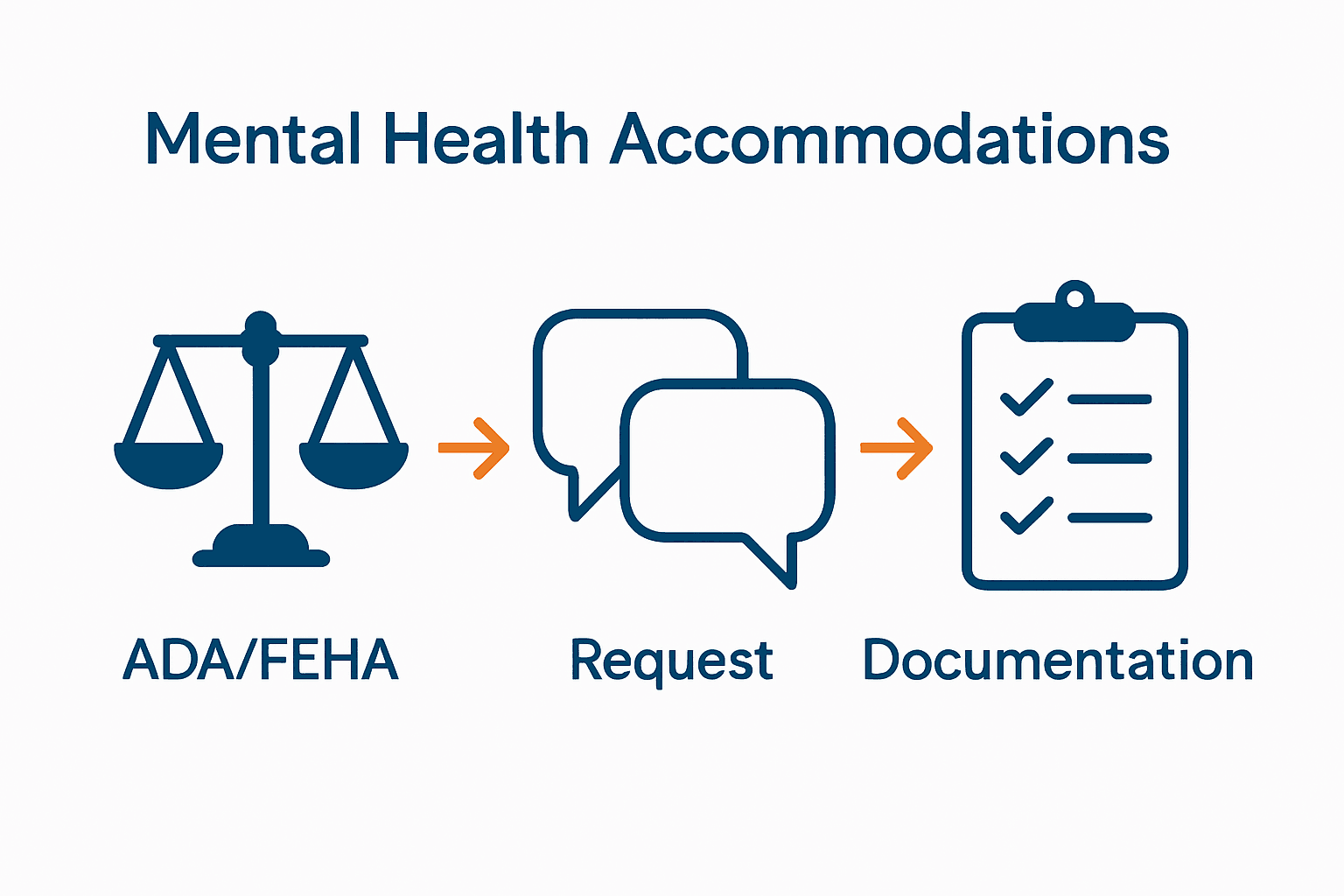
The accommodation request typically involves several key steps:
- Documenting the mental health condition
- Identifying specific work challenges
- Proposing potential workplace modifications
- Maintaining open dialogue with supervisors
- Protecting personal medical information
- Exploring multiple potential solutions
Employers must approach these requests with sensitivity and legal compliance. Reasonable accommodations might include adjusted work hours, modified job responsibilities, additional break times, or creating a less stimulating work environment. The goal is finding a mutually beneficial solution that enables the employee to perform essential job functions while maintaining workplace productivity and individual dignity.
For comprehensive guidance on navigating complex disability accommodation scenarios, explore our guide on disability accommodation issues in Orange County.
Employer Responsibilities and Compliance Risks
Employers face significant legal obligations when addressing mental health accommodations in the workplace. According to Texas Christian University, organizations must provide reasonable accommodations under the Americans with Disabilities Act while carefully avoiding any form of discrimination against employees with mental health conditions.
The Equal Employment Opportunity Commission (EEOC) warns that failure to properly handle mental health accommodations can result in substantial legal consequences. Compliance risks for employers include potential discrimination claims, which can lead to:
- Costly litigation expenses
- Significant monetary penalties
- Damage to organizational reputation
- Potential mandated workplace reforms
- Loss of employee trust
- Potential federal or state sanctions
Effective compliance requires a proactive and compassionate approach. Employers must develop comprehensive strategies that balance legal requirements with supportive workplace practices. This includes creating clear policies, training management on mental health accommodation protocols, maintaining strict confidentiality, and establishing transparent communication channels for employees seeking workplace modifications.
Navigating these complex legal landscapes demands careful attention to detail and a genuine commitment to employee well-being. Employers who view mental health accommodations as an opportunity for organizational growth, rather than a legal burden, are more likely to create inclusive, productive work environments that minimize compliance risks and support individual employee needs.
For additional insights into managing potential workplace accommodation challenges, explore our guide on understanding workplace discrimination.
Protect Your Rights with Expert Disability Accommodation Support in Tustin
Facing mental health challenges at work can feel overwhelming, especially when trying to secure the necessary accommodations. This article highlights the importance of reasonable adjustments such as flexible schedules and quiet workspaces designed to help you succeed. When employers do not provide these accommodations, it can impact your job performance and well-being.
If you are navigating mental-health disability accommodation issues in Tustin, you do not have to face these challenges alone. Our dedicated team understands the legal framework and emotional weight behind these cases. We strongly encourage you to visit our Disability Accommodation Archives to learn more and take the first step toward fair treatment. Get tailored support from a trusted Orange County law firm by contacting us today at Serendib Law Firm. Explore resources and expert guidance specific to Tustin in our Tustin Archives and start securing the workplace accommodations you need now.
Frequently Asked Questions
What are mental health disability accommodations?
Mental health disability accommodations are workplace adjustments that enable employees with psychiatric conditions to perform essential job functions effectively. These accommodations are personalized to fit individual needs and may include flexible scheduling, telecommuting options, or modifications to job responsibilities.
How do employees request reasonable accommodations for mental health issues?
Employees can request reasonable accommodations by documenting their mental health condition, identifying specific work challenges, and proposing potential modifications. It’s important to maintain open dialogue with supervisors throughout the process and protect personal medical information.
What are common mental health conditions that may require workplace accommodations?
Common mental health conditions that may require workplace accommodations include depression, anxiety disorders, and post-traumatic stress disorder (PTSD). These conditions can significantly impact productivity and workplace interactions, necessitating tailored support strategies.
What are the employer’s responsibilities regarding mental health accommodations?
Employers are legally obligated to provide reasonable adjustments for employees with mental health conditions under the Americans with Disabilities Act (ADA). They must engage in a dialogue about potential accommodations, maintain confidentiality, and ensure that no discrimination occurs against the affected employees.