Pregnancy at work comes with unique challenges and medical needs that many employers still overlook. Nearly 1 in 5 discrimination complaints filed with the Equal Employment Opportunity Commission involve pregnancy-related issues. It sounds shocking because pregnancy discrimination has been illegal for decades. Yet the real surprise is how often simple workplace adjustments—like more breaks or a safer schedule—are ignored or denied, risking both the health of employees and the companies themselves.
Table of Contents
- What Does Failure To Accommodate Pregnancy-Related Needs Mean?
- The Importance Of Accommodating Pregnancy-Related Medical Needs
- Legal Framework Surrounding Pregnancy Accommodations
- Consequences Of Failing To Provide Necessary Accommodations
- How Businesses Can Support Pregnant Employees Effectively
Quick Summary
| Takeaway | Explanation |
|---|---|
| Employers must accommodate pregnancy needs. | Failure to make reasonable adjustments for pregnant employees is discriminatory and illegal under several laws. |
| Effective accommodations enhance workplace productivity. | Supporting pregnant employees leads to higher retention and lowers recruitment costs, benefiting overall organizational effectiveness. |
| Legal protections for pregnant workers exist. | The Pregnancy Discrimination Act and other laws require fair treatment of pregnant employees as those with temporary disabilities. |
| Neglecting accommodations has severe consequences. | Employers face legal, financial, and reputational risks for failing to support pregnant employees adequately. |
| Create a supportive workplace culture. | Implement clear policies and encourage open communication to foster an inclusive and supportive environment for pregnant workers. |
What Does Failure to Accommodate Pregnancy-Related Needs Mean?
Failure to accommodate pregnancy-related medical needs represents a serious form of workplace discrimination that occurs when employers refuse to provide reasonable adjustments for pregnant employees. According to the Equal Employment Opportunity Commission, this type of discrimination directly impacts a worker’s ability to maintain their professional role while managing pregnancy-related health requirements.
Understanding Pregnancy Workplace Accommodations
Pregnancy-related workplace accommodations are modifications that enable pregnant employees to continue working safely and effectively. These adjustments recognize that pregnancy can create temporary physical limitations or medical needs that require workplace flexibility. Key accommodations might include:
- Temporary reassignment to less physically demanding tasks
- Modification of work schedules
- Providing additional rest breaks
- Adjusting workstation ergonomics
- Limiting heavy lifting or strenuous activities
Legal Protections and Employee Rights
The Pregnancy Discrimination Act and Americans with Disabilities Act provide critical legal protections for pregnant workers. These laws mandate that employers treat pregnancy-related medical conditions similar to temporary disabilities, requiring reasonable workplace modifications.
Read more about pregnancy discrimination laws and your rights.
When employers fail to accommodate these needs, they violate fundamental worker protections. This failure can manifest through direct refusal to make adjustments, creating hostile work environments, demoting pregnant employees, or imposing unreasonable performance standards that disregard temporary physical constraints.
Employees experiencing such discrimination have legal recourse to challenge these unacceptable workplace practices and seek appropriate remedies for their unfair treatment.
The Importance of Accommodating Pregnancy-Related Medical Needs
Accommodating pregnancy-related medical needs is crucial for maintaining a healthy, equitable, and productive workplace environment. By recognizing and supporting pregnant employees, organizations demonstrate commitment to workforce diversity, employee well-being, and legal compliance.
Health and Safety Implications
Pregnancy introduces unique physical challenges that require specialized workplace considerations. Research from the Centers for Disease Control and Prevention highlights that workplace stress and physical strain can significantly impact maternal and fetal health. Proper accommodations help mitigate potential risks by:
- Reducing physical strain during critical developmental stages
- Minimizing workplace stress that could lead to complications
- Protecting both maternal and infant health
- Preventing potential long-term health consequences
Economic and Professional Productivity Benefits
Effective pregnancy accommodations contribute directly to organizational productivity and employee retention. By supporting pregnant workers, companies can:
- Retain experienced and skilled employees
- Reduce costly recruitment and retraining expenses
- Maintain workforce continuity
- Demonstrate inclusive workplace practices
Legal and Ethical Responsibilities
Employers have both legal and moral obligations to support pregnant employees. Learn more about pregnancy discrimination protections that mandate fair treatment and reasonable workplace modifications. Comprehensive accommodations reflect an organization’s commitment to equal opportunity and respect for employee health and professional growth.
Ultimately, supporting pregnancy-related medical needs is not just a legal requirement but a fundamental aspect of creating a compassionate, progressive workplace that values every employee’s contribution and well-being.
Legal Framework Surrounding Pregnancy Accommodations
The legal landscape for pregnancy accommodations in the workplace has evolved significantly, providing robust protections for pregnant employees and establishing clear guidelines for employers. According to the Equal Employment Opportunity Commission, multiple federal laws work together to safeguard the rights of pregnant workers.
Key Federal Legislation
Several critical pieces of legislation form the foundation of pregnancy accommodation protections. These laws ensure that pregnant employees receive fair treatment and necessary workplace modifications. The most significant legislative frameworks include:
The table below summarizes the major federal laws that protect pregnant workers, highlighting their key features and protections for easy comparison.
| Law Name | Main Focus | Key Protections |
|---|---|---|
| Pregnancy Discrimination Act (PDA) | Prohibits discrimination based on pregnancy | Ensures equal treatment in hiring, job assignments, and promotions |
| Americans with Disabilities Act (ADA) | Disability accommodation, including pregnancy | Requires reasonable accommodations for temporary pregnancy-related needs |
| Pregnant Workers Fairness Act (PWFA) | Expands accommodation rights for pregnant employees | Guarantees reasonable accommodation unless undue hardship on employer |
| Family and Medical Leave Act (FMLA) | Medical leave for family or personal health reasons | Provides unpaid, job-protected leave for pregnancy or childbirth |
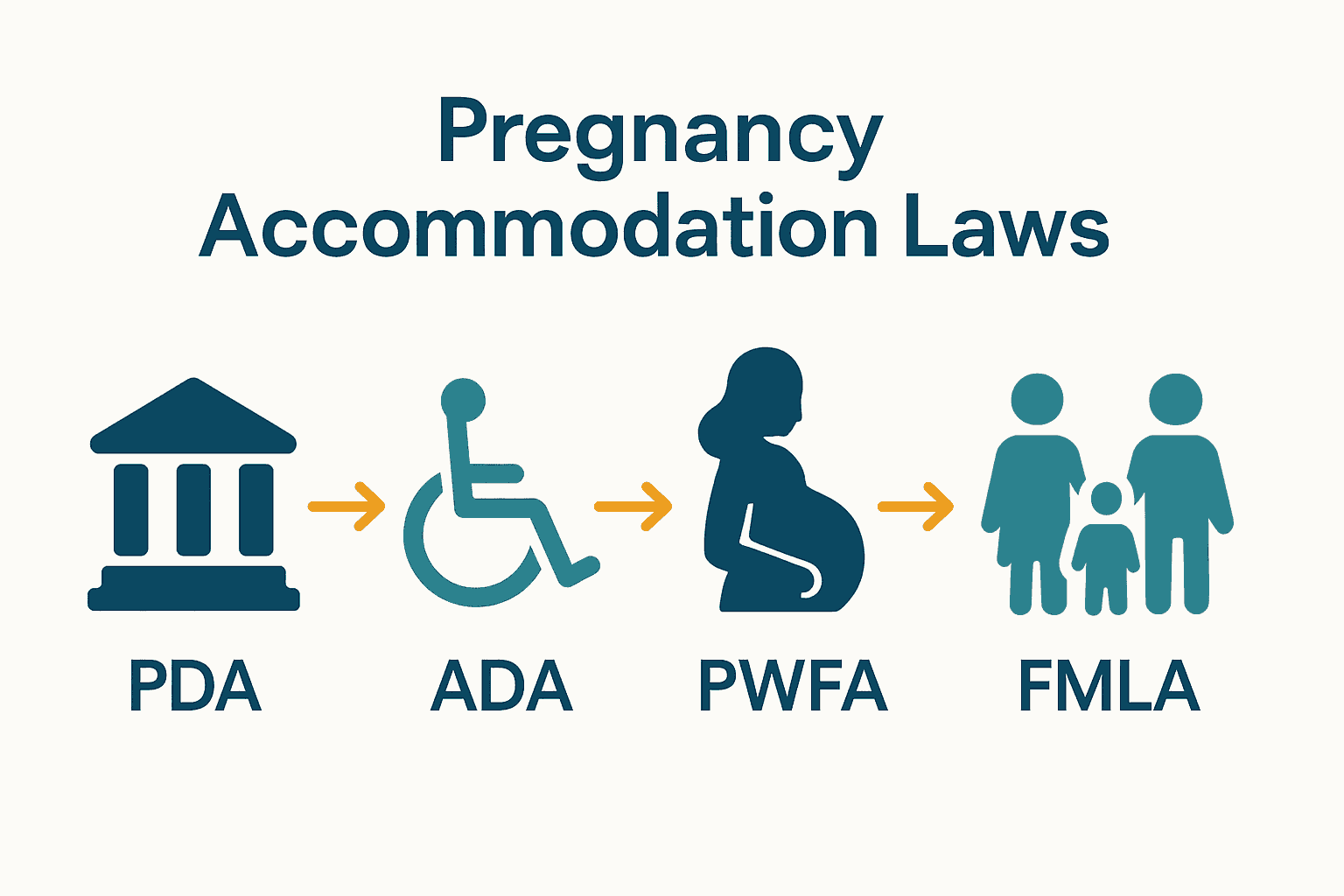
- Pregnancy Discrimination Act (PDA)
- Americans with Disabilities Act (ADA)
- Pregnant Workers Fairness Act (PWFA)
- Family and Medical Leave Act (FMLA)
Employer Obligations and Requirements
Employers must navigate a complex set of legal requirements when addressing pregnancy-related workplace needs. Explore our comprehensive guide on pregnancy discrimination laws to understand the full scope of these obligations. Key requirements include:
- Providing reasonable workplace accommodations
- Treating pregnancy-related conditions as temporary disabilities
- Ensuring no discriminatory practices in hiring, promotion, or job assignments
- Maintaining equivalent job responsibilities during and after pregnancy
Protections and Legal Remedies
When employers fail to comply with pregnancy accommodation laws, pregnant employees have several legal recourse options. These protections are designed to prevent discrimination and ensure fair treatment. Potential legal remedies include:
- Filing complaints with the Equal Employment Opportunity Commission
- Seeking monetary compensation for discrimination
- Requesting job reinstatement or reassignment
- Pursuing legal action for workplace violations
The legal framework surrounding pregnancy accommodations continues to evolve, reflecting a growing understanding of workplace equality and the unique needs of pregnant workers. Employers must stay informed and proactive in implementing these critical protections.
Consequences of Failing to Provide Necessary Accommodations
Employers who neglect to provide appropriate pregnancy-related workplace accommodations expose themselves to significant legal, financial, and professional risks. These consequences extend far beyond immediate workplace interactions and can have long-lasting impacts on organizational reputation and operational effectiveness.
This table presents the main categories of consequences that employers may face if they fail to provide necessary accommodations for pregnant employees, organizing legal, professional, and personal impacts for clearer understanding.
| Category | Examples of Consequences |
|---|---|
| Legal and Financial | Lawsuits, monetary penalties, compliance orders, regulatory investigations |
| Professional/Organizational | Decreased morale, high turnover, recruitment difficulties, reputation damage |
| Personal/Health | Increased stress, health risks, lost advancement, workplace isolation |
Legal and Financial Repercussions
According to the Centers for Disease Control and Prevention, failing to accommodate pregnancy-related needs can result in substantial legal challenges. Potential consequences include:
- Costly discrimination lawsuits
- Substantial monetary penalties and settlements
- Mandatory legal compliance training
- Potential federal and state regulatory investigations
- Mandated workplace policy revisions
Professional and Organizational Impact
Beyond legal ramifications, employers who disregard pregnancy accommodations risk significant professional damage. These organizational consequences can fundamentally undermine workforce stability and corporate culture:
- Decreased employee morale and trust
- Higher turnover rates among skilled workers
- Difficulty recruiting top talent
- Negative public perception and brand reputation
- Reduced workforce diversity and inclusivity
Personal and Health Implications
The most critical consequences of failing to accommodate pregnancy needs directly impact the pregnant employee’s health and professional trajectory. Understand more about workplace discrimination protections and their broader implications. Potential personal consequences include:
- Increased physical and emotional stress
- Potential health risks for mother and unborn child
- Compromised professional advancement opportunities
- Psychological distress and workplace isolation
- Long-term career development interruptions
Ultimately, pregnancy accommodation is not merely a legal obligation but a fundamental aspect of creating a supportive, equitable workplace that values every employee’s well-being and professional contribution.
How Businesses Can Support Pregnant Employees Effectively
Supporting pregnant employees requires a comprehensive, proactive approach that goes beyond mere legal compliance. Organizations must develop strategic policies and practices that demonstrate genuine commitment to employee well-being and professional development.
Creating a Supportive Workplace Culture
Research from the Society for Human Resource Management emphasizes the importance of developing an inclusive workplace environment. Businesses can foster a supportive culture by:
- Implementing clear, transparent accommodation policies
- Training managers on pregnancy-related workplace rights
- Promoting open communication about employee needs
- Establishing mentorship programs for pregnant workers
- Encouraging a non-discriminatory work environment
Practical Workplace Accommodations
Effective support requires thoughtful, tailored workplace modifications that address individual needs. Employers can provide meaningful accommodations such as:
- Flexible work schedules
- Ergonomic workspace adjustments
- Remote work options
- Reduced physical strain assignments
- Additional break times
Comprehensive Support Systems
Learn more about pregnancy workplace support strategies to understand comprehensive employee protection. Holistic support extends beyond immediate workplace adjustments and includes:
- Comprehensive health insurance coverage
- Supportive parental leave policies
- Phased return-to-work programs
- Lactation support facilities
- Career development opportunities during and after pregnancy
By implementing these strategies, businesses not only comply with legal requirements but also create an environment that values employee health, supports professional growth, and demonstrates a genuine commitment to workforce diversity and inclusion.
Protect Your Pregnancy Rights with Experienced Legal Support
If you are feeling the pressure and uncertainty that comes from your employer failing to make reasonable adjustments during your pregnancy, you are not alone. The article highlights the stress and risks of being denied essential workplace accommodations, which can harm both your health and professional future. These situations are not only unfair but also unlawful. You deserve fair treatment at work. For more resources and insights on employee protections, visit our Employment Law Archives.
Take charge of your rights today. The dedicated team at Serendib Law Firm is here to offer clear, compassionate guidance on pregnancy discrimination, workplace accommodations, and holding employers accountable. Let us help you secure the respect and support you need during this critical time. Schedule your free consultation and discover how our legal experience can make a difference in your case. Learn more about pregnancy and disability workplace protections by visiting our Disability Discrimination section. Act now to protect your health, your job, and your future.
Frequently Asked Questions
What constitutes a failure to accommodate pregnancy-related medical needs in the workplace?
Failure to accommodate pregnancy-related medical needs occurs when employers do not provide reasonable adjustments that support pregnant employees. This could involve ignoring requests for modified tasks or flexible schedules to manage health requirements.
What are some common types of accommodations for pregnant employees?
Common accommodations include flexible work schedules, temporary reassignments to less strenuous tasks, and adjustments to workstations. To ensure a supportive environment, it’s vital to assess individual needs and implement appropriate changes promptly.
What legal protections do pregnant employees have if accommodations are denied?
Pregnant employees are protected under laws like the Pregnancy Discrimination Act and the Americans with Disabilities Act. If accommodations are denied, employees can file complaints to seek justice and remedy their situation.
How can employers effectively address the accommodation needs of pregnant employees?
Employers can start by creating clear policies for pregnancy-related accommodations and training managers on these guidelines. Implementing a system for open communication about employee needs is also essential for providing timely support.
What are the potential consequences for employers who fail to accommodate pregnancy-related needs?
Employers who fail to provide necessary accommodations may face legal repercussions, including lawsuits and monetary penalties. They may also experience decreased employee morale and increased turnover, negatively impacting overall business performance.
How can employees advocate for their pregnancy-related workplace needs?
Employees should document their requests for accommodations and communicate openly with their supervisors about their needs. It’s important to follow up regularly and, if necessary, seek guidance from HR to ensure their rights are respected.
Recommended
- Pregnancy Discrimination and Types of Related Leaves | Serendib Law Firm
- Pregnancy Discrimination | Serendib Law Firm
- Workplace Disability Discrimination- Common Violations by Employers | Serendib Law Firm
- Important Facts About State & Federal Law on Employee Rights
- California ADA – Americans with Disabilities Act Violations