Most american healthcare employees in Westminster are surprised to learn that nearly one in five leave requests under FMLA or CFRA are denied or mishandled by employers each year. Facing unexpected pushback when requesting medical or family leave not only disrupts your job security but can also threaten your well-being. This guide breaks down the critical differences between federal and California leave laws so you can confidently assert your rights and safeguard your job in the healthcare workplace.
Table of Contents
- Defining FMLA and CFRA Leave Rules
- Eligibility and Covered Healthcare Situations
- Legal Protections and Employer Obligations
- Common Violations in Healthcare Workplaces
- How to Address Leave Violations Legally
Key Takeaways
| Point | Details |
|---|---|
| FMLA and CFRA Protections | Employees in Westminster are entitled to protections under FMLA and CFRA for medical and family leave without risking job loss. |
| Employer Coverage Differences | FMLA applies to employers with 50+ employees, while CFRA covers those with just 5+, enhancing employee rights in California. |
| Leave Qualifying Conditions | Employees may take leave for serious health conditions, family care, and bonding, with CFRA offering broader definitions of family. |
| Common Violations | Healthcare workers must be aware of common FMLA/CFRA violations, such as improper leave denials and retaliation, to protect their rights. |
Defining FMLA and CFRA Leave Rules
The Family and Medical Leave Act (FMLA) and California Family Rights Act (CFRA) represent critical legal protections for employees seeking medical and family-related leave in Westminster. These laws ensure workers can take necessary time off without risking their employment status. Understanding medical leave rights under CFRA and FMLA requires examining their specific provisions and applicability.
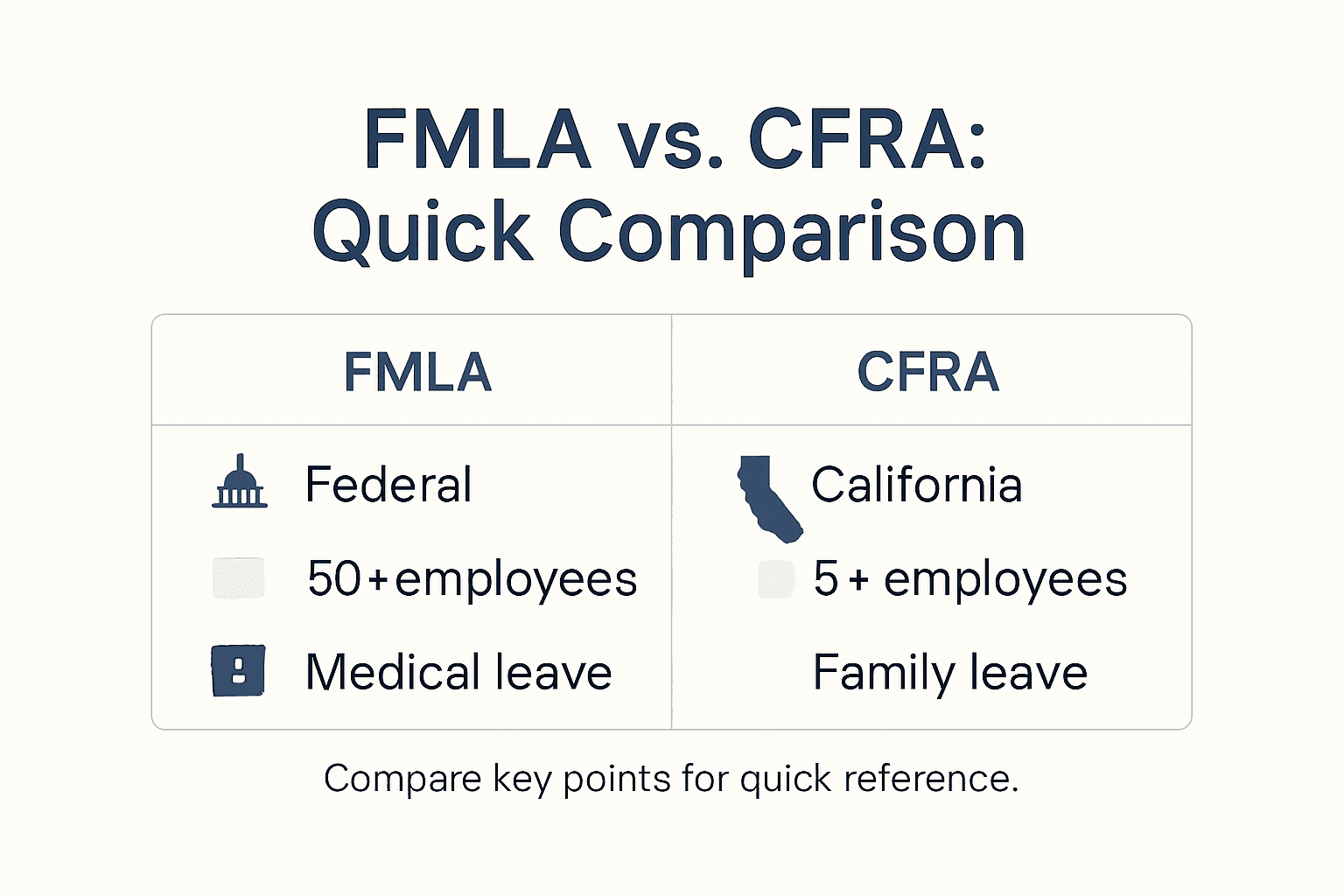
FMLA, a federal law, provides eligible employees with up to 12 weeks of unpaid, job-protected leave annually for specific qualifying reasons. These include childbirth, adoption, foster care placement, and addressing serious personal or family health conditions. The law applies to public agencies, schools, and private companies with 50 or more employees within a 75-mile radius. California’s CFRA offers similar protections but with some key distinctions, including coverage for employers with just 5 or more employees and a broader definition of family members eligible for care.
The primary differences between FMLA and CFRA lie in their scope and implementation. While FMLA is a federal mandate, CFRA provides additional state-level protections for California workers. CFRA allows leave for caring for a broader range of family members, including domestic partners and in-laws, and offers more comprehensive definitions of family care. Employees must typically have worked for their employer for at least 12 months and completed 1,250 work hours to qualify for these protections.
Here’s a side-by-side comparison summarizing the key differences between FMLA and CFRA:
| Aspect | FMLA (Federal) | CFRA (California) |
|---|---|---|
| Employer Coverage | 50+ employees within 75 miles | 5+ employees, no distance limit |
| Eligible Family Members | Spouse, child, parent | Adds domestic partner, in-laws, more relatives |
| Leave Duration | Up to 12 weeks unpaid | Up to 12 weeks unpaid |
| Job Reinstatement | Same or equivalent position | Same or equivalent position |
| Military Family Leave | Yes, covered | Somewhat limited |
Pro tip: Always document your leave requests in writing and keep detailed records of all communications with your employer to protect your legal rights under FMLA and CFRA regulations.
Eligibility and Covered Healthcare Situations
Understanding the nuanced eligibility requirements for FMLA and CFRA is critical for healthcare workers in Westminster seeking medical leave protections. Comprehensive legal awareness about employee leave rights reveals specific criteria that determine an employee’s qualification for job-protected leave.
To be eligible for FMLA and CFRA leave, employees must meet several key requirements. First, workers must have been employed with their current employer for at least 12 consecutive months. Additionally, they must have worked a minimum of 1,250 hours during the 12 months preceding the leave request. The employer size also plays a crucial role: FMLA applies to companies with 50 or more employees within a 75-mile radius, while CFRA extends protections to employers with just 5 or more employees, offering broader coverage for California workers.
Covered healthcare situations under these laws are comprehensive and include several critical scenarios. Employees can take protected leave for personal serious health conditions, caring for family members with significant medical issues, bonding with newborn or newly adopted children, and supporting military family members during deployment. Notably, CFRA provides more expansive definitions of family members compared to FMLA, including domestic partners, in-laws, and a wider range of relatives who may require care. This expanded definition ensures more inclusive support for diverse family structures and medical needs.
Pro tip: Gather and organize all necessary documentation, including medical certifications and employment records, before submitting your leave request to streamline the approval process and protect your legal rights.
Legal Protections and Employer Obligations
Employers in Westminster face significant legal responsibilities when administering FMLA and CFRA leave provisions. Comprehensive employer obligations under leave protection laws mandate specific actions to ensure employee rights are consistently maintained and respected.
Under both FMLA and CFRA, employers are required to provide several critical protections for employees. These include maintaining group health insurance coverage during leave periods, guaranteeing job reinstatement to the same or an equivalent position upon return, and prohibiting any form of retaliation or discrimination against employees who exercise their legal leave rights. Employers must also provide clear written notices explaining employees’ leave entitlements and handle leave certification processes with strict adherence to legal standards.
The legal landscape for employer obligations extends beyond basic leave administration. Employers must navigate complex requirements such as maintaining confidentiality of medical information, responding promptly to leave requests, and avoiding intrusive inquiries about medical conditions. California’s CFRA imposes additional state-specific requirements, particularly for smaller employers with 5 or more employees, which significantly broadens the scope of legal protections compared to federal FMLA standards. This means Westminster employers must be particularly vigilant in understanding and implementing both federal and state-level leave regulations.
Pro tip: Maintain meticulous documentation of all leave requests, communications, and decisions to protect both employee rights and employer interests in potential legal disputes.
Common Violations in Healthcare Workplaces
Healthcare workplaces in Westminster frequently encounter complex FMLA and CFRA leave violation scenarios that can significantly impact employee rights. Identifying workplace retaliation patterns reveals multiple ways employers may inadvertently or intentionally violate leave protection laws.
Common violations in healthcare settings often involve improper denial of leave requests, retaliation against employees who request medical leave, and failure to maintain health insurance coverage during leave periods. Specific problematic practices include requiring employees to provide excessive medical documentation, denying reinstatement to equivalent positions after leave, reducing work hours or responsibilities as punishment for taking protected leave, and creating hostile work environments that discourage employees from exercising their legal leave rights.
The healthcare industry presents unique challenges in leave administration due to complex scheduling requirements and staffing needs. Employers frequently violate FMLA and CFRA regulations by pressuring employees to work during approved leave periods, refusing to accommodate intermittent leave for chronic medical conditions, discriminating against employees with recurring health issues, and failing to provide clear written notifications about leave entitlements. These violations can result in significant legal consequences, including potential monetary damages and mandatory corrective actions.
The following table outlines common FMLA/CFRA violations in healthcare workplaces and their potential consequences:
| Violation Type | Real-World Example | Possible Employer Liability |
|---|---|---|
| Leave Denial | Refusing leave after medical certification | Back pay, mandatory leave grant |
| Retaliation | Reducing hours post-leave request | Job reinstatement, damages |
| Interference | Pressuring work during approved leave | Penalties, corrective action |
| Poor Documentation | Incomplete leave notices to staff | Fines, compliance monitoring |
Pro tip: Document every interaction related to your medical leave request, including emails, verbal communications, and any changes in workplace treatment to build a strong evidence trail for potential legal protection.
How to Address Leave Violations Legally
Healthcare employees in Westminster facing FMLA and CFRA leave violations have multiple legal pathways to address workplace injustices. Navigating employee complaint procedures requires strategic documentation and understanding of both federal and state-level legal protections.
Initial steps in addressing leave violations involve comprehensive documentation of all interactions, communications, and incidents related to the leave request. Employees should compile a detailed chronological record including emails, written correspondence, witness statements, and any evidence demonstrating the employer’s failure to comply with FMLA or CFRA regulations. This documentation serves as critical evidence if legal action becomes necessary, providing a clear narrative of potential workplace violations and supporting potential claims before administrative agencies or in court.
Legal recourse for leave violations typically involves filing formal complaints with relevant government agencies or pursuing civil litigation. Employees can submit complaints to the U.S. Department of Labor Wage and Hour Division or the California Civil Rights Department, which investigate potential violations and may provide remedies. Potential legal outcomes include job reinstatement, back pay, compensation for damages, and mandatory corrective actions by the employer. Professional legal representation can help navigate these complex processes, assess the strength of the case, and determine the most effective strategy for addressing workplace leave violations.
Pro tip: Consult with an employment law specialist before filing formal complaints to understand the full scope of your legal rights and develop the most strategic approach to addressing workplace leave violations.
Protect Your Rights Against FMLA and CFRA Leave Violations in Westminster
Facing denial of your rightful medical or family leave can feel overwhelming and unfair. This article sheds light on common challenges like retaliation, improper leave denial, and employer interference with your protections under FMLA and CFRA. You deserve a workplace where your health and family needs are respected without fear of losing your job or benefits.
If you are dealing with these issues, accessing knowledgeable legal support is critical. Our experienced team at Serendib Law Firm is dedicated to standing up for employees in Westminster and throughout California against leave violations. Learn more about how we help with employment leave disputes by visiting our Leaves Archives. Do not wait while your rights are compromised. Reach out today for a free consultation at Serendib Law Firm to get personalized guidance on protecting your job and benefits under FMLA and CFRA. Empower yourself with trusted advocacy that fights for fair treatment and lawful leave protections.
Frequently Asked Questions
What are the main differences between FMLA and CFRA leave?
FMLA offers protections for employees at companies with 50 or more employees, while CFRA covers employers with just 5 employees. CFRA allows for broader definitions of family members eligible for care.
How can I determine if I am eligible for FMLA or CFRA leave?
To be eligible, you must have worked for your employer for at least 12 months and completed 1,250 work hours. For CFRA, smaller employers with 5 or more employees are covered.
What should I do if my employer denies my leave request under FMLA or CFRA?
Document all communications related to your leave request and consider filing a complaint with the U.S. Department of Labor or the California Civil Rights Department. Consulting with an employment law specialist is also recommended.
What common violations should I look out for regarding FMLA and CFRA?
Common violations include improper denial of leave, retaliation for requesting leave, failing to maintain health insurance during leave, and pressuring employees to work while on approved leave.