Over one third of whistleblowers in American B2B firms experience direct retaliation, from abrupt job loss to ongoing professional harassment. For employees who risk exposing wrongdoing, the prospect of facing such consequences highlights just how precarious workplace ethics can be. This guide unpacks the serious risks, common retaliation tactics, and the legal protections every American worker needs to know before stepping forward.
Table of Contents
- Defining Whistleblower Retaliation In B2B Firms
- Types Of Internal Fraud At Fountain Valley Companies
- California Laws Protecting Whistleblowers
- Common Retaliation Tactics By Employers
- Steps To Take After Reporting Fraud
Key Takeaways
| Point | Details |
|---|---|
| Whistleblower Retaliation | Employers in B2B firms may engage in various forms of retaliation against employees reporting misconduct, including termination, harassment, and demotion. |
| Legal Protections | California laws offer robust protections for whistleblowers, prohibiting retaliation for reporting a wide range of illegal activities. |
| Documentation Importance | Employees should meticulously document all communications and interactions related to their whistleblowing to protect their legal rights. |
| Internal Fraud Risks | B2B companies face significant internal fraud risks, such as embezzlement and payroll fraud, which can harm organizational integrity and trust. |
Defining Whistleblower Retaliation in B2B Firms
Whistleblower retaliation represents a serious workplace violation where employers punish employees who expose unethical or illegal practices within their organization. In B2B environments, this retaliation can take multiple forms, ranging from subtle discrimination to direct professional consequences. Research from Harvard Business School reveals that these retaliatory actions are strategically designed to intimidate workers and suppress internal reporting.
The spectrum of whistleblower retaliation is broad and nuanced. Specific actions might include termination, demotion, harassment, salary reduction, or creating a hostile work environment. According to the Harvard Business School study, the most common retaliatory measures include firing employees (37% of cases), professional harassment (16%), workplace threats (10%), unexpected demotions (6%), and suspension (2.5%). These statistics underscore the significant professional risks employees face when reporting corporate misconduct.
In B2B firms, whistleblower retaliation often occurs in complex, layered professional settings where power dynamics can be particularly intricate. Employees might face retaliation for reporting financial fraud, safety violations, discriminatory practices, or regulatory non-compliance. The consequences extend beyond individual experiences, potentially undermining organizational integrity and creating a culture of fear that discourages transparency and ethical behavior.
Pro Tip for Employees: Document every interaction and communication related to your whistleblowing report, including dates, times, and specific details. This evidence can be crucial if you need to pursue legal protection against potential retaliation.
Here’s a comparison of common retaliation methods and their potential impact on whistleblowers:
| Retaliation Method | Immediate Impact | Long-Term Consequence |
|---|---|---|
| Termination | Sudden job loss | Career disruption, financial strain |
| Professional harassment | Increased workplace stress | Diminished reputation, burnout |
| Workplace threats | Environment of fear | Decreased morale, anxiety |
| Demotion | Reduced responsibilities, status | Limited career growth |
| Suspension | Loss of income, job uncertainty | Lack of advancement, instability |
Types of Internal Fraud at Fountain Valley Companies
Internal fraud in B2B companies represents a complex landscape of deceptive practices that can significantly undermine organizational integrity. Fountain Valley businesses, like many small to medium-sized corporate environments, face various sophisticated fraud risks that extend beyond simple financial misconduct. Experienced Fountain Valley workplace retaliation lawyers understand that these fraudulent activities often involve intricate schemes designed to exploit systemic vulnerabilities.
The most prevalent types of internal fraud in Fountain Valley companies include financial manipulation, embezzlement, payroll fraud, and intellectual property theft. Financial manipulation might involve deliberately misreporting financial statements, creating false expense reports, or artificially inflating revenue figures. Embezzlement frequently occurs when employees with financial access siphon company funds through unauthorized transactions or create phantom vendor accounts.

Payroll fraud represents another significant risk, where employees might engage in practices like ghost employee schemes, falsifying work hours, or creating fictitious overtime claims. Intellectual property theft can be particularly damaging in technology and service-oriented B2B firms, where employees might steal trade secrets, client lists, or proprietary methodologies to benefit competing organizations or personal ventures. These fraudulent activities not only cause direct financial losses but also erode trust, damage corporate reputation, and potentially lead to legal consequences.
Pro Tip for Business Owners: Implement robust internal control systems, conduct regular financial audits, and establish clear reporting mechanisms that allow employees to confidentially report suspicious activities without fear of retaliation.
The following table summarizes key internal fraud risks specific to B2B firms and associated business impacts:
| Fraud Type | Typical Scheme Example | Business Impact |
|---|---|---|
| Financial manipulation | False revenue reporting | Misleading investors, legal penalties |
| Embezzlement | Unauthorized fund transfers | Direct cash loss, regulatory scrutiny |
| Payroll fraud | Ghost employees | Inflated costs, reduced profitability |
| Intellectual property theft | Stolen trade secrets | Loss of competitive advantage |
California Laws Protecting Whistleblowers
California has established comprehensive legal protections for employees who report workplace misconduct, recognizing the critical role whistleblowers play in maintaining corporate integrity. Whistleblower protection laws in the state provide robust safeguards that shield employees from retaliatory actions when they report illegal activities, safety violations, or unethical practices within their organizations.
The California Labor Code Section 1102.5 stands as a cornerstone of whistleblower protection, explicitly prohibiting employers from retaliating against employees who disclose information to government or law enforcement agencies about potential legal violations. This statute covers a wide range of scenarios, including reporting violations related to workplace safety, financial fraud, environmental violations, and potential criminal activities. Employees are protected when they report internally to supervisors or externally to regulatory agencies, ensuring multiple channels of reporting are legally defended.
Additional legal protections extend across various specific domains. For instance, the California False Claims Act provides protection for employees who report fraud against government entities, while industry-specific regulations offer additional layers of protection in sectors like healthcare, finance, and public safety. These laws not only prohibit direct retaliation like termination or demotion but also protect against more subtle forms of workplace discrimination, including harassment, reduced work hours, negative performance evaluations, or creating a hostile work environment designed to force an employee to resign.
Pro Tip for Workers: Document every detail of potential misconduct and your reporting process, including dates, specific communications, and any subsequent workplace treatment. Maintaining a comprehensive record can be crucial if you need to demonstrate potential retaliation or protect your legal rights.
Common Retaliation Tactics by Employers
Employers in B2B environments frequently deploy sophisticated psychological and professional intimidation strategies designed to suppress whistleblowing and discourage future reporting of misconduct. Research from Harvard Business School highlights that these retaliatory tactics are systematically implemented to create an environment of fear and compliance.
The most prevalent retaliation tactics include direct professional consequences and subtle workplace manipulation. According to the research, termination remains the most extreme form of retaliation, occurring in 37% of documented cases. Beyond outright dismissal, employers often engage in more nuanced approaches such as professional harassment (16% of cases), issuing direct workplace threats (10%), implementing unexpected demotions (6%), and strategically suspending employees (2.5%). These actions are carefully calculated to undermine an employee’s professional standing, credibility, and future career prospects.
Subtle retaliation tactics can be even more insidious, involving systematic workplace marginalization. These might include strategically excluding whistleblowers from important meetings, assigning meaningless or demeaning work responsibilities, creating hostile work environments, spreading professional rumors, denying training or promotional opportunities, and deliberately providing negative performance evaluations. Such tactics are designed to psychologically wear down employees, making continued employment uncomfortable and potentially forcing them to resign voluntarily, thereby avoiding direct legal accountability for wrongful termination.
Pro Tip for Employees: Maintain a detailed, contemporaneous record of all workplace interactions, communications, and potential retaliatory actions, including dates, specific incidents, and potential witnesses. This documentation can serve as critical evidence if legal action becomes necessary.
Steps to Take After Reporting Fraud
After reporting workplace fraud, employees must take strategic and deliberate steps to protect their professional and legal interests. Workplace retaliation lawyers recommend maintaining comprehensive documentation and understanding your legal rights as a critical first line of defense against potential employer misconduct.
Immediate actions should include creating a detailed, chronological record of the fraud report and subsequent workplace interactions. This documentation must include specific dates, times, communication methods, recipients of your report, and any subsequent workplace changes or treatment. Employees should preserve all relevant emails, memos, performance reviews, and communication records that might demonstrate potential retaliation. Simultaneously, it is crucial to report the fraud through multiple channels, such as internal compliance departments, human resources, and external regulatory agencies like the Securities and Exchange Commission (SEC) or appropriate industry-specific oversight bodies.
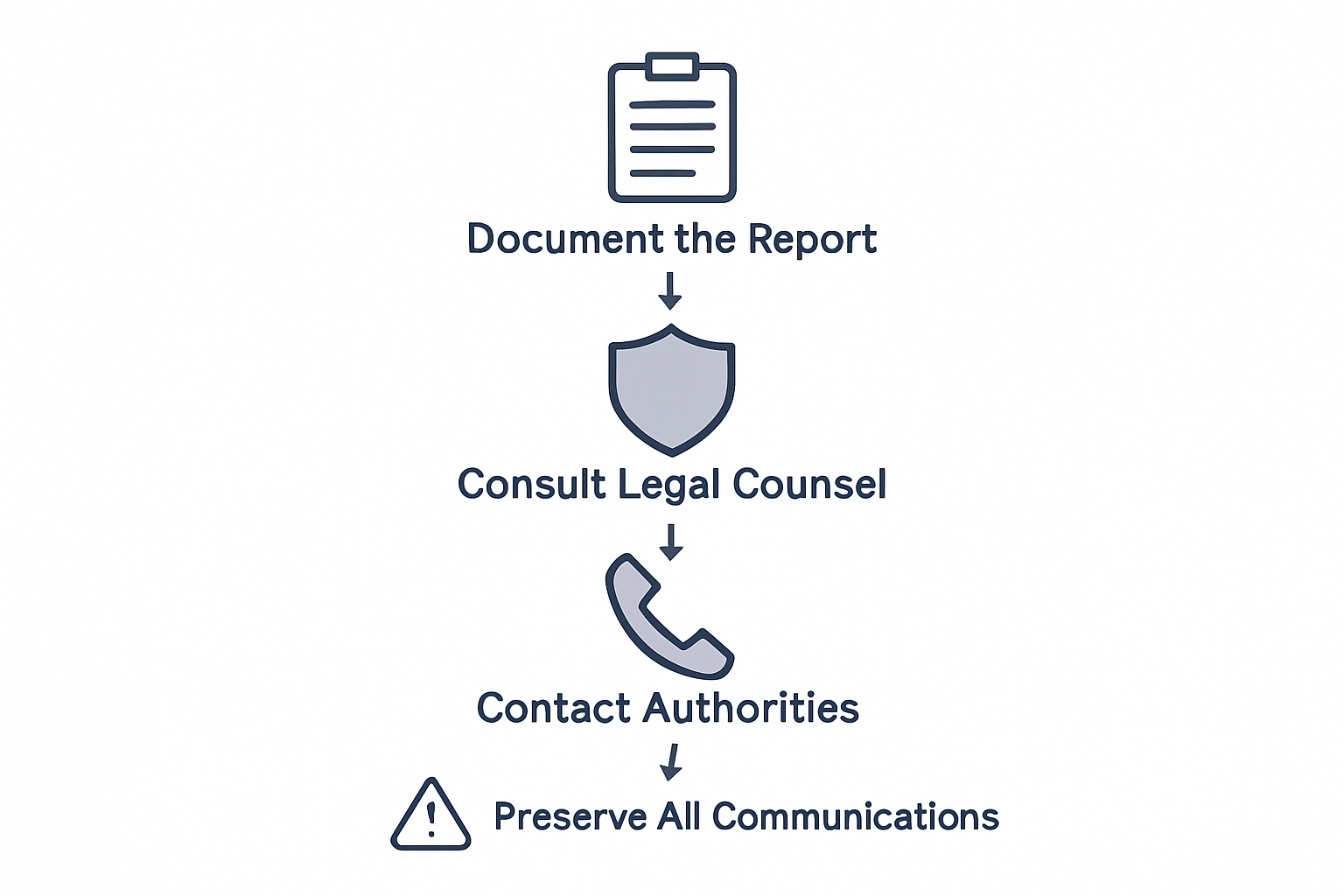
Legal protection becomes paramount after reporting fraud. Employees should consider consulting with an employment law attorney who specializes in whistleblower protection to understand their rights and potential legal strategies. Many employees are unaware that multiple state and federal laws provide explicit protections against retaliation, including the Sarbanes-Oxley Act, Dodd-Frank Act, and specific California state regulations. These laws not only prohibit direct retaliatory actions but also provide potential mechanisms for financial compensation and reinstatement if an employer engages in discriminatory practices.
Pro Tip for Whistleblowers: Seek legal consultation immediately after reporting fraud, even if no immediate retaliation appears evident. Early professional legal guidance can help you understand your rights and preemptively document potential future workplace challenges.
Protect Your Rights After Reporting Whistleblower Retaliation in Fountain Valley B2B Firms
Facing retaliation after exposing workplace misconduct can be a deeply stressful and harmful experience. Whether you have encountered termination, harassment, demotion, or subtle workplace discrimination for standing up against unethical practices, you do not have to face it alone. Understanding your legal protections under California law and securing expert guidance are crucial steps to protect your career and personal wellbeing.
At Serendib Law Firm, we specialize in handling whistleblower retaliation cases with personalized and zealous advocacy. Our knowledgeable team is dedicated to helping you navigate complex workplace disputes and defend your rights. Don’t let fear or retaliation silence your voice. Visit our Whistleblower Retaliation Archives | Serendib Law Firm to learn more about your protections or explore our broader resources in Retaliation Archives | Serendib Law Firm.
Take control of your situation today by contacting us at https://serendiblaw.com for a free consultation. The sooner you act, the better your chance to preserve your rights and combat retaliation with trusted legal representation on your side.
Frequently Asked Questions
What constitutes whistleblower retaliation in B2B firms?
Whistleblower retaliation in B2B firms involves any negative action taken by an employer against an employee who reports unethical or illegal practices. This can include termination, professional harassment, demotion, or creating a hostile work environment.
What are common forms of retaliation employees face after reporting misconduct?
Common forms of retaliation include termination (37% of cases), professional harassment (16%), workplace threats (10%), unexpected demotions (6%), and suspension (2.5%). These actions can significantly impact an employee’s career and well-being.
How can employees protect themselves from whistleblower retaliation?
Employees can protect themselves by documenting all interactions related to their whistleblowing reports, keeping detailed records of incidents and communications. It is also advisable to maintain open channels of communication with legal representatives who specialize in employment law.
What legal protections exist for whistleblowers?
Legal protections for whistleblowers include the California Labor Code Section 1102.5, which prohibits retaliation against employees who report workplace misconduct to regulatory agencies or internally. Additional protections may also exist under the California False Claims Act and various industry-specific regulations.