
When Uber’s 2017 crisis exposed systematic sexual harassment affecting thousands of employees, the tech world learned a hard lesson about toxic workplaces. The scandal cost the company its CEO, billions in valuation, and countless legal battles. For tech employees in Costa Mesa facing similar harassment or toxic work environments today, these lessons remain vital. Understanding your legal rights, how to document claims properly, and when to seek expert help can mean the difference between suffering in silence and securing justice.
Table of Contents
- Understanding Sexual Harassment And Toxic Workplace Claims In Costa Mesa Tech Offices
- Lessons From The Uber Workplace Scandal: How Toxic Culture Develops And Impacts Tech Companies
- Proving Sexual Harassment Claims: Legal Standards And Common Pitfalls
- Notable Sexual Harassment Cases In Orange County Tech And Government Sectors
- Get Expert Legal Help For Sexual Harassment And Workplace Claims In Orange County Tech
Key takeaways
| Point | Details |
|---|---|
| Sexual harassment claims require proof | You must show unwelcome conduct was severe or pervasive, based on protected characteristics, and that your employer knew but failed to act. |
| Orange County cases yield substantial awards | Recent jury verdicts include a $3.5 million award to an Orange County prosecutor for sexual harassment. |
| Documentation determines case strength | Early, detailed records of incidents, witnesses, and employer responses are essential to proving your claim. |
| Leadership creates or prevents toxic culture | Companies that prioritize growth over ethics enable harassment and retaliation, as Uber’s crisis demonstrated. |
| Specialized legal support protects your rights | Consulting experienced employment attorneys early helps you avoid common pitfalls and maximize your claim’s success. |
Understanding sexual harassment and toxic workplace claims in Costa Mesa tech offices
Sexual harassment in the workplace involves unwelcome conduct of a sexual nature that creates a hostile or offensive work environment. The EEOC defines these claims as involving unwelcome sexual advances, requests for sexual favors, or other verbal or physical harassment based on sex. Toxic workplaces extend beyond sexual misconduct to include discrimination, retaliation, bullying, and patterns of behavior that make work unbearable.
In Costa Mesa’s tech sector, these issues manifest in unique ways. Fast-paced startup cultures often blur professional boundaries. Late night coding sessions, social drinking events, and casual workplace norms can create environments where harassment flourishes unchecked. The power dynamics between engineers, managers, and executives mirror those that enabled Uber’s toxic culture.
Common legal claims in tech workplaces include:
- Hostile work environment based on sex, race, or other protected characteristics
- Quid pro quo harassment where job benefits depend on sexual favors
- Disparate treatment involving unequal pay or promotion opportunities
- Retaliation after reporting misconduct or participating in investigations
- Wrongful termination following harassment complaints
Recent cases in Orange County tech companies show these aren’t abstract concepts. Employees face real harassment, from inappropriate comments during standup meetings to executives creating cultures of fear. Understanding sexual harassment standards Costa Mesa courts apply helps you recognize when your rights are violated. Legal standards matter because they determine whether your experience qualifies for protection and potential compensation.
Lessons from the Uber workplace scandal: how toxic culture develops and impacts tech companies
Uber’s 2017 implosion provides a blueprint for understanding how toxic cultures develop in tech. Former engineer Susan Fowler’s blog post exposed widespread sexual harassment, discrimination, and aggressive competitive tactics that had become normalized. The company’s human resources department routinely dismissed complaints, protected high performers despite misconduct, and retaliated against employees who spoke up.
Travis Kalanick’s leadership exemplified how executive priorities shape workplace culture. His ‘growth at any cost’ mentality created an environment where ethical concerns took a backseat to expansion and revenue. Managers learned that hitting targets mattered more than treating employees fairly. This top-down toxicity permeated every level of the organization.
“The company’s aggressive approach to business extended into its workplace culture, where complaints of sexual harassment were often ignored or dismissed, and employees who reported such behavior faced retaliation rather than support.”
The consequences were severe. Uber faced multiple lawsuits, government investigations, and a shareholder revolt that forced Kalanick out. The company’s valuation dropped billions. Public trust eroded. Talented employees fled to competitors.
For Costa Mesa tech workers, the warning signs are clear:
- Leadership that glorifies overwork and dismisses work-life balance
- HR departments that protect the company instead of employees
- High performers who face no consequences for misconduct
- Retaliation against employees who raise concerns
- Metrics and growth prioritized over employee welfare
When you see these patterns, document everything. Toxic cultures rarely improve without external pressure, legal action, or leadership changes. Recognizing these dynamics early helps you protect yourself and build a stronger case if you need legal recourse.
Proving sexual harassment claims: legal standards and common pitfalls
Successfully proving a sexual harassment claim requires meeting specific legal standards. You must establish that the conduct was unwelcome, based on sex, severe or pervasive enough to create a hostile work environment, and that your employer knew or should have known but failed to act. Each element requires concrete evidence, not just your testimony.
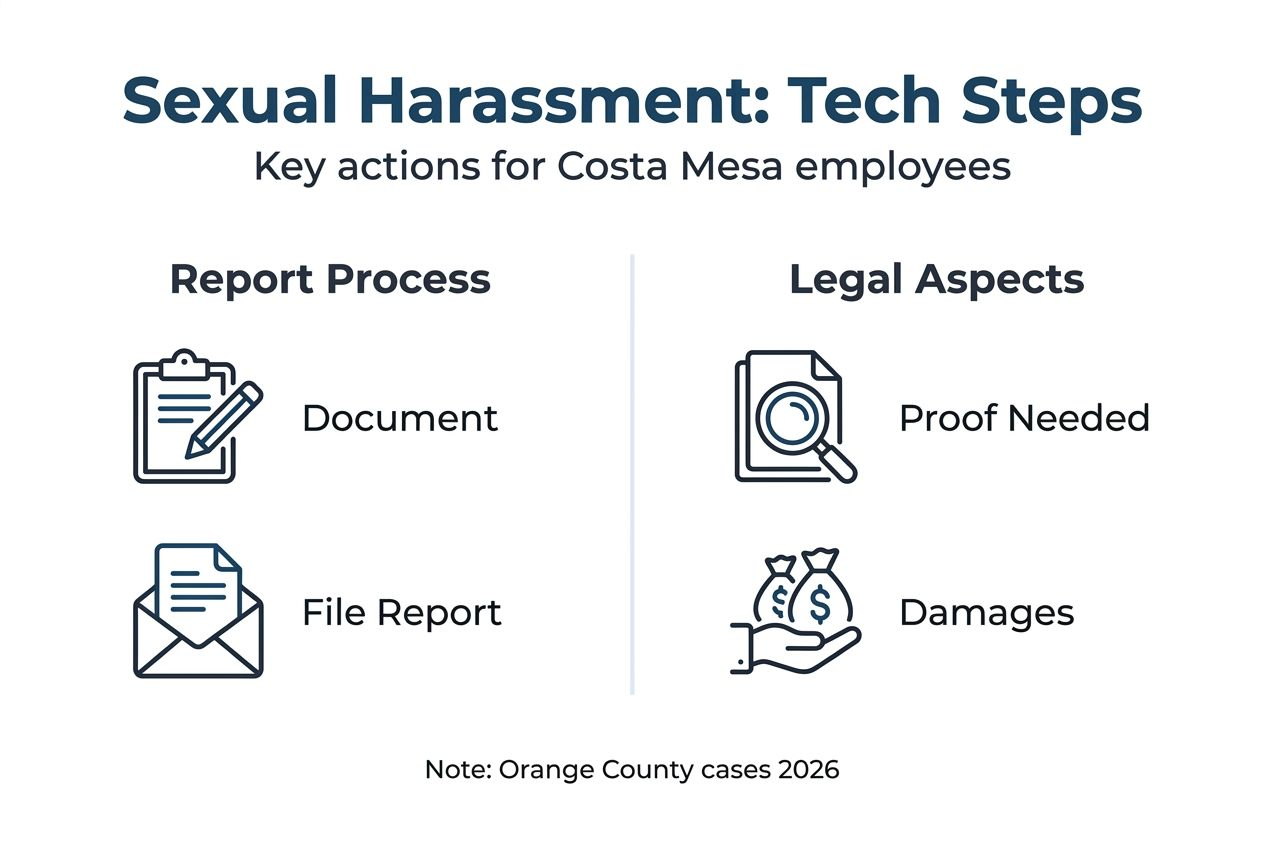
To build a strong case, follow these steps:
- Report the harassment promptly through your company’s designated channels, typically HR or a supervisor
- Document every incident with dates, times, locations, witnesses, and exact quotes when possible
- Preserve all evidence including emails, text messages, Slack conversations, and performance reviews
- Note your employer’s response or lack thereof to each report
- Consult an employment attorney before the situation escalates or you’re terminated
Common mistakes that undermine otherwise valid claims include waiting too long to report incidents, relying on memory instead of written documentation, and misunderstanding what legally qualifies as harassment. One offensive comment rarely meets the severity threshold. A pattern of unwanted touching, sexual propositions, or gender-based insults typically does.

Pro Tip: Start a private journal documenting workplace incidents immediately after they occur. Include factual details without editorializing. This contemporaneous record carries more weight than memories reconstructed months later during litigation.
Orange County tech workers often stumble by confusing general workplace rudeness with illegal harassment. Your manager being difficult doesn’t create a claim unless the behavior stems from your protected characteristics like sex, race, age, or disability. Similarly, consensual workplace relationships that later sour don’t automatically become harassment unless unwelcome conduct continues after you clearly object.
Another pitfall involves informal resolution attempts. While trying to resolve issues directly can be appropriate, doing so exclusively without formal HR reports may later undermine claims that your employer had knowledge. Companies defend cases by arguing they never received complaints through proper channels. Working with Orange workplace harassment lawyers helps you navigate these procedural requirements while protecting your rights.
Notable sexual harassment cases in Orange County tech and government sectors
Recent Orange County cases illustrate how sexual harassment claims proceed and the substantial damages available to successful plaintiffs. These real outcomes demonstrate that juries take workplace harassment seriously when employees present strong evidence.
In February 2026, a jury awarded a veteran prosecutor $3.5 million in a sexual harassment case against Orange County. The case involved a supervisor’s pattern of unwanted sexual advances and retaliation after the employee complained. The substantial verdict reflected both economic damages for lost career opportunities and non-economic damages for emotional distress.
Another significant case, Prather v. Priority Plus Financial LLC, alleges systematic gender discrimination, sexual harassment, and wage violations at the company’s Orange County operations. The allegations include unequal pay for female employees, hostile work environment based on sex, and retaliation against employees who complained about discriminatory treatment.
| Case | Sector | Award/Status | Key Issues |
|---|---|---|---|
| Veteran Prosecutor v. Orange County | Government | $3.5 million | Supervisor harassment, retaliation |
| Prather v. Priority Plus Financial | Financial Services | Pending litigation | Gender discrimination, wage violations, hostile environment |
| Multiple tech startups | Technology | Confidential settlements | Sexual harassment, failure to investigate |
These cases share common elements:
- Supervisors or executives engaging in misconduct
- Employer’s inadequate or absent response to complaints
- Retaliation following protected activity like filing complaints
- Clear documentation of incidents and employer knowledge
- Substantial damages reflecting severity and duration of harassment
For tech employees facing similar situations, these precedents demonstrate that Orange County juries understand workplace harassment and award meaningful compensation. The cases also highlight the importance of formal complaints and documentation. Employees who reported harassment through proper channels and preserved evidence achieved better outcomes than those who handled issues informally.
When evaluating your own situation, consider whether your employer’s response matches legal requirements. Employers must promptly investigate complaints, take appropriate corrective action, and prevent retaliation. Failure on any element strengthens potential claims. Working with attorneys experienced in retaliation claims Orange County court proceedings helps you understand how local juries evaluate these cases.
Get expert legal help for sexual harassment and workplace claims in Orange County tech
Navigating sexual harassment and toxic workplace claims requires specialized legal expertise. Serendib Law Firm brings extensive experience with Orange County employment law cases, understanding both the legal standards and local workplace dynamics that affect tech employees. Our team has successfully represented employees facing harassment, discrimination, and retaliation across various industries.
We offer confidential consultations to evaluate your situation and explain your legal options. Whether you’re currently experiencing harassment, facing retaliation for complaints, or considering whether to report misconduct, early legal guidance protects your rights and strengthens potential claims. Our employment law services cover all aspects of workplace disputes, from initial demand letters through trial.
Our experienced Orange law attorneys understand the unique challenges tech employees face. We know how startup cultures can enable misconduct and how to prove employer liability when companies fail to protect workers. Contact our Orange workplace harassment lawyers today to discuss your case and explore your options for securing justice and fair compensation.
FAQ
What should I do immediately if I experience sexual harassment at my tech job in Costa Mesa?
Report the incident promptly to HR or a trusted manager following your company’s established policy. Document all details immediately, including dates, times, specific statements or actions, and any witnesses. Seek legal advice from an employment attorney early to understand your rights and avoid common mistakes that could weaken your claim.
How can I prove a hostile work environment claim in a Costa Mesa tech office?
You must show the harassment was unwelcome, severe or pervasive enough to alter working conditions, and based on sex or another protected characteristic. Additionally, demonstrate your employer knew or should have known about the harassment but failed to take prompt, appropriate corrective action. Strong documentation of incidents and employer responses is essential.
What are common mistakes employees make when filing sexual harassment complaints?
Delaying reporting incidents, maintaining poor or no documentation of harassment, and misunderstanding what legally qualifies as actionable harassment undermine many claims. Many employees also fail to follow company reporting procedures properly or don’t preserve critical evidence like emails and messages. Consulting an attorney early helps you avoid these pitfalls and build the strongest possible case.
Can I sue my employer for retaliation after reporting harassment in Orange County?
Yes, California law prohibits retaliation against employees who report harassment or participate in investigations. Retaliation claims are separate from underlying harassment claims and can proceed even if the harassment claim doesn’t succeed. If you’ve faced adverse actions like termination, demotion, or hostile treatment after reporting, consult Orange workplace retaliation lawyers immediately to evaluate your case and protect your rights.
