
Audio summary
Being hit while walking in a crosswalk can change your life in seconds. One moment you are stepping off the curb near your home or heading to class at UC Irvine; the next, you are injured, confused, and facing medical and financial questions.
How Crosswalk Injuries Happen in Irvine
Irvine is built around wide, fast arterials and major intersections. Data show injury collisions, including pedestrian crashes, at locations such as:
- Culver Drive & Irvine Center Drive.
- Campus Drive & University Drive near UC Irvine.
- Busy corridors like Jamboree Road between Campus Drive and Birch Street, where tens of thousands of vehicles travel daily.
Heavy traffic near schools, shopping centers, and campus puts drivers and pedestrians in frequent conflict. Common crosswalk crash patterns include:
- Drivers turning right on red while watching oncoming cars instead of the crosswalk.
- Left turns by drivers trying to “beat the light” and missing a person in the crosswalk.
- Multilane “multiple-threat” scenarios where one lane stops but a driver in the next lane does not.
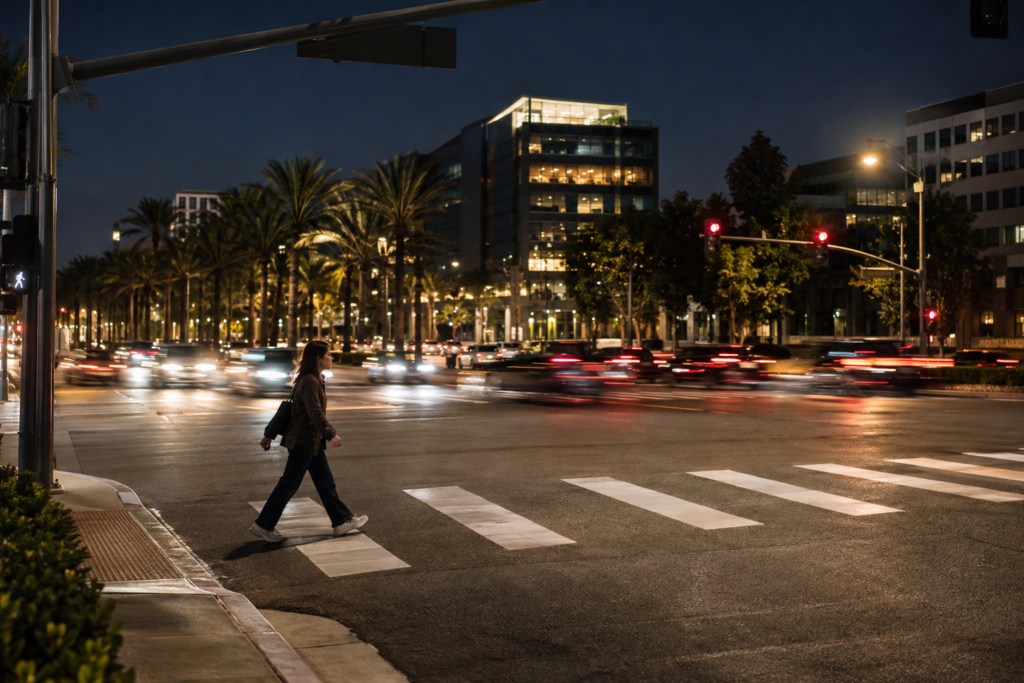
- Collisions after dark at large intersections such as Irvine Center Drive & Culver Drive.
Understanding how your crash happened is central to proving driver negligence.
California Crosswalk Law: Pedestrian Rights and Duties
Liability in crosswalk cases often turns on California Vehicle Code section 21950, which sets duties for both drivers and pedestrians.
Pedestrian Right of Way in Crosswalks
Section 21950 requires drivers to yield the right of way to pedestrians in:
- Any marked crosswalk.
- Any unmarked crosswalk at an intersection.
Subsection (c) adds that drivers approaching a pedestrian in a crosswalk must use “all due care,” including slowing or taking other steps needed to protect the pedestrian. On Culver Drive, Campus Drive, or neighborhood intersections throughout Irvine, drivers must let you go first when it is reasonably safe.
If they fail to yield, speed through a crosswalk, or do not keep a proper lookout, that violation can support a finding of negligence.
Pedestrian Responsibilities and Comparative Fault
Section 21950(b) sets pedestrian duties. You must not:
- Suddenly leave a curb or safe place and walk or run into the path of a vehicle that is so close as to be an immediate hazard.
- Unnecessarily stop or delay traffic while in a crosswalk.
But subsection (c) makes clear that a pedestrian’s mistake does not erase the driver’s duty of due care. In civil cases this becomes comparative fault: a jury may assign some percentage of fault to each party. A pedestrian who stepped out late in the signal cycle might be found partly responsible, while a speeding, distracted driver who failed to yield may still carry most of the blame.
Comparative fault may reduce, but usually does not eliminate, your compensation.
What Counts as Driver Negligence in an Irvine Crosswalk Crash
Negligence means failing to use reasonable care, and that failure being a substantial factor in causing harm. In Irvine crosswalk cases, driver negligence often involves:
- Not yielding to a pedestrian already in a marked or unmarked crosswalk.
- Speeding or failing to slow when approaching a crosswalk.
- Distracted driving (phones, touchscreens, passengers).
- Driving under the influence of alcohol or drugs.
- Running red lights, ignoring walk signals, or trying to “beat the light.”
- Not maintaining a careful lookout at night or in low-visibility conditions.
The California Manual on Uniform Traffic Control Devices (MUTCD) notes special dangers on multilane roads: a stopped vehicle in one lane can hide a pedestrian from drivers in another lane. On Irvine arterials, drivers approaching a crosswalk with stopped cars should anticipate that pedestrians may be crossing.
Evidence That Helps Prove Driver Fault
Strong evidence can counter driver excuses and insurance-company blame. In an Irvine crosswalk case, useful evidence includes:
- Police or CHP collision reports documenting location, initial fault assessment, and citations.
- Photos or videos of the crosswalk, signals, skid marks, debris, vehicle positions, and visibility at the time of the crash.
- Traffic signal timing data for intersections such as Campus Drive & University Drive.
- Surveillance or dash-cam footage from nearby businesses, buses, rideshares, or private cars.
- Witness statements from drivers, passengers, pedestrians, or bystanders.
- Vehicle damage records to help establish speed and point of impact.
- Accident reconstruction using measurements and crash data when events are disputed or injuries are severe.
Video systems may overwrite recordings within days and memories fade quickly, so early evidence collection is critical. Many people work with experienced local counsel, such as the Irvine personal injury attorneys at Serendib Law Firm, to handle these tasks.
Marked vs. Unmarked Crosswalks in Irvine
California law protects pedestrians in many places that do not have painted stripes. The City of Irvine explains that:
- Crosswalks exist at most intersections, whether marked or unmarked.
- Marking a crosswalk does not automatically make it safer.
- Irvine generally marks crosswalks only where there is substantial conflict between vehicles and pedestrians, significant pedestrian volumes, or where proper crossing locations are not obvious.
If you are struck while crossing at an intersection near your home or school—even without paint—you may still have been in a legal crosswalk, and drivers may have owed you the same right-of-way protections under section 21950.
Local Hotspots and Risk Factors
Crash mapping and traffic data highlight patterns that often matter in claims:
- High-volume arterials: Corridors like Jamboree Road carry roughly 40,000–49,000 vehicles per day between Campus Drive and Birch Street, increasing exposure risk for people crossing.
- Major intersections: Campus Drive & University Drive and Culver Drive & Irvine Center Drive have recorded multiple injury crashes, including pedestrians hit in crosswalks.
- Nighttime and low light: Some local crosswalk crashes occur after dark, consistent with broader research showing severe pedestrian injuries are common at night and on busy arterials.
- School and campus areas: Around UC Irvine, Ring Road, and Irvine Unified School District campuses, there is a constant mix of pedestrians, cyclists, and vehicles.
These patterns can help show that drivers should have anticipated pedestrian presence and used extra caution.
How Official Standards and Local Programs Can Support Your Case
Beyond the individual driver’s conduct, official standards and local practices can help show what “reasonable care” required at a particular crosswalk. Relevant context includes:
- California MUTCD: Emphasizes risks at multilane crosswalks where stopped vehicles may screen pedestrians from view.
- City of Irvine Traffic Safety Program: Describes how the city inspects, installs, and maintains marked crosswalks, traffic control signs, and striping, and explains that markings are used where pedestrian–vehicle conflict is substantial.
- Irvine Police Department Traffic Unit: Highlights pedestrian safety and impaired-driving enforcement and collaborates with Public Works on crosswalk striping and signage.
Attorneys sometimes compare a crash location to these standards to argue that pedestrian conflicts were foreseeable and that drivers should have exercised particular care when approaching the area.
Step-by-Step: What to Do After a Crosswalk Collision
If you are able—or with a friend or family member’s help—these steps can protect both your health and your claim:
- Get to safety and call 911. Move out of traffic if possible and request medical help and police. Officers can investigate and create an official report.
- Accept medical evaluation. Adrenaline can hide serious injuries. Let paramedics examine you and consider going to the ER or urgent care to document early symptoms.
- Exchange information. Obtain the driver’s name, contact info, license, plate number, and insurance, plus contact details for witnesses.
- Document the scene. Photograph the crosswalk, signals, vehicles, skid marks, debris, weather, lighting, and your visible injuries. Note nearby businesses or cameras.
- Preserve physical evidence. Keep your damaged clothing and shoes unwashed; they may help show impact and injury severity.
- Notify your insurer. Report the crash to your auto or health insurer, but avoid detailed recorded statements about fault before getting legal advice.
- Follow up medically. See your regular doctor or specialists, report all symptoms, follow treatment plans, and keep appointments.
- Consult an injury lawyer. Before negotiating with the at-fault driver’s insurer, talk with a pedestrian accident attorney about your rights and deadlines.

Documenting Injuries and Damages to Maximize Your Claim
Your recovery depends on proving both liability and the full extent of your damages. Thorough documentation is essential.
Medical Records and Treatment
Prompt, consistent medical care connects your injuries to the collision and shows their seriousness. Steps that help include:
- Getting evaluated quickly, even if pain seems minor.
- Telling providers you were injured as a pedestrian in a crosswalk.
- Following recommendations for imaging, therapy, or specialist care.
- Saving visit summaries, imaging results, prescriptions, and referrals.
These records form the backbone of your injury claim.
Tracking Financial Losses
Crosswalk injuries often cause large economic losses. Helpful documentation includes:
- Hospital, urgent care, and clinic bills.
- Physical therapy, chiropractic, or rehabilitation invoices.
- Receipts for medications, braces, crutches, or transport to appointments.
- Employer letters and payroll records showing missed work and lost income.
In serious cases, your attorney may coordinate expert evaluations about future medical needs or reduced earning capacity.
Documenting Daily Impact and Pain
Non-economic harms are significant but less visible. To convey them:
- Keep a brief journal describing pain, sleep issues, and activity limits.
- Note hobbies and daily tasks you can no longer do or that now require help.
- Ask close family to pay attention to changes in your mood or independence.
This information can help an adjuster or jury understand how the crash has affected your life.
Types of Compensation in a Pedestrian Crosswalk Case
While no honest lawyer can promise a result, successful Irvine pedestrian claims often involve several damage categories:
| Category | What It Covers |
|---|---|
| Medical expenses | Emergency care, hospitalization, imaging, surgery, follow-up visits, medications, and rehabilitation related to the crash. |
| Future medical needs | Ongoing treatment, therapy, or surgeries reasonably expected because of your injuries. |
| Lost income | Wages or salary you could not earn while recovering. |
| Reduced earning capacity | Loss of future income if you cannot return to your prior work or hours. |
| Pain and suffering | Physical pain, discomfort, and reduced enjoyment of life. |
| Emotional distress | Anxiety, depression, trauma symptoms, and other psychological effects. |
| Out-of-pocket costs | Transportation to care, home modifications, and paid help with daily tasks. |
Where conduct is especially reckless, additional damages may sometimes be available; an attorney can explain possibilities based on your facts.
How Comparative Fault Affects Your Recovery
Insurers often argue the pedestrian was mostly to blame, claiming they “darted out” or crossed against the signal. Section 21950(b) does prohibit suddenly stepping into the path of an immediate hazard, but it does not cancel the driver’s duties.
California’s comparative fault system reduces damages by your percentage of fault but does not bar recovery unless you were entirely responsible. For example, if a jury finds a speeding driver on Jamboree Road 80% at fault for failing to yield, and you 20% at fault for stepping out late in the cycle, you can still recover 80% of your total damages.
Evidence that you were within a marked or unmarked crosswalk, had the signal, and were hit by a speeding or distracted driver can counter efforts to shift blame. Patterns recognized in the MUTCD—such as multiple-threat collisions on multilane roads and after-dark visibility issues—can also support arguments that the driver should have anticipated danger and slowed down.
Insurance Company Tactics in Crosswalk Claims
The at-fault driver’s insurer may contact you quickly. Common tactics include:
- Requesting a recorded statement before you know the full extent of your injuries.
- Asking leading questions about whether you looked for cars or stepped off suddenly.
- Blaming pain on prior conditions or labeling injuries as “minor.”
- Offering a fast, low settlement before long-term needs are clear.
Once you sign a release and accept a settlement, you usually cannot seek more, even if serious issues surface later. Many people prefer to talk with an attorney who regularly handles pedestrian cases, such as lawyers in the firm’s pedestrian accidents practice, before dealing extensively with insurers.
Why Local Experience Matters for Irvine Pedestrian Claims
Pedestrian cases are fact-intensive and local context matters. Lawyers familiar with Irvine understand:
- Traffic patterns and turning behavior at intersections like Culver Drive & Irvine Center Drive.
- The constant flow of students and visitors around UC Irvine and Ring Road.
- How Irvine’s crosswalk marking policies and Traffic Safety Program relate to your crash location.
- The role of the Irvine Police Department Traffic Unit in collision investigations and pedestrian-safety enforcement.
That knowledge helps them identify key evidence, address visibility and traffic-flow issues, and explain to an adjuster or jury what a careful driver should have done differently. If your crash also involves vehicles or bikes, experience with related car accidents and bicycle accidents can also be important.
Working With a Lawyer to Build Your Irvine Crosswalk Case
When you hire counsel after a crosswalk injury, the legal team typically:
- Obtains and analyzes police reports and citations.
- Collects and organizes your medical records and bills.
- Locates and interviews witnesses.
- Seeks surveillance or dash-cam video from nearby sources.
- Consults accident reconstruction or medical experts in complex cases.
- Handles all communication with insurers and evaluates available coverage.
Lawyers also plan your case with jury instructions in mind. Judicial Council of California civil instructions explain what it means to yield the right of way and how violating a Vehicle Code section such as 21950 can support a finding of negligence if it substantially contributed to the crash. Understanding these standards shapes how evidence is gathered and presented from the start. For more about the firm’s broader practice, see its page on experienced Irvine personal injury lawyers.
Disclaimer
This article provides general educational information, not legal advice for your specific situation. Reading it does not create an attorney–client relationship with Serendib Law Firm or any attorney. Laws, regulations, and procedures can change, and outcomes depend on individual facts. If you were injured in a crosswalk or have questions about your rights, consult a qualified attorney for personalized advice under current California law.
Frequently Asked Questions About Irvine Pedestrian Crosswalk Injuries
Do I still have a case if I was hit in an unmarked crosswalk?
Possibly. Section 21950 protects pedestrians in marked and unmarked crosswalks at intersections. The City of Irvine notes that many crosswalks are unmarked; markings are reserved for areas with heavy conflicts or high volumes. If you were crossing at an intersection and a driver failed to yield or use due care, you may still have a strong claim even without painted lines.
What if the driver says I jumped into the street?
Drivers and insurers often claim pedestrians “darted out.” While section 21950(b) prohibits suddenly stepping into the path of an immediate hazard, subsection (c) keeps the driver’s duty of due care in place. Video, skid marks, impact location, and witness accounts can show you were already in the crosswalk or visible. Under comparative fault, you may still recover substantial damages if the driver was primarily at fault—for example, because of speeding or distraction.
How do nighttime conditions affect my Irvine crosswalk claim?
Some Irvine crosswalk crashes occur after dark, including at major intersections. Darkness does not excuse unsafe driving. Drivers must adjust speed, use headlights properly, and maintain a careful lookout. In nighttime cases, attorneys examine lighting, headlight use, speed, and sight lines. If the driver failed to drive in a manner safe for the conditions, that supports a negligence finding even in low light.
Will my immigration status affect my pedestrian accident claim?
Your immigration status does not change drivers’ legal duties under California law. Courts in personal injury cases focus on negligence and damages, not status. Many injured pedestrians in Irvine are international students, workers, or visitors, especially near UC Irvine. If you are concerned about how your status might arise in a claim, discuss it confidentially with your attorney so they can advise and plan your case strategy.
How long do I have to file a claim after a crosswalk injury?
Strict time limits apply. The specific deadline depends on the parties involved, and claims that potentially involve public entities can have much shorter notice requirements. Missing the applicable deadline can bar recovery. You should contact an attorney as soon as reasonably possible so they can identify the correct statute of limitations and preserve your rights.
Where can I learn more about California pedestrian laws?
The California Driver Handbook, available on the DMV website at dmv.ca.gov, explains basic rules about yielding to pedestrians and crosswalk safety. For detailed guidance on your situation in Irvine, you should speak directly with a qualified attorney rather than relying solely on general online materials.