Many Vietnamese business owners and employees in Garden Grove face confusion when language discrimination claims arise at work. You might wonder if an accent-related comment crosses legal boundaries, or whether workplace rules requiring English-only communication violate federal protections. These questions carry serious consequences for your livelihood and business reputation. Understanding the legal framework around language discrimination empowers you to recognize violations, protect your rights, and respond effectively when claims emerge in Orange County’s vibrant Vietnamese business community.
Table of Contents
- Understanding Language Discrimination Claims In Orange County’s Vietnamese Business Community
- Real Cases And Impacts: Language Discrimination Lawsuits In Orange County’s Vietnamese Businesses
- Preventing And Responding To Language Discrimination Claims: Best Practices For Vietnamese Businesses
- Legal Options And Advocacy Resources For Vietnamese Employees And Businesses In Garden Grove
- Legal Support For Language Discrimination Claims In Orange County
- Frequently Asked Questions
Key takeaways
| Point | Details |
|---|---|
| Language discrimination often involves unfair treatment due to accent or language skills | Federal law prohibits using language as a proxy for national origin discrimination in employment decisions |
| Title VII protects workers from language-based discrimination | The Civil Rights Act covers hiring, firing, promotion, and harassment tied to language or accent |
| EEOC actively investigates Orange County cases | Federal enforcement targets employers who discriminate based on language proficiency or accent |
| Clear policies prevent costly claims | Businesses with documented anti-discrimination training and procedures reduce liability exposure |
| Early legal consultation improves outcomes | Professional advocacy helps employees file claims and assists businesses in compliance and defense |
Understanding language discrimination claims in Orange County’s Vietnamese business community
Language discrimination occurs when employers treat workers unfairly because of their accent, limited English proficiency, or native language. In Garden Grove’s Vietnamese business community, these claims typically involve situations where employees face harassment over pronunciation, receive lower pay than English-speaking colleagues doing identical work, or get passed over for promotions despite qualifications. Title VII prohibits discrimination where language serves as a stand-in for national origin bias.
Claims take several common forms in Orange County workplaces. Hiring managers might reject qualified Vietnamese applicants citing communication concerns that don’t relate to actual job requirements. Supervisors may assign Vietnamese-speaking employees to less desirable shifts or roles based solely on accent. Coworkers sometimes create hostile environments through mockery of pronunciation or exclusion from meetings conducted only in English when bilingual options exist. Employers occasionally terminate workers after they request language accommodations or complain about language-based discrimination.
The legal standard focuses on whether language requirements serve legitimate business needs. You can require English proficiency for customer-facing roles where clear communication affects safety or service quality. However, blanket English-only policies in break rooms or restrictions unrelated to job duties often violate federal protections. The EEOC investigates these cases locally, examining whether language rules disproportionately impact workers of specific national origins.
Common scenarios triggering claims include:
- Disciplining employees for speaking Vietnamese during lunch breaks
- Requiring accent modification as a promotion condition
- Paying bilingual workers less despite added language skills
- Refusing to provide translated safety materials when feasible
Pro Tip: Document every workplace interaction involving language concerns, including dates, witnesses, and exact statements made, as this evidence proves critical when filing claims or defending against allegations.
Understanding language discrimination national origin protections helps you recognize when legitimate business needs cross into illegal bias. The EEOC provides detailed guidance on language discrimination that clarifies these boundaries for Orange County employers and employees.
Real cases and impacts: language discrimination lawsuits in Orange County’s Vietnamese businesses
Recent litigation demonstrates how language discrimination affects local Vietnamese businesses and workers. In 2026, an Asian American sued South Coast Plaza security after a guard allegedly used racial slurs, highlighting how language-related harassment often accompanies broader discrimination. Such high-profile cases damage business reputations and trigger costly legal battles that strain company resources.

Local lawsuits reveal patterns affecting Vietnamese employees across Orange County industries. Restaurant workers report managers mocking accents in front of customers and assigning less lucrative sections to Vietnamese-speaking servers. Retail employees face discipline for helping Vietnamese customers in their native language despite improving sales. Manufacturing facilities sometimes segregate Vietnamese workers into lower-paid positions regardless of skills or experience.
These cases produce significant financial and emotional consequences. Settlement amounts in EEOC language discrimination cases often reach six figures when employers demonstrate clear patterns of bias. Beyond monetary damages, businesses face injunctive relief requiring policy changes, mandatory training, and ongoing monitoring. The reputational harm extends through Vietnamese community networks, affecting customer loyalty and employee recruitment.
“Language discrimination lawsuits expose how accent bias and English-only rules create hostile workplaces that violate federal protections, costing Orange County businesses millions in settlements while devastating employee careers and wellbeing.”
Employees pursuing claims endure professional and personal challenges. You might face retaliation attempts, hostile work environments worsening during investigations, and career disruptions lasting months or years. Many Vietnamese workers hesitate to report violations, fearing immigration consequences or community stigma, allowing discriminatory practices to continue unchecked.
Community awareness has grown as advocacy organizations and Orange workplace harassment lawyers publicize successful cases. Vietnamese business associations now offer discrimination prevention workshops, and workers increasingly understand their rights under federal law. This shift encourages reporting and pushes employers toward compliance.
Key impacts include:
- Financial damages averaging $50,000 to $200,000 in settled EEOC cases
- Mandatory policy revisions and training programs lasting years
- Lost business from Vietnamese community boycotts
- Employee turnover and recruitment difficulties
Preventing and responding to language discrimination claims: best practices for Vietnamese businesses
Orange County Vietnamese business owners can implement specific strategies to prevent discrimination claims and reduce legal exposure. Proactive approaches protect your business reputation while creating inclusive workplaces that attract talented employees from diverse backgrounds.
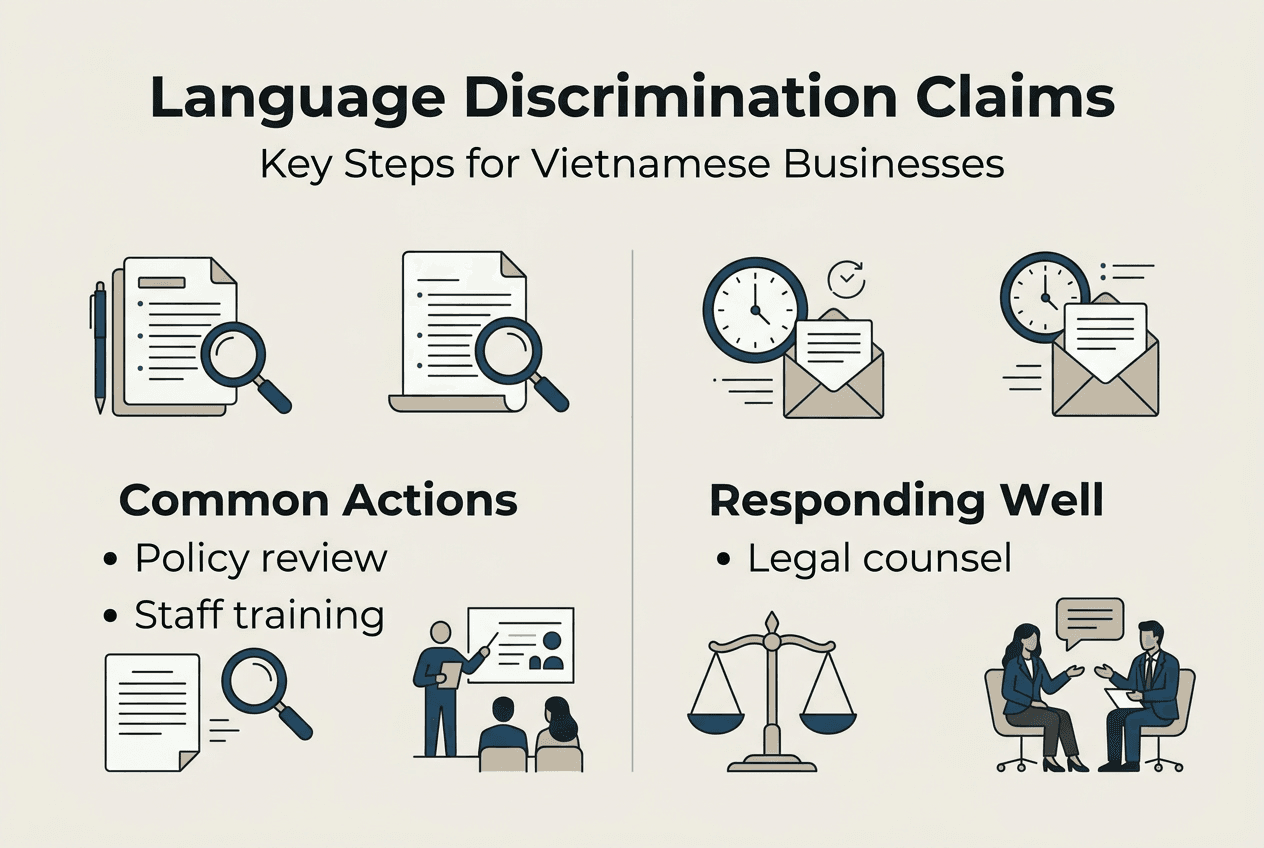
Develop comprehensive anti-discrimination policies explicitly addressing language bias. Your employee handbook should state that accent or language proficiency cannot influence employment decisions unless directly tied to legitimate job requirements. Define what constitutes acceptable language use in different workplace contexts, clarifying when English is necessary versus when multilingual communication is permitted or encouraged.
Implement regular training programs for managers and employees covering:
- Federal protections against language discrimination under Title VII
- Recognizing unconscious bias related to accents and language proficiency
- Proper procedures for addressing language-related workplace concerns
- Cultural competency emphasizing the value of multilingual workforces
- Documentation requirements when language affects job performance
Respond promptly and fairly to any discrimination complaints. Establish clear reporting channels where employees can raise concerns without fear of retaliation. Investigate claims thoroughly, interviewing witnesses and reviewing relevant documentation. Take corrective action when violations occur, demonstrating your commitment to compliance.
Pro Tip: Conduct annual policy reviews with employment law counsel to ensure your language requirements align with current EEOC guidance and reflect actual business needs rather than unstated preferences.
The following table contrasts proactive versus reactive approaches:
| Approach | Legal Impact | Workplace Culture | Cost |
|---|---|---|---|
| Proactive prevention | Reduces claim likelihood by 60-70% | Builds inclusive environment attracting diverse talent | Modest training and policy costs |
| Reactive response | Higher settlement exposure and EEOC scrutiny | Creates fear and distrust among employees | Substantial legal fees, damages, and reputation harm |
Adopt supportive communication strategies recognizing language diversity as a business asset. Provide translated materials for safety procedures and important policies when serving multilingual workforces. Offer English language training as a benefit rather than a requirement, supporting employee development without creating discriminatory pressure. Celebrate linguistic skills by highlighting how bilingual employees enhance customer service and market reach.
Consult Orange employment law attorneys when developing policies or facing claims. Professional guidance helps you navigate complex regulations while implementing language-based discrimination policies that protect your business and employees.
Legal options and advocacy resources for Vietnamese employees and businesses in Garden Grove
Vietnamese employees facing language discrimination can pursue several legal remedies to hold employers accountable and obtain compensation. Understanding the claim process and available resources empowers you to take action when violations occur.
File complaints with the EEOC by visiting their local office or submitting online intake questionnaires. The agency investigates discrimination claims, attempts mediation between parties, and may litigate cases involving systemic violations. You must file within 180 days of the discriminatory act in California, though this extends to 300 days when state agencies are involved. The EEOC investigates by requesting employer records, interviewing witnesses, and analyzing workplace policies.
The EEOC investigates and litigates cases resulting in substantial settlements when evidence supports discrimination claims. After investigation, the agency issues determination letters indicating whether reasonable cause exists to believe discrimination occurred. You then receive a right-to-sue letter allowing private legal action in federal court.
Typical case timelines and outcomes:
| Stage | Timeline | Potential Outcome | Settlement Range |
|---|---|---|---|
| EEOC filing | 180-300 days from incident | Investigation initiated | N/A |
| Investigation | 6-10 months | Reasonable cause determination | $15,000-$75,000 (mediation) |
| Litigation | 12-24 months | Court judgment or settlement | $50,000-$250,000+ |
| Appeals | Additional 12-18 months | Affirmed or modified judgment | Varies |
Consult experienced Orange workplace discrimination lawyers who understand Vietnamese community concerns and can communicate in your preferred language. Attorneys help gather evidence, draft complaints, negotiate settlements, and represent you in court when necessary. Early legal consultation often improves outcomes by ensuring proper documentation and strategic claim presentation.
Community organizations supporting Vietnamese workers include:
- Orange County Asian and Pacific Islander Community Alliance
- Vietnamese American Labor Council
- Legal Aid Society of Orange County (employment law clinic)
- California Civil Rights Department (formerly DFEH)
These resources provide education, advocacy, and referrals to qualified attorneys handling language discrimination claims. Many offer free consultations and operate on contingency fee arrangements where you pay only if your case succeeds.
Business owners facing claims should immediately consult employment law counsel to develop defense strategies and assess liability exposure. Attorneys review workplace policies, interview managers, and evaluate whether language requirements serve legitimate business purposes. Professional representation helps negotiate favorable settlements while implementing corrective measures that prevent future claims.
Legal support for language discrimination claims in Orange County
Serendib Law Firm provides dedicated employment law representation for Vietnamese business owners and employees navigating language discrimination claims throughout Orange County. Our team understands the unique challenges facing Garden Grove’s Vietnamese community and offers tailored legal strategies addressing accent bias, English-only policies, and workplace harassment tied to language proficiency.
We assist employees in filing EEOC complaints, gathering evidence, and pursuing maximum compensation for lost wages, emotional distress, and punitive damages. For business owners, we develop comprehensive anti-discrimination policies, conduct compliance training, and defend against claims through strategic negotiation and litigation when necessary. Our bilingual capabilities ensure clear communication throughout the legal process.
Conveniently located offices in Lake Forest, Huntington Beach, and Newport Beach provide accessible legal support across Orange County. Early consultation strengthens your position whether filing claims or defending your business, as prompt action preserves evidence and protects your rights. Contact us today for a free case evaluation and discover how experienced advocacy can improve your outcomes in language discrimination matters.
Frequently asked questions
What is language discrimination in the workplace?
Language discrimination involves treating employees unfairly based on accent, native language, or English proficiency level. This includes harassment, unequal pay, promotion denial, or termination tied to how someone speaks rather than their actual job performance. Federal law prohibits using language as a proxy for discriminating against workers based on national origin.
What legal protections exist against language discrimination?
Title VII of the Civil Rights Act protects workers from discrimination based on national origin, which includes language and accent bias. California’s Fair Employment and Housing Act provides additional state-level protections. The EEOC enforces these laws by investigating complaints and pursuing legal action against violating employers. Remedies include back pay, reinstatement, compensatory damages, and policy changes.
How can I recognize language discrimination at work?
Watch for patterns like discipline for speaking your native language during breaks, accent-related harassment from supervisors or coworkers, or being passed over for promotions despite qualifications. English-only rules unrelated to job duties, lower pay than English-speaking colleagues doing identical work, and termination after requesting language accommodations also signal potential discrimination. Document specific incidents with dates and witnesses.
What steps should I take to file a language discrimination claim?
File a complaint with the EEOC within 180 to 300 days of the discriminatory act, providing detailed information about incidents, witnesses, and supporting documentation. The agency investigates and may attempt mediation or litigation. Simultaneously consult an employment attorney who can guide you through the process, protect your rights, and maximize potential compensation. Gather all relevant evidence including emails, performance reviews, and witness statements before filing.
Why is early legal consultation important for language discrimination cases?
Early consultation with experienced employment attorneys ensures you meet critical filing deadlines and preserve essential evidence. Attorneys identify the strongest legal theories, develop strategic approaches, and prevent common mistakes that weaken claims. For businesses, prompt legal guidance helps implement corrective measures, reduce liability exposure, and demonstrate good faith compliance efforts that favorably influence case outcomes and settlement negotiations.
Recommended
- Language discrimination in Little Saigon workplaces 2026 | Serendib Law Firm
- Language Discrimination and National Origin Claims in Garden Grove | Serendib Law Firm
- Language-Based Discrimination in Garden Grove Jobs – Employee Rights and Legal Protections | Serendib Law Firm
- Experienced Orange Workplace Discrimination Lawyers