Standing up to workplace injustice can feel overwhelming when facing powerful employers in Orange County. Conflict over wrongful termination, harassment, or unfair pay is not just stressful but can threaten your financial security and wellbeing. With so much at risk, understanding legal representation gives you the tools to reclaim your rights and protect your future as California laws and local advocates work to even the playing field for employees like you.
Table of Contents
- Legal Representation In Employment Disputes Defined
- Types Of Workplace Disputes And Legal Needs
- California Employment Laws And Protections
- Employee Rights And Attorney Responsibilities
- Risks, Costs, And Choosing Representation
Key Takeaways
| Point | Details |
|---|---|
| Legal representation is crucial in employment disputes | Qualified attorneys advocate for employees facing issues like discrimination and wrongful termination, ensuring their rights are protected. |
| Different types of workplace disputes require specific legal strategies | Understanding the nature of the conflict helps in choosing the right representation and approach. |
| California offers strong protections for employees | Employees are afforded rights covering wage laws, discrimination, and retaliation, making legal knowledge essential. |
| Selecting the right attorney is vital | Evaluate attorneys based on their experience, communication style, and fee structures to ensure effective representation. |
Legal representation in employment disputes defined
Legal representation in employment disputes is the process of having a qualified attorney advocate for your rights and interests when workplace conflicts arise. Whether you’re facing wrongful termination, harassment, discrimination, or wage disputes, legal representation means having someone in your corner who understands the law and knows how to protect your interests.
At its core, legal representation gives you a professional voice in situations where power imbalances typically exist between employees and employers. Your attorney becomes your advocate, negotiator, and strategist all in one.
What Legal Representation Covers
Employment lawyers handle a wide range of workplace disputes:
- Wrongful termination claims when you’re fired illegally or in violation of public policy
- Harassment and discrimination cases based on race, gender, age, disability, or other protected characteristics
- Retaliation claims when employers punish you for reporting violations or asserting your rights
- Wage and hour disputes involving unpaid overtime, improper classification, or other compensation issues
- Contract disputes regarding employment agreements and non-compete clauses
- Hostile work environment situations that make your job unbearable
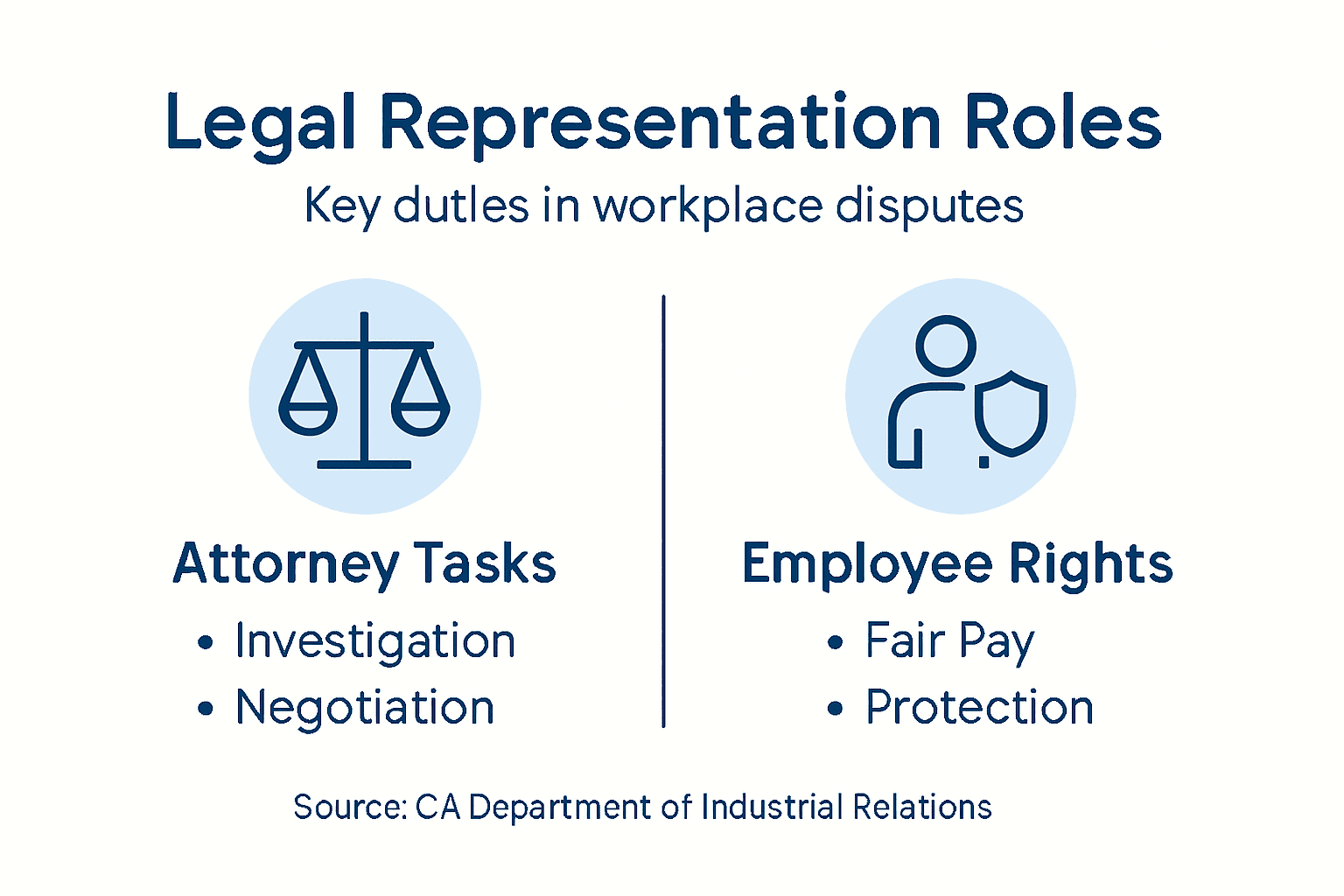
Your attorney will investigate your case, gather evidence, negotiate with opposing parties, and represent you in settlement discussions or court proceedings if necessary.
The Core Role of Your Representative
Under workers’ rights to organize and bargain, legal representatives have specific duties and protections. Your attorney ensures you understand your options and can make informed decisions about your claim.
They also handle the complex paperwork and procedural requirements that often trip up employees trying to represent themselves. Missing deadlines or filing documents incorrectly can damage your case significantly.
Your attorney transforms legal complexity into clear strategies that protect your interests and maximize your chances of a favorable outcome.
Why This Matters in Orange County
Orange County employers operate in a competitive business environment, and many face employment disputes regularly. Having proper representation during workplace investigations and grievance procedures ensures you’re not navigating these situations alone.
Your lawyer knows local court procedures, understands how Orange County judges handle employment cases, and can anticipate employer defense tactics. This local knowledge proves invaluable when building your case.
Key Responsibilities of Your Legal Representative
A qualified employment attorney will:
- Evaluate the strength of your claim based on California employment law
- Gather evidence including emails, performance reviews, and witness statements
- Communicate with your employer’s legal team on your behalf
- Negotiate settlements when appropriate
- File lawsuits and represent you through litigation if necessary
- Protect you from retaliation during the dispute process
They also advise you on statute of limitations and other procedural requirements that vary depending on your specific situation.
Pro tip: When selecting representation, look for attorneys with specific experience in your type of dispute—wrongful termination cases differ significantly from harassment claims, and having focused expertise matters.
Types of workplace disputes and legal needs
Workplace disputes come in many forms, and understanding what you’re facing helps determine the legal representation you need. Not every conflict requires litigation, but some situations demand immediate legal intervention to protect your rights and employment.

Disputes arise from different sources, and each type requires distinct legal strategies. Orange County employees encounter various workplace conflicts that can escalate quickly without proper handling.
Three Main Categories of Workplace Disputes
Workplace conflicts typically fall into three patterns:
- Task conflict involves disagreements over work procedures, resource allocation, or how jobs should be completed
- Relationship conflict stems from interpersonal friction between coworkers or between you and management
- Value conflict emerges when differing beliefs about organizational values clash with company practices or your personal ethics
Each type creates different pressures and may require different legal approaches. Task conflicts might involve contract interpretation, while relationship conflicts often escalate into harassment claims.
Here’s a summary comparing common types of workplace disputes and their primary legal considerations:
| Dispute Type | Typical Legal Issues | Evidence Often Required |
|---|---|---|
| Wrongful termination | Policy violations, retaliation | Termination letter, emails |
| Harassment/discrimination | Hostile work environment, bias | Witness statements, records |
| Wage disputes | Overtime, misclassification | Pay stubs, work schedules |
| Contract-related issues | Non-compete, severance rights | Signed agreements, emails |
| Retaliation claims | Adverse action after reporting | Reports, proof of retaliation |
Common Disputes Requiring Legal Representation
Several workplace situations demand attorney involvement:
- Wrongful termination when you’re fired without valid cause or in violation of public policy
- Discrimination claims based on protected characteristics like race, gender, age, or disability
- Harassment and hostile work environments that make your job unbearable
- Wage theft including unpaid overtime, improper deductions, or misclassification
- Retaliation for reporting violations or participating in protected activities
- Contract breaches involving non-competes, severance agreements, or executive compensation
Some disputes stem from negative attitudes, inadequate resources, or unethical behavior that create dangerous work environments requiring legal intervention.
When You Need Legal Help
You should consult an employment lawyer when:
- You’ve been fired and suspect it was illegal or retaliatory
- You’re experiencing ongoing harassment or discrimination
- Your employer refuses to pay earned wages or overtime
- You’re asked to sign agreements you don’t understand
- You’ve reported violations and faced negative consequences
- You’re facing a non-compete or confidentiality dispute
Waiting too long to seek legal representation can damage your case. Acting quickly protects evidence and meets critical deadlines.
Understanding Your Legal Needs
Different disputes require different expertise. When documenting workplace harassment, you’ll need an attorney experienced in hostile work environment claims. Wage disputes demand someone knowledgeable in California’s complex pay rules.
Your attorney evaluates whether settlement, mediation, or litigation best serves your interests. Some cases resolve quickly through negotiation, while others require courtroom representation.
Pro tip: Document everything as disputes develop—emails, text messages, performance reviews, and witness names become critical evidence that strengthens your legal case considerably.
California employment laws and protections
California has some of the strongest employment protections in the United States. As an employee in Orange County, you benefit from state laws that go far beyond federal minimums, covering everything from wages to discrimination to retaliation.
Understanding these protections helps you recognize when your rights have been violated and when legal action is necessary. California’s Division of Labor Standards Enforcement actively enforces these rules.
Core Wage and Hour Protections
California mandates specific wage protections:
- Minimum wage increases annually, with special provisions for fast food and healthcare workers
- Overtime pay at 1.5 times your regular rate for hours over 8 per day or 40 per week
- Meal and rest breaks with compensation if your employer fails to provide them
- Timely payment of final wages when you’re terminated or quit
- No wage deductions except those legally required or authorized
These rules protect you regardless of your immigration status. Fair wages and safe working conditions are enforced strictly by state labor authorities.
Protection from Discrimination and Harassment
Your employer cannot treat you differently based on protected characteristics:
- Race, color, or national origin
- Gender, gender identity, or gender expression
- Age (40 and older)
- Disability or medical condition
- Religion or religious beliefs
- Sexual orientation
- Marital or family status
- Military or veteran status
When discrimination or harassment occurs, you have the right to report it without fear of retaliation. Employers cannot fire, demote, or threaten workers for exercising their labor rights.
Anti-Retaliation Protections
California law explicitly prohibits employer retaliation when you:
- Report wage violations or unsafe conditions
- File a workers’ compensation claim
- Request family or medical leave
- Report discrimination or harassment
- Organize with coworkers or join a union
- Participate in investigations or legal proceedings
Retaliation includes termination, reduced hours, threats, or any negative employment action. These protections apply whether you work full-time, part-time, or as a contractor.
California presumes retaliation occurred if an adverse action follows protected activity within a short timeframe, shifting the burden to your employer to prove otherwise.
Paid Leave Rights
You’re entitled to multiple types of paid leave:
- Paid sick leave (three days minimum per year for most employees)
- Family leave for bonding with newborns or caring for family members
- Medical leave for your own serious health conditions
- Bereavement leave in some circumstances
Your employer cannot deny these rights or penalize you for using them. Wage disputes over meal and rest breaks are common legal issues in Orange County retail positions.
Special Protections for Vulnerable Workers
Certain groups receive additional safeguards:
- Immigrant workers cannot be exploited or threatened with immigration-related action
- Young workers have restrictions on work hours and hazardous job assignments
- Domestic workers receive overtime and meal break protections
- Fast food workers have specific scheduling and meal break rights
These protections exist because vulnerable populations face greater exploitation risks.
Pro tip: Keep detailed records of your work hours, pay stubs, performance reviews, and any communications with management—these documents become critical evidence if you need to file a complaint or pursue legal action.
Employee rights and attorney responsibilities
When you hire an employment attorney, you’re entering a relationship built on trust, communication, and shared goals. Your lawyer has specific responsibilities toward you, and understanding these duties helps you get the most from legal representation.
Your rights as an employee and your attorney’s obligations are intertwined. A good lawyer ensures you understand what you’re entitled to and how to protect those entitlements.
Your Fundamental Employee Rights
Every employee deserves certain protections:
- Fair compensation including minimum wage, overtime pay, and timely payment
- Safe working conditions free from hazards and health risks
- Freedom from discrimination based on protected characteristics
- Protection from retaliation when asserting your rights or reporting violations
- Right to organize and engage in protected concerted activities with coworkers
- Right to union representation if your workplace is unionized
- Family and medical leave for qualifying circumstances
- Confidentiality in communications with your attorney
These rights exist under federal law, California state law, and sometimes local ordinances. Your attorney ensures employers respect these protections.
What Your Attorney Must Do
A competent employment lawyer has clear responsibilities:
- Explain your rights under fair pay and workplace protection laws in language you understand
- Evaluate your case objectively, including potential weaknesses
- Maintain strict confidentiality about your case and personal information
- Communicate regularly about case developments and strategy
- Advocate aggressively for your interests in negotiations and litigation
- Keep you informed about applicable deadlines and legal procedures
- Avoid conflicts of interest that could compromise representation
- Provide honest advice even when it’s not what you want to hear
Your attorney also has a duty to understand protected concerted activities and union rights that may apply to your situation.
Attorney Duties Beyond Advocacy
Your lawyer must operate within ethical and legal boundaries. They cannot:
- Help you lie or commit fraud
- Violate attorney-client privilege
- Take on cases where they have conflicting interests
- Misrepresent facts or law to courts
- Ignore your express instructions about case strategy
These limitations protect both you and the integrity of the legal system.
Your Responsibilities as a Client
You also have obligations in this relationship:
- Provide complete, truthful information about your situation
- Respond promptly to your attorney’s requests for documents or information
- Follow advice about preserving evidence and avoiding problematic communications
- Be honest about your goals and what you hope to achieve
- Understand that your attorney advises but you make final decisions
Your attorney is your advocate, not your friend. The relationship is professional, and maintaining clear boundaries helps both parties serve the case effectively.
Communication and Transparency
A strong attorney-client relationship requires open dialogue. Your lawyer should explain:
- The strength of your claim compared to typical cases
- Likely costs and how fees will be calculated
- Realistic timelines for resolution
- Settlement options versus litigation risks
- How decisions will be made in your case
When choosing an employment attorney, assess their communication style and willingness to answer your questions thoroughly.
Pro tip: Document every conversation with your attorney by taking notes of dates, topics discussed, and advice given—this creates a record of your attorney’s guidance and protects both parties if questions arise later.
Risks, costs, and choosing representation
Hiring an employment lawyer is an investment, and like any investment, you need to understand the potential risks and costs involved. Making an informed decision about representation requires weighing these factors against the strength of your case and what you hope to achieve.
Employment disputes carry real financial and personal consequences. Understanding these risks helps you decide whether to pursue legal action or explore other options.
Financial Costs of Legal Representation
Employment lawyers typically charge in three ways:
- Hourly rates ranging from $150 to $500+ per hour depending on attorney experience and location
- Contingency fees where you pay nothing unless you win, then the attorney takes a percentage (typically 25-40%)
- Flat fees for specific services like document review or settlement negotiation
Orange County employment attorneys often work on contingency for wrongful termination and discrimination cases because these claims have clear monetary damages. This arrangement reduces your upfront financial risk.
To help you compare options, here is an overview of legal representation cost models for employment disputes:
| Fee Structure | When It Applies | Typical Cost Range |
|---|---|---|
| Hourly | Complex, ongoing cases or consultations | $150–$500+/hour |
| Contingency | Damages-based claims like termination | 25–40% of recovery |
| Flat fee | Document review, brief negotiations | $500–$5,000+ |
Litigation Risks Beyond Fees
Taking your case to court involves significant risks:
- Lengthy timelines where cases often take 1-3 years or longer to resolve
- Uncertain outcomes even with a strong case—judges and juries are unpredictable
- Reputational damage that can follow you in your industry or profession
- Emotional toll from extended conflict and workplace stress
- Discovery costs for document production and expert witnesses
You might win your case but receive less compensation than expected. Conversely, you could lose and recover nothing.
Benefits of Alternative Dispute Resolution
Mediation and arbitration offer faster, more confidential resolutions than litigation. These methods cost less, take months instead of years, and allow creative solutions.
Your attorney should discuss whether negotiation or mediation makes sense for your situation. Not every dispute requires a courtroom battle.
Selecting the Right Attorney for Your Situation
When choosing representation, evaluate:
- Experience with cases similar to yours
- Communication style and how accessible they are
- Fee structure and what costs you can afford
- Track record of settlements and verdicts
- Resources to investigate and litigate thoroughly
- Personality fit since you’ll work together closely
Your initial consultation is crucial. Ask direct questions about costs, timelines, and realistic outcomes.
The cheapest attorney isn’t always the best value, and the most expensive doesn’t guarantee success—find someone experienced, accessible, and trustworthy.
Red Flags When Choosing Representation
Avoid attorneys who:
- Guarantee specific outcomes (no reputable lawyer does this)
- Rush you into decisions without proper evaluation
- Won’t discuss costs or fee arrangements clearly
- Ignore your concerns or questions
- Have no relevant employment law experience
- Won’t explain their strategy in understandable terms
Your instinct matters here. If something feels off, trust that feeling and keep looking.
Working with Serendib Law Firm
Our firm offers free consultations where we evaluate your case honestly and discuss your options without pressure. We handle many employment disputes on contingency, meaning you pay nothing unless we recover compensation for you.
Explore detailed information about workplace dispute resolution to understand different approaches and what might work for your situation.
Pro tip: Get consultations with 2-3 different attorneys before deciding—compare their expertise, fee structures, and communication style to find the best fit for your case.
Secure the Legal Support You Need for Workplace Disputes
Workplace conflicts like wrongful termination, harassment, and retaliation create stress and uncertainty that can feel overwhelming. If you are facing discrimination, wage disputes, or any hostile work environment issues, having experienced legal representation is essential to protect your rights and navigate complex employment laws. Understanding your options and having an attorney who can advocate and negotiate on your behalf makes all the difference.
At Serendib Law Firm, our Orange County-based team specializes in employment law and is dedicated to providing personalized and zealous advocacy. We offer free consultations and work on contingency for select cases so you can focus on your future while we handle the legal challenges. Don’t wait until important deadlines pass or evidence disappears. Visit Serendib Law Firm’s homepage to learn more about our approach, or reach out today to discuss your situation and explore your best course of action.
Frequently Asked Questions
What is the role of legal representation in workplace disputes?
Legal representation involves having a qualified attorney advocate for your rights and interests during workplace conflicts. Your attorney helps protect your interests in cases like wrongful termination, harassment, and wage disputes.
Why is it important to have an attorney for employment-related disputes?
An attorney ensures you understand your rights under employment laws, guides you through complex legal processes, and helps you with negotiations or litigation to resolve your dispute effectively.
When should I seek legal representation for a workplace issue?
You should consult an employment lawyer if you suspect wrongful termination, experience harassment or discrimination, face wage disputes, or encounter retaliation after reporting workplace violations.
What types of issues can employment lawyers help with?
Employment lawyers assist with various issues, including wrongful termination, discrimination claims, harassment, wage disputes, retaliation, contract breaches, and hostile work environment cases.
Recommended
- How to Choose an Employment Lawyer | Serendib Law Firm
- How to Document Workplace Harassment for Legal Protection | Serendib Law Firm
- Workplace Harassment Claims in Entertainment | Serendib Law Firm
- Employer Retaliation for Workers’ Compensation Claims: Complete Guide | Serendib Law Firm
- Arbeitsgerichtsverfahren Ablauf: So meistern Sie jeden Schritt