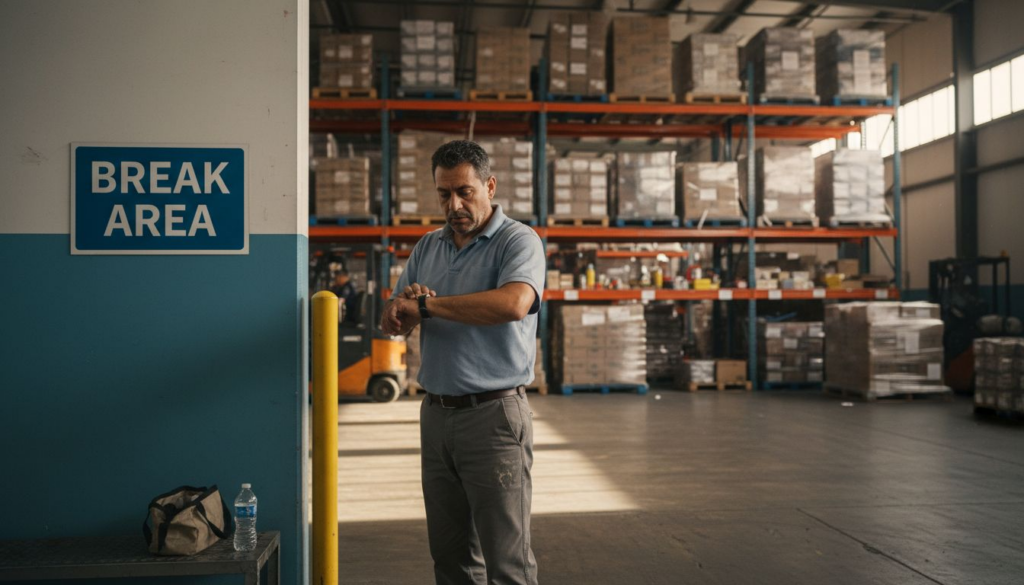
Getting through a shift in a Stanton warehouse becomes even tougher when employers skip legally required breaks or force employees to work straight through lunch. California law demands warehouse workers get a 30-minute duty-free meal break for shifts over five hours and a paid 10-minute rest break every four hours. When companies ignore these rules, workers miss out on fair wages and protections. Learn how to recognize meal and rest break violations and what steps you can take to claim what you are owed.
Table of Contents
- Defining Meal and Rest Break Violations
- California Law for Warehouse Breaks
- Common Types of Employer Violations
- Worker Rights and Employer Obligations
- Legal Remedies for Break Violations
Key Takeaways
| Point | Details |
|---|---|
| Legal Protections for Breaks | Warehouse workers in California are entitled to legally mandated meal and rest breaks, and employers must comply with specific regulations. |
| Consequences for Employers | Failure to provide required breaks can lead to significant penalties, including premium wage payments and potential legal claims. |
| Employee Rights | Workers have the right to report violations without retaliation and seek legal remedies for any systematic break infringements. |
| Documentation is Crucial | Employees should carefully document denied or interrupted breaks as this evidence supports potential legal action against employers. |
Defining Meal and Rest Break Violations
In Stanton warehouses, meal and rest break violations represent serious legal infractions that can significantly impact worker rights and compensation. The Fair Labor Standards Act establishes critical guidelines for workplace breaks, though federal regulations differ from California state standards.
Meal and rest break violations typically occur in several key scenarios:
- Employers denying legally mandated break periods
- Requiring employees to work through designated break times
- Failing to provide uninterrupted 30-minute meal breaks
- Preventing workers from taking required rest intervals
- Discouraging or penalizing employees who request legally protected breaks
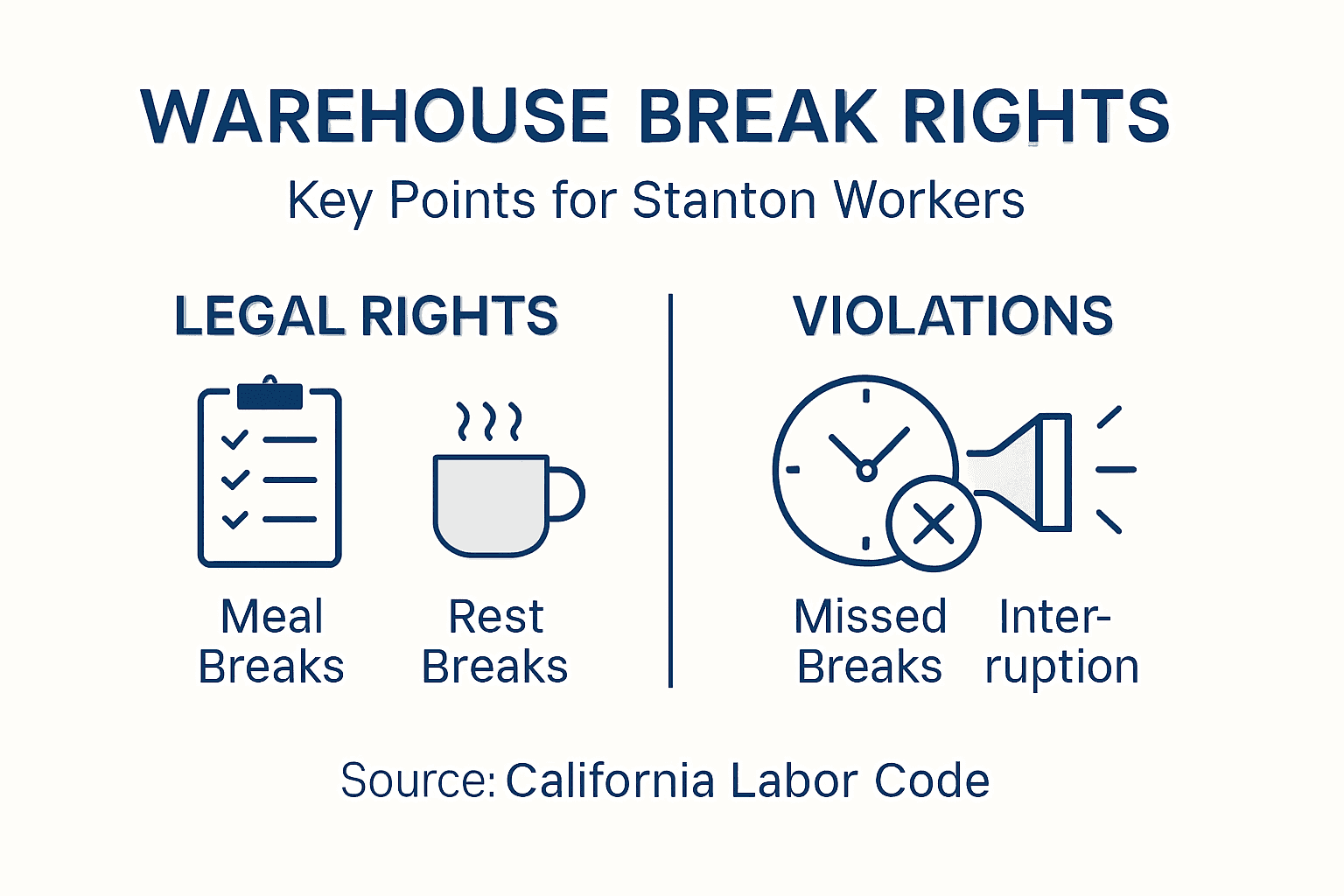
Under California labor law, warehouse workers are entitled to specific break protections. Meal breaks must be:
- Minimum of 30 consecutive minutes
- Uninterrupted by work responsibilities
- Provided within first 5 hours of shift
Rest breaks are equally important, typically requiring a 10-minute paid break for every 4 hours worked. When employers systematically deny these breaks, workers can pursue legal compensation for lost time and potential wage violations.
Warehouse employees have the right to take their legally mandated breaks without fear of retaliation or workplace punishment.
Pro tip: Document every instance of denied or interrupted break periods, including dates, times, and supervisors involved, which can serve as critical evidence in potential legal proceedings.
California Law for Warehouse Breaks
California has some of the most comprehensive worker protection laws in the United States, particularly when it comes to meal and rest breaks for warehouse employees. California break regulations establish clear guidelines that employers must follow to ensure worker well-being and fair compensation.
The key provisions for warehouse workers under California law include:
Here’s a summary of how California meal and rest break rules differ from federal standards:
| Criteria | California Law | Federal Law |
|---|---|---|
| Meal Break Duration | 30 minutes minimum | No required duration |
| Rest Breaks | 10 minutes per 4 hours worked | Not mandated |
| Break Area Requirement | Must provide suitable rest areas | Not specified |
| Premium Pay for Missed Breaks | Required by law | Not required |
| Enforcement Agencies | Labor Commissioner, civil courts | Department of Labor |
- Mandatory 30-minute unpaid meal break for shifts exceeding 5 hours
- Second 30-minute meal break for shifts longer than 10 hours
- 10-minute paid rest break for every 4 hours worked
- Breaks must be duty-free and uninterrupted
- Employers must provide suitable rest areas for break periods
Under these regulations, warehouse employers are legally required to:
- Schedule meal breaks before the end of the fifth working hour
- Relieve employees of all work responsibilities during breaks
- Provide a separate area for rest and meal breaks
- Pay premium wages for missed or interrupted breaks
Warehouse workers in California are protected by some of the most worker-friendly break regulations in the country.
Failure to comply with these break regulations can result in significant penalties for employers, including:
- Payment of additional hour of wages for each day a break is missed
- Potential legal claims for wage violations
- Potential civil penalties and fines
- Potential class action lawsuits from affected workers
Pro tip: Keep a detailed personal log of all work hours and break periods, including any instances where breaks were denied or interrupted, to support potential legal claims.
Common Types of Employer Violations
Warehouse workers in Stanton face numerous potential meal and rest break violations that can significantly impact their rights and compensation. Meal and rest break violations often stem from systematic workplace practices designed to maximize productivity at workers’ expense.
The most common employer violations in warehouse settings include:
- Forcing employees to work through designated break times
- Failing to provide full 30-minute uninterrupted meal breaks
- Discouraging or penalizing workers who request mandated breaks
- Requiring employees to remain on-call during break periods
- Implementing policies that effectively prevent taking legally required breaks
Intentional violation strategies frequently employed by unethical employers involve:
- Creating impossible productivity quotas that discourage break-taking
- Scheduling work so tightly that breaks become impractical
- Pressuring employees through informal workplace cultures
- Misclassifying workers to avoid break regulation requirements
Employers who systematically deny required breaks are committing wage theft and violating fundamental worker protection laws.
Financial consequences for these violations can be substantial, potentially including:
Below is a quick reference for typical financial consequences of break violations:
| Penalty Type | When Applied | Potential Impact |
|---|---|---|
| Premium Wage Payment | Each missed break | Increased payroll costs |
| Back Pay | For uncompensated time | Required wage adjustments |
| Civil Fines | For legal violations | Risk of significant penalties |
| Class Action Damages | Multiple affected workers | Large legal settlements |
| Regulatory Sanctions | Repeated violations | Possible loss of licenses |
- Premium wage payments for missed breaks
- Back pay for uncompensated work time
- Civil penalties and fines
- Potential class action lawsuit damages
- Regulatory investigations and sanctions
Pro tip: Document every instance of break denial with precise dates, times, and supervisory personnel involved, as this evidence can be crucial in potential legal proceedings.
Worker Rights and Employer Obligations
Warehouse workers in Stanton are protected by comprehensive legal frameworks that define clear employee rights and employer responsibilities. These regulations ensure workers can maintain their health, safety, and fair compensation during work hours.
Key worker rights in meal and rest break regulations include:
- Receiving full, uninterrupted break periods
- Being compensated for mandated rest breaks
- Working in environments that respect break time requirements
- Reporting violations without fear of retaliation
- Seeking legal remedies for systematic break violations
Employer obligations are equally comprehensive and legally binding:
- Provide mandatory meal and rest breaks as specified by California law
- Ensure breaks are genuinely uninterrupted
- Maintain accurate records of break times
- Pay premium wages for missed or interrupted breaks
- Create workplace policies that explicitly support break rights
Employers who systematically violate break regulations are not just breaking the law, but undermining worker dignity and health.
Employer responsibilities extend beyond simply allowing breaks. They must actively:
- Create workplace cultures that respect break rights
- Train supervisors on legal break requirements
- Implement tracking systems for break compliance
- Avoid indirect discouragement of break-taking
- Provide suitable break areas for employees
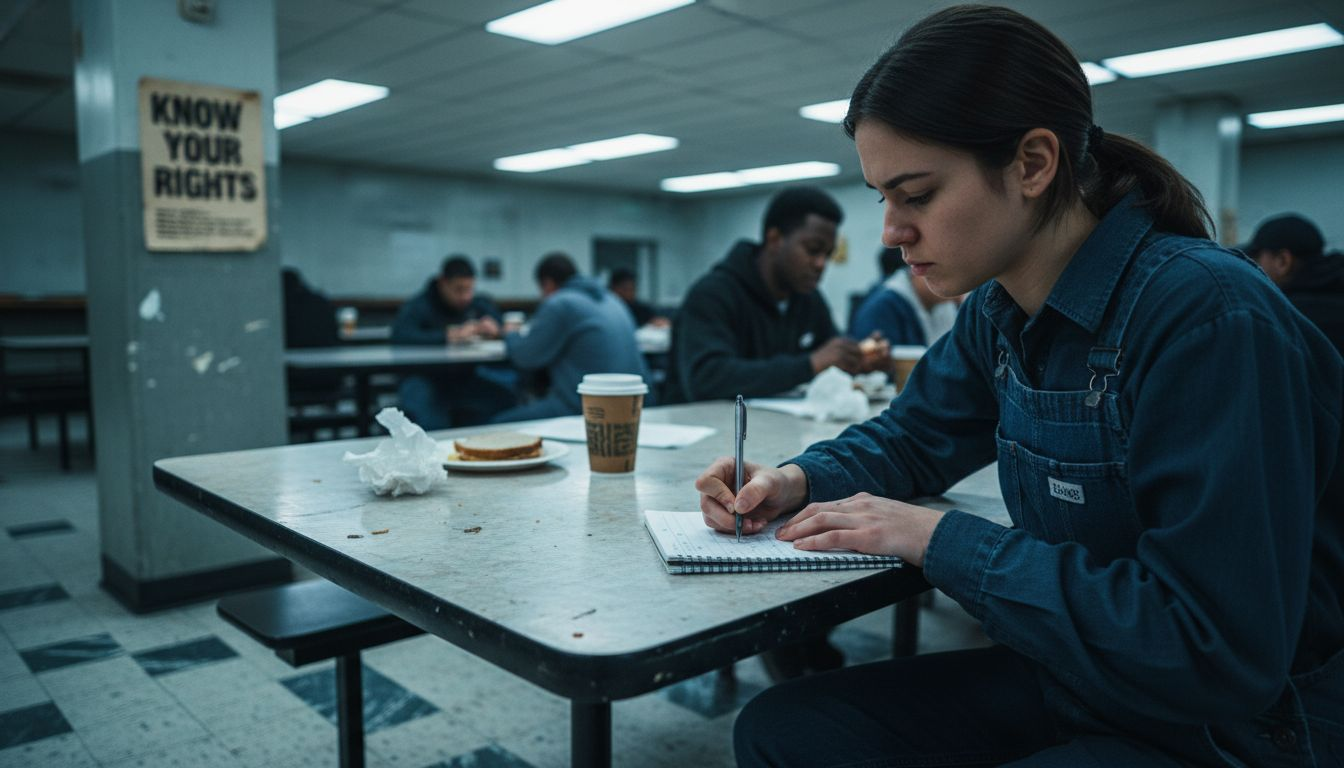
Pro tip: Photograph break area conditions, maintain personal break logs, and document any instances of break interference to strengthen potential legal claims.
Legal Remedies for Break Violations
Warehouse workers in Stanton have multiple legal pathways to address meal and rest break violations. Legal remedies for workplace violations provide comprehensive protection for employees experiencing systematic break infringements.
Key legal remedies available to workers include:
- Filing wage claims with California Labor Commissioner
- Pursuing private lawsuits for back pay and penalties
- Seeking premium pay for missed breaks
- Requesting compensation for unpaid work time
- Reporting violations to state labor enforcement agencies
The legal process for break violation claims typically involves:
- Documenting specific instances of break violations
- Gathering supporting evidence and workplace records
- Consulting with an employment law attorney
- Filing administrative complaints or civil lawsuits
- Negotiating settlements or pursuing court judgments
Workers have the legal right to full compensation for systematically denied break periods.
Potential compensation in break violation cases may include:
- Premium wage payments for missed breaks
- Back pay for uncompensated work time
- Penalties against non-compliant employers
- Potential punitive damages in severe cases
- Legal fees and court costs
Pro tip: Preserve all documentation, including pay stubs, work schedules, and personal break logs, as these can serve as critical evidence in legal proceedings.
Know Your Rights and Protect Your Breaks in Stanton Warehouses
Workers in Stanton warehouses face serious challenges when it comes to getting their legally required meal and rest breaks. When employers deny or interrupt these breaks, it can cause lost wages and harm your well-being. According to California law, you deserve uninterrupted 30-minute meal breaks and paid 10-minute rest periods. If you have experienced break violations or feel pressured to work through your breaks, you are not alone.
Our team at Serendib Law Firm understands the impact of these violations and is committed to fighting for your rights. Explore how we help clients navigate Meal and Rest Breaks and recover the compensation they deserve. Stand up against wage violations and take control with trusted guidance from experienced Stanton attorneys. For practical advice and personalized support, visit Stanton Archives or learn more about your options under Wage Violations.
Don’t wait to reclaim your legal rights and wage protections. Contact us today through Serendib Law Firm for a free consultation and expert legal representation that puts your needs first.
Frequently Asked Questions
What are meal and rest break violations in the workplace?
Meal and rest break violations occur when employers fail to provide legally mandated breaks, require employees to work through designated break times, or discourage workers from taking their entitled breaks.
What are the entitlements for meal breaks under California law?
Under California law, employees are entitled to a minimum of one 30-minute unpaid meal break for shifts exceeding 5 hours, and a second meal break for shifts longer than 10 hours, during which all work responsibilities must be suspended.
How can I document break violations at work?
To document break violations, keep a detailed log of every instance where breaks were denied or interrupted, including dates, times, and any supervisors involved. This information can be critical for legal proceedings.
What legal remedies are available for workers facing break violations?
Workers can file wage claims with the California Labor Commissioner, pursue private lawsuits for back pay, seek premium pay for missed breaks, and report violations to state labor enforcement agencies.