Nearly one in five american security guards reports missed or interrupted rest breaks, a problem that can affect both alertness and workplace safety. Security guards face unique pressures in their daily routines, making fair rest periods critical for protecting their rights and health. Understanding how rest break laws apply—and what happens when employers fail to follow them—gives security professionals the knowledge they need to safeguard their wellbeing and respond effectively to workplace violations.
Table of Contents
- Defining Security-Guard Rest Break Violations
- Naranjo v. Spectrum: Case Impact on Policy
- Rest Break Laws for Orange County Security
- Employer Duties, Liabilities, and Penalties
- Employee Rights and Steps for Legal Claims
Key Takeaways
| Point | Details |
|---|---|
| Rest Break Rights | Security guards are legally entitled to specific rest periods under the Fair Labor Standards Act (FLSA) to prevent fatigue and maintain alertness. |
| Employer Obligations | Employers must provide uninterrupted break periods and compensate guards appropriately for their rest breaks, as outlined by federal and state regulations. |
| Legal Protections | Security guards should document instances of rest break violations and may pursue legal remedies, including filing complaints with relevant agencies. |
| Naranjo v. Spectrum Impact | This landmark case emphasizes the necessity for compliance with rest break regulations and outlines potential penalties for noncompliant employers. |
Defining Security-Guard Rest Break Violations
Security guards operate in complex workplace environments where understanding rest break regulations is critical for protecting their legal rights. Rest break violations represent significant employment law challenges that can impact worker safety and compensation. According to the U.S. Department of Labor, federal labor standards explicitly outline specific protections for security personnel regarding work breaks and workplace conditions.
Under the Fair Labor Standards Act (FLSA), security guards are legally entitled to specific rest periods during their shifts. These breaks are not merely conveniences but fundamental worker protections designed to prevent fatigue and maintain alert performance in high-stress professional environments. OSHA clarifies that while federal regulations might not mandate exact break durations, employers remain responsible for providing reasonable opportunities for rest and recuperation.
Key elements that constitute rest break violations for security guards include:
- Denying scheduled rest periods
- Requiring continuous work beyond reasonable shift lengths
- Preventing meaningful breaks that allow physical and mental recovery
- Failing to compensate guards for short authorized rest intervals
Employers who consistently ignore or intentionally circumvent these break requirements expose themselves to potential legal action. Security guards experiencing persistent rest break violations should document incidents carefully, track work hours meticulously, and consider consulting employment law professionals who can assess potential workplace violations and recommend appropriate legal strategies.

Naranjo v. Spectrum: Case Impact on Policy
The Naranjo v. Spectrum legal case represents a landmark moment in California labor law, specifically addressing critical issues surrounding rest break regulations for security personnel. According to the California Department of Industrial Relations, this case significantly emphasized the importance of adhering to rest break policies and sparked increased scrutiny of workplace compensation practices.
At the core of this legal dispute were fundamental questions about employer obligations regarding uninterrupted rest periods. State Fiscal Affairs documented that the case resulted in substantial legislative changes, reinforcing the necessity for employers to provide meaningful and uninterrupted rest breaks to security guards. The ruling effectively established clearer guidelines for what constitutes a legally compliant rest break and highlighted potential financial consequences for noncompliance.
Key policy implications emerging from the Naranjo v. Spectrum case include:
- Mandatory full relief from work duties during rest periods
- Requirement for employers to provide compensable rest breaks
- Strict enforcement of break duration and timing regulations
- Potential financial penalties for systemic break policy violations
For security guards and employers alike, this case serves as a critical precedent. It underscores the legal system’s commitment to protecting worker rights and ensuring fair labor practices. Organizations must now approach rest break policies with heightened diligence, recognizing that non-compliance can result in significant legal and financial repercussions.
Rest Break Laws for Orange County Security
Security guards in Orange County operate under specific labor regulations that protect their workplace rights, particularly regarding rest breaks. California Department of Industrial Relations mandates clear guidelines ensuring that security personnel receive adequate rest periods during their shifts. These regulations recognize the physically and mentally demanding nature of security work, which often involves extended hours of vigilance and potential high-stress scenarios.
Under state law, security guards are entitled to specific protections that guarantee meaningful rest opportunities. State Fiscal Affairs emphasizes that employers must provide uninterrupted break periods that allow complete disengagement from work responsibilities. This means security guards should receive breaks where they are fully relieved of duty, enabling genuine rest and recovery during demanding shifts.
Key rest break requirements for Orange County security personnel include:
- Mandatory 10-minute rest breaks for every 4 hours worked
- Full relief from work duties during rest periods
- Compensation at regular hourly rates during authorized rest intervals
- Prohibition of on-call or interrupted rest breaks
Employers who fail to comply with these regulations face significant legal and financial consequences. Security guards experiencing consistent break violations should document incidents carefully, track work hours meticulously, and consider consulting employment law professionals who can help protect their workplace rights and seek appropriate remedies for potential violations.
For more detailed insights into local rest break regulations, check out our comprehensive guide on missed rest breaks in Santa Ana, which provides additional context for security workers navigating their legal protections.
Employer Duties, Liabilities, and Penalties
Employers bear significant legal responsibilities when it comes to providing rest breaks for security guards. Department of Labor guidelines clearly outline that non-compliance can result in substantial financial and legal consequences. These obligations extend beyond mere scheduling, requiring employers to ensure genuine opportunities for rest and recovery during work shifts.
Occupational Safety and Health Administration emphasizes that employers must proactively manage rest break compliance to avoid potential penalties. The legal framework demands more than minimal effort, requiring comprehensive strategies that genuinely protect security guard workplace rights and well-being.
Key employer duties and potential liabilities include:
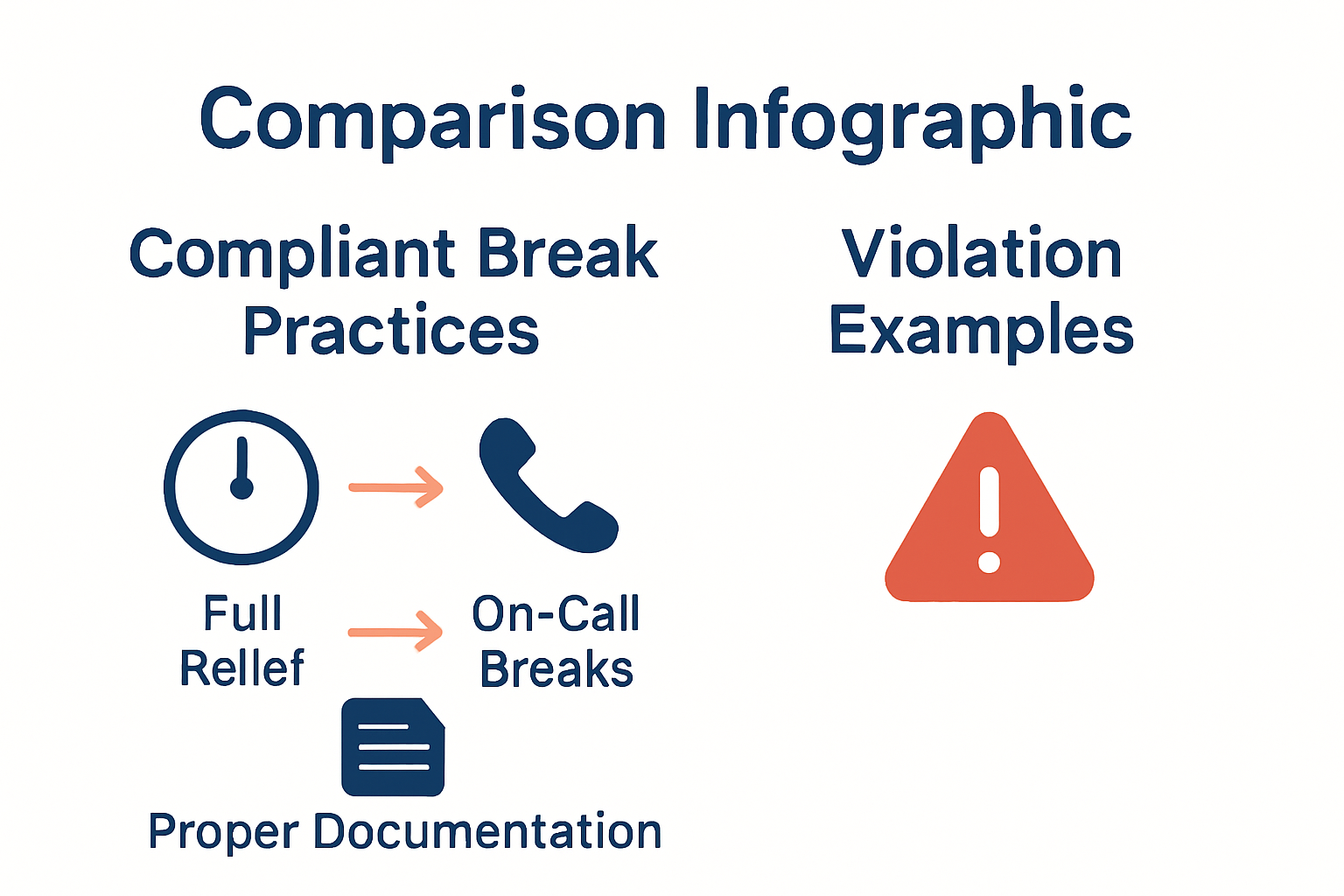
- Mandatory provision of uninterrupted 10-minute rest breaks
- Full compensation for authorized rest periods
- Documentation and tracking of rest break allocations
- Prohibition of on-call or interrupted rest periods
- Potential financial penalties for systematic violations
Employers facing potential rest break violation claims should anticipate comprehensive legal scrutiny. Financial penalties can include back pay, administrative fines, and potential civil litigation. Security guards experiencing persistent break violations have robust legal protections, and employers must recognize that systematic non-compliance can lead to significant financial and reputational damage.
For more insights into workplace compensation regulations, explore our guide on wage and hour claims, which provides comprehensive information about employer obligations and potential legal challenges.
Employee Rights and Steps for Legal Claims
Security guards possess fundamental workplace rights that protect them from rest break violations. Department of Labor regulations clearly outline employees’ abilities to seek remedies when their rest break entitlements are compromised. These rights represent critical protections designed to ensure fair treatment and maintain worker safety in demanding professional environments.
Occupational Safety and Health Administration provides multiple avenues for security guards to address potential rest break violations. Employees have robust legal mechanisms to challenge employers who systematically deny mandated rest periods, including formal complaint processes and potential administrative investigations.
Critical steps for security guards pursuing legal claims include:
- Document every instance of rest break denial
- Collect detailed work schedules and shift records
- Preserve communication evidence with employers
- File formal complaints with appropriate state agencies
- Consult with employment law professionals
- Understand potential timeframes for filing claims
Navigating rest break violation claims requires strategic preparation and thorough documentation. Security guards must approach these legal processes methodically, gathering comprehensive evidence that substantiates their claims. Potential outcomes may include financial compensation, mandated policy changes, and potential administrative penalties against non-compliant employers.
For a comprehensive understanding of your workplace rights, explore our detailed employee rights guide, which provides essential insights into protecting your professional interests and understanding your legal recourse.
Protect Your Rights Against Security-Guard Rest Break Violations
If you are a security guard facing denied rest periods or interrupted breaks during your shifts, you are not alone. Rest break violations can cause physical and mental exhaustion and threaten your safety on the job. These violations also violate your legal rights under California labor laws, which require employers to provide full relief during breaks and compensate you accordingly. Knowing your rights is the first step to reclaiming fair treatment and preventing continued workplace abuse.
At Serendib Law Firm, we understand the challenges security guards in Orange County face with rest break violations. Our skilled team offers dedicated support in employment law matters, helping you document incidents, assess employer responsibilities, and pursue rightful compensation. Explore our Meal and Rest Breaks Archives and Orange County Archives to learn more about your protections and legal options. Do not let unlawful break practices go unchecked. Act now and contact us for a free consultation to defend your rights and ensure fair workplace conditions.
Frequently Asked Questions
What constitutes a rest break violation for security guards?
Rest break violations for security guards include denying scheduled rest periods, requiring continuous work beyond reasonable shift lengths, preventing meaningful breaks, and failing to compensate guards for authorized short breaks.
What are the legal rights of security guards regarding rest breaks?
Security guards are entitled to mandatory rest periods, including 10-minute breaks for every 4 hours worked, full relief from work duties during these breaks, and compensation for authorized rest intervals.
What should security guards do if they experience rest break violations?
Security guards should document incidents of rest break violations, track their work hours, and consider consulting with employment law professionals for guidance and potential legal action.
What are the potential penalties for employers who violate rest break regulations?
Employers may face significant financial penalties, including back pay, administrative fines, and potential civil litigation for failing to comply with rest break regulations.
Recommended
- Meal and Rest Break Violations in Santa Ana Construction
- Complete Guide to Missed Rest Breaks in Santa Ana | Serendib Law Firm
- Understanding Failure to Provide Meal and Rest Breaks in Restaurants | Serendib Law Firm
- Understanding Whistleblower Protections for Employees in Financial Services Firms | Serendib Law Firm