Working in Placentia can feel uncertain when your role is labeled as an independent contractor despite performing everyday tasks vital to your company. Many California workers face this issue and lose out on crucial protections including minimum wage, overtime, and legal rights. Understanding the signs of employee misclassification and the legal tests California uses empowers you to recognize if your situation fits and confidently consider your options for seeking fair treatment.
Table of Contents
- Defining Employee Misclassification In Placentia
- California Legal Tests For Worker Status
- Key Differences: Employees Vs. Independent Contractors
- Consequences For Misclassified Workers And Employers
- Filing Claims And Seeking Legal Remedies
Key Takeaways
| Point | Details |
|---|---|
| Employee Misclassification Risks | Misclassification denies workers critical protections and benefits, impacting their financial security and legal rights. |
| Legal Tests for Worker Status | California employs the ABC Test and Borello Test to determine worker classification, significantly affecting entitlement to workplace protections. |
| Consequences of Misclassification | Misclassified workers risk loss of benefits and protections, while employers face severe legal and financial penalties. |
| Legal Paths for Recourse | Workers can file claims through various legal channels, making timely documentation and consultation essential for vindicating their rights. |
Defining Employee Misclassification in Placentia
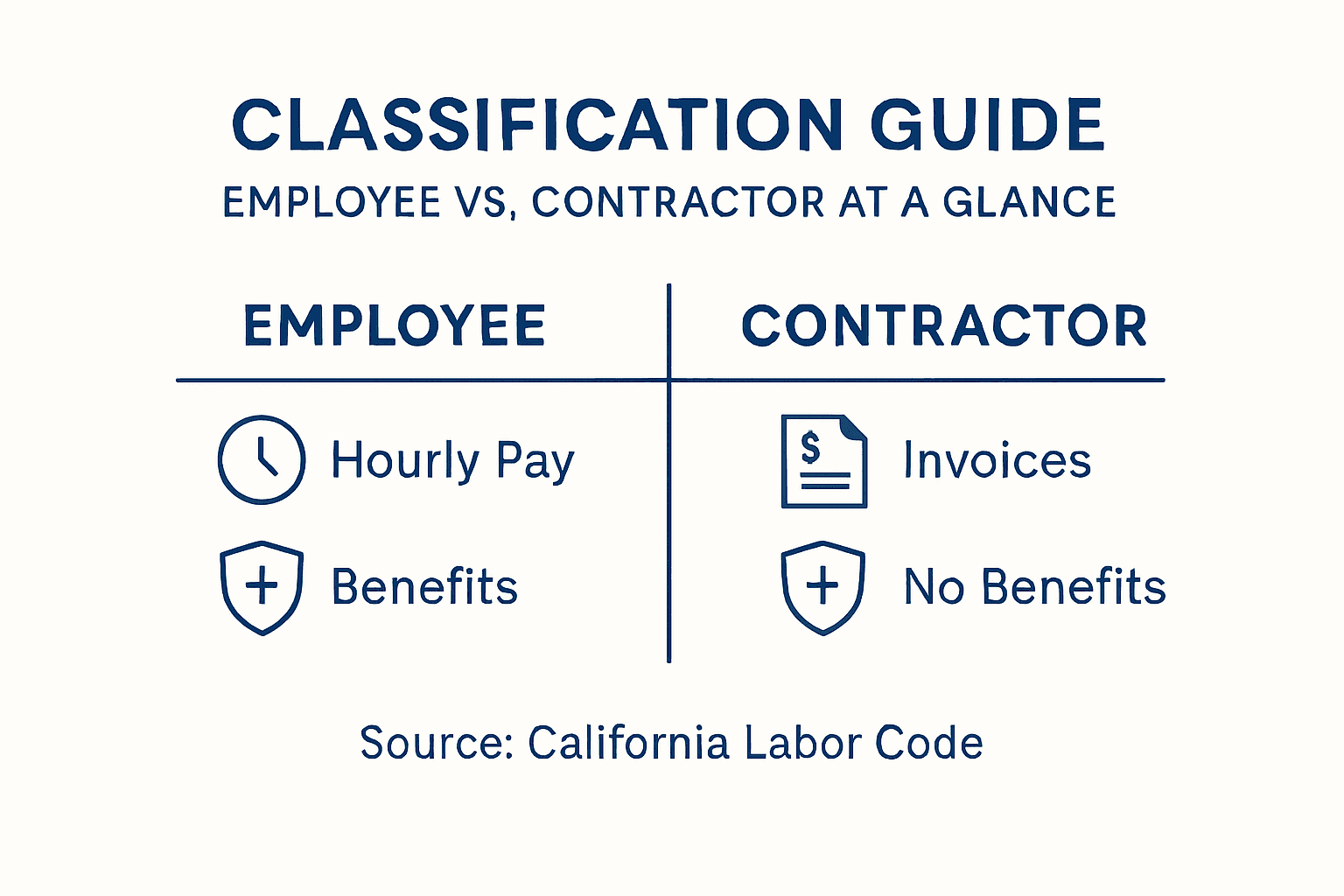
Employee misclassification represents a serious legal and financial issue impacting workers in Placentia and throughout California. At its core, this practice involves employers deliberately labeling workers as independent contractors instead of employees to circumvent legal obligations and reduce labor costs.
The California Department of Industrial Relations defines employee misclassification as intentionally improper worker classification designed to avoid paying essential worker protections. This systematic practice undermines workers’ fundamental rights by denying them critical benefits and legal safeguards.
Critical indicators of misclassification include:
- Workers performing tasks integral to the company’s core business
- Employer controlling work schedules and job performance
- Limited worker autonomy in completing assigned tasks
- Lack of independent business operations by the worker
- Employer providing primary work tools and equipment
Under California labor regulations, the actual nature of the working relationship matters more than contractual labels. State law focuses on control and economic dependency to determine proper worker classification, ensuring businesses cannot exploit technicalities to deny workers their legal rights.
Pro tip: Document all work arrangements, communications, and job responsibilities meticulously to strengthen potential misclassification claims.
California Legal Tests for Worker Status
California has developed sophisticated legal frameworks to determine worker classification, with two primary tests playing crucial roles in protecting worker rights: the ABC Test and the Borello Test. These tests help distinguish between legitimate independent contractors and employees who should receive comprehensive workplace protections.
California’s worker classification standards are designed to prevent employers from exploiting workers through improper classification. The ABC Test, established under Assembly Bill 5 (AB 5), creates a stringent standard that presumes workers are employees unless employers can prove three specific conditions:
ABC Test Requirements:
- A: Worker is free from company control and direction
- B: Work performed is outside the company’s usual business operations
- C: Worker is independently established in that type of business
Some professional categories have specific exemptions from the ABC Test, instead falling under the more traditional Borello Test. This alternative test examines multiple factors to determine worker status, including:
- Amount of control the employer exercises
- Whether the worker uses specialized skills
- Worker’s opportunity for profit or loss
- Length of time services are performed
- Method of payment
- Whether the work is part of the employer’s regular business
Pro tip: Consult with an employment law professional who can precisely evaluate your specific work arrangement and determine the most applicable classification test.
Here’s a quick comparison of the ABC and Borello tests commonly used in California:
| Legal Test | Main Focus | Applicability | Number of Factors |
|---|---|---|---|
| ABC Test | Employer control, business nature | Most workers statewide under AB 5 | 3 stringent points |
| Borello Test | Multi-factor, control analysis | Certain exempted professions | 8+ flexible elements |
Key Differences: Employees vs. Independent Contractors
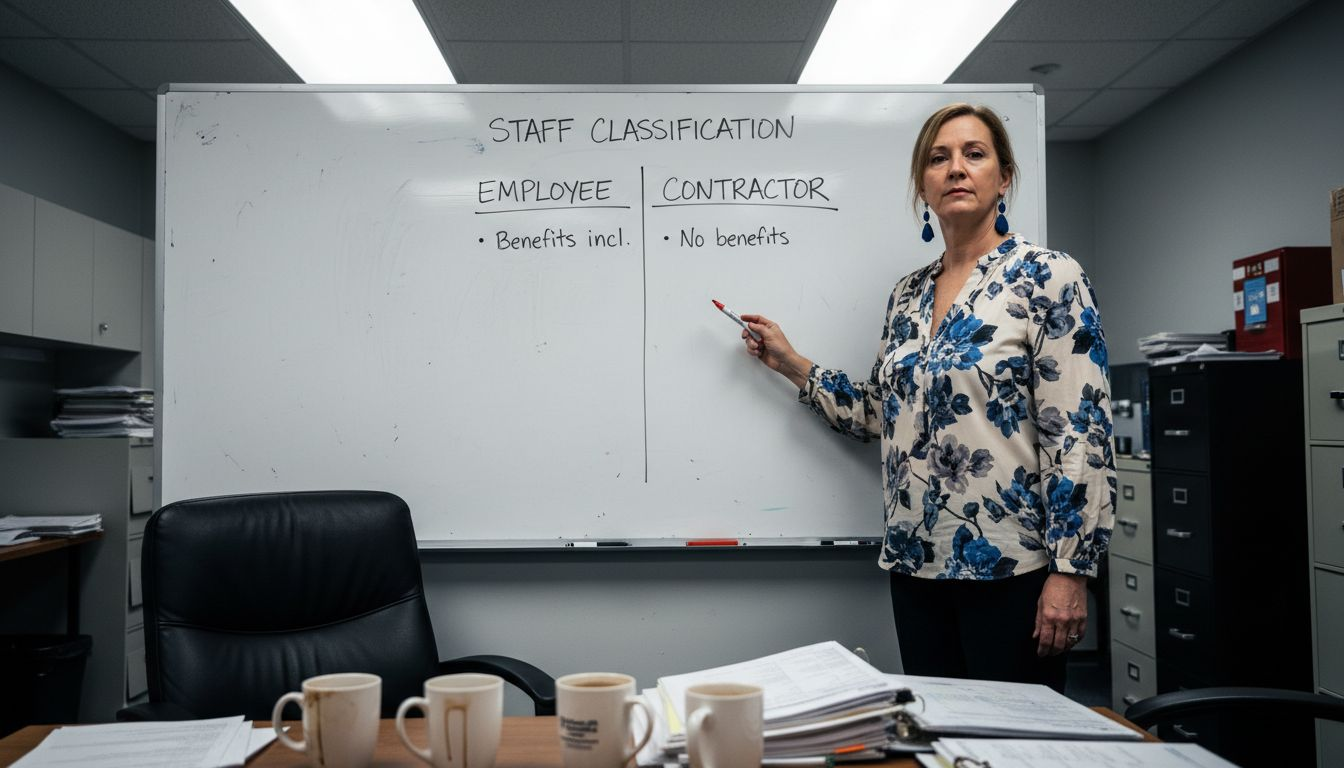
Understanding the critical distinctions between employees and independent contractors is essential for workers in Placentia seeking to protect their legal rights and financial interests. These classifications dramatically impact workplace protections, tax obligations, and overall job security.
Key differences between employees and independent contractors include:
- Workplace Control: Employees are directly supervised and managed by employers, while independent contractors maintain significant autonomy in completing work
- Tax Responsibilities: Employees have taxes automatically withheld, whereas contractors must manage their own tax payments
- Benefits Eligibility: Employees typically receive health insurance, retirement plans, and workers’ compensation
- Job Security: Employees have more robust legal protections against termination
- Equipment and Resources: Employees use employer-provided tools, while contractors supply their own equipment
The financial implications of classification are substantial. Independent contractors bear more financial risks and responsibilities, including self-employment taxes, personal insurance, and retirement planning. They lack the structured safety nets provided to traditional employees.
Legal protections differ significantly between these classifications. Employees receive comprehensive workplace rights, including minimum wage guarantees, overtime compensation, meal and rest breaks, and protection under anti-discrimination laws. Independent contractors, conversely, must negotiate their own contracts and lack these standardized protections.
Pro tip: Carefully document all work arrangements, compensation structures, and communication with employers to build a clear record of your actual working relationship.
Consequences for Misclassified Workers and Employers
Employee misclassification creates significant legal and financial risks for both workers and businesses in Placentia, with potentially devastating consequences that extend far beyond simple administrative errors. The penalties can be substantial and long-lasting, affecting multiple aspects of professional and financial life.
For misclassified workers, the consequences include:
- Loss of critical workplace protections
- Inability to receive unemployment benefits
- No access to workers’ compensation
- Reduced social security contributions
- Limited healthcare and retirement benefits
- Potential personal financial liability for tax discrepancies
Misclassification of workers in logistics can trigger severe penalties for employers, including mandatory back wage payments, substantial tax penalties, and potential civil litigation. Employers may face additional sanctions such as:
- Retroactive payment of employment taxes
- Significant financial penalties from state and federal agencies
- Potential criminal charges for intentional misclassification
- Mandatory compensation for denied employee benefits
- Legal costs associated with defending against worker claims
The financial impact can be exponential, with potential penalties multiplying across multiple misclassified workers. Employers might face class-action lawsuits that could threaten their entire business structure, while workers risk losing years of potential compensation and benefits.
The following table highlights how misclassification affects both workers and employers:
| Impact Area | Worker Consequences | Employer Consequences |
|---|---|---|
| Financial Security | Loss of wage protections, benefits | Owed back wages and heavy penalties |
| Legal Exposure | Personal tax liability, lost rights | Civil lawsuits and criminal charges |
| Workplace Protections | No access to unemployment or compensation | Retroactive tax and benefit obligations |
| Reputation | Difficulties in future employment | Damaged business credibility |
Pro tip: Maintain comprehensive documentation of your work relationship and seek immediate legal consultation if you suspect misclassification.
Filing Claims and Seeking Legal Remedies
Workers who have been misclassified in Placentia have several critical legal pathways to address their employment status and seek appropriate compensation. Understanding these options is essential for protecting one’s workplace rights and recovering potential lost wages and benefits.
Initial steps for filing misclassification claims include:
- Gathering comprehensive documentation of work arrangements
- Collecting evidence of job responsibilities and workplace interactions
- Documenting hours worked and compensation received
- Preserving communication records with employers
- Obtaining witness statements from coworkers or supervisors
Filing claims against public entities requires careful navigation of complex administrative procedures. Workers have multiple potential avenues for legal recourse, including:
- Administrative complaints with state labor boards
- Equal Employment Opportunity Commission (EEOC) investigations
- California Labor Commissioner wage claims
- Civil lawsuits for wage theft and misclassification
- Potential class action litigation
Employees should be aware that legal claims are subject to specific statute of limitations, which vary depending on the specific type of claim and jurisdiction. Prompt action is crucial to preserve potential legal rights and maximize potential recovery of lost compensation.
Pro tip: Consult with an employment law specialist who can provide personalized guidance on the most appropriate legal strategy for your specific misclassification situation.
Protect Your Rights Against Employee Misclassification in Placentia
Employee misclassification can cause serious harm by denying you crucial workplace protections and financial benefits. If you suspect you have been wrongly classified as an independent contractor, you are not alone. Understanding the key distinctions and legal tests like the ABC Test is vital in fighting for your rights and fair treatment. These challenges require experienced advocacy to navigate complex labor laws and hold employers accountable.
At Serendib Law Firm, we specialize in defending worker rights throughout California, focusing on misclassification and related employment issues. Explore how we help clients in Placentia by visiting our Misclassification Archives | Serendib Law Firm for insights, or learn about local cases at our Placentia Archives | Serendib Law Firm. Don’t wait until it is too late. Take the first step today by contacting us through https://www.serendiblaw.com/. Our team is ready to provide a free consultation and guide you toward the justice and compensation you deserve.
Frequently Asked Questions
What is employee misclassification?
Employee misclassification occurs when an employer incorrectly labels a worker as an independent contractor instead of an employee to avoid legal obligations and reduce labor costs. This practice denies workers essential benefits and rights.
How can I determine if I am misclassified as an independent contractor?
You can identify misclassification by evaluating factors such as the level of control your employer has over your work, if your tasks are integral to the company’s business, and if you maintain autonomy in your work processes and tools used.
What are the legal consequences of misclassification for workers?
Misclassified workers may lose critical workplace protections, such as unemployment benefits and workers’ compensation. They may also face personal financial liability for unpaid taxes and lack access to key benefits like health insurance and retirement plans.
What steps should I take if I suspect I am misclassified?
If you suspect misclassification, you should gather documentation of your work arrangements, collect evidence of job responsibilities, and consult with an employment law specialist to explore your legal options for filing a claim and recovering lost compensation.