Losing job security or fair treatment at work because of pregnancy can feel isolating for women in Santa Ana. This issue matters deeply, since both federal and California laws offer some of the most comprehensive pregnancy protections in the United States. Discover how these legal safeguards apply across office and retail environments, empowering you to defend your rights and address workplace discrimination confidently.
Table of Contents
- Defining Pregnancy Discrimination In Santa Ana
- Federal And California Laws Protecting Pregnant Workers
- Types Of Discrimination In Office And Retail Jobs
- Employer Responsibilities For Accommodations And Leave
- How To File A Pregnancy Discrimination Claim
- Common Workplace Risks And Mistakes To Avoid
Key Takeaways
| Point | Details |
|---|---|
| Understanding Pregnancy Discrimination | Employers in Santa Ana must treat pregnant employees equitably, as discrimination based on pregnancy status violates both federal and California laws. |
| Legal Protections | Federal and California laws provide comprehensive protections, including job-protected leave and mandated reasonable accommodations for pregnant workers. |
| Documentation is Key | Maintaining detailed records of interactions and treatment related to pregnancy can be critical for supporting discrimination claims. |
| Employer Responsibilities | Employers must provide necessary accommodations and cannot force pregnant employees to take leave or make unilateral changes to their job roles. |
Defining Pregnancy Discrimination in Santa Ana
Pregnancy discrimination occurs when an employer treats a woman unfairly due to her pregnancy, childbirth, or related medical conditions. In Santa Ana, this form of workplace bias is prohibited under both federal and California state laws, protecting pregnant workers from unfair treatment.
Under the Pregnancy Discrimination Act, employers are legally required to treat pregnancy-related conditions the same as other temporary medical conditions. This means pregnant employees must receive equal treatment in key workplace areas:
- Hiring processes
- Job assignments
- Promotions
- Salary and compensation
- Health insurance and benefits
- Training opportunities
- Workplace accommodations
The United States Equal Employment Opportunity Commission (EEOC) defines pregnancy discrimination as any adverse employment action based on pregnancy status. These discriminatory actions can include:
- Refusing to hire a qualified candidate because she is pregnant
- Demoting or firing an employee after discovering her pregnancy
- Denying reasonable workplace accommodations
- Excluding pregnant workers from job opportunities
- Creating a hostile work environment related to pregnancy
Pregnancy discrimination is fundamentally a form of sex discrimination, which means it violates core civil rights protections in the workplace.
Employers in Santa Ana are prohibited from making employment decisions that disadvantage women due to pregnancy, current or potential childbearing, or related medical conditions. This protection extends to all stages of employment, from recruitment through termination.
Pro tip: Document every interaction and communication related to your pregnancy and workplace treatment, as detailed records can be critical evidence in potential discrimination claims.
Federal and California Laws Protecting Pregnant Workers
Pregnant workers in Santa Ana are protected by a comprehensive framework of federal and state laws designed to prevent discrimination and ensure fair treatment in the workplace. Federal laws provide foundational protections that safeguard women from unfair employment practices related to pregnancy and childbirth.
The key federal protections include:
- Title VII of the Civil Rights Act: Prohibits sex discrimination, including pregnancy-related discrimination
- Pregnancy Workers Fairness Act (PWFA): Requires employers to provide reasonable accommodations for pregnant employees
- Americans with Disabilities Act (ADA): Covers pregnancy-related medical conditions that qualify as temporary disabilities
California offers even more robust protections for pregnant workers through state-specific legislation. The California Fair Employment and Housing Act (FEHA) and additional state laws provide comprehensive safeguards:
- Pregnancy Disability Leave (PDL): Allows up to 4 months of job-protected leave
- California Family Rights Act (CFRA): Provides additional leave for child bonding
- Mandatory workplace accommodations for pregnancy-related limitations
California’s pregnancy protection laws are among the most comprehensive in the United States, offering significantly broader protections than federal minimums.
Unlike federal regulations, California laws apply to employers with just five or more employees, ensuring widespread protection for pregnant workers across various industries in Santa Ana and throughout the state. These laws mandate that employers cannot discriminate in hiring, promotions, job assignments, or benefits based on pregnancy status.
Here’s a quick overview comparing federal and California protections for pregnant workers:
| Protection Area | Federal Law (EEOC, PDA) | California Law (FEHA, CFRA, PDL) |
|---|---|---|
| Minimum Employer Size | 15 or more employees | 5 or more employees |
| Job-Protected Leave | No minimum guarantee | Up to 4 months, plus bonding leave |
| Accommodation Required | Only for disability-related needs | Mandatory for pregnancy limitations |
| Scope of Coverage | Nationwide, baseline standards | Enhanced protections, broader rights |
Pro tip: Keep detailed records of any workplace interactions, accommodations requested, and communications related to your pregnancy, as documentation can be crucial in protecting your employment rights.
Types of Discrimination in Office and Retail Jobs
Pregnancy discrimination can manifest in numerous ways across office and retail work environments, creating significant challenges for pregnant employees. Workplace discrimination takes multiple complex forms that systematically undermine a woman’s professional opportunities and job security.
In office settings, pregnancy discrimination often includes:
- Passing over pregnant candidates during hiring processes
- Denying promotions or professional development opportunities
- Reducing job responsibilities without justification
- Excluding pregnant employees from critical meetings or projects
- Creating hostile work environments through inappropriate comments
Retail environments present unique discriminatory challenges, with specific patterns of unfair treatment:
- Scheduling pregnant workers fewer hours
- Assigning physically demanding tasks despite medical restrictions
- Refusing reasonable workplace accommodations
- Pressuring employees to take unpaid leave
- Implementing punitive performance evaluations
Pregnancy discrimination fundamentally represents a systemic attempt to marginalize women’s professional capabilities during a vulnerable period of their lives.
These discriminatory practices can significantly impact a pregnant worker’s economic stability, career trajectory, and psychological well-being. Employers who engage in such behaviors not only violate legal standards but also perpetuate harmful workplace cultures that disadvantage women.
Pro tip: Maintain a contemporaneous digital or physical journal documenting any discriminatory incidents, including dates, specific interactions, and potential witnesses, which can serve as critical evidence in potential legal proceedings.
Employer Responsibilities for Accommodations and Leave
Employers in Santa Ana have specific legal obligations to support pregnant workers through comprehensive accommodations and leave policies. Federal regulations mandate reasonable workplace protections for employees experiencing pregnancy-related limitations and medical needs.
Key employer responsibilities include:
- Providing reasonable workplace modifications
- Maintaining job protection during pregnancy leave
- Ensuring equal treatment and opportunities
- Preserving health insurance and benefits
- Protecting employee privacy regarding medical conditions
Specific accommodation requirements for employers involve:
- Allowing flexible scheduling for medical appointments
- Modifying job duties to reduce physical strain
- Providing alternative assignments when current roles pose risks
- Offering intermittent leave for medical needs
- Maintaining confidentiality of medical information
Employers cannot force pregnant employees to accept accommodations they do not request or require, ensuring workers maintain autonomy over their employment conditions.
Under California law, businesses with five or more employees must provide up to four months of job-protected Pregnancy Disability Leave. This protection ensures pregnant workers can recover from childbirth and manage pregnancy-related medical conditions without fear of workplace retaliation.

Pro tip: Request all accommodation discussions and agreements in writing to create a documented record of your employer’s commitments and compliance with legal requirements.
How to File a Pregnancy Discrimination Claim
Filing a pregnancy discrimination claim requires strategic documentation and understanding of legal procedures. Employees can initiate claims through multiple official channels to protect their workplace rights and seek potential legal remedies.
Initial steps for filing a discrimination claim include:
- Documenting specific instances of discriminatory treatment
- Collecting supporting evidence and communications
- Identifying witnesses who can corroborate your experience
- Preserving employment records and performance evaluations
- Tracking dates and details of discriminatory actions
The formal claim filing process involves several critical stages:
- Contact the Equal Employment Opportunity Commission (EEOC)
- Submit a signed formal discrimination charge
- Cooperate with investigative processes
- Provide comprehensive documentation
- Consider consulting an employment discrimination attorney
Timely filing is crucial, as discrimination claims are subject to strict statutory time limitations that can vary by jurisdiction.
In California, pregnant workers have additional options for filing claims with state agencies like the California Civil Rights Department, which can work in conjunction with federal investigations. These agencies collaborate to ensure comprehensive review of workplace discrimination allegations.
Pro tip: Maintain a detailed, contemporaneous digital journal documenting every discriminatory interaction, including specific dates, conversations, and potential witnesses, to strengthen your potential legal claim.
Common Workplace Risks and Mistakes to Avoid
Pregnant workers in Santa Ana face numerous workplace risks that can compromise their professional standing and personal well-being. Workplace discrimination manifests through subtle and overt practices that threaten job security and career advancement.
Common workplace risks for pregnant employees include:
- Unexpected job reassignments or demotions
- Denial of reasonable workplace accommodations
- Harassment or hostile work environments
- Reduction in work hours or pay
- Exclusion from professional development opportunities
Specific mistakes employers frequently make that can lead to discrimination claims:
- Forcing pregnant employees to take unnecessary leave
- Assuming reduced work capacity without evidence
- Discussing pregnancy as a professional limitation
- Excluding pregnant workers from critical meetings
- Making unilateral changes to job responsibilities
Pregnancy is a natural condition of employment, not a professional liability or performance indicator.
Certain marginalized groups, particularly women of color, experience disproportionately higher rates of pregnancy discrimination. Understanding these systemic challenges is crucial for recognizing and addressing workplace inequities that extend beyond individual interactions.
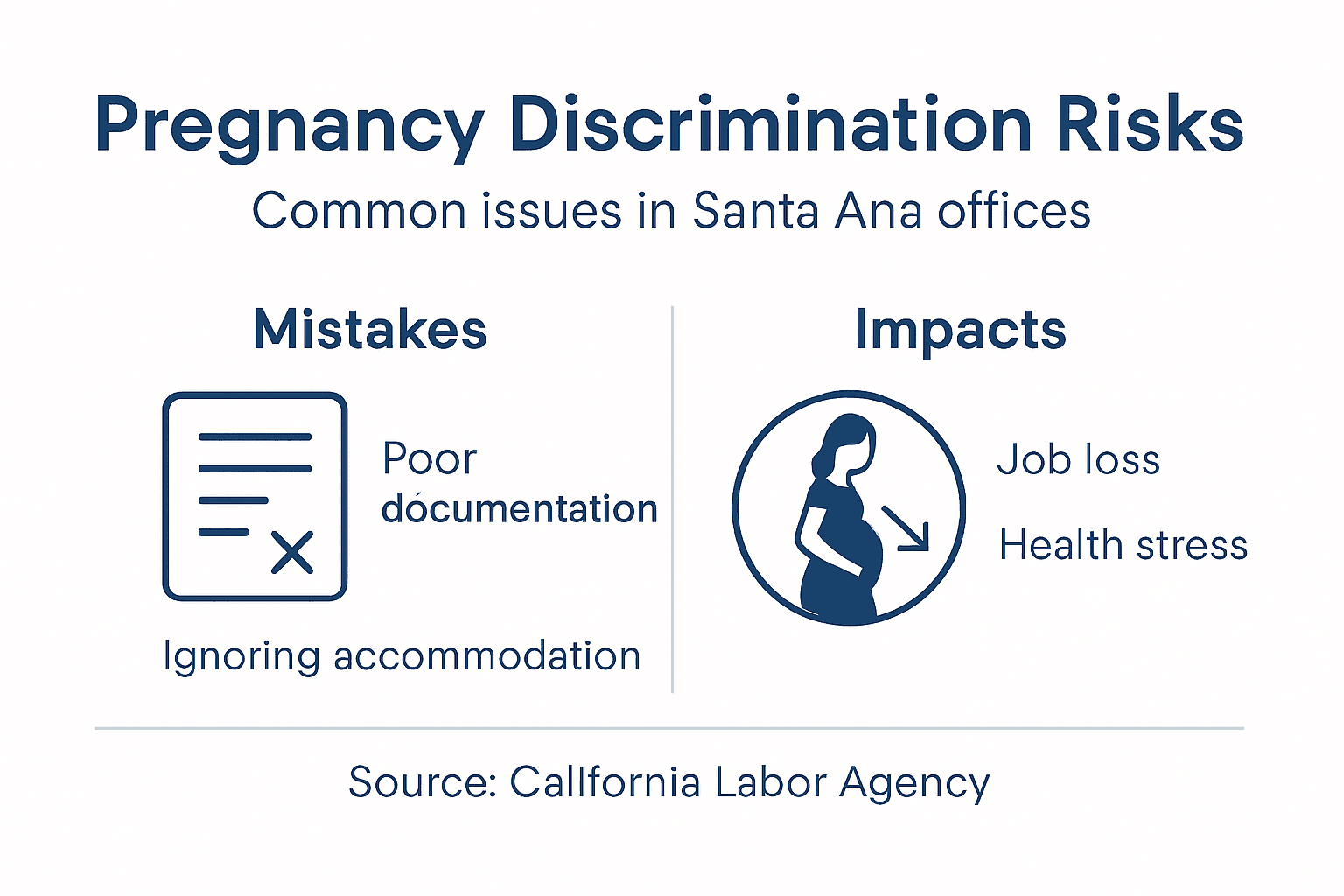
For easy reference, here’s a summary of common risks and mistakes and their possible impacts on pregnant workers:
| Workplace Issue | Example Mistake | Potential Impact |
|---|---|---|
| Job Assignment Changes | Unjustified reassignments | Reduced job status, income loss |
| Accommodation Denials | Refusing accommodations | Increased health risks |
| Harassment | Hostile comments | Psychological distress |
| Professional Exclusion | Left out of meetings | Limited growth opportunities |
| Unilateral Duty Changes | Forced task modifications | Decreased fairness, morale |
Pro tip: Maintain a comprehensive, contemporaneous digital record of all workplace interactions, communications, and potential discriminatory incidents to build a strong foundation for any future legal claims.
Protect Your Rights Against Pregnancy Discrimination in Santa Ana Workplaces
Facing unfair treatment at work due to pregnancy can feel overwhelming and isolating. Pregnancy discrimination is a serious violation that affects your job security, professional growth, and well-being. If you have experienced being passed over for promotions, denied reasonable accommodations, or pressured into leave because of pregnancy, you deserve strong legal support to fight back. This is exactly what the dedicated team at Serendib Law Firm offers for those in Santa Ana and beyond.
Our experienced attorneys understand the complexities of federal and California laws that protect pregnant workers. We are committed to zealously advocating for your rights and helping you secure fair treatment and compensation. Don’t wait until your opportunities slip away or your workplace conditions worsen. Visit our Pregnancy Discrimination Archives | Serendib Law Firm and explore how we can help you navigate your situation with confidence. For personalized support, reach out through our Santa Ana Archives | Serendib Law Firm or at our main site serendiblaw.com. Take the first step toward protecting your rights today.
Frequently Asked Questions
What is pregnancy discrimination in the workplace?
Pregnancy discrimination occurs when an employer treats a woman unfairly due to her pregnancy, childbirth, or related medical conditions. It includes adverse employment actions like hiring refusals, demotions, or creating a hostile work environment based on pregnancy status.
What laws protect pregnant workers from discrimination?
Pregnant workers are protected by several laws, including Title VII of the Civil Rights Act, the Pregnancy Workers Fairness Act, and the Americans with Disabilities Act, along with California’s Fair Employment and Housing Act and Pregnancy Disability Leave provisions, offering comprehensive protection against discrimination.
How can I file a pregnancy discrimination claim?
To file a pregnancy discrimination claim, document specific instances of discrimination, collect evidence and witness statements, and file a formal charge with the Equal Employment Opportunity Commission (EEOC) or the California Civil Rights Department, ensuring to meet statutory time limits.
What accommodations can I request during pregnancy at work?
You can request accommodations such as flexible scheduling for medical appointments, modifications to reduce physical strain, alternative assignments, and intermittent leave for medical needs. Employers are legally obligated to provide these reasonable accommodations.
Recommended
- Experienced Santa Ana Workplace Discrimination Lawyers
- Pregnancy Accommodations in Santa Ana Tech Sector: Complete Guide | Serendib Law Firm
- Pregnancy Discrimination and Light Duty Denials: Santa Ana Guide | Serendib Law Firm
- Understanding Pregnancy Discrimination Cases Against Large Retail Employers | Serendib Law Firm
- Employment Lawyer Santa Monica – Los Angeles Employment Lawyers | California United Law Group, P.C.