Most American creative professionals in Costa Mesa now work remotely, and over 50 percent have encountered disputes about privacy or workplace boundaries. This shift has pushed agencies to rethink how they balance employee rights with digital oversight. Understanding your protections and obligations is essential not just for professional security but also for personal privacy. Here, you will find practical strategies to help you navigate remote work issues and uphold your legal rights as an American employee.
Table of Contents
- Remote Work Disputes In Creative Agencies
- Types Of Employee Privacy Rights Involved
- California Legal Framework For Remote Work
- Employer Monitoring And Data Security Practices
- Employee Obligations And Risk Factors
- Navigating Disputes And Seeking Legal Help
Key Takeaways
| Point | Details |
|---|---|
| Remote Work Challenges | Creative agencies face conflicts over productivity measurement and communication expectations in remote work settings. |
| Employee Privacy Rights | Employees must have clear protections against unauthorized monitoring and ensure transparency in data collection practices. |
| Legal Framework in California | California mandates that remote workers receive equivalent protections as in-office employees, including rights around compensation and safety. |
| Dispute Resolution Strategies | Employees should document disputes and consider legal options such as mediation or arbitration for resolving conflicts. |
Remote work disputes in creative agencies
Creative agencies in Costa Mesa have experienced radical transformations in workplace dynamics as remote work becomes increasingly prevalent. Remote work trends have fundamentally reshaped traditional workplace interactions, introducing complex legal and professional challenges. This shift requires agencies to reimagine collaboration, communication protocols, and employee management strategies.
The emergence of remote work has created unprecedented disputes around productivity measurement, communication expectations, and professional boundaries. Unlike traditional office environments, virtual workspaces demand sophisticated approaches to tracking performance and maintaining team cohesion. Creative professionals now face unique challenges including potential isolation, reduced spontaneous collaboration, and blurred lines between professional responsibilities and personal time. Nationwide work trends indicate that these disputes are not isolated incidents but systemic shifts in workplace dynamics.
Key disputes in creative agency remote work environments typically involve compensation structures, communication protocols, and performance evaluation methods. Employees often challenge management’s ability to fairly assess their contributions without traditional in-person oversight. Common conflict areas include equitable workload distribution, technology access, and maintaining consistent team culture across digital platforms. These disputes can quickly escalate without clear, documented remote work policies that protect both employer and employee interests.
Here’s a summary of common remote work disputes and their impact on creative agencies:
| Dispute Category | Typical Challenge | Impact on Agency Operations |
|---|---|---|
| Compensation Structures | Fairly measuring contributions | Can cause morale and retention issues |
| Communication Protocols | Setting clear expectations | May slow project delivery and collaboration |
| Performance Evaluations | Tracking productivity remotely | Risk of unfair assessments and conflict |
Pro tip: Develop comprehensive remote work agreements that explicitly outline expectations, communication protocols, and performance metrics to minimize potential disputes and protect both organizational and individual interests.
Types of employee privacy rights involved
Employee privacy rights in Costa Mesa’s creative agencies encompass a complex landscape of legal protections that safeguard personal information and professional boundaries in remote work environments. Experienced Orange Employment Law Attorneys recognize that privacy rights extend far beyond traditional workplace settings, particularly in digital workspaces where personal and professional boundaries frequently intersect.
Key privacy rights for remote workers include protection against unauthorized monitoring, data collection limitations, and personal information security. Employers must navigate careful legal boundaries when implementing digital tracking technologies, ensuring they do not infringe on employees’ reasonable expectations of privacy. This includes restrictions on invasive monitoring practices such as continuous screen tracking, undisclosed webcam surveillance, or excessive digital communication monitoring that extends beyond legitimate work performance assessment.
Creative agency employees retain critical privacy protections around personal communication, personal device usage, and protection of sensitive personal data. These rights include maintaining confidentiality of personal health information, preventing unauthorized access to personal digital accounts, and ensuring that remote work monitoring practices remain transparent and consensual. Employers must establish clear, written policies that explicitly define acceptable monitoring practices, provide employees with comprehensive understanding of potential digital surveillance, and maintain strict confidentiality protocols for any collected information.
Pro tip: Carefully document and review all remote work monitoring policies, ensuring they balance organizational needs with robust employee privacy protections and comply with current legal standards.
California legal framework for remote work
California’s legal framework for remote work represents a comprehensive and progressive approach to protecting employee rights in digital work environments. Misclassification of remote workers remains a critical issue that significantly impacts employment regulations, particularly in creative agency settings where traditional job classifications may not align with evolving work structures.
The state’s legal framework establishes robust protections that address multiple dimensions of remote work. Key legislative provisions mandate clear guidelines for employee classification, compensation, workplace safety, and digital privacy. Employers must adhere to strict standards that ensure remote workers receive equivalent protections to in-office employees, including proper wage calculations, expense reimbursements, and maintaining safe home workspace environments. These regulations are particularly complex for creative agencies, where work boundaries can become increasingly blurred in digital environments.
Critical legal considerations for remote work in California include comprehensive anti-discrimination protections, defined communication expectations, and explicit guidelines for digital monitoring practices. Employers must implement transparent policies that respect employee privacy while maintaining necessary performance oversight. This includes specific regulations around data collection, communication tracking, and maintaining clear boundaries between professional monitoring and personal privacy. Creative agencies must carefully navigate these legal requirements, ensuring that remote work policies comply with both state and federal employment standards.
Below is a comparison of key California legal protections for remote employees versus traditional in-office employees:
| Legal Area | Remote Employees | In-Office Employees | Unique Remote Implications |
|---|---|---|---|
| Wage Calculation | Requires accurate logs | Based on shift onsite | Remote tools for verification |
| Expense Reimbursement | Home office, digital expenses | Commuting, office supplies | Must track digital-related costs |
| Safety Standards | Home office safety checks | Workplace safety inspections | Self-reporting is needed |
| Data Privacy | Strong digital privacy required | Physical security protocols | More data handled online |
Pro tip: Consult with employment law professionals to develop comprehensive remote work policies that explicitly address California’s nuanced legal requirements for digital workplace management.
Employer monitoring and data security practices
Employer monitoring practices in remote work environments demand a delicate balance between organizational oversight and employee privacy rights. Disability discrimination protections play a critical role in defining acceptable digital surveillance boundaries, particularly for creative agencies navigating complex technological monitoring landscapes.
Digital monitoring technologies have evolved to include sophisticated tracking mechanisms that can capture employee productivity, communication patterns, and digital interactions. These tools range from screen monitoring software and keystroke tracking to comprehensive performance analytics platforms. However, employers must carefully implement these technologies within strict legal constraints that protect employee privacy. Key considerations include obtaining explicit consent, limiting monitoring to work-related activities, and ensuring transparency about data collection practices. Creative agencies must develop clear, written policies that explicitly define the scope, purpose, and limitations of digital monitoring efforts.

Data security practices represent another critical dimension of remote work management. Employers must implement robust cybersecurity protocols that protect both organizational and employee digital assets. This includes secure virtual private networks (VPNs), multi-factor authentication, encrypted communication channels, and comprehensive data protection strategies. Creative agencies must develop comprehensive data handling policies that address potential security risks, protect sensitive client information, and ensure compliance with state and federal data protection regulations.
Pro tip: Develop comprehensive written policies that explicitly outline digital monitoring practices, ensuring transparency, obtaining employee consent, and maintaining clear boundaries between professional oversight and personal privacy.
Employee obligations and risk factors
Remote work in creative agencies introduces complex legal obligations and potential risks that employees must carefully navigate. California remote work legal requirements mandate specific responsibilities that extend far beyond traditional workplace expectations, compelling employees to proactively manage their professional conduct and documentation.
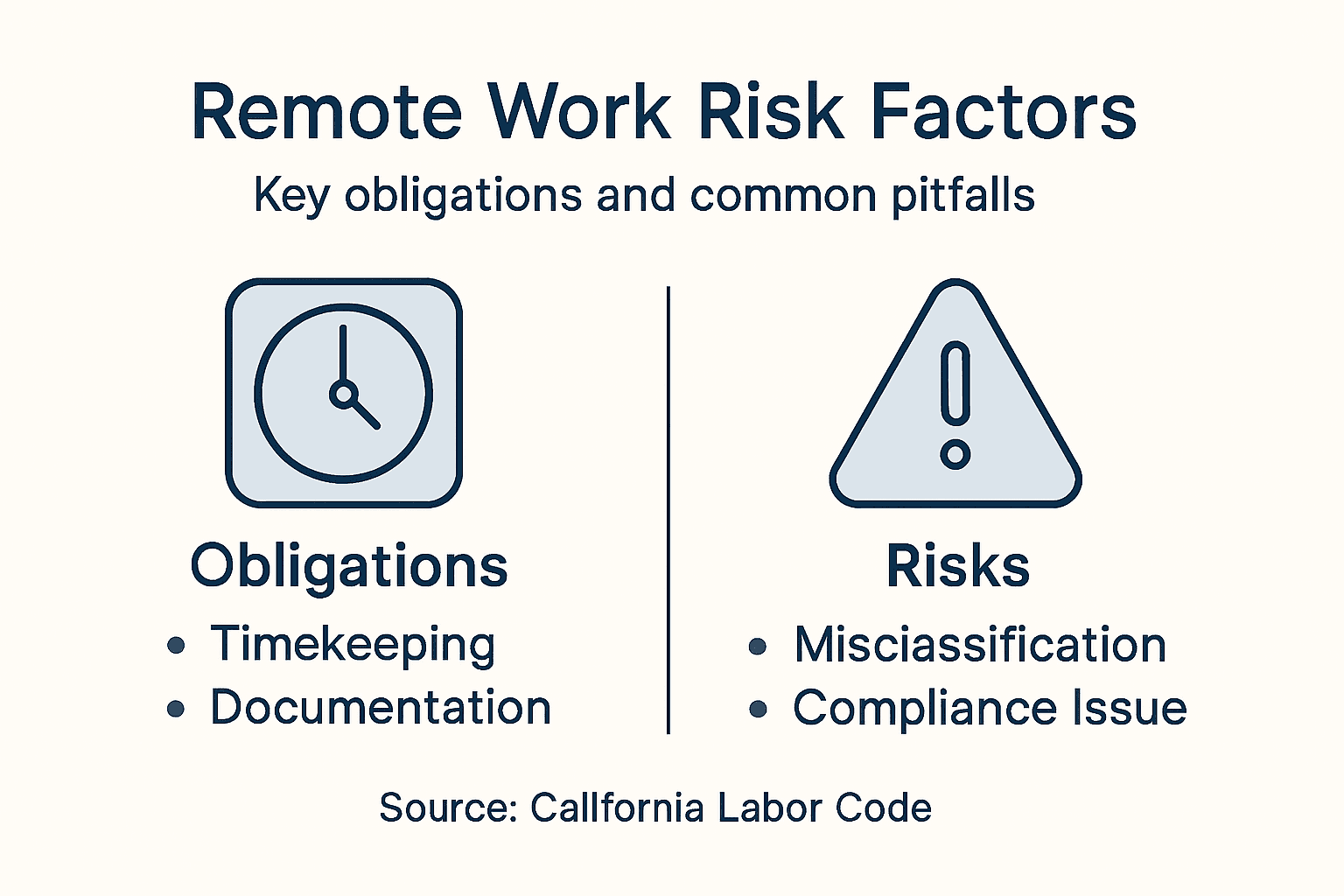
Key employee obligations include maintaining accurate timekeeping, documenting work-related expenses, and ensuring compliance with workplace safety standards. Creative agency employees must meticulously track their work hours, including overtime, and communicate transparently about their productivity and professional activities. This requires maintaining detailed records of work performed, communication logs, and project deliverables. Failure to meet these obligations can result in potential wage disputes, workers’ compensation challenges, and potential termination.
Risk factors for remote workers in creative agencies encompass multiple dimensions, including potential misclassification, compliance violations, and privacy breaches. Employees must be vigilant about maintaining professional boundaries, protecting confidential client information, and adhering to company digital security protocols. This includes using secure communication channels, protecting company data, and avoiding potential conflicts of interest. Additionally, employees must be aware of potential legal implications surrounding intellectual property rights, confidentiality agreements, and professional conduct in digital work environments.
Pro tip: Develop a comprehensive personal documentation system that tracks work hours, expenses, and professional communications to protect yourself and demonstrate professional accountability.
Navigating disputes and seeking legal help
Employees in creative agencies facing remote work disputes must understand the strategic options for resolution, with employment law arbitration representing a critical pathway for addressing workplace conflicts. Legal strategies can range from informal negotiations to formal legal proceedings, each requiring careful consideration of potential outcomes and professional implications.
Initial dispute resolution typically involves internal channels, such as human resources departments or direct communication with management. When these approaches fail, employees have multiple legal avenues available. These include formal mediation, where a neutral third party helps facilitate a resolution, and arbitration, which provides a more structured alternative to traditional court litigation. Creative agency professionals should document all communication, maintain comprehensive records of incidents, and carefully review any employment contracts or remote work agreements that might impact dispute resolution processes.
Legal consultation becomes crucial when workplace disputes involve potential violations of employee rights, discrimination, wage disputes, or privacy breaches. Experienced employment law attorneys can help evaluate the merits of a case, advise on potential strategies, and represent employees’ interests effectively. Professionals should seek legal counsel who specialize in remote work and creative industry employment issues, ensuring they receive targeted advice that understands the unique challenges of digital workplace environments.
Pro tip: Preserve all digital and physical documentation related to workplace disputes, as these records can provide critical evidence when seeking legal resolution.
Protect Your Rights in Remote Work Disputes and Privacy Challenges
Remote work brings unique challenges for creative professionals in Costa Mesa, especially when it comes to disputes over compensation, communication, and employee privacy. If you are facing difficulties with fair performance evaluations, invasive monitoring, or unclear remote work policies, you are not alone. These issues can affect your peace of mind and job security, but you do not have to navigate them by yourself.
At Serendib Law Firm, our experienced team understands the complexities of California employment law and how it applies specifically to remote work environments. We are dedicated to protecting your rights against unfair treatment and privacy intrusions. Explore our California Employment Law Archives to learn more about your legal protections or visit our CA Employment Law Archives for additional insights. Do not wait for disputes to escalate. Get trusted guidance tailored to your situation by contacting us today at serendiblaw.com. Taking action now ensures you stay informed and prepared to defend your rights in this evolving remote work landscape.
Frequently Asked Questions
What are common disputes in remote work environments for creative agencies?
Common disputes include challenges around compensation structures, communication protocols, and performance evaluations, often stemming from difficulties in measuring contributions without in-person oversight.
How can creative agencies protect employee privacy while monitoring remote work?
Agencies can protect employee privacy by establishing clear policies on digital monitoring, ensuring transparency, obtaining explicit consent, and limiting monitoring to work-related activities only.
What employee obligations exist in remote work settings?
Employees are required to maintain accurate timekeeping, document work-related expenses, and comply with workplace safety standards to ensure accountability and prevent disputes.
What steps should I take if I face a dispute while working remotely?
Initial steps include using internal channels like HR for resolution, documenting all communications related to the dispute, and considering legal consultation if the issue involves potential rights violations or discrimination.