Facing backlash at work after requesting reasonable accommodations can leave employees in Tustin feeling isolated and unsure of their rights. Retaliation often takes the form of termination, demotion, or increased hostility, which can make daily tasks feel overwhelming. Understanding what counts as workplace retaliation and knowing the protections provided under both California and federal law gives you the confidence to respond and seek appropriate legal options.
Table of Contents
- Defining Retaliation After Accommodation Requests
- Common Retaliatory Actions By Employers
- California Laws Protecting Employees In Tustin
- Recognizing And Proving Retaliation Claims
- Documenting Evidence And Seeking Legal Help
Key Takeaways
| Point | Details |
|---|---|
| Understanding Retaliation | Retaliation after accommodation requests is a serious legal violation that can involve direct and indirect adverse actions. Employees should recognize these as threats to their rights. |
| Documentation is Crucial | Employees facing potential retaliation should meticulously document all interactions, communications, and incidents to support their claims. |
| Legal Protections Exist | Robust legal frameworks, including California civil rights laws, protect employees from retaliatory actions when requesting workplace accommodations. |
| Know Your Rights | Employees should consult with legal specialists to understand their protections and effectively address potential workplace discrimination. |
Defining Retaliation After Accommodation Requests
Retaliation after accommodation requests represents a serious legal violation that threatens employee rights in Tustin workplaces. When an employee seeks reasonable workplace adjustments due to disability, medical condition, or other protected characteristics, employers must respond appropriately – not punitively. Workplace retaliation involves any adverse action intended to discourage an employee from exercising their legal rights.
The legal definition of retaliation encompasses several critical elements that employees should understand:
- Direct adverse actions such as termination, demotion, or reduced work hours
- Indirect intimidation tactics designed to make the work environment hostile
- Punitive responses targeting an employee after they request accommodations
- Systematic marginalization that undermines professional opportunities
According to the Department of Labor, retaliation can manifest through multiple mechanisms. Materially adverse actions might include reducing an employee’s responsibilities, changing shift assignments, creating uncomfortable work conditions, or implementing unexplained performance evaluations that appear designed to push the employee out.
Retaliation is prohibited when an employee exercises rights guaranteed under employment protection laws, including requesting reasonable workplace accommodations.
Employees experiencing potential retaliation should document every interaction, communication, and incident meticulously. Federal guidelines on workplace retaliation provide clear protections that can help workers defend their professional rights and seek appropriate legal remedies.
Here’s a useful summary contrasting direct and indirect retaliation:
| Type of Retaliation | Common Examples | Impact on Employee |
|---|---|---|
| Direct Actions | Immediate termination, demotion | Loss of income, career setback |
| Indirect Actions | Hostile environment, micromanagement | Emotional distress, reduced morale |
| Systematic Tactics | Reassignment, downgraded duties | Isolation, limited growth |
Pro tip: Keep a detailed, dated record of all accommodation requests, employer communications, and potential retaliatory actions to strengthen your potential legal case.
Common Retaliatory Actions by Employers
Employers in Tustin frequently engage in subtle and overt forms of retaliation when employees request workplace accommodations. Common retaliatory tactics range from direct employment actions to more nuanced forms of professional harassment designed to undermine an employee’s position and confidence.
The most prevalent retaliatory actions include:
- Termination without legitimate cause
- Demotion to less desirable positions
- Reduction of work hours or shift assignments
- Negative performance reviews that lack substantive evidence
- Denial of promotion opportunities
- Increased workplace scrutiny and micromanagement
- Verbal harassment or creating a hostile work environment
Employers may strategically implement these tactics to discourage future accommodation requests or punish employees who have already sought workplace adjustments. Systematic retaliation often involves carefully constructed actions that appear neutral but are designed to make the work environment unbearable.
Retaliation can be subtle or aggressive, but the underlying intent remains the same: to discourage employees from asserting their legal rights to workplace accommodations.
Workers in Tustin should recognize that workplace accommodation retaliation comes in multiple forms, some of which might not be immediately obvious. Documentation and careful observation are critical in identifying and addressing these potentially illegal employer actions.

Pro tip: Maintain a detailed, confidential log of all interactions, communications, and potential retaliatory actions to build a strong foundation for potential legal protection.
California Laws Protecting Employees in Tustin
Employees in Tustin are protected by robust legal frameworks designed to safeguard their rights when requesting workplace accommodations. California civil rights laws provide comprehensive protections against employer retaliation, ensuring workers can assert their legal rights without fear of professional consequences.
Key legal protections for employees include:
- Prohibition of discriminatory actions following accommodation requests
- Protection from wrongful termination
- Right to reasonable workplace modifications
- Legal recourse for retaliatory behaviors
- Mandatory employer compliance with accommodation requirements
The California Fair Employment and Housing Act (FEHA) establishes strong legal precedents that complement federal protections. Workplace accommodation rights extend to various scenarios, including disabilities, pregnancy, religious practices, and medical conditions. Employers are legally obligated to provide reasonable adjustments unless they can demonstrate undue hardship.
California law explicitly prohibits employers from taking adverse actions against employees who request legitimate workplace accommodations.
Employees in Tustin have multiple avenues for legal protection, including state-level employment regulations that offer more comprehensive safeguards than federal statutes. These laws empower workers to challenge discriminatory practices and seek justice when their fundamental employment rights are violated.
For quick reference, here is how federal versus California laws protect employees against retaliation:
| Law Type | Scope of Protection | Key Remedies | Unique Features |
|---|---|---|---|
| Federal (EEOC/ADA) | Anti-retaliation for disability, protected traits | Reinstatement, damages, legal action | Applies nationwide, minimum standards |
| California (FEHA) | Broader coverage for workplace rights | Higher compensation, stronger enforcement | Covers more conditions, stricter rules |
Pro tip: Consult with an employment law specialist to understand the full scope of your legal protections and develop a strategic approach to addressing workplace accommodation challenges.
Recognizing and Proving Retaliation Claims
Navigating retaliation claims requires a strategic understanding of legal standards and evidence collection. Legal proof of workplace retaliation demands a precise demonstration of three critical elements that connect an employee’s protected activity to adverse employment actions.
The key components for establishing a retaliation claim include:
- Documented protected activity such as accommodation requests
- Clear evidence of adverse employment actions
- Demonstrable causal connection between the activity and the action
- Chronological timeline of events
- Witness statements or supporting documentation
- Pattern of differential treatment
Substantiating retaliation involves more than simply presenting isolated incidents. Employers frequently attempt to disguise retaliatory actions under the veneer of legitimate business practices, making comprehensive documentation crucial. The strength of a claim often depends on showing a direct link between the accommodation request and subsequent negative treatment.
Retaliation claims require proving that an employer’s actions were motivated by punitive intent rather than legitimate business considerations.
Employees in Tustin must understand that workplace retaliation evidence involves nuanced legal standards. Timing, consistency of treatment, and documented communications can significantly strengthen a potential legal case against retaliatory employers.
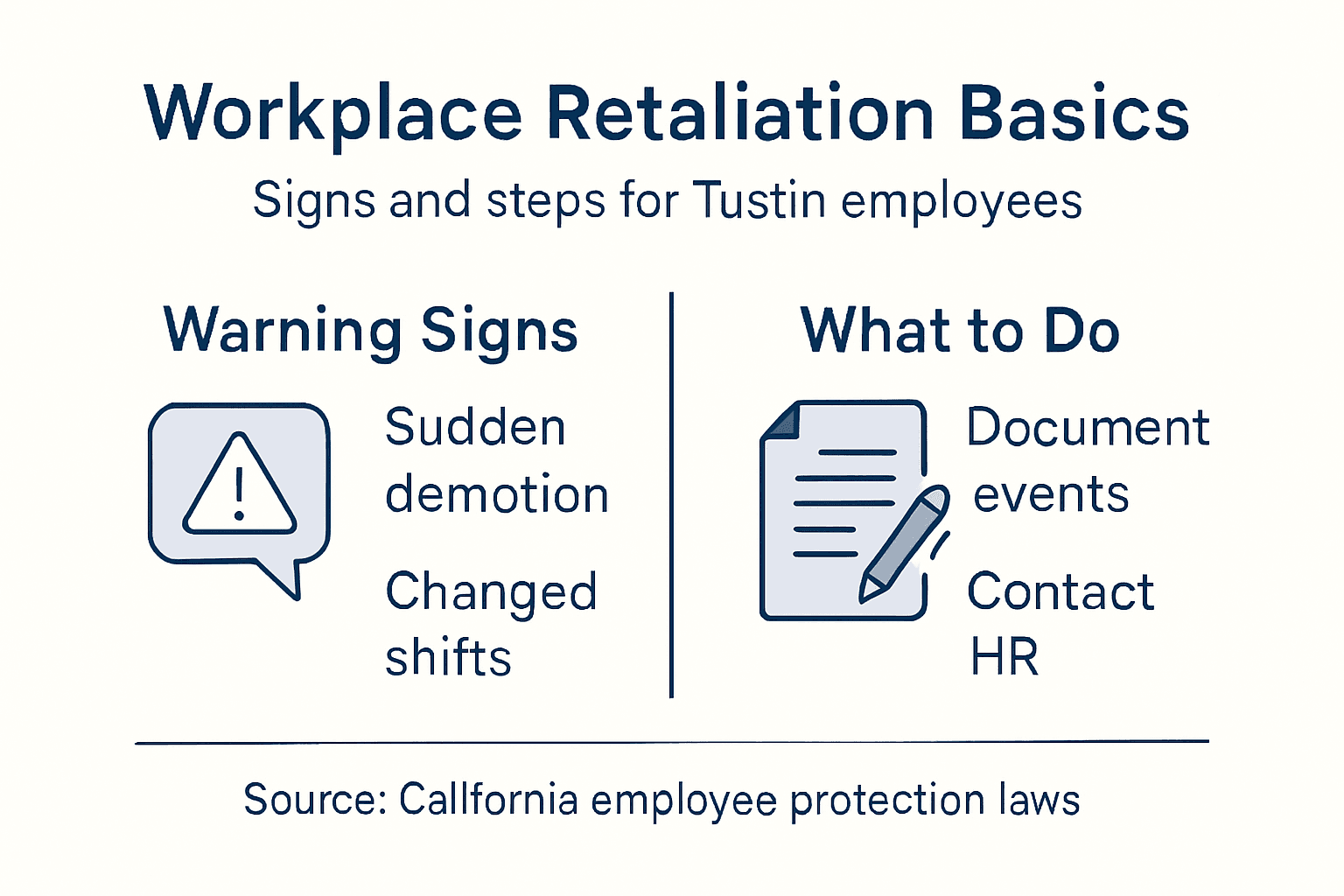
Pro tip: Maintain a comprehensive, dated record of all workplace interactions, communications, and potential retaliatory actions, preserving digital and physical evidence to support your potential legal claim.
Documenting Evidence and Seeking Legal Help
Building a compelling case against workplace retaliation requires meticulous evidence collection and strategic documentation. Legal documentation strategies are critical in establishing a strong foundation for potential legal action in Tustin’s employment landscape.
Critical evidence gathering steps include:
- Preserve all written communication
- Create a detailed chronological timeline
- Collect witness contact information
- Maintain copies of accommodation requests
- Screenshot digital communications
- Store performance reviews and employment records
Professional documentation involves creating a comprehensive record that demonstrates the sequence of events surrounding your accommodation request and subsequent treatment. Employers often attempt to obscure retaliatory actions, making thorough evidence collection paramount. Each piece of documentation serves as a potential puzzle piece in constructing a legal narrative.
Effective evidence documentation transforms your experience from a personal grievance into a legally substantiated claim of workplace retaliation.
Employees seeking legal recourse have multiple avenues for support, including workplace retaliation complaint procedures through state and federal agencies. Consulting with an employment law specialist can help interpret complex legal standards and determine the most appropriate strategy for addressing workplace discrimination.
Pro tip: Create a dedicated, secure digital and physical file system for organizing all potential evidence, ensuring no critical documentation is accidentally lost or destroyed.
Protect Your Rights Against Retaliation for Accommodation Requests in Tustin
Facing retaliation after requesting workplace accommodations can feel overwhelming and unjust. If you are encountering adverse actions such as termination, demotion, or a hostile work environment for asserting your legal rights, you are not alone. Understanding your rights and having strong legal support is essential to stop employer retaliation and secure fair treatment.
Serendib Law Firm is dedicated to defending employees in Tustin against retaliation and workplace discrimination. With expertise in employment law and a deep commitment to personalized advocacy, our team helps you document your case, navigate complex legal protections under California law, and fight for the justice you deserve. Visit our Retaliation Archives | Serendib Law Firm to learn more about how we support clients facing these challenges.
Don’t wait until retaliatory actions escalate. Get trusted guidance tailored to your situation now by contacting us at Serendib Law Firm. For information specific to our local community and laws, explore our Tustin Archives | Serendib Law Firm to stay informed and empowered.
Frequently Asked Questions
What constitutes retaliation after requesting workplace accommodations?
Retaliation may include direct actions such as termination or demotion, as well as indirect actions like creating a hostile work environment or implementing punitive responses targeting the employee.
How can I document potential retaliation from my employer?
To document retaliation, keep records of all interactions, communications, incidents, and any adverse actions taken against you following your accommodation request. A detailed timeline can support your claims.
What should I do if I believe I am experiencing retaliation?
If you suspect retaliation, document the events meticulously and consider consulting with an employment law specialist. You can also file a complaint with state or federal agencies for protection against employer retaliation.
Are there any legal protections against retaliation for accommodation requests?
Yes, employees are protected under state and federal laws, such as the California Fair Employment and Housing Act and federal anti-discrimination laws, which prohibit retaliatory actions against employees who request workplace accommodations.