More than eight out of ten American warehouse workers say fear of retaliation stops them from reporting safety hazards. This issue matters because warehouse jobs are among the most dangerous in the United States, and every worker deserves a safe workplace without risking their job. Understanding how retaliation claims work helps American employees protect their rights and hold employers accountable when safety concerns are met with threats, demotion, or other unfair treatment.
Table of Contents
- Defining Retaliation Claims In Warehouse Settings
- OSHA Complaints Process For Warehouse Employees
- Common Forms Of Employer Pushback And Retaliation
- Legal Protections Against Retaliation In California
- Employee Rights And Steps After Retaliation
Key Takeaways
| Point | Details |
|---|---|
| Retaliation Protections | Workers reporting safety concerns are legally protected from adverse actions like termination or demotion. |
| Documentation Importance | Maintaining detailed records of all workplace interactions and safety complaints is crucial for building a strong legal defense. |
| Complaint Filing Process | Employees can file complaints through various channels; timely submission is essential for effective investigation. |
| Legal Remedies | Affected workers may seek remedies including reinstatement, back pay, and compensation for damages after experiencing retaliation. |
Defining Retaliation Claims in Warehouse Settings
Retaliation claims in warehouse settings represent critical legal protections for workers who report unsafe working conditions or workplace hazards. When employees exercise their rights to report safety violations or participate in official workplace safety investigations, employers are strictly prohibited from taking adverse actions against them.
Under California workplace safety regulations, retaliation encompasses a wide range of punitive behaviors that can harm an employee’s professional standing or economic opportunities. These adverse actions might include termination, demotion, reduction in work hours, pay cuts, or creating a hostile work environment designed to pressure the worker into silence. The legal framework specifically protects workers who file complaints about workplace safety hazards, participate in OSHA investigations, or raise concerns about potential health risks in warehouse environments.
Specifically, state labor regulations establish clear boundaries for employer conduct after an employee reports a safety concern. Workers have the right to document and report unsafe working conditions without fear of professional repercussions. This means that if a warehouse worker notices inadequate safety equipment, improper machinery maintenance, hazardous material handling procedures, or potential risks to worker health, they can report these issues through official channels without risking their employment status.
Pro Tip – Document Everything: Maintain a detailed, dated record of all safety communications, complaints, and any subsequent workplace interactions, as this documentation can be crucial evidence if you need to pursue a retaliation claim.
Important Legal Considerations:
Here’s a comparison of direct versus indirect forms of workplace retaliation:
| Retaliation Type | Example Action | Typical Impact |
|---|---|---|
| Direct | Immediate firing after complaint | Job loss, income disruption |
| Indirect | Gradual exclusion from team projects | Increased stress, career stalling |
| Direct | Sudden demotion in job role | Decreased authority, lower pay |
| Indirect | Hostile work environment created over time | Emotional distress, forced resignation |
- Retaliation can be direct or indirect
- Adverse actions need not be immediate to qualify as retaliation
- Workers are protected even if the original safety complaint is not fully substantiated
- Employers bear the burden of proving any disciplinary actions were unrelated to the safety report
OSHA Complaints Process for Warehouse Employees
Warehouse employees in California have clear legal pathways to report workplace safety concerns through official OSHA complaint procedures. These processes are designed to protect workers from potential hazards and ensure safe working environments by providing multiple channels for reporting workplace safety violations.
The complaint process typically involves several critical steps. Workers can submit their safety concerns through multiple methods: online submission, telephone reporting, or in-person filing with local OSHA offices. When filing a complaint, employees should provide detailed information about the specific safety hazards or workplace violations they have observed. Confidentiality is a key protection, meaning workers can report issues without fear of workplace retaliation.
California state labor regulations establish specific guidelines for workplace safety complaints. After a complaint is filed, OSHA will evaluate the reported concerns and determine the appropriate response. This may include conducting an on-site inspection, requesting documentation from the employer, or initiating a formal investigation into the reported workplace safety violations. The agency takes these complaints seriously and works to ensure that warehouse workers are protected from potential dangerous working conditions.
Important Documentation Requirements:
- Specific location of the safety hazard
- Date and time of observed violation
- Detailed description of the safety concern
- Names of witnesses, if applicable
- Photographic evidence, if possible
Pro Tip – Prepare Thoroughly: Gather comprehensive documentation before filing your OSHA complaint to increase the likelihood of a thorough and effective investigation.
Common Forms of Employer Pushback and Retaliation
Employers have numerous subtle and direct methods of retaliating against warehouse workers who file safety complaints through official channels. These tactics are designed to intimidate employees and discourage future reporting of workplace safety violations, ranging from overt actions like termination to more nuanced forms of workplace harassment.

Workplace Retaliation can manifest through multiple strategic approaches. Direct forms include immediate termination, unexpected demotion, or significant reduction in work hours. More insidious methods involve creating a hostile work environment, such as systematically isolating the employee, denying critical training opportunities, or implementing punitive scheduling practices that disrupt an employee’s work life and economic stability. California labor regulations recognize these tactics as illegal forms of workplace discrimination that directly violate employee protection statutes.
Some of the most common retaliation strategies employed by unscrupulous employers include deliberately assigning less desirable shifts, denying performance opportunities, withholding critical workplace benefits, and creating an environment of persistent psychological pressure. These actions are designed to make the workplace uncomfortable and potentially force the employee to resign voluntarily, thereby avoiding direct legal accountability for wrongful termination.
Common Retaliation Tactics:
- Unexpected job reassignment
- Sudden performance criticism
- Exclusion from team communications
- Unreasonable performance expectations
- Scheduling harassment
Pro Tip – Document Everything: Maintain a comprehensive, dated record of all workplace interactions, communications, and potential retaliatory actions to build a strong legal defense if needed.
Legal Protections Against Retaliation in California
California provides robust legal safeguards for warehouse workers who report workplace safety concerns, with comprehensive state labor regulations designed to protect employees from potential employer retaliation. These protections are fundamentally rooted in the California Occupational Safety and Health Act, which explicitly prohibits employers from taking adverse actions against workers who exercise their legal right to report workplace hazards.
Workplace Protection Mechanisms include multiple layers of legal defense for employees. Workers who experience retaliation can file formal complaints with the California Labor Commissioner’s Office, which investigates alleged violations and provides remedies for affected employees. These protections cover a wide range of potential retaliatory actions, including termination, demotion, reduction in hours, harassment, or creating a hostile work environment designed to discourage future safety reporting.
California’s workplace safety laws ensure that employees can confidentially report workplace safety concerns without fear of professional consequences. The state’s regulatory framework mandates that employers cannot punish workers for participating in safety investigations, filing official complaints, or testifying about workplace conditions. This legal shield extends to both direct and indirect forms of retaliation, providing comprehensive protection for warehouse workers who prioritize workplace safety.
Key Legal Protections:
- Confidential complaint filing
- Protection from termination
- Right to file complaints without fear
- Potential legal remedies for retaliation
- Preservation of employee rights
Pro Tip – Know Your Rights: Thoroughly document all workplace interactions and potential retaliatory actions, as detailed evidence is crucial when pursuing a legal claim against an employer.
Employee Rights and Steps After Retaliation
Warehouse workers who experience retaliation have critical legal pathways to protect their rights and seek justice, beginning with filing an official whistleblower complaint that documents the specific retaliatory actions taken against them. These complaints serve as formal documentation of workplace misconduct and trigger investigative processes designed to protect employee rights and hold employers accountable.
Legal Remedies available to workers include potential reinstatement, back pay, compensation for damages, and other corrective actions. Workers can file complaints with multiple agencies, including the California Labor Commissioner’s Office and federal OSHA, which provides multiple avenues for seeking resolution. Each complaint triggers a comprehensive investigation that examines the details of the alleged retaliation, requiring employers to demonstrate legitimate, non-retaliatory reasons for their actions.
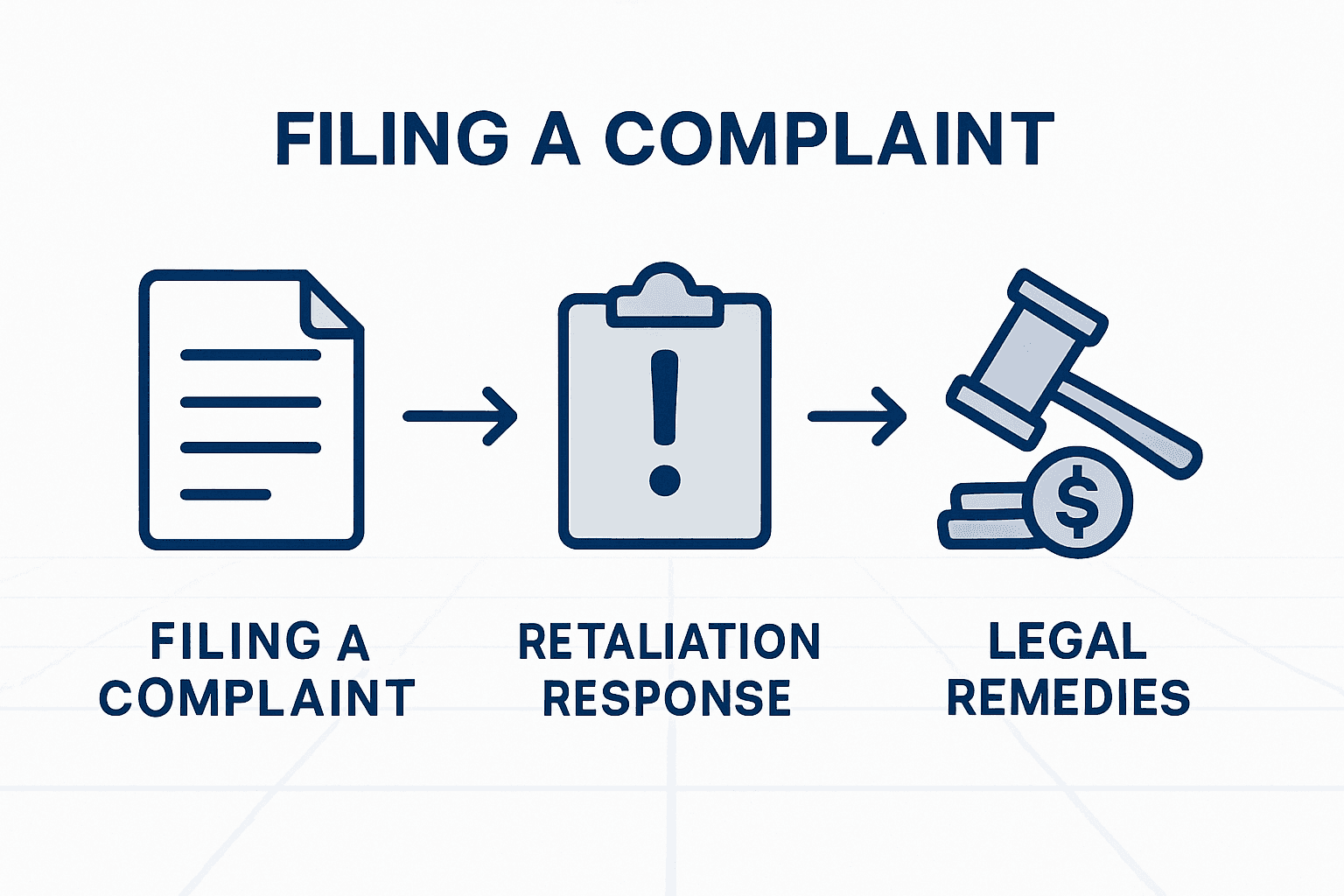
California workplace safety regulations establish clear protocols for addressing retaliation claims. Employees must typically file their complaints within specific timeframes, usually 30 to 60 days from the date of the retaliatory action. The investigative process involves gathering evidence, interviewing witnesses, and carefully examining the sequence of events leading to the alleged retaliation.
Below is a summary of agencies available to address warehouse retaliation issues and their primary roles:
| Agency | Main Responsibility |
|---|---|
| California Labor Commissioner | Investigates retaliation claims |
| Federal OSHA | Handles federal workplace safety |
| Local OSHA Office | Conducts safety inspections |
| State Court | Provides legal remedies if needed |
Important Steps After Experiencing Retaliation:
- Document all incidents in detail
- Preserve communications and evidence
- File complaints with appropriate agencies
- Seek legal consultation
- Maintain professional conduct
Pro Tip – Protect Your Evidence: Create a secure, timestamped digital and physical archive of all workplace communications, performance records, and incident documentation to strengthen your potential legal claim.
Protect Your Rights Against Retaliation in Tustin Warehouses
Facing retaliation after filing an OSHA complaint can be overwhelming. If you have experienced termination, demotion, or hostile treatment for speaking up about unsafe conditions at your warehouse job in Tustin you are not alone. The article highlights how California law shields workers from these unlawful practices but fighting back requires careful action and solid legal support.
At Serendib Law Firm we understand the challenges of retaliation claims and offer personalized advocacy to protect your rights. From documenting workplace harassment to navigating complex complaint processes our experienced team is committed to defending workers who stand up for safety. Learn more about how we help clients facing workplace retaliation by exploring our Retaliation Archives and see specific cases from the Tustin area.
Don’t wait until your situation worsens take control now by contacting us at Serendib Law Firm for a free consultation. Protect yourself today and get the trusted legal help you deserve before retaliation damages your career and livelihood.
Frequently Asked Questions
What constitutes retaliation in warehouse settings?
Retaliation in warehouse settings includes actions such as termination, demotion, pay cuts, or creating a hostile work environment aimed at punishing workers for reporting safety violations or participating in safety investigations.
How can warehouse employees report OSHA complaints?
Warehouse employees can report OSHA complaints through various methods including online submission, telephone reporting, or in-person filings at local OSHA offices. It’s important to provide detailed information about the safety hazards observed.
What are some common forms of employer retaliation?
Common forms of employer retaliation include unexpected job reassignments, sudden performance criticism, exclusion from team communications, and unreasonable performance expectations that impact the employee’s work life.
What legal protections do workers have against retaliation?
Workers have several legal protections against retaliation, including confidentiality in complaint filing, protection from termination, rights to file complaints without fear, and potential remedies such as reinstatement and back pay for victims of retaliation.
Recommended
- Experienced Tustin Workplace Retaliation Lawyers
- Experienced Santa Ana Workplace Retaliation Lawyers
- Employer Retaliation for Workers’ Compensation Claims: Complete Guide | Serendib Law Firm
- Experienced Anaheim Workplace Retaliation Lawyers
- Employment Law – Law Office of Brian Y. Shirazi, PC
- 12 Bad Fire Safety Habits That Can Burn Down Your Workplace