More than twenty percent of American workers have experienced employer retaliation for wage theft reports. In Yorba Linda, small business employees who speak up about wage theft often face sudden schedule changes, unfair discipline, and even threats to their jobs. Understanding your rights and how retaliation laws protect you is crucial if you want to take action and safeguard your financial security.
Table of Contents
- Defining Retaliation After Wage Theft Reports
- Types of Retaliation in Small Businesses
- California Laws Protecting Whistleblowers
- Employee Rights and Employer Obligations
- Taking Action Against Workplace Retaliation
Key Takeaways
| Point | Details |
|---|---|
| Workplace Retaliation Defined | Employers are prohibited from punishing employees for reporting wage theft, which includes various adverse actions. |
| California Legal Protections | Whistleblowers in California have strong protections against retaliation, allowing them to report violations safely. |
| Documenting Retaliation | Employees should meticulously document any retaliatory actions post-reporting to support their claims. |
| Action Steps for Employees | Workers facing retaliation can file complaints with the California Labor Commissioner’s Office to seek accountability. |
Defining Retaliation After Wage Theft Reports
Retaliation represents a serious workplace violation where employers illegally punish workers for reporting labor law infractions like wage theft. In Yorba Linda, employees who expose wage violations are legally protected from negative employment actions by their employers. Adverse employment actions can include demotion, unfair disciplinary measures, salary reduction, undesirable shift assignments, or outright termination.
Under California employment law, workers have robust protections against workplace retaliation. When an employee reports wage theft, employers cannot legally respond with punitive measures designed to discourage future reporting. These protections extend to both written and verbal complaints, provided they clearly communicate potential labor law violations. The legal standard requires that complaints be specific enough for a reasonable employer to understand the nature of the potential violation.
Specific retaliation tactics may involve subtle workplace strategies intended to make an employee uncomfortable or discourage future reporting. Such actions might include unexplained performance reviews, sudden schedule changes, exclusion from workplace communications, or creating a hostile work environment. Workers experiencing these behaviors after reporting wage theft should document each incident meticulously, including dates, specific actions, and potential witnesses.
Pro tip: Keep a detailed, contemporaneous record of all interactions and potential retaliatory actions following your wage theft report to strengthen any future legal claim.
Types of Retaliation in Small Businesses
Small businesses often employ subtle and complex strategies of workplace retaliation that can be challenging to identify. Retaliation tactics range from direct actions like demotion to more nuanced approaches designed to marginalize employees who report wage theft or other workplace violations. These strategies might include systematic exclusion from critical meetings, deliberately unfavorable work assignments, or creating an environment of professional isolation.
In Yorba Linda’s small business landscape, retaliation can manifest through seemingly innocuous workplace modifications. Employers might implement sudden schedule changes, reduce work hours, increase managerial scrutiny, or create performance evaluation metrics that unfairly target whistleblowers. Some businesses develop quiet retaliation cultures where communication channels are subtly restricted, project opportunities are strategically withheld, or professional development paths are intentionally blocked for employees who have raised concerns about labor violations.

Recognizing these sophisticated retaliation methods requires careful documentation and understanding of workplace dynamics. Common indicators include abrupt changes in communication patterns, unexplained negative performance reviews, increased micromanagement, professional isolation, and systematic exclusion from team activities. Workers should pay close attention to any significant workplace shifts that occur after reporting wage theft or other labor law violations.
Pro tip: Maintain a confidential, detailed log of all workplace interactions and potential retaliatory actions, including dates, specific incidents, and any witnesses to strengthen your potential legal documentation.
Here’s a summary of typical retaliation tactics and their workplace impact:
| Retaliation Tactic | Workplace Impact | Likely Employer Motive |
|---|---|---|
| Unexplained schedule changes | Disrupts work-life balance | Pressure for resignation |
| Micromanagement | Increases employee stress | Discourage future reporting |
| Performance review changes | Threatens job security | Question credibility |
| Exclusion from meetings | Limits professional growth | Marginalize or isolate |
| Blocked development paths | Hampers career advancement | Deter reporting among staff |
California Laws Protecting Whistleblowers
California offers robust legal protections for employees who report workplace violations, ensuring workers can speak up without fear of professional retaliation. Whistleblower Protection Act provides comprehensive safeguards that cover both public and private sector employees reporting legal violations, unsafe working conditions, or potential misconduct. These protections are particularly critical for workers in small businesses like those in Yorba Linda, where employees might feel vulnerable when challenging employer practices.
The legal framework extends beyond simple job protection, offering multiple avenues for employees who experience retaliation after reporting wage theft or other workplace violations. Under California law, whistleblowers are protected when making internal reports to supervisors or external reports to regulatory agencies. Importantly, employees are shielded even if their initial report contains unintentional errors, provided they act in good faith and reasonably believe a violation has occurred. Whistleblower protections cover a wide range of potential disclosures, including financial improprieties, safety hazards, legal violations, and systemic workplace misconduct.
The legal protections for whistleblowers in California are designed to be comprehensive and proactive. Employers found retaliating against employees for lawful reporting can face significant legal consequences, including potential financial penalties, mandatory reinstatement, and compensation for damages. Workers who believe they have experienced retaliation have several recourse options, including filing complaints with state labor boards, pursuing civil litigation, or seeking administrative remedies through appropriate government agencies.
Pro tip: Consult with an employment law specialist immediately after experiencing potential retaliation to preserve your legal rights and document all interactions related to your whistleblower report.
Below is a comparison of whistleblower protection avenues and their key benefits:
| Protection Method | Who Oversees It | Main Benefit |
|---|---|---|
| Internal reporting | Employer/supervisor | Quick resolution attempt |
| External agency | State Labor Board | Independent investigation |
| Civil litigation | Courts/legal counsel | Financial compensation |
| Administrative remedy | Government agencies | Legal job protection |
Employee Rights and Employer Obligations
In Yorba Linda’s workplace landscape, employees and employers have clearly defined legal responsibilities regarding wage reporting and workplace protections. Labor law enforcement mandates that employers must maintain transparent wage practices and cannot take retaliatory actions against workers who report potential violations. This includes protecting employees who file wage claims, participate in workplace investigations, or raise concerns about potential labor law infractions.
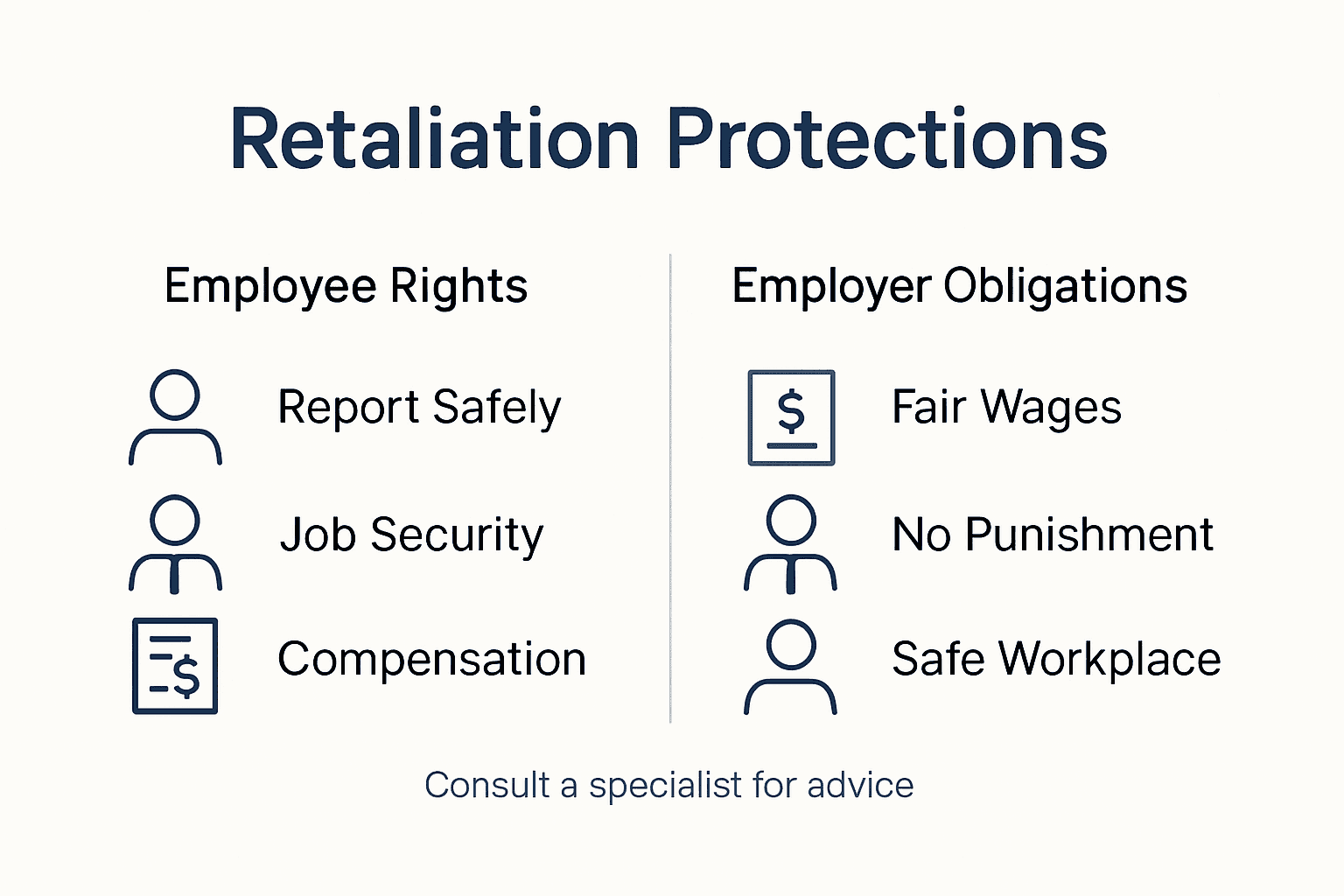
California’s robust legal framework establishes comprehensive protections for workers reporting wage theft or other workplace violations. Employers are strictly prohibited from implementing punitive measures such as termination, demotion, reducing work hours, or creating hostile work environments in response to employee reports. Workplace retaliation prevention requires employers to maintain professional environments where employees can safely report concerns without fear of professional consequences.
Specific employer obligations include maintaining fair wage practices, ensuring workplace safety, and responding appropriately to employee complaints. Workers have legal rights to document potential violations, file formal complaints with labor agencies, and seek administrative or legal remedies if they experience retaliation. Small businesses in Yorba Linda must understand that these protections apply regardless of company size, with potential significant financial and legal consequences for non-compliance.
Pro tip: Always document workplace interactions, keep copies of all communication, and consult with an employment law professional if you suspect your workplace rights have been violated.
Taking Action Against Workplace Retaliation
Employees in Yorba Linda facing workplace retaliation have multiple strategic avenues to challenge and address unlawful employer actions. Filing a retaliation complaint with the California Labor Commissioner’s Office represents a critical first step in holding employers accountable for illegal workplace practices. This formal process involves submitting detailed documentation of retaliatory actions, providing a structured mechanism for investigating potential labor law violations.
The complaint process requires meticulous preparation and comprehensive evidence gathering. Workers must systematically document all incidents of retaliation, including specific dates, detailed descriptions of adverse actions, potential witnesses, and any communication related to the original wage theft report. Documenting workplace retaliation involves creating a chronological record that demonstrates a clear pattern of punitive behavior following the initial workplace complaint.
Legal remedies for workplace retaliation can include financial compensation, job reinstatement, and potential penalties against the employer. Workers have multiple options for pursuing justice, including filing administrative complaints with state labor agencies, seeking legal representation, or pursuing civil litigation. Small businesses in Yorba Linda must understand that retaliation laws apply universally, regardless of company size, and that violations can result in significant financial and legal consequences.
Pro tip: Create a dedicated, secure digital folder to store all evidence of potential retaliation, including emails, performance reviews, scheduling records, and contemporaneous notes documenting specific incidents.
Protect Yourself from Retaliation After Reporting Wage Theft
Facing retaliation after reporting wage theft can leave you feeling vulnerable and unsure of your next steps. Employers in Yorba Linda sometimes use tactics like unfair demotions, schedule changes, or increased scrutiny to punish workers who speak up. These actions violate your rights and can harm your career and well-being. Understanding your protections under California law and acting decisively is crucial to stopping retaliation and holding employers accountable.
If you are dealing with workplace retaliation, the team at Serendib Law Firm is here to help. We specialize in whistleblower retaliation and general retaliation claims. Our experienced attorneys provide personalized support with free consultations to guide you through the legal process and protect your rights. Do not wait until retaliation impacts your life further. Visit Serendib Law Firm today and take the first step toward justice and workplace fairness.
Frequently Asked Questions
What constitutes retaliation after reporting wage theft?
Retaliation occurs when an employer takes punitive actions against an employee for reporting wage theft. This can include demotion, salary reduction, unfair disciplinary measures, or termination.
What protections do employees have against retaliation in California?
Employees in California are protected by the Whistleblower Protection Act, which prohibits employers from retaliating against workers who report wage theft or other labor law violations, even if the reports include unintentional errors made in good faith.
How should I document incidents of retaliation after reporting wage theft?
To document retaliation, keep a detailed log of all relevant incidents, including dates, descriptions of events, potential witnesses, and any communications associated with your original wage theft report. This evidence is crucial for any legal claims.
What actions can I take if I experience retaliation for reporting wage theft?
If you face retaliation, you can file a complaint with the California Labor Commissioner’s Office, pursue civil litigation, or seek administrative remedies through appropriate government agencies to hold the employer accountable.