Facing pushback at work after reporting harassment can feel isolating and unjust. Retaliation takes many forms, from demotions and sudden terminations to more subtle actions like exclusion or unfair reviews—all designed to punish or silence. For corporate employees in Lake Forest, understanding your rights under California law and knowing what steps to take is vital. Protection from workplace retaliation is a deeply rooted legal right, and learning how to recognize and respond to these tactics can make a crucial difference in safeguarding your career and well-being.
Table of Contents
- Defining Retaliation After Reporting Harassment
- Forms Of Retaliation In The Workplace
- California Laws Protecting Employees
- Employee Rights And Employer Responsibilities
- Risks Of Retaliation For Employers
- Steps To Take If You Experience Retaliation
Key Takeaways
| Point | Details |
|---|---|
| Understanding Retaliation | Retaliation occurs when an employer takes adverse action against an employee for reporting harassment or engaging in protected activities. |
| Forms of Retaliation | Retaliation can manifest as direct actions, such as termination, or subtle behaviors, like exclusion from opportunities. |
| Legal Protections in California | California laws provide extensive protections against retaliation, allowing employees to report misconduct without fear of repercussions. |
| Documentation Is Key | Keeping detailed records of retaliatory actions is vital to building a strong case in potential legal proceedings. |
Defining Retaliation After Reporting Harassment
Retaliation occurs when an employer takes adverse action against an employee specifically because they reported harassment or engaged in a legally protected activity. Federal law defines workplace retaliation as any negative employment action designed to punish an employee for exercising their legal rights. These actions can range from obvious forms like termination to more subtle tactics intended to undermine an employee’s professional standing.
The spectrum of retaliatory behavior includes multiple potential manifestations. Employers might implement direct punitive measures such as demotion, salary reduction, or termination. More nuanced forms of retaliation can involve systematic workplace exclusion, unfair performance evaluations, unnecessary disciplinary write-ups, or creating a hostile work environment designed to force an employee to resign. Retaliation patterns often emerge gradually through consistent negative treatment following a formal complaint.
Specifically in Lake Forest offices, employees should recognize that retaliation protections extend across various employment contexts. These legal safeguards apply regardless of an individual’s immigration status and cover reporting scenarios involving workplace harassment, discrimination, safety violations, wage disputes, and organizational misconduct. Documenting each instance of potential retaliation becomes crucial, as establishing a clear pattern helps build a compelling legal case against retaliatory employers.
Pro tip: Keep a comprehensive, dated record of all interactions, communications, and incidents following your harassment report to create a strong evidentiary trail for potential legal proceedings.
Forms of Retaliation in the Workplace
Workplace retaliation manifests through multiple complex strategies designed to punish employees who exercise their legal rights. Retaliatory actions span a wide spectrum of professional consequences, ranging from direct employment actions to more subtle forms of workplace marginalization. These can include immediate punitive measures like termination or demotion, as well as less obvious tactics intended to undermine an employee’s professional standing and future opportunities.

Employers might implement retaliatory practices through several specific mechanisms. Direct forms of retaliation often involve concrete employment actions such as sudden termination, forced demotion, significant salary reductions, or unwarranted disciplinary write-ups. More nuanced approaches can include systematic exclusion from professional opportunities, deliberately creating a hostile work environment, reassigning critical job responsibilities, or strategically reducing work hours to economically pressure the employee. Workplace retaliation laws protect workers from threats including immigration-based intimidation, suspension, or arbitrary changes to job duties.
In Lake Forest offices, employees should understand that retaliatory behaviors can be both overt and subtle. Common indicators include unexpected performance reviews that contradict previous positive assessments, deliberate professional isolation, exclusion from team communications, denial of training opportunities, or creating unreasonable performance standards designed to set an employee up for failure. Recognizing these patterns requires careful documentation and an understanding of how employers might attempt to disguise retaliatory actions as legitimate management practices.
Pro tip: Maintain a detailed, contemporaneous log of all workplace interactions, communications, and potential retaliatory incidents, including dates, specific actions, and potential witnesses to build a robust legal documentation trail.
Here’s a summary of common forms of workplace retaliation and their impact:
| Form of Retaliation | Typical Example | Likely Impact on Employee |
|---|---|---|
| Direct Adverse Action | Demotion or sudden termination | Job loss, financial hardship |
| Subtle Exclusion | Omission from meetings | Professional isolation |
| Unfair Performance Review | Negative, unexpected review | Damaged reputation, missed raises |
| Task Reassignment | Removal of responsibilities | Stalled career progress |
| Economic Pressure | Reduced work hours | Lower income, increased stress |
California Laws Protecting Employees
California provides robust legal protections for employees facing workplace harassment and retaliation, establishing comprehensive frameworks that safeguard workers’ fundamental rights. California regulations define retaliation broadly to encompass any adverse action motivated by an employee’s protected activities, ensuring that workers can confidently report misconduct without fear of professional repercussions. These legal protections extend beyond traditional discrimination cases, covering a wide range of scenarios where employees might face potential workplace intimidation.
The legal landscape in California empowers employees by establishing clear standards for proving retaliation claims. The burden of proof initially falls on the employee to demonstrate a connection between their protected activity and subsequent adverse employment actions. Once this initial threshold is established, the legal responsibility shifts to the employer to provide legitimate, non-retaliatory explanations for their workplace decisions. Critically, these protections do not require the employee to be a member of a specific protected class, making the legal safeguards more inclusive and accessible to all workers.
California’s Civil Rights Department actively enforces workplace protection laws, providing comprehensive resources and robust complaint mechanisms for employees experiencing harassment or retaliation. The department’s commitment extends beyond mere legal enforcement, offering educational resources, complaint processes, and strategic support to ensure that Lake Forest employees understand and can effectively exercise their workplace rights. This proactive approach helps create workplace environments where employees can confidently report misconduct without experiencing professional or personal consequences.
Pro tip: Consult with an employment law specialist immediately after experiencing potential retaliation to preserve critical evidence and understand the specific legal protections applicable to your unique workplace situation.
Employee Rights and Employer Responsibilities
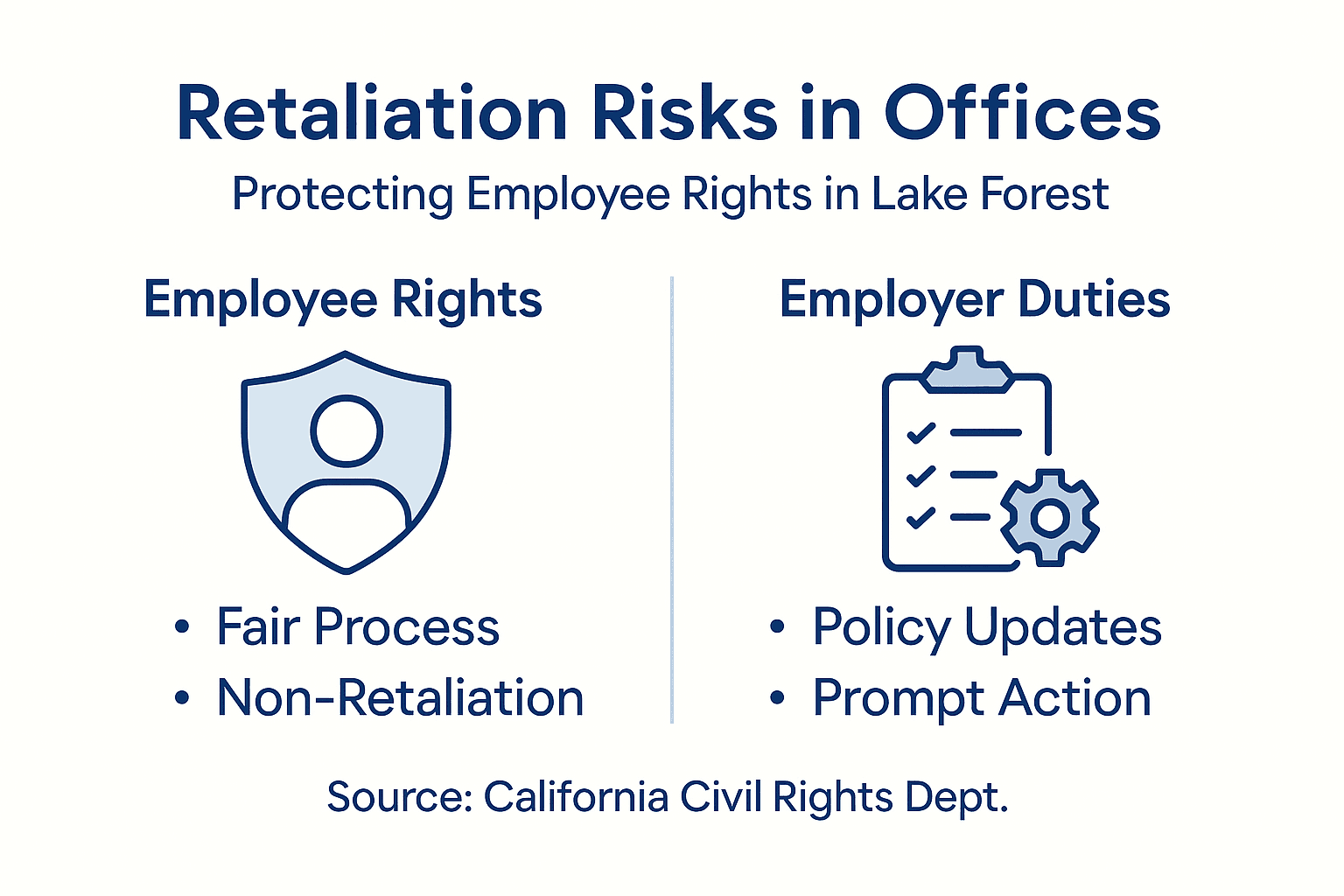
Workplace interactions between employees and employers are governed by critical legal frameworks that delineate specific rights and obligations. Employees have fundamental protections against retaliatory actions when reporting workplace misconduct, ensuring they can speak up about harassment or discrimination without experiencing professional consequences. These protections create a critical balance that empowers workers to maintain workplace integrity while holding organizations accountable for maintaining safe and respectful environments.
Employers carry substantial legal responsibilities in preventing and addressing workplace harassment. Their obligations extend beyond simply avoiding direct retaliation to proactively creating systems that protect employee rights. This includes establishing clear reporting mechanisms, conducting thorough and impartial investigations, maintaining confidentiality, and ensuring that no adverse employment actions are taken against employees who exercise their legal rights to report misconduct. Employers must provide safe complaint channels and demonstrate a commitment to workplace safety and fairness.
In Lake Forest offices, these legal principles translate into concrete expectations for both employees and employers. Workers have the right to report harassment, participate in investigations, and seek workplace improvements without fear of professional retaliation. Employers, conversely, must develop comprehensive policies that not only prohibit harassment but actively prevent retaliatory behaviors. This includes training management, creating transparent communication channels, and implementing consistent, fair response protocols when complaints are raised. Failure to meet these standards can result in significant legal and financial consequences for organizations.
Pro tip: Document every interaction related to a harassment complaint, including dates, witnesses, and specific communication details, to create a robust evidentiary record that can protect your professional interests.
This table compares employee rights and employer responsibilities under California law:
| Area | Employee Rights | Employer Responsibilities |
|---|---|---|
| Reporting Misconduct | Freedom from retaliation | Provide safe channels for complaints |
| Investigation | Confidential, fair treatment | Conduct impartial, thorough inquiry |
| Workplace Safety | Protection from hostile environment | Prevent and address harassment |
| Documentation | Keep detailed records | Maintain proper investigation records |
Risks of Retaliation for Employers
Employers who engage in retaliatory practices expose themselves to substantial legal and financial vulnerabilities. Workplace retaliation carries serious consequences that extend far beyond immediate legal penalties, potentially devastating an organization’s reputation, financial stability, and long-term workforce dynamics. These risks encompass direct financial settlements, expensive litigation costs, and profound damage to organizational credibility that can persist long after the initial incident.
The spectrum of potential risks includes significant legal and economic repercussions. Retaliation claims can result in costly lawsuits, substantial monetary settlements, and punitive damages that far exceed the original complaint’s scope. Moreover, such actions create a toxic workplace environment that dramatically reduces employee morale, productivity, and organizational trust. Employers face significant risks from retaliation claims that can undermine their ability to attract and retain top talent, essentially creating a self-destructive cycle of workplace dysfunction.
In Lake Forest offices, employers must recognize that retaliation risks extend beyond immediate legal consequences. Workplace reputation can be irreparably damaged through negative publicity, decreased employee engagement, and potential difficulty recruiting skilled professionals. Companies found guilty of retaliatory practices may face regulatory scrutiny, potential business license challenges, and long-term brand reputation damage that can take years to rehabilitate. The cumulative effect of these risks makes preventative strategies and proactive workplace management critical for organizational survival.
Pro tip: Develop comprehensive, transparent workplace policies that explicitly prohibit retaliation and provide clear, confidential reporting mechanisms for employees to minimize potential legal and financial risks.
Steps to Take If You Experience Retaliation
When facing workplace retaliation, immediate and strategic action becomes critical to protecting your professional rights and legal interests. Documenting all retaliatory actions is the foundational first step, requiring meticulous record-keeping of every adverse action, communication, and potential evidence. This documentation should include specific dates, detailed descriptions of incidents, names of witnesses, and any supporting materials like emails, performance reviews, or communication records that demonstrate the pattern of retaliatory behavior.
Navigating the formal complaint process requires a methodical approach. Employees should first utilize internal reporting mechanisms, such as human resources departments or established workplace grievance protocols. If internal channels prove ineffective, external reporting becomes necessary. Government agencies provide critical complaint mechanisms for employees facing workplace retaliation, including the Equal Employment Opportunity Commission (EEOC), Occupational Safety and Health Administration (OSHA), or the Department of Labor. Each agency has specific procedures and deadlines for filing complaints, making timely action essential.
In Lake Forest offices, employees must understand their legal rights and potential remedies. Consulting with an employment law specialist can provide strategic guidance on building a compelling case. Potential legal remedies may include reinstatement to a previous position, recovery of lost wages, compensation for emotional distress, and potential punitive damages against the employer. The goal is not just to address the immediate retaliation but to create meaningful accountability and prevent future workplace misconduct.
Pro tip: Create a secure, chronological digital and physical file of all relevant documentation, storing copies in multiple locations to ensure evidence preservation and protect against potential tampering.
Protect Your Rights Against Retaliation in Lake Forest Workplaces
Experiencing retaliation after reporting harassment can feel isolating and overwhelming. The article highlights critical challenges such as unfair performance reviews, workplace exclusion, and hostile environments designed to punish employees who exercise their legal rights. Understanding your protections under California law is essential to stop retaliation before it damages your career and well-being.
At Serendib Law Firm, we specialize in advocating for employees facing retaliation in Lake Forest offices. Our dedicated team is committed to guiding you through the complex legal landscape documented in this article — from careful evidence gathering to navigating complaint processes. Do not let retaliation derail your professional life. Visit our Lake Forest Archives to learn more about your rights, and contact us through https://www.serendiblaw.com/ to schedule a free consultation today. Act now to protect your career and hold your employer accountable.
Frequently Asked Questions
What constitutes retaliation after reporting harassment?
Retaliation occurs when an employer takes adverse action against an employee specifically because they reported harassment or engaged in protected activities. This can include termination, demotion, unfair evaluations, or creating a hostile work environment.
How can I document retaliation in the workplace?
To document retaliation, keep a detailed, dated record of all interactions, communications, and incidents following your report of harassment. Include specifics such as dates, actions taken, and potential witnesses to create a strong evidentiary trail.
What should I do if I experience retaliation at work?
If you experience retaliation, first document all related actions and communications. You should then report the issue through your workplace’s internal mechanisms, like HR. If that proves ineffective, consider filing a complaint with relevant government agencies such as the EEOC or OSHA.
What legal protections exist for employees facing workplace retaliation?
Employees are protected under laws that prohibit retaliation for reporting harassment or engaging in protected activities. These protections ensure that workers can report misconduct without fear of adverse consequences, and they require employers to provide safe channels for reporting complaints.