More than half of American workers say they have witnessed or experienced workplace sexual harassment, a statistic that should give every Costa Mesa founder and HR manager pause. As modern startups push for innovation, the blurred lines between casual collaboration and professional boundaries can become risky. Clear guidance on post-#MeToo legal standards and strong prevention strategies are critical to building safe, compliant, and productive workplaces for every California startup.
Table of Contents
- Defining Sexual Harassment In Modern Workplaces
- Types Of Sexual Harassment Startups Face
- Post-#Metoo Legal Changes In California
- Key Employer Duties And Liability Risks
- Essential Steps For Policy And Compliance
- Common Pitfalls For Startup Founders
Key Takeaways
| Point | Details |
|---|---|
| Understanding Sexual Harassment | Sexual harassment includes unwanted sexual advances, comments, and behaviors that can affect professional environments, emphasizing the need for clear policies in startups. |
| Types of Harassment in Startups | Founders should recognize the types of harassment—gender harassment, unwanted sexual attention, and sexual coercion—which can manifest in unique startup cultures. |
| Legal Changes Post-#MeToo | California’s new regulations demand proactive harassment prevention strategies, emphasizing the need for startups to establish clear reporting mechanisms and employee rights. |
| Proactive Employer Responsibilities | Employers must not only react to incidents but also create a culture of accountability and safety through comprehensive training and transparent policies. |
Defining Sexual Harassment in Modern Workplaces
Sexual harassment remains a pervasive issue in contemporary workplaces, particularly within startup environments where professional boundaries can sometimes become blurred. Workplace sexual harassment encompasses a wide range of inappropriate behaviors that create hostile, intimidating, or offensive work environments. These behaviors are not limited to physical interactions but also include verbal comments, digital communications, and systemic patterns of inappropriate conduct.
The U.S. Equal Employment Opportunity Commission provides comprehensive guidance defining sexual harassment as unwelcome sexual advances, requests for sexual favors, and verbal or physical conduct of a sexual nature. This definition critically emphasizes that harassment occurs when such behavior explicitly or implicitly affects employment conditions or creates an environment that undermines professional dignity. In Costa Mesa’s dynamic startup ecosystem, understanding these nuanced definitions becomes paramount for maintaining respectful workplace interactions.
Modern sexual harassment standards recognize that inappropriate behavior can manifest across multiple dimensions. It can involve supervisors, peers, or even non-employees like clients or contractors. Gender is irrelevant harassment can occur between individuals of any gender identity. Key indicators include unwanted touching, offensive sexual remarks, inappropriate digital communications, suggestive gestures, and creating environments that make employees feel uncomfortable or threatened. Sexual harassment definitions have evolved to provide more comprehensive protections, acknowledging the complex ways power dynamics and workplace interactions can enable inappropriate conduct.
Pro tip: Establish clear, written sexual harassment policies that define specific behavioral expectations and outline transparent reporting mechanisms for all employees.
Types of Sexual Harassment Startups Face
Startup environments present unique challenges when addressing sexual harassment, with distinct harassment types emerging from their fast-paced, often less structured professional cultures. The National Academies of Sciences research identifies three primary categories of sexual harassment that are particularly relevant to startup settings: gender harassment, unwanted sexual attention, and sexual coercion. These classifications help organizations understand and address inappropriate workplace behaviors more effectively.
Gender harassment represents the most prevalent form of misconduct in startup environments. This category includes hostile conduct that demeans or excludes employees based on their gender, even when no sexual advances are involved. In tech and innovation-driven workplaces, gender harassment might manifest through dismissive comments, systematic marginalization, or creating environments that subtly undermine professional opportunities based on gender identity. Unwanted sexual attention, the second category, involves uninvited verbal or physical advances that create uncomfortable or threatening workplace dynamics. This can range from inappropriate digital communications to persistent personal remarks that cross professional boundaries.

The most severe type of sexual harassment is sexual coercion, which involves explicit or implicit job-related threats exchanged for sexual cooperation. In startup ecosystems with complex power structures and competitive environments, this form of harassment can be particularly insidious. Research on professional harassment further highlights that sexual harassment can intersect with other forms of discrimination, including racial, appearance-related, and intellectual harassment. These nuanced interactions make it critical for startup leadership to develop comprehensive, proactive prevention strategies that recognize the multifaceted nature of workplace misconduct.
Here’s a concise summary of the three main types of sexual harassment relevant to startups:
| Harassment Type | Core Description | Typical Workplace Impact |
|---|---|---|
| Gender Harassment | Hostile acts targeting gender | Marginalization of talent |
| Unwanted Sexual Attention | Uninvited comments or advances | Decreased psychological safety |
| Sexual Coercion | Job-linked threats for compliance | Increased legal liability risk |
Pro tip: Conduct regular, mandatory training sessions that clearly define different types of sexual harassment and provide concrete examples specific to startup work environments.
Post-#MeToo Legal Changes in California
The #MeToo movement has dramatically transformed California’s legal landscape, particularly for startups in regions like Costa Mesa where workplace dynamics are rapidly evolving. Recent legislative changes have significantly expanded protections for employees experiencing sexual harassment, with groundbreaking bills designed to prevent workplace misconduct and support survivors.
California has implemented comprehensive legal reforms that fundamentally reshape how startups must approach workplace harassment prevention. These changes include expanding employer coverage, strengthening safeguards against retaliation, and broadening the definition of actionable harassment. Specifically, new regulations require employers to provide clear information about employee rights, establish transparent reporting mechanisms, and create environments that actively discourage inappropriate behavior. The legislation places increased accountability on startup leadership to proactively address potential harassment scenarios before they escalate.
One of the most significant legal developments is Assembly Bill 933, signed in October 2023, which provides critical protections for individuals reporting harassment. Legal reforms post-#MeToo now restrict predatory defamation lawsuits intended to silence survivors, ensuring that employees can share their experiences without fear of legal intimidation. This shift represents a fundamental change in how California views workplace harassment, moving from a reactive to a proactive approach that prioritizes employee safety and systemic accountability. For Costa Mesa startups, these legal changes mean implementing more robust training programs, developing clear anti-harassment policies, and creating organizational cultures that reject any form of misconduct.
Key legal reforms shaping California startup responsibilities post-#MeToo:
| Reform/Regulation | New Requirement | Impact on Startups |
|---|---|---|
| Expanded Employer Coverage | Applies to small businesses | Greater compliance obligations |
| AB 933 (2023) | Protects employee disclosures | Reduces fear of retaliation |
| Transparent Reporting | Mandatory clear complaint channels | Fosters safer work environments |
Pro tip: Conduct a comprehensive legal audit of your startup’s harassment policies, ensuring full compliance with California’s latest #MeToo-related legislative changes.
Key Employer Duties and Liability Risks
In the complex landscape of startup environments, employer liability for sexual harassment extends far beyond simple misconduct prevention. California regulations mandate comprehensive employer responsibilities that require proactive and systematic approaches to workplace safety, regardless of the organization’s size or developmental stage. Employers are legally accountable for harassment perpetrated by supervisors, and in certain circumstances, can also be held responsible for incidents involving non-supervisory employees or even third-party interactions.
Startup leaders must understand that their legal obligations encompass more than reactive measures. Workplace harassment prevention regulations require employers to develop and distribute written policies, establish confidential complaint mechanisms, and conduct thorough, timely investigations into any reported misconduct. This means creating robust documentation that clearly outlines reporting procedures, potential consequences, and the organization’s commitment to maintaining a safe, respectful work environment. Small businesses and emerging startups are particularly vulnerable, as their limited HR infrastructure can increase potential legal exposure.
The scope of employer liability is expansive and nuanced. Beyond direct harassment, companies can face significant legal consequences for retaliation against employees who report misconduct, failure to investigate claims promptly, or maintaining workplace cultures that implicitly tolerate inappropriate behavior. Costa Mesa startups must recognize that prevention is not just a moral imperative but a critical legal requirement. This involves implementing comprehensive training programs, developing clear communication channels, and creating organizational cultures that actively reject any form of harassment or discriminatory conduct. Proactive risk management is key to protecting both employees and the organization’s long-term viability.
Pro tip: Develop a comprehensive, written sexual harassment prevention policy that goes beyond legal minimums and reflects a genuine commitment to workplace respect and safety.
Essential Steps for Policy and Compliance
For Costa Mesa startups, developing a robust sexual harassment prevention strategy is not optional but a legal imperative. Sexual harassment prevention training requirements mandate that organizations with five or more employees must implement comprehensive compliance programs. These programs must document specific training processes, cover both federal and California legal standards, and address prevention, reporting procedures, and potential consequences for policy violations.
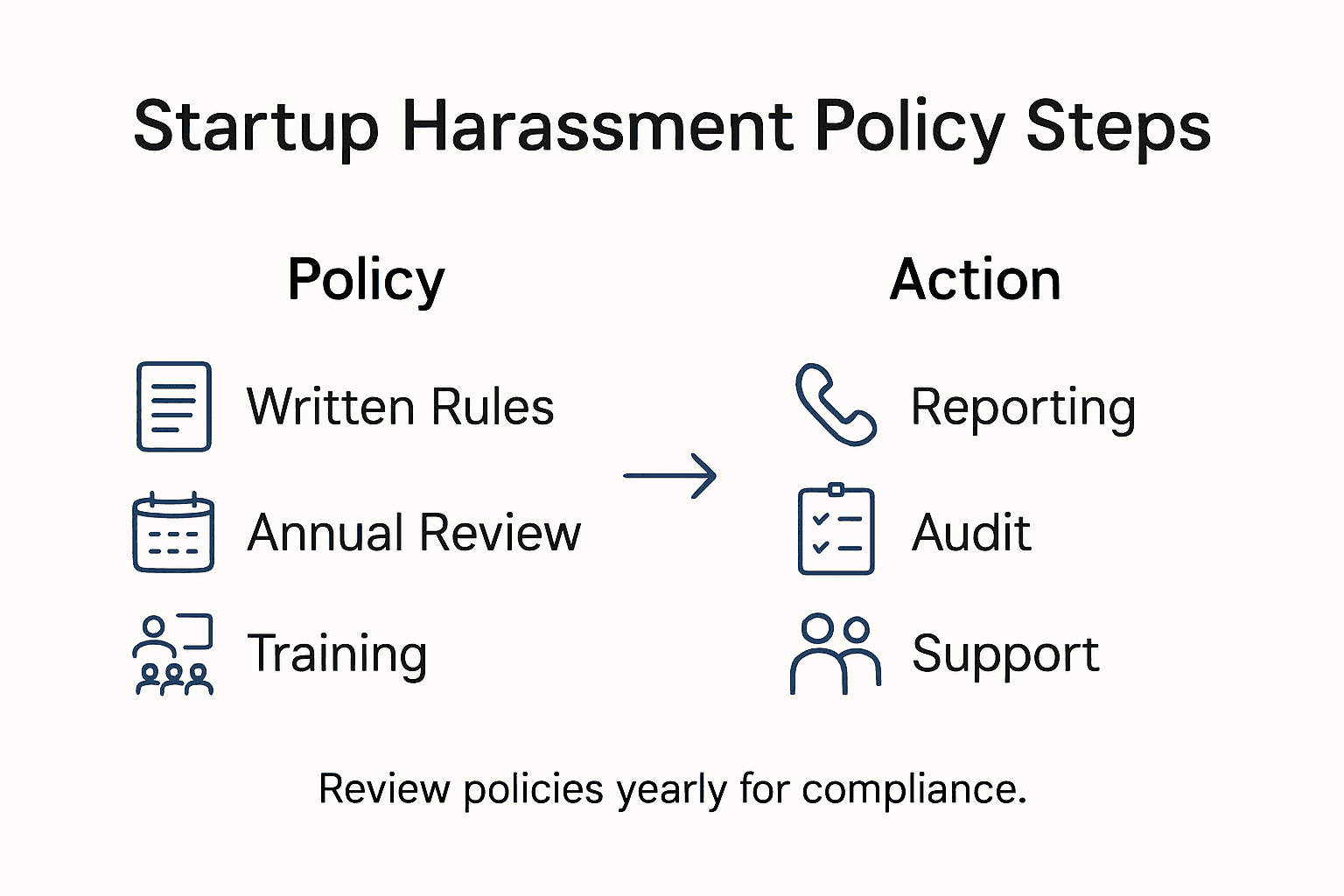
A comprehensive anti-harassment policy requires more than a simple document. Effective workplace protection demands a multifaceted approach that includes clear written policies, strong leadership commitment, and accessible reporting mechanisms. California’s workplace harassment prevention guidelines recommend developing a strategic framework that goes beyond minimal legal compliance. This includes creating transparent investigation protocols, ensuring confidential reporting channels, and establishing a zero-tolerance culture that actively discourages any form of harassment.
Startups must implement systematic compliance strategies that address potential vulnerabilities. This involves conducting regular training sessions, maintaining detailed documentation, and creating an organizational culture that prioritizes employee safety and respect. Key components should include mandatory annual training for all employees, clear escalation procedures, protections against retaliation, and consistent enforcement of anti-harassment policies. The goal is not just legal compliance, but creating a workplace environment where all employees feel safe, respected, and empowered to report inappropriate behavior without fear of professional consequences.
Pro tip: Conduct a comprehensive annual review of your sexual harassment prevention policy, ensuring it reflects the latest legal standards and organizational changes.
Common Pitfalls for Startup Founders
Startup founders in Costa Mesa frequently underestimate the complexity of sexual harassment prevention, often making critical mistakes that expose their organizations to significant legal and reputational risks. Organizational approaches to sexual harassment reveal several systemic errors that can derail a startup’s workplace culture and legal compliance. These mistakes often stem from a combination of inexperience, resource constraints, and misunderstanding of comprehensive prevention strategies.
One of the most prevalent pitfalls is relying on superficial compliance training that fails to create meaningful behavioral change. Tech industry harassment research indicates that many startups treat sexual harassment training as a perfunctory checkbox exercise rather than a genuine opportunity for cultural transformation. Common mistakes include delegating HR responsibilities to inexperienced staff, implementing generic training programs, and failing to establish clear, enforceable reporting mechanisms. Startups frequently underestimate the importance of creating an environment where employees feel genuinely safe reporting inappropriate behavior without fear of professional repercussions.
The most dangerous pitfalls emerge when startup founders fail to take meaningful action against harassment. This includes inconsistent enforcement of policies, minimizing serious complaints, or protecting high-performing employees who violate workplace standards. Successful prevention requires a holistic approach that goes beyond documentation and training. Founders must demonstrate a genuine commitment to workplace safety through consistent leadership, transparent investigation processes, and a willingness to take decisive action regardless of an employee’s perceived value to the organization. This means creating a culture of accountability where harassment is never tolerated, and all employees understand the serious consequences of inappropriate behavior.
Pro tip: Develop an anonymous reporting system that provides multiple channels for employees to raise concerns, ensuring psychological safety and comprehensive documentation.
Protect Your Startup and Employees from Sexual Harassment Risks
Navigating the complex sexual harassment standards in Costa Mesa startups requires more than understanding legal definitions and types of misconduct. The real challenge lies in addressing your employees’ concerns about hostile work environments, unwanted advances, and the risk of sexual coercion while staying fully compliant with California’s evolving laws. Ensuring transparent reporting mechanisms and proactive prevention policies are vital to maintaining a respectful workplace culture where every employee feels safe and valued.
If you are committed to safeguarding your startup against costly liability and fostering a harassment-free environment, explore expert guidance and legal support available at Sexual Harassment Archives | Serendib Law Firm. Don’t wait until a claim arises. Visit Serendib Law Firm today to schedule a consultation and learn how our experienced legal team can help you comply with California’s latest regulations, develop robust policies, and protect your business from legal risks associated with workplace harassment. Act now to build a safer and stronger startup culture.
Frequently Asked Questions
What constitutes sexual harassment in a startup workplace?
Sexual harassment in a startup includes unwelcome sexual advances, requests for sexual favors, and any verbal or physical conduct of a sexual nature that creates a hostile work environment.
How can startups prevent sexual harassment?
Startups can prevent sexual harassment by establishing clear written policies, conducting regular training sessions, and creating transparent reporting mechanisms for employees.
What are the different types of sexual harassment that startups may encounter?
The three primary types of sexual harassment relevant to startups are gender harassment, unwanted sexual attention, and sexual coercion, each presenting unique challenges and impacts in the workplace.
What legal responsibilities do startups have regarding sexual harassment?
Startups are legally required to develop and enforce anti-harassment policies, provide training for employees, and promptly investigate complaints while ensuring protections against retaliation.