Many student workers in Fullerton step into internships expecting a fair chance to learn and earn, but end up facing confusing labor laws and unpaid wages. Understanding wage violations is crucial, since employers often misclassify interns or overlook California’s strict wage requirements, leaving students vulnerable. If you are struggling with unclear pay or feel your work is benefiting an employer more than your education, you will find practical guidance here to help protect your rights.
Table of Contents
- Defining Wage Violations For Student Workers
- Types Of Violations Affecting Interns And Students
- California Laws On Intern Pay And Protections
- Recognizing Employee Misclassification And Red Flags
- How To Address And Report Wage Violations
Key Takeaways
| Point | Details |
|---|---|
| Understanding Wage Violations | Student workers should be aware of their rights regarding wage violations, which include unpaid wages and misclassification. |
| Documentation is Essential | It is crucial for student workers to meticulously document hours worked, tasks performed, and communications with employers. |
| Know Your Protections | Familiarize yourself with California’s labor laws and protections available to prevent workplace exploitation. |
| Reporting Procedures | Know the channels available for reporting wage violations and ensure confidentiality throughout the process. |
Defining Wage Violations for Student Workers
Intern wage violations represent serious legal challenges that many student workers in Fullerton encounter, often without understanding their rights. Wage violations occur when employers fail to provide proper compensation according to state and federal labor standards, leaving vulnerable student workers financially exploited.
According to the Department of Labor’s intern guidelines, student interns are subject to complex wage regulations. The primary legal framework determining wage eligibility is the “primary beneficiary test,” which evaluates whether the internship primarily benefits the student or the employer. This test includes several critical factors:
- Educational environment similarity to academic training
- Direct connection to formal educational programs
- Integration with academic commitments
- Limited compensation or unpaid status
- Clear understanding of non-employment status
- Complementary rather than displacement of paid workers
The Economic Policy Institute highlights that many student workers face systemic wage discrimination, particularly in low-wage and tipped job sectors. Federal and state laws often permit subminimum wages for young workers, creating significant potential for exploitation.
Wage violations can manifest in multiple forms for student workers, including:
- Below minimum wage payments
- Unpaid overtime hours
- Misclassification as independent contractors
- Denial of legally mandated rest breaks
- Unpaid training or orientation time
Pro tip: Always document your work hours, tasks performed, and any communications about compensation to protect yourself from potential wage violations.

Types of Violations Affecting Interns and Students
Intern and student workers in Fullerton face numerous potential wage violations that can significantly impact their financial and professional well-being. California labor law protections outline specific legal standards designed to protect vulnerable young workers from exploitation.
The most common wage violations experienced by student workers include:
- Misclassification as unpaid interns when performing work benefiting the employer
- Failure to provide minimum wage compensation
- Denial of overtime pay for hours worked beyond standard schedules
- Performing tasks outside the scope of legitimate educational training
- Replacing paid workers with unpaid student labor
- Lack of clear educational objectives in internship programs
Under California’s strict legal framework, employers must demonstrate that the internship primarily benefits the student rather than the company. Workplace protections are particularly critical in preventing systemic exploitation. According to legal clarity guidelines, interns are entitled to several key protections, including protection from workplace harassment and discriminatory practices.
Moreover, student workers often encounter additional complex violations such as:
- Unpaid training periods
- Inconsistent compensation practices
- Unauthorized deductions from wages
- Lack of transparent payment documentation
- Preventing students from tracking actual hours worked
These violations can have long-lasting consequences for student workers, potentially impacting their future career opportunities and financial stability.
Pro tip: Keep detailed records of all work performed, hours logged, and communication with employers to protect yourself from potential wage violations.
California Laws on Intern Pay and Protections
California has established robust legal protections for student workers and interns, creating a comprehensive framework designed to prevent workplace exploitation. Intern pay regulations rely on a sophisticated “primary beneficiary” test that carefully evaluates the nature of internship arrangements to determine appropriate compensation standards.
The key components of California’s intern protection laws include:
- Mandatory minimum wage requirements for most internships
- Strict criteria for unpaid internship classifications
- Protection against displacement of paid workers
- Clear guidelines for educational value in internship programs
- Enforcement mechanisms through the Labor Commissioner’s Office
- Provisions for overtime compensation when applicable
Workplace protections are particularly nuanced under California law. The state requires employers to demonstrate that the internship primarily benefits the student, not the company. California Labor Commissioner’s guidelines provide a detailed framework for evaluating internship legality, focusing on several critical factors:
- Educational alignment with academic training
- Integration of internship with formal educational programs
- Limitations on direct economic benefit to the employer
- Complementary nature of intern work to existing employee roles
- Clear understanding of non-employment status
Employers face significant legal consequences for violating these protections, including potential fines, back wage payments, and civil penalties. Student workers are afforded multiple avenues for seeking redress, including filing complaints with state labor authorities and pursuing legal action.
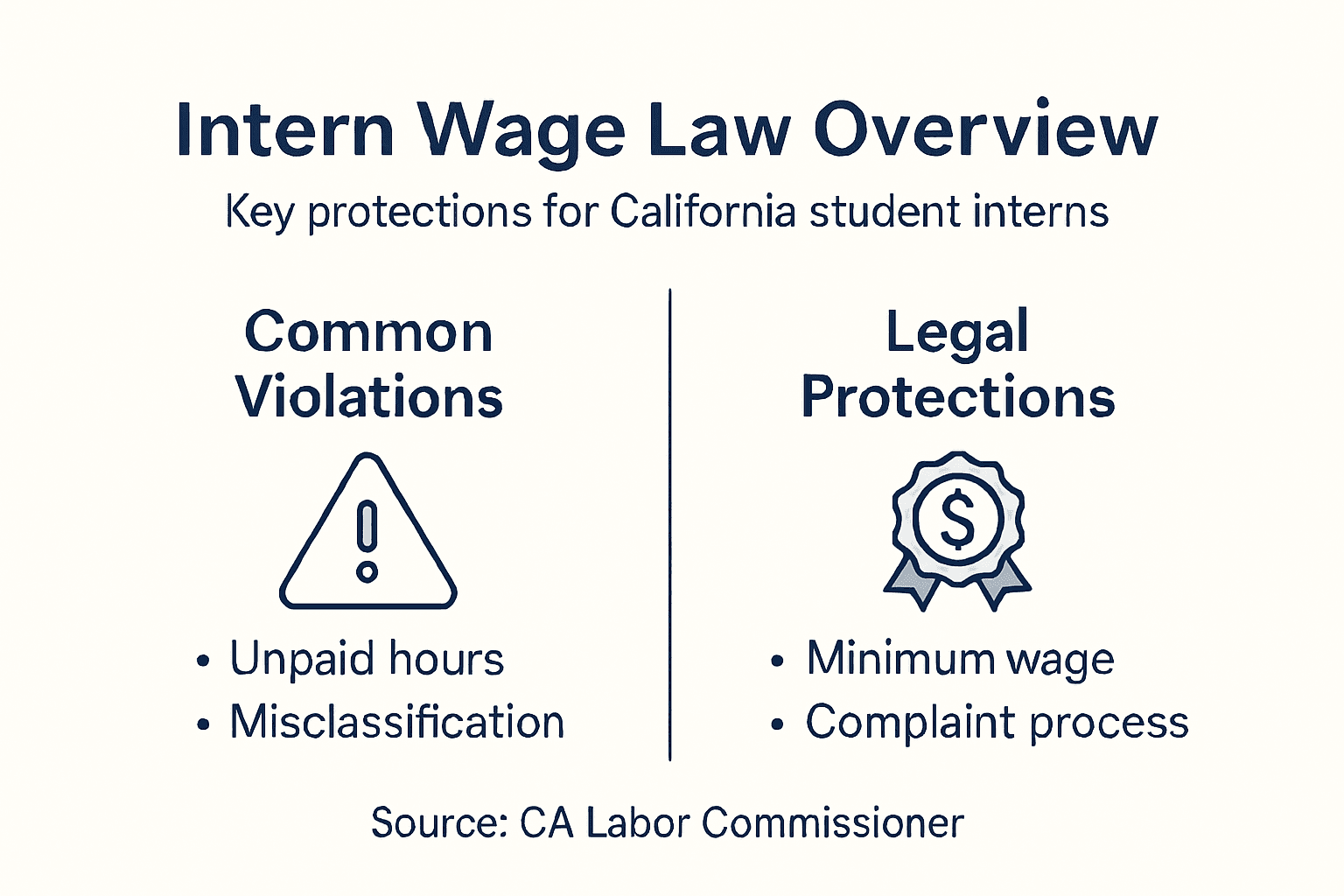
Here’s a quick overview of how federal and California laws differ for student interns:
| Legal Standard | Federal (FLSA) Requirements | California Specific Protections | Impact on Student Workers |
|---|---|---|---|
| Minimum Wage | Sometimes not required | Usually mandatory | Greater pay protection in CA |
| Overtime Eligibility | Limited for interns | Expanded for students | Increased overtime access |
| Internship Classification | Primary beneficiary test | Stricter educational criteria | Clearer rules in California |
| Enforcement | Department of Labor | Labor Commissioner’s Office | State enforcement options |
Pro tip: Carefully document all aspects of your internship, including job duties, hours worked, and communication with employers to protect your legal rights.
Recognizing Employee Misclassification and Red Flags
Employee misclassification represents a significant threat to student workers’ rights in Fullerton, with potentially devastating financial consequences. Worker classification rules have become increasingly complex, requiring workers to understand their legal status carefully.
Critical red flags that indicate potential misclassification include:
- Employer controls most aspects of work performance
- Work is integral to the company’s core business
- Lack of independent business operations
- No ability to negotiate pay or working conditions
- Limited autonomy in completing assigned tasks
- Consistent scheduled work hours
- Requirement to use company-provided equipment
Workplace protections are designed to prevent employers from exploiting workers through improper classification. California’s legal standards establish clear criteria for determining true employment status, focusing on three primary considerations:
- Degree of control over work performance
- Economic dependence on the employer
- Integration into the company’s standard business operations
The financial stakes of misclassification are substantial. Employers can face significant penalties ranging from $5,000 to $25,000 per violation, plus potential liability for unpaid wages, benefits, and taxes. Student workers who suspect misclassification have multiple legal avenues to challenge their employment status and seek appropriate compensation.
Pro tip: Collect and preserve all documentation related to your work arrangement, including communications, job descriptions, and payment records, to support potential legal claims.
How to Address and Report Wage Violations
Navigating wage violation reporting requires strategic and careful documentation of workplace issues. Labor standards enforcement provides multiple channels for students to protect their rights and seek appropriate compensation for workplace violations.
The key steps to addressing wage violations include:
- Documenting all work hours meticulously
- Collecting pay stubs and employment contracts
- Recording instances of wage discrepancies
- Preserving electronic and written communications
- Identifying specific labor law violations
- Understanding your legal rights as a worker
- Maintaining a chronological record of incidents
Reporting procedures involve multiple official channels. U.S. Department of Labor guidelines outline comprehensive strategies for filing confidential complaints, which include:
- Gathering detailed employment documentation
- Preparing a clear, factual account of violations
- Submitting formal complaints to appropriate agencies
- Cooperating with investigative processes
- Protecting yourself from potential employer retaliation
Workers can file complaints through various official mechanisms, including the California Labor Commissioner’s Office, the federal Wage and Hour Division, and potential legal representation. Each avenue offers distinct advantages for recovering unpaid wages and addressing systemic workplace violations.
The following table summarizes common reporting options and their advantages for student workers:
| Reporting Channel | Confidentiality Level | Typical Outcome | Additional Support Provided |
|---|---|---|---|
| California Labor Office | High | Wage recovery, fines | Help with legal process |
| Federal Wage Division | Moderate to high | Investigation, back pay | Guidance on federal standards |
| Legal Representation | Very high | Legal action, damages | Advice, negotiation, advocacy |
Pro tip: Request and retain copies of all workplace communications and maintain a contemporaneous journal documenting work hours, assignments, and any unusual employment practices.
Protect Your Rights Against Intern Wage Violations in Fullerton
Intern wage violations can leave student workers feeling overwhelmed and uncertain about how to protect their legal rights. If you are facing issues such as unpaid overtime, misclassification, or subminimum wages, you are not alone. Many interns struggle silently while employers fail to meet California’s strict standards designed to safeguard educational and workplace fairness. These challenges affect your financial stability and future career opportunities.
At Serendib Law Firm, we understand these struggles and offer dedicated support for students and interns confronting wage violations. Our experienced attorneys are committed to fighting for fair compensation and legal protections. Learn more about your options in our Wage Violations Archives | Serendib Law Firm and discover how California labor laws serve to protect you. If you are in Orange County, our team has in-depth knowledge of local workplace issues highlighted in our Orange County Archives | Serendib Law Firm.
Don’t wait to stand up for yourself. Visit Serendib Law Firm today to schedule your free consultation and take the first step toward reclaiming your rightful wages and workplace dignity.
Frequently Asked Questions
What are common wage violations that student workers face?
Common wage violations for student workers include below minimum wage payments, unpaid overtime hours, misclassification as independent contractors, denial of legally mandated rest breaks, and unpaid training or orientation time.
How can I determine if I’m classified as an unpaid intern correctly?
You can determine if you are classified correctly by evaluating your internship against the ‘primary beneficiary test,’ which assesses whether the internship mainly benefits you (the intern) rather than the employer, taking into account educational alignment, work duties, and economic dependence.
What steps should I take if I believe my employer has violated wage laws?
If you believe your employer has violated wage laws, meticulously document your work hours and communications, identify specific labor law violations, and file a complaint with the California Labor Commissioner’s Office or the federal Wage and Hour Division.
What protections do student interns have under California law?
California law provides strong protections for student interns, including mandatory minimum wage requirements, strict criteria for unpaid internships, protection against displacing paid workers, and rights to overtime pay when applicable.