
Immigration law touches millions of lives every year and sets the ground rules for who can enter, stay or become a citizen in any country. The United States processed over 9 million visa applications in 2022 alone, shaping families and futures with a single decision. Most people picture endless paperwork and bureaucracy when they think of immigration, but the true impact runs much deeper—it’s about real lives, reunions, and second chances you might never see in the headlines.
Table of Contents
- Defining Immigration Law: What It Encompasses
- The Importance Of Immigration Law In Society
- How Immigration Law Functions: Key Processes
- Understanding Key Concepts: Visas, Residency, And Citizenship
- Real-World Impact Of Immigration Law On Individuals And Families
Quick Summary
| Takeaway | Explanation |
|---|---|
| Immigration law governs entry and residency. | It includes rules on how individuals can enter and live in a country, impacting their legal status and rights. |
| Legal status affects rights and responsibilities. | Various classifications like permanent residents or refugees come with distinct legal implications and potential paths for adjustment. |
| Immigration contributes to economic growth. | Immigrants fill labor shortages and create entrepreneurial opportunities, enhancing productivity and workforce diversity. |
| Humanitarian pathways protect vulnerable groups. | Immigration regulations are essential for providing safety and support to those fleeing persecution or hardship. |
| Family reunification supports emotional stability. | Legal mechanisms allow families to stay connected, reinforcing emotional support networks across borders. |
Defining Immigration Law: What It Encompasses
Immigration law represents a complex legal framework governing how individuals enter, reside in, and potentially become citizens of a country. At its core, what is immigration law encompasses a comprehensive set of rules, regulations, and policies that determine the legal status and rights of foreign nationals seeking to establish themselves in a new nation.
Core Components of Immigration Regulations
Immigration law addresses multiple critical aspects of international movement and settlement. According to the United States Citizenship and Immigration Services (USCIS), these regulations cover several fundamental areas:
- Entry and admission requirements for foreign nationals
- Visa classification and processing
- Permanent residency pathways
- Citizenship and naturalization processes
- Deportation and removal proceedings
These regulations are designed to balance national security interests with humanitarian considerations, providing structured mechanisms for individuals seeking opportunities in a new country. The legal framework ensures that immigration processes remain transparent, fair, and aligned with national policy objectives.
Legal Status and Rights Under Immigration Law
The concept of legal status is fundamental to understanding immigration law. Research from the Migration Policy Institute indicates that immigrants can have various classifications, including:
- Temporary residents
- Permanent residents
- Conditional residents
- Refugees and asylees
- Undocumented individuals
Each classification carries distinct legal rights, responsibilities, and potential pathways to more permanent status.
Below is a table summarizing the main categories of legal immigration status, including a concise explanation of each and their associated legal implications.
| Status Category | Description | Legal Implications |
|---|---|---|
| Temporary Residents | Individuals allowed to stay for a limited, defined time | Limited rights, specific requirements |
| Permanent Residents | People granted long-term right to live and work | Broad rights, possible path to citizenship |
| Conditional Residents | Residents with time-limited or contingent status | Rights contingent on meeting certain terms |
| Refugees and Asylees | Persons fleeing persecution or conflict | Protected from return, may gain residency |
| Undocumented Individuals | Those present without official authorization | Limited/no rights; risk of removal |
Ultimately, immigration law serves as a dynamic system balancing national interests with individual human mobility, creating structured pathways for legal movement across international borders while maintaining rigorous standards for entry and settlement.
The Importance of Immigration Law in Society
Immigration law plays a critical role in shaping the social, economic, and cultural landscape of modern societies. Far beyond mere administrative regulations, these legal frameworks serve as intricate mechanisms for managing human mobility, protecting national interests, and facilitating cross-border interactions that contribute to societal development and global interconnectedness.
Economic and Workforce Contributions
According to the American Immigration Council, immigration law enables strategic workforce integration that directly impacts economic growth. Immigrants contribute significantly to various economic sectors by:
- Filling critical labor shortages in specialized and manual industries
- Generating entrepreneurial opportunities and innovation
- Supporting demographic sustainability in aging populations
- Contributing substantial tax revenues and economic productivity
- Enhancing workforce diversity and global competitiveness
These contributions demonstrate how well-structured immigration policies can transform legal frameworks into powerful economic development tools, balancing national workforce needs with individual professional aspirations.
Humanitarian and Social Protection Dimensions
Beyond economic considerations, immigration law serves fundamental humanitarian functions. Legal pathways for immigration provide critical protections for vulnerable populations, offering safe passages for individuals fleeing persecution, conflict, or economic instability. Research from the Migration Policy Institute highlights how immigration regulations create structured mechanisms for:
- Refugee resettlement and asylum protections
- Family reunification processes
- Supporting individuals experiencing human rights challenges
- Establishing legal frameworks for vulnerable populations
- Creating standardized international mobility protocols
These humanitarian aspects underscore immigration law’s role in protecting individual human rights while maintaining national security and social stability.
By establishing clear, fair processes, immigration regulations help transform complex international movements into organized, dignified human experiences.
How Immigration Law Functions: Key Processes
Immigration law operates through a complex system of administrative procedures, legal assessments, and regulatory frameworks designed to manage international human mobility. These intricate processes involve multiple government agencies, detailed documentation requirements, and comprehensive evaluation mechanisms that determine an individual’s eligibility for entry, residence, or citizenship.
Entry and Visa Application Processes
According to the U.S. Department of State, immigration law’s initial stage centers on visa application and entry procedures. Foreign nationals must navigate a systematic approach that typically involves:
- Identifying appropriate visa categories matching their specific purpose
- Completing extensive application documentation
- Undergoing background and security screenings
- Participating in personal interviews with immigration officials
- Providing comprehensive personal and professional documentation
Each visa category carries unique requirements, reflecting the specific intentions of travel or immigration. These stringent processes ensure that individuals meet legal standards while protecting national security interests.
Legal Status Determination and Adjustment
Once an individual enters a country, immigration law provides mechanisms for status modification and long-term settlement. Legal status transitions represent complex procedural journeys involving careful administrative review. Research from the Migration Policy Institute reveals that status adjustments typically require:
- Demonstrating continuous legal compliance
- Meeting specific residency duration requirements
- Providing evidence of financial stability
- Passing comprehensive background checks
- Showing integration into local social and economic systems
These processes transform temporary entry permissions into potential permanent residency or citizenship pathways, reflecting immigration law’s dynamic and responsive nature. By establishing clear, structured progression routes, legal frameworks create predictable mechanisms for individual mobility and national integration.
Understanding Key Concepts: Visas, Residency, and Citizenship
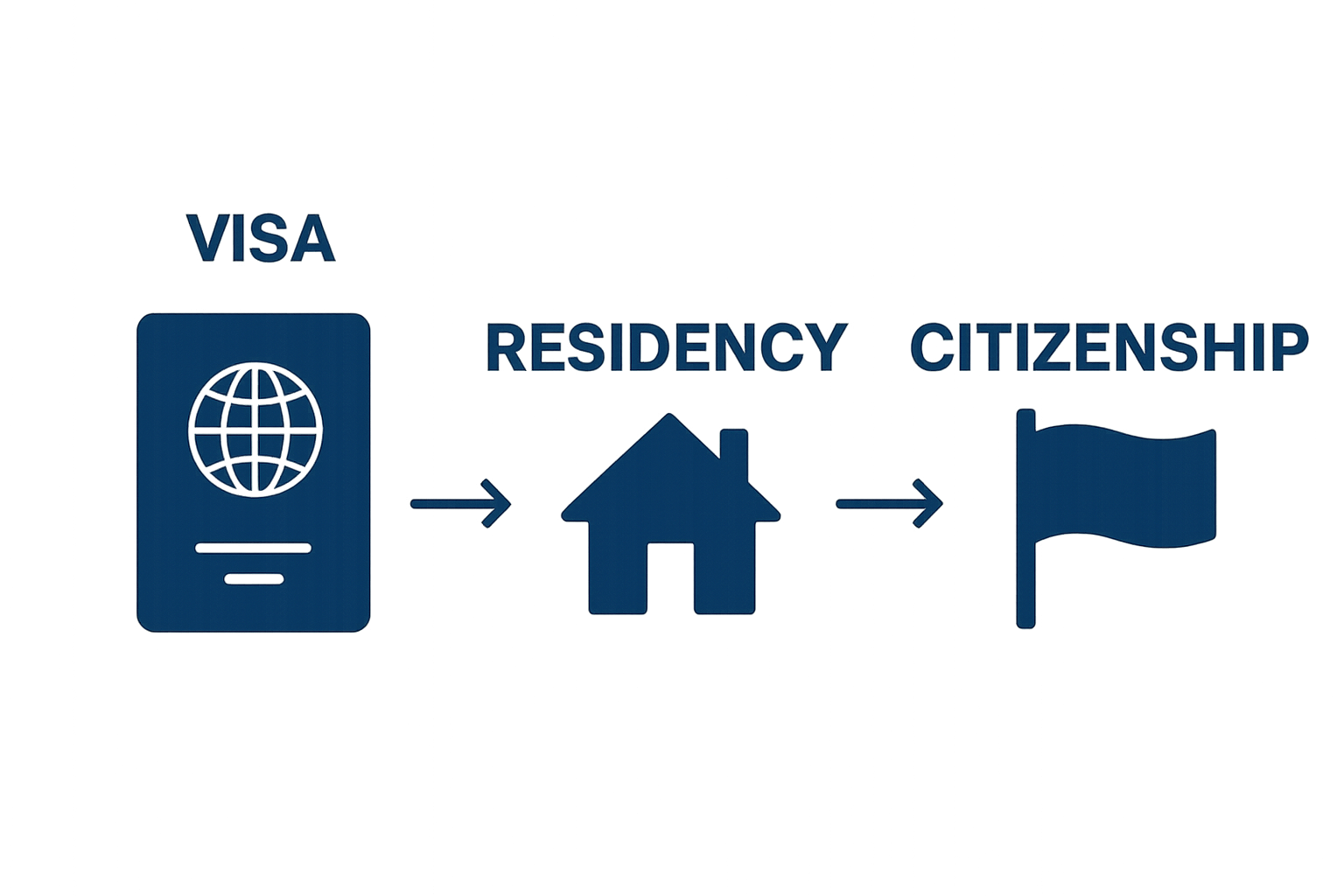
Immigration law encompasses complex legal mechanisms that define an individual’s status, rights, and potential pathways for international movement. These foundational concepts of visas, residency, and citizenship represent interconnected legal categories that determine an individual’s relationship with a host country.
Visa Classifications and Purposes
According to the U.S. Department of State, visas serve as official authorization documents permitting entry into a country for specific purposes. These legal instruments are categorized based on the nature of an individual’s intended activities:
- Temporary work visas for employment
- Student visas for academic pursuits
- Tourist visas for short-term travel
- Family reunion visas
- Humanitarian and refugee visas
Each visa classification carries distinct requirements, duration limits, and specific legal permissions that define the holder’s authorized activities and stay parameters.
This table outlines common visa categories and their primary purposes, assisting readers in quickly understanding the various reasons someone might apply for entry under immigration law.
| Visa Type | Intended Purpose | Duration/Restriction |
|---|---|---|
| Temporary Work Visa | Employment for a specific job/period | Limited duration, employer-specific |
| Student Visa | Enroll in academic/educational program | Tied to course of study, limited work |
| Tourist Visa | Short-term visit for tourism/leisure | Typically several months, no work |
| Family Reunion Visa | Join family members in the country | May lead to residency, family-based |
| Humanitarian/Refugee Visa | Escape persecution or seek safety | Protection-focused, sometimes longer-term |
Residency and Permanent Settlement
Permanent residency represents a critical transitional status in immigration law, offering individuals more stable legal standing beyond temporary visa arrangements. Research from the Migration Policy Institute reveals that residency pathways typically involve:
- Demonstrating sustained economic contribution
- Maintaining continuous legal compliance
- Passing comprehensive background investigations
- Proving linguistic and cultural integration
- Meeting specific time-based residency requirements
Residency status provides individuals with expanded rights, including potential work authorization and social service access, while creating a foundation for potential future citizenship applications.
Real-World Impact of Immigration Law on Individuals and Families
Immigration law transcends administrative procedures, profoundly affecting human lives by shaping personal trajectories, family dynamics, and individual opportunities. These legal frameworks create intricate pathways that can dramatically transform an individual’s socioeconomic landscape, determining access to education, employment, and fundamental human rights.
Family Reunification and Emotional Consequences
According to the American Immigration Council, immigration regulations play a critical role in maintaining family connections across international boundaries. The legal mechanisms for family-based immigration directly influence:
- Preservation of familial relationships
- Emotional and psychological stability
- Intergenerational support networks
- Cultural continuity and transmission
- Economic interdependence within families
These processes recognize family unity as a fundamental human right, providing structured legal mechanisms that enable families to navigate complex international migration challenges while maintaining their core relational structures.

Economic and Social Mobility Pathways
Immigration law serves as a transformative mechanism for individual advancement, offering opportunities for economic and social progression. Research from the Migration Policy Institute highlights how legal frameworks create critical pathways for:
- Access to educational opportunities
- Professional skill development
- Workforce integration
- Entrepreneurial potential
- Social and economic advancement
These legal pathways represent more than administrative processes they are fundamental mechanisms of social transformation, enabling individuals to rebuild lives, pursue dreams, and contribute meaningfully to their adopted communities.
Overwhelmed by Immigration Law? You Deserve Personalized Help Now
Navigating immigration law can feel confusing and overwhelming. The article explores how detailed visa requirements, complicated residency processes, and shifting legal definitions impact real families who just want stability, security, and a clear path forward. Many people worry about keeping their loved ones together or pursuing new opportunities but get stuck in a maze of rules and paperwork. If you are facing uncertainty or fear about your immigration status—or simply want to know your best options—a trusted legal partner can make a real difference.
At Serendib Law Firm, you get guidance that is clear and compassionate. Our team speaks both English and Spanish and offers free consultations, so you can ask questions and get answers right away. We focus on immigration challenges, family unification, and helping people build brighter futures in Orange County. Do not let confusion or fear stop your progress. Contact us today for immediate support, or explore more about our approach and legal solutions to start your journey with confidence.
Frequently Asked Questions
What is immigration law?
Immigration law is a legal framework that governs how individuals enter, reside in, and become citizens of a country. It includes rules and policies regarding entry requirements, visa classifications, permanent residency, and citizenship processes.
What are the different types of visas under immigration law?
Visas under immigration law are classified based on the intended activities of the individual, including temporary work visas, student visas, tourist visas, family reunion visas, and humanitarian or refugee visas.
How does one transition from a temporary visa to permanent residency?
Transitioning from a temporary visa to permanent residency typically involves meeting specific requirements such as demonstrating continuous legal compliance, proving economic stability, and meeting time-based residency criteria.
What role do immigration attorneys play in navigating immigration law?
Immigration attorneys assist individuals in understanding complex immigration laws, providing guidance on legal classifications, helping with documentation and applications, and representing clients through various immigration processes.

One Response