Personal injury touches lives in unexpected ways and can mean anything from a sudden car crash to a severe workplace accident. But here is something surprising. Medical negligence is estimated to be the third leading cause of death in the US, right after heart disease and cancer. Most people think personal injury law is only about money. In reality, it is the system that pressures hospitals, employers, and businesses to keep us all safer every single day.
Table of Contents
- Defining Personal Injury And Its Types
- The Importance Of Personal Injury Law
- How Personal Injury Claims Work
- Key Concepts In Personal Injury Cases
- Real-World Examples And Implications
Quick Summary
| Takeaway | Explanation |
|---|---|
| Personal injury covers various harm types. | It includes physical, emotional, and psychological injuries caused by negligence or intentional actions. |
| Legal claims require proving negligence. | Establishing duty of care, breach, causation, and damages is essential for a successful personal injury claim. |
| Victims can seek multiple types of compensation. | Compensation may cover medical expenses, lost wages, pain and suffering, and emotional distress. |
| Personal injury law promotes societal safety. | It encourages accountability and safer practices, benefiting communities and individuals alike through systemic changes. |
| Professional legal guidance is crucial. | Experienced attorneys help navigate claims and improve chances of fair compensation in personal injury cases. |
Defining Personal Injury and Its Types
Personal injury represents a critical legal concept encompassing physical, emotional, and psychological harm caused to an individual through various circumstances. According to legal definitions, personal injury refers to harm inflicted on a person’s body, mental state, or emotional well-being, distinct from property damage.
Understanding Personal Injury Categories
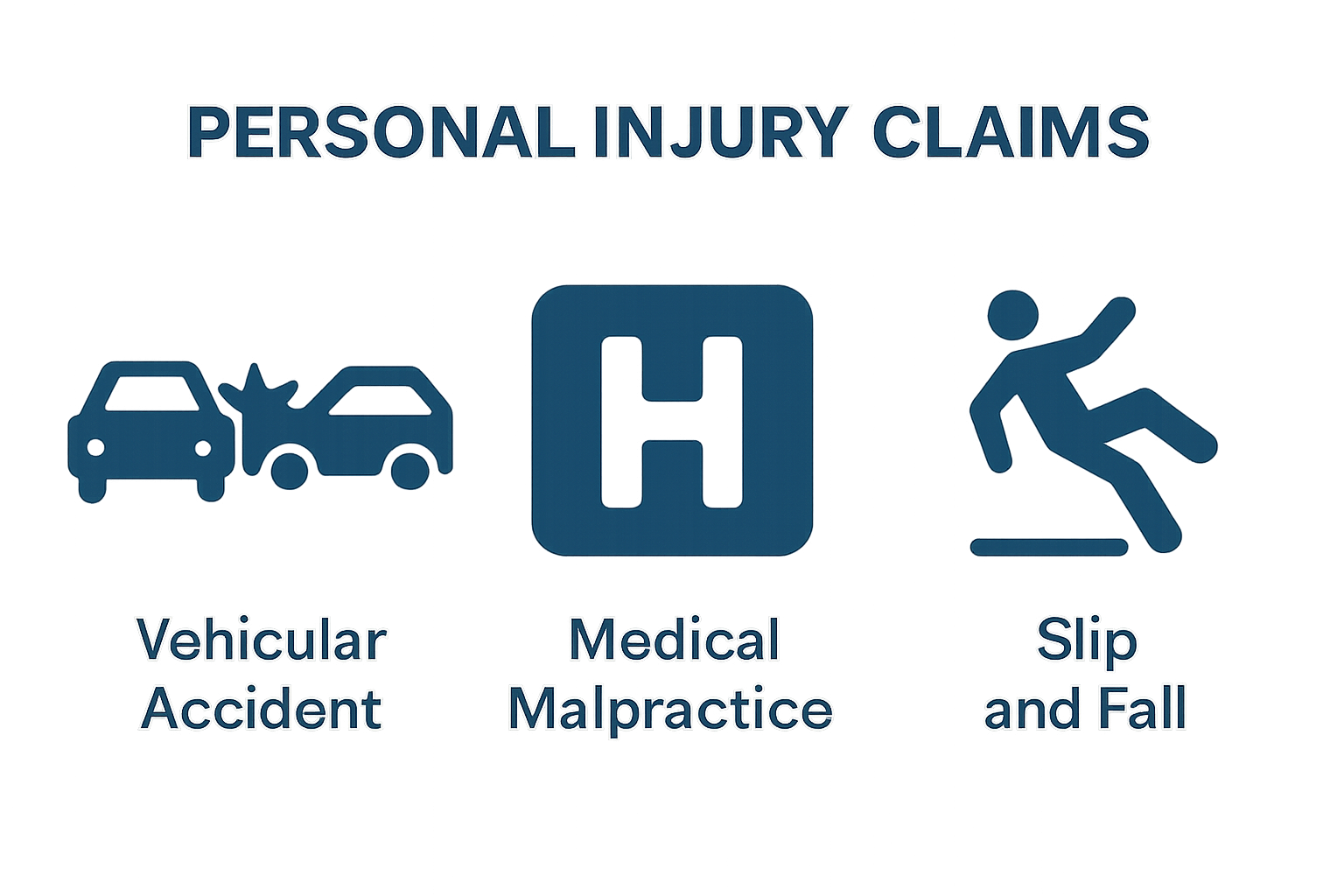
Personal injury law covers a wide spectrum of incidents where an individual suffers harm due to another party’s negligence or intentional actions. These incidents typically fall into several primary categories
 :
:
- Vehicular accidents involving cars, trucks, motorcycles, and pedestrians
- Workplace injuries and occupational hazards
- Medical malpractice and healthcare-related incidents
- Slip and fall accidents on public or private properties
- Intentional tort cases like assault or battery
- Product liability claims involving defective merchandise
Legal Implications and Compensation
When personal injury occurs, victims may seek legal recourse to obtain compensation for their damages. Research from the American Bar Association indicates that compensation can cover multiple areas including:
- Medical expenses and ongoing treatment costs
- Lost wages and potential future earnings
- Physical pain and suffering
- Emotional distress and psychological trauma
- Rehabilitation and recovery expenses
Key Insight: Not every injury qualifies as a valid personal injury claim. Legal professionals evaluate the incident based on specific criteria, including establishing clear negligence, demonstrating direct harm, and proving causation between the action and resulting injury.
Understanding personal injury requires recognizing the nuanced ways individuals can experience harm and the legal pathways available for seeking justice.
The following table summarizes the primary categories of personal injury incidents, helping readers easily compare the types and the unique features associated with each.
| Personal Injury Category | Description | Common Examples |
|---|---|---|
| Vehicular Accidents | Injuries involving vehicles and road use | Car crashes, pedestrian injuries |
| Workplace Injuries | Harm caused by unsafe work conditions or incidents | Construction accidents, ergonomic strains |
| Medical Malpractice | Harm due to errors or negligence in medical care | Surgical mistakes, misdiagnosis |
| Slip and Fall Accidents | Injuries from falls on unsafe property | Icy sidewalks, loose flooring |
| Intentional Torts | Injuries from deliberate acts | Assault, battery |
| Product Liability | Harm caused by defective or dangerous products | Faulty electronics, contaminated food |
The Importance of Personal Injury Law
Personal injury law plays a crucial role in protecting individual rights and ensuring accountability when harm occurs due to negligence or intentional actions. According to the National Center for State Courts, this legal framework provides a structured mechanism for victims to seek justice and compensation for their suffering.
Protecting Individual Rights and Safety
The fundamental purpose of personal injury law extends beyond financial compensation. It serves as a critical societal mechanism that:
- Establishes accountability for harmful actions
- Encourages safer practices across industries
- Provides a legal pathway for victims to recover damages
- Deters potential future negligent behavior
- Ensures responsible conduct in professional and personal interactions
Legal Deterrence: By imposing financial and legal consequences, personal injury law motivates individuals and organizations to maintain higher safety standards and exercise reasonable care.
Economic and Social Impact
Research from the Insurance Research Council demonstrates that personal injury law has significant broader implications. Beyond individual cases, it creates systemic pressure for improved safety protocols, ultimately benefiting entire communities. The economic ripple effects include:
- Reduced workplace accidents
- Enhanced product safety standards
- More comprehensive medical and rehabilitation support
- Increased organizational accountability
- Financial protection for vulnerable populations
Critical Understanding: Personal injury law is not merely about monetary compensation, but about creating a more responsible and safer societal framework. Learn more about how personal injury claims protect individual rights and contribute to broader social accountability.
How Personal Injury Claims Work
Personal injury claims represent a structured legal process designed to help individuals obtain compensation for harm caused by another party’s negligence or intentional actions. According to the American Bar Association, these claims follow a complex but systematic approach to seeking justice.
Essential Components of a Personal Injury Claim
Successful personal injury claims require establishing several critical elements that demonstrate the validity of the legal action. These fundamental components include:
- Proving the existence of a duty of care
- Demonstrating a breach of that duty
- Establishing a direct causal connection between the breach and resulting injury
- Documenting quantifiable damages resulting from the incident
- Presenting evidence within applicable legal time limits
Legal Foundation: The burden of proof rests with the plaintiff, who must provide compelling evidence that supports each of these essential elements.
Navigating the Legal Process
Research from the National Center for State Courts indicates that personal injury claims typically progress through several critical stages:
- Initial consultation and case evaluation
- Evidence gathering and documentation
- Negotiation with insurance companies
- Potential settlement discussions
- Litigation and potential trial proceedings
Strategic Approach: Most personal injury claims are resolved through settlement negotiations, avoiding the time and expense of a full trial. Learn more about the intricacies of filing claims and understanding your legal options.
The complexity of personal injury claims underscores the importance of professional legal guidance.
This table highlights the essential components needed for a successful personal injury claim, clarifying what must be proven in order to establish legal responsibility.
| Component | Description |
|---|---|
| Duty of Care | Legal obligation to act reasonably to avoid causing harm |
| Breach of Duty | Failure to meet the standard of reasonable care |
| Causation | Direct link between breach of duty and the resulting injury |
| Actual Damages | Documented harm or losses suffered as a result |
| Evidence & Time Limits | Proof and adherence to statutory deadlines for filing claims |
Key Concepts in Personal Injury Cases
According to legal experts, personal injury law encompasses several fundamental concepts that form the backbone of legal compensation and accountability. Understanding these core principles helps individuals recognize their rights and potential legal recourse when harm occurs.
Establishing Negligence
Negligence represents the cornerstone of most personal injury claims. This legal concept requires demonstrating that a responsible party failed to exercise reasonable care, directly resulting in injury. The key elements of negligence include:
- Duty of Care: A legal obligation to act reasonably and prevent potential harm
- Breach of Duty: Failing to meet the standard of reasonable care
- Direct Causation: Proving the breach directly caused the injury
- Actual Damages: Demonstrating measurable harm or loss
Legal Standard: Not all accidents constitute negligence. Courts assess whether a reasonable person would have acted differently under similar circumstances.
Types of Damages in Personal Injury
Research from the National Center for State Courts highlights the comprehensive nature of damages in personal injury cases. Compensation typically encompasses multiple categories:
- Economic damages covering medical expenses and lost wages
- Non-economic damages for pain and suffering
- Potential punitive damages in cases of extreme misconduct
- Rehabilitation and long-term care costs
- Loss of earning potential
Critical Insight: Damages are not just about monetary compensation but about restoring the victim’s quality of life and holding responsible parties accountable. Learn more about specific legal considerations in premises liability to understand how different scenarios impact potential claims.
Navigating personal injury law requires nuanced understanding of these complex legal principles. Professional legal guidance becomes crucial in interpreting and applying these concepts to individual cases.

Real-World Examples and Implications
According to workplace safety research, personal injury cases extend far beyond theoretical legal concepts, representing real human experiences of harm and potential systemic failures that demand accountability and prevention.
Workplace Injury Scenarios
Workplace personal injury cases illustrate the critical importance of safety standards and legal protections. These scenarios frequently demonstrate how negligence can result in substantial physical, emotional, and financial consequences:
- Construction site accidents involving inadequate safety equipment
- Manufacturing injuries caused by faulty machinery
- Repetitive strain injuries from ergonomically unsafe work environments
- Chemical exposure leading to long-term health complications
- Workplace violence incidents with insufficient security measures
Systemic Impact: Each workplace injury case not only seeks individual compensation but also potentially triggers broader safety reforms and organizational accountability.
Medical Malpractice and Consumer Protection
Research from the Journal of Patient Safety reveals that medical negligence represents a significant category of personal injury claims with profound societal implications. These cases typically involve:
- Surgical errors and incorrect procedures
- Misdiagnosis or delayed diagnosis
- Medication administration mistakes
- Failure to obtain proper patient consent
- Inadequate post-treatment monitoring
Critical Insight: Medical malpractice claims serve dual purposes of compensating victims and incentivizing healthcare institutions to maintain rigorous professional standards.
Learn more about navigating complex injury scenarios to understand your legal rights and potential recourse.
These real-world examples underscore personal injury law’s fundamental role in protecting individual rights, promoting institutional accountability, and fostering a culture of preventative safety across various sectors.
Struggling With the Impact of Personal Injury? Find Trusted Legal Support Now
After reading about the complexities of personal injury, you may feel overwhelmed by the idea of navigating claims, proving negligence, or securing fair compensation. The legal path can be confusing and deeply emotional when you are dealing with pain, lost wages, or uncertainty about your rights. If you are facing any of these challenges, it is important to know that you do not have to face them alone. Our Personal Injury Archives offer more real-world solutions and success stories that matter to people just like you.
Do not let doubt or fear delay the help you deserve. Our team at Serendib Law Firm provides free consultations and personalized advice to guide you every step of the way. Take the first step toward protecting your future and find out how we can help you achieve justice. Contact us today to start your recovery and get dedicated legal support designed for your needs.
Frequently Asked Questions
What constitutes a personal injury?
Personal injury refers to harm inflicted on an individual’s body, mind, or emotional well-being due to the negligence or intentional actions of another party. It encompasses various incidents such as vehicular accidents, workplace injuries, medical malpractice, and more.
What types of accidents are covered under personal injury law?
Personal injury law covers a wide range of incidents, including vehicular accidents (cars, trucks, and motorcycles), workplace injuries, medical malpractice, slip and fall accidents, and product liability claims involving defective products.
How can victims seek compensation for personal injuries?
Victims of personal injury can seek compensation by filing a legal claim that demonstrates negligence or intentional wrongdoing, which includes proving duty of care, breach of duty, causation, and quantifiable damages resulting from the incident.
What damages can be claimed in a personal injury case?
In a personal injury case, victims can claim various types of damages, including medical expenses, lost wages, pain and suffering, emotional distress, and rehabilitation costs. In some cases, punitive damages may also be awarded for extreme misconduct.