Think harassment lawsuits at Riot Games and Activision Blizzard only matter to executives? Wrong. These landmark cases created legal precedents that directly protect every tech employee in Irvine’s gaming sector today. From major settlements totaling over $154 million to sweeping workplace reforms, these cases fundamentally changed how Southern California gaming companies handle harassment complaints, employee rights, and retaliation claims in 2026.
Table of Contents
- Overview Of Harassment Claims Against Riot Games And Other Major Gaming Companies
- Legal Protections And Employee Rights For Irvine Tech Workers Under California Law
- Impact And Lessons From Major Harassment Settlements In Gaming On Irvine Tech Employees
- Navigating Harassment Claims And Retaliation Risks For Irvine Tech Workers In 2026
- Protect Your Rights With Experienced Employment Law Attorneys In The Irvine Area
Key takeaways
| Point | Details |
|---|---|
| Legal protections | California’s FEHA shields Irvine tech workers from harassment, discrimination, and retaliation in gaming workplaces. |
| Historic settlements | Riot Games paid $100 million and Activision Blizzard settled for $54 million in gender discrimination cases. |
| Mandatory reforms | Gaming companies now face third-party monitoring, pay equity audits, and stricter harassment reporting policies. |
| Retaliation is illegal | Employers cannot fire or punish workers for reporting harassment under California law. |
| Documentation matters | Recording incidents and reporting promptly strengthens legal claims and protects employee rights. |
Overview of harassment claims against Riot Games and other major gaming companies
Starting in 2018, Riot Games faced multiple lawsuits alleging workplace harassment, gender discrimination, and retaliation that exposed systemic problems in gaming company cultures. Employees reported hostile work environments, barriers to promotion based on gender, and punitive actions after filing complaints. These weren’t isolated incidents affecting only senior staff.
The legal complaints painted a disturbing picture:
- Gender-based pay disparities across technical roles
- Hostile environments tolerating inappropriate conduct
- Retaliation against employees who spoke up
- Systematic barriers preventing women from advancing
Activision Blizzard encountered similar scrutiny when the company faced a class action lawsuit alleging systemic workplace discrimination, sexual harassment, and retaliation against women employees. The allegations described what plaintiffs called a “frat boy culture” that created toxic conditions for female employees across departments.
“The pattern of behavior described in these lawsuits represents not just individual misconduct, but organizational failures that enabled harassment to persist unchecked for years.”
These high-profile cases brought national attention to workplace practices in gaming companies. For Irvine tech workers, the implications extend beyond headlines. These lawsuits established legal precedents, forced policy changes, and created enforcement mechanisms that protect employees today. Understanding workplace harassment in entertainment contexts helps workers recognize when their rights are violated.
The legal pressure intensified as state agencies and private attorneys joined forces. California’s Department of Fair Employment and Housing launched investigations. Class action certifications expanded the scope of claims. Gaming companies faced mounting evidence that their workplace cultures violated state and federal employment laws.
Legal protections and employee rights for Irvine tech workers under California law
California’s Fair Employment and Housing Act provides the strongest workplace protections in the nation. Irvine tech workers are protected by FEHA, which prohibits sexual harassment and other discriminatory practices in employment. This law applies to companies with five or more employees, covering virtually every gaming studio in Southern California.
FEHA protects employees from multiple forms of workplace misconduct:
- Sexual harassment, including quid pro quo and hostile environment claims
- Gender discrimination in hiring, promotion, and compensation
- Retaliation for reporting harassment or participating in investigations
- Failure to prevent harassment and discrimination
Under FEHA, employers must take reasonable steps to prevent harassment. This includes implementing clear policies, providing training, and investigating complaints promptly. When companies fail these obligations, employees have legal recourse through administrative complaints and civil lawsuits.

Employees hold specific rights when facing harassment. You can file complaints internally through HR departments or externally with the Civil Rights Department (formerly DFEH). Both options remain open simultaneously. Filing an internal complaint doesn’t waive your right to pursue legal action later.
Pro Tip: Document every harassment incident with dates, times, witnesses, and exact words or actions. This contemporaneous evidence proves invaluable if you later file a formal complaint or lawsuit.
Retaliation for reporting harassment violates state law explicitly. If your employer demotes you, cuts your pay, gives negative reviews, or terminates your employment after you report harassment, that’s an independent legal violation. Many successful claims combine both harassment and retaliation causes of action.
Understanding workplace harassment protections helps you recognize when your rights are violated. The law covers not just direct harassment but also employer failures to stop known harassment. If management knows about harassment and does nothing, that’s actionable under FEHA.
California law also protects workers who participate in harassment investigations as witnesses. You cannot be punished for truthfully answering questions during an HR investigation or providing testimony in a legal proceeding. These retaliation protections in harassment cases extend broadly to shield employees from employer punishment.
Legal outcomes depend heavily on timely reporting and preserving evidence. FEHA claims require filing with the Civil Rights Department within three years of the harassment. However, waiting reduces your leverage and allows evidence to disappear. Early action strengthens your position.
Impact and lessons from major harassment settlements in gaming on Irvine tech employees
Riot Games agreed to pay $100 million to settle gender discrimination claims, with $80 million going to class members and $20 million covering legal fees. This represents one of the largest gender discrimination settlements in California history. For context, Activision Blizzard reached a $54 million settlement over workplace harassment claims in December 2023.
These settlements included more than just money. They mandated sweeping workplace reforms:
| Company | Settlement Amount | Key Reforms |
|---|---|---|
| Riot Games | $100 million | Pay equity analysis, third-party monitoring, enhanced reporting systems |
| Activision Blizzard | $54 million | Independent compliance auditor, harassment training overhaul, promotion equity review |
The financial payouts went to affected employees based on specific criteria. Around 1,000 workers qualified for compensation from Riot’s settlement. Amounts varied based on tenure and employment status, with full-time employees receiving larger shares than contractors.
Beyond compensation, these settlements forced structural changes that benefit all current employees. Gaming companies now conduct regular pay equity audits. They’ve implemented anonymous reporting systems. Third-party monitors review harassment complaints and company responses. These reforms create accountability that didn’t exist before 2018.
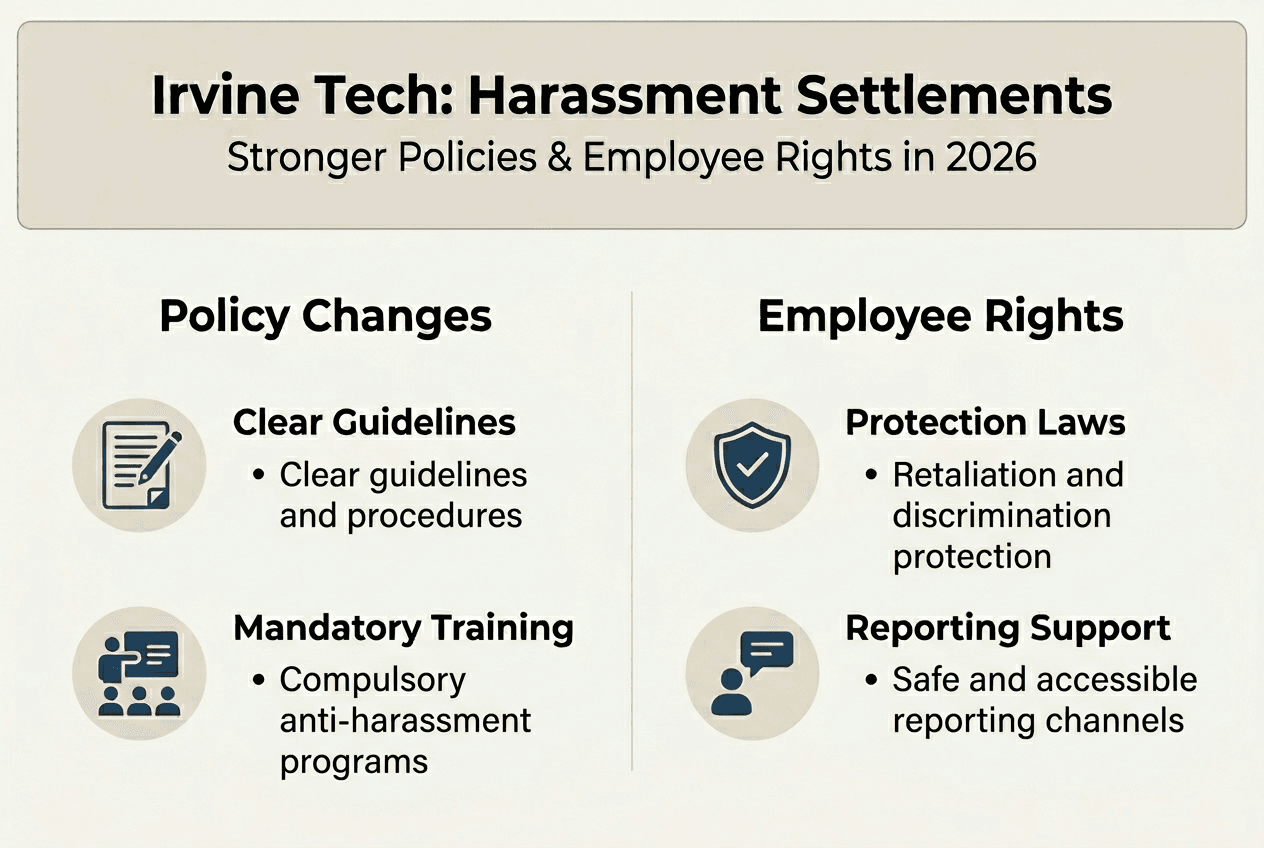
For Irvine tech workers, these changes mean stronger protections. Your employer likely has stricter harassment policies today because of these lawsuits. Reporting mechanisms improved. Training became more comprehensive. The legal landscape shifted in favor of employees willing to speak up.
Pro Tip: Review your company’s harassment policy annually. Note reporting procedures, timelines, and protections. This knowledge becomes critical if you ever need to file a complaint.
The settlements also demonstrated that harassment claims have real consequences. Gaming companies paid massive sums and accepted ongoing oversight. This precedent makes current employers more cautious about tolerating harassment. Legal departments now push for swift action on complaints to avoid similar liability.
However, policy changes only work when employees know their rights and use available protections. Understanding Irvine employment law trends helps workers stay informed about evolving protections. The gaming industry continues adapting to these legal pressures, with social responsibility in gaming companies becoming a competitive advantage for talent recruitment.
The lesson for tech workers is clear: prompt reporting and legal awareness improve outcomes. Employees who documented harassment, reported it through proper channels, and sought legal advice received compensation. Those who stayed silent got nothing. The settlements rewarded workers who took action despite career risks.
Navigating harassment claims and retaliation risks for Irvine tech workers in 2026
Recognizing harassment is the first step. California law recognizes several types:
- Quid pro quo harassment: Supervisors conditioning job benefits on sexual favors
- Hostile work environment: Pervasive conduct that creates intimidating or offensive conditions
- Retaliation: Adverse actions after reporting harassment or discrimination
Each type requires different evidence. Quid pro quo cases often hinge on direct communications proving the exchange. Hostile environment claims need patterns of behavior over time. Retaliation cases compare your treatment before and after reporting harassment.
Retaliation poses a significant risk that stops many employees from reporting harassment. Retaliation for reporting sexual harassment is illegal under California law, and victims have legal recourse if they experience adverse actions. Yet fear of retaliation remains the top reason employees don’t report harassment.
Common retaliation tactics include:
- Negative performance reviews after previously positive evaluations
- Exclusion from projects or meetings
- Reassignment to less desirable roles
- Salary freezes or bonus denials
- Termination during or after harassment investigations
Protecting yourself requires strategic documentation and timely action. Start by preserving evidence immediately. Save emails, text messages, and any written communications related to harassment. Note dates, times, locations, and witnesses for verbal incidents. Create a detailed timeline while memories remain fresh.
“The strongest harassment cases combine contemporaneous documentation with prompt reporting and consistent testimony. Employees who document everything as it happens build cases that are difficult to defend against.”
Report harassment through proper channels as soon as possible. Follow your company’s written harassment policy exactly. If the policy requires reporting to HR, do that. If it allows reporting to any supervisor, choose someone you trust. Put your complaint in writing and keep copies.
Seek confidential legal advice before filing formal complaints. An experienced employment attorney can evaluate your case, explain your options, and help you avoid common mistakes. Many attorneys offer free consultations for harassment cases. Getting legal input early prevents missteps that weaken claims later.
Be aware of deadlines. While FEHA allows three years to file administrative complaints, internal company policies often impose shorter deadlines. Missing these deadlines can forfeit your rights. Review your employee handbook’s complaint procedures carefully.
If you experience retaliation after reporting harassment, document that separately. The retaliation itself becomes an independent legal claim. Track how your treatment changed after filing your complaint. Note any adverse actions, changed responsibilities, or negative comments from supervisors.
Understanding wrongful termination legal actions in Irvine helps if retaliation escalates to termination. California’s at-will employment doctrine doesn’t protect employers who fire employees for reporting harassment. That’s wrongful termination regardless of at-will status.
The key insight: early legal consultation prevents claim weakening through delayed reporting. Attorneys can guide you through internal processes while preserving your legal rights. They help you avoid statements or actions that could undermine future claims. Most importantly, they ensure you meet all deadlines and procedural requirements.
Protect your rights with experienced employment law attorneys in the Irvine area
Workplace harassment cases require specialized legal knowledge and strategic experience. The gaming industry’s unique dynamics, combined with California’s complex employment laws, make professional guidance essential for protecting your rights and maximizing outcomes.
Local attorneys who focus on employment law understand the patterns prevalent in Southern California’s tech and gaming sectors. They’ve handled cases against major gaming companies. They know how these employers respond to harassment complaints. This experience translates into better strategies for your specific situation.
Timing matters critically in harassment cases. Early legal involvement improves claim outcomes and workplace protections. Attorneys can advise you on reporting strategies, help preserve evidence, and prevent retaliation before it starts. They also identify legal issues you might miss without professional training.
Resources are readily available for affected employees throughout Orange County. Lake Forest employment law attorneys and Huntington Beach employment law attorneys serve the broader Southern California tech community. Staying informed about employment law trends in Irvine helps you understand evolving protections and emerging legal issues in the gaming industry.
FAQ
What should I do if I experience harassment at an Irvine gaming company?
Document every incident with specific dates, times, witnesses, and exact words or actions. Report the harassment internally following your company’s written policy, typically through HR or a designated supervisor. Seek confidential legal advice promptly to understand your rights and options. Use company complaint channels first, but preserve your right to file with the Civil Rights Department if internal processes fail.
Can I be fired for reporting workplace harassment in California?
No. California law prohibits firing or punishing employees for reporting harassment or participating in harassment investigations. If your employer terminates you, demotes you, cuts your pay, or takes other adverse actions after you report harassment, that’s illegal retaliation. Victims can pursue legal action for wrongful termination and seek damages including lost wages, emotional distress compensation, and attorney fees. Understanding retaliation protections in harassment cases helps you recognize when your rights are violated.
How are payouts determined in harassment settlement cases like Riot Games?
Payouts depend on multiple factors including length of employment, full-time versus contractor status, and specific terms negotiated in settlement agreements. Around 1,000 workers qualified for compensation from the Riot Games settlement, with amounts varying based on tenure and employment classification. Legal fees and administrative costs are typically deducted from total settlement funds before distribution to class members. Individual awards can range from hundreds to tens of thousands of dollars depending on your specific circumstances and damages.
What legal protections exist if I face retaliation after reporting harassment?
Employees can file administrative complaints alleging retaliation through the Civil Rights Department or pursue civil lawsuits directly in court. Retaliation for reporting harassment is illegal and victims have extensive legal recourse under California law. Successful retaliation claims can result in reinstatement to your position, back pay for lost wages, compensatory damages for emotional distress, punitive damages against the employer, and mandatory policy changes. Many retaliation cases settle before trial once employers recognize their liability. Knowing your options for wrongful termination legal actions in Irvine strengthens your position when facing retaliation.