Most American manufacturing employees will face some form of workplace harassment in their careers, with over 60 percent of workers reporting at least one incident according to recent studies. For those working in Placentia plants, understanding what truly counts as harassment—and how it affects both your rights and your employer’s responsibilities—goes far beyond simple arguments or disagreements. This article gives clear definitions and practical guidance so you know where you stand, what protections you have, and the steps you can take if harassment happens.
Table of Contents
- Defining Workplace Harassment in Manufacturing
- Types of Harassment Employees Face
- Key California Laws Governing Harassment
- How Employer Liability Is Established
- Employer Responsibilities and Prevention Steps
- Legal Options for Affected Employees
Key Takeaways
| Point | Details |
|---|---|
| Understanding Workplace Harassment | Workplace harassment in manufacturing involves behaviors that undermine employee safety and dignity, affecting overall productivity. |
| Types of Harassment | Workers face psychological, physical, and sexual harassment, each leading to unique challenges and emotional impacts. |
| California Legal Framework | California laws require employers to uphold strict anti-harassment policies and offer comprehensive training to protect employees. |
| Employee Rights and Actions | Workers have the right to report harassment without fear of retaliation and can seek legal remedies through various state and federal agencies. |
Defining Workplace Harassment in Manufacturing
Workplace harassment in manufacturing environments represents a complex and pervasive challenge that goes far beyond simple interpersonal conflicts. The International Labour Organization’s global survey defines workplace harassment broadly, encompassing multiple dimensions of hostile workplace interactions that can significantly impact worker safety and psychological well-being.
In manufacturing settings, harassment often manifests through various destructive behaviors, including physical intimidation, verbal abuse, discriminatory practices, and systemic marginalization. Workplace harassment can target individuals based on gender, race, age, national origin, or other protected characteristics. These behaviors create toxic work environments that undermine employee dignity, productivity, and fundamental human rights.
The manufacturing sector presents unique vulnerability to harassment due to its hierarchical structures, high-stress environments, and potential power imbalances between supervisors and workers. Workplace harassment encompasses various hostile behaviors that can include repeated patterns of bullying, emotional manipulation, explicit discrimination, and threats that compromise an individual’s professional and personal security.
Pro tip: Document every incident of harassment meticulously, including dates, times, witnesses, and specific details to strengthen potential legal claims and protect your professional interests.
Types of Harassment Employees Face
Manufacturing workers encounter several distinct forms of harassment that can profoundly impact their professional and personal lives. The International Labour Organization survey identifies primary harassment categories including physical, psychological, and sexual harassment, each presenting unique challenges for workers in industrial environments.

Psychological harassment represents a pervasive problem in manufacturing settings, characterized by persistent verbal abuse, bullying, and emotional manipulation. This form of harassment can manifest through repeated humiliation, constant criticism, social isolation, and deliberate undermining of an employee’s professional capabilities. Such behaviors create toxic workplace dynamics that erode individual confidence and organizational productivity.
Physical and sexual harassment pose significant risks, especially for vulnerable worker populations. Manufacturing sector research highlights significant risks of gender-based violence that disproportionately impact migrant workers, temporary employees, and those with limited workplace protections. These harassment types can range from inappropriate physical contact and sexual comments to more severe forms of assault and economic exploitation.
Pro tip: Maintain a confidential, detailed record of all harassment incidents, including dates, specific behaviors, potential witnesses, and any physical or emotional impact, which can provide critical documentation for potential legal recourse.
The following table highlights key types of workplace harassment and how they may affect workers in manufacturing environments:
| Harassment Type | Common Examples | Impact on Employees |
|---|---|---|
| Psychological | Bullying, isolation, constant criticism | Reduced morale, increased stress |
| Physical | Intimidation, unwanted contact | Fear, lost sense of safety |
| Sexual | Inappropriate comments or advances | Emotional distress, turnover |
| Discriminatory | Unequal treatment based on identity | Decreased inclusion, resentment |
Key California Laws Governing Harassment
Workplace harassment in California is governed by comprehensive legal frameworks designed to protect employees from discriminatory and harmful behaviors. California regulations impose an affirmative duty on employers to prevent and promptly address workplace harassment, establishing clear standards for organizational responsibility and employee protection.
The Fair Employment and Housing Act (FEHA) stands as a cornerstone of California’s workplace harassment protections. This legislation prohibits harassment based on protected characteristics including race, gender, age, sexual orientation, disability, and national origin. Employers are mandated to develop and maintain comprehensive written prevention policies, establish effective complaint mechanisms, and conduct thorough investigations into any reported harassment incidents.
Employer responsibilities under California law extend beyond simply responding to harassment claims. The California Labor Commissioner’s Office enforces strict regulations requiring employers to provide annual rights notifications, implement mandatory training programs, and create workplace environments that actively discourage discriminatory behaviors. Failure to comply can result in significant legal penalties, including monetary fines, mandated corrective actions, and potential civil litigation.
Pro tip: Familiarize yourself with your employer’s official harassment prevention policy and document every interaction related to potential harassment, as detailed records can be crucial in protecting your legal rights.
How Employer Liability Is Established
Employer liability in workplace harassment cases hinges on complex legal principles that evaluate an organization’s proactive measures and responsive actions. The doctrine of respondeat superior establishes fundamental guidelines for holding employers accountable for harassment perpetrated by their employees, particularly when such actions occur within the scope of employment.
Under California law, employer liability is not automatic but depends on several critical factors. Legal regulations require employers to take reasonable steps to prevent and correct harassment, which means maintaining comprehensive anti-harassment policies, conducting prompt and thorough investigations, and implementing meaningful corrective actions when harassment is reported. The organization’s response to harassment claims becomes a crucial determinant in establishing whether they can be held legally responsible for the harmful workplace behavior.
The evaluation of employer liability typically involves examining specific elements, including the existence of clear workplace policies, evidence of preventative training, the speed and thoroughness of complaint investigations, and the organization’s track record in addressing harassment issues. Employers are expected to demonstrate a consistent commitment to creating a safe, respectful work environment through proactive prevention strategies and immediate, appropriate responses to any reported incidents.
Pro tip: Maintain detailed documentation of all workplace harassment prevention efforts, including training records, policy communications, and investigation protocols, as these can be critical evidence in demonstrating an organization’s commitment to preventing harassment.
Employer Responsibilities and Prevention Steps
Employers in California manufacturing plants face comprehensive legal obligations for preventing workplace harassment. California regulations mandate proactive workplace violence prevention strategies that require systematic approaches to identifying, addressing, and mitigating potential harassment risks.
Workplace prevention involves multiple critical components. Employers must develop robust anti-harassment policies that explicitly cover all protected categories, including race, gender, age, sexual orientation, and disability. These policies should outline clear reporting mechanisms, investigation procedures, and potential consequences for harassment. Training programs become essential, requiring regular educational sessions that help employees understand inappropriate behaviors, recognize potential harassment, and know exactly how to report concerns without fear of retaliation.
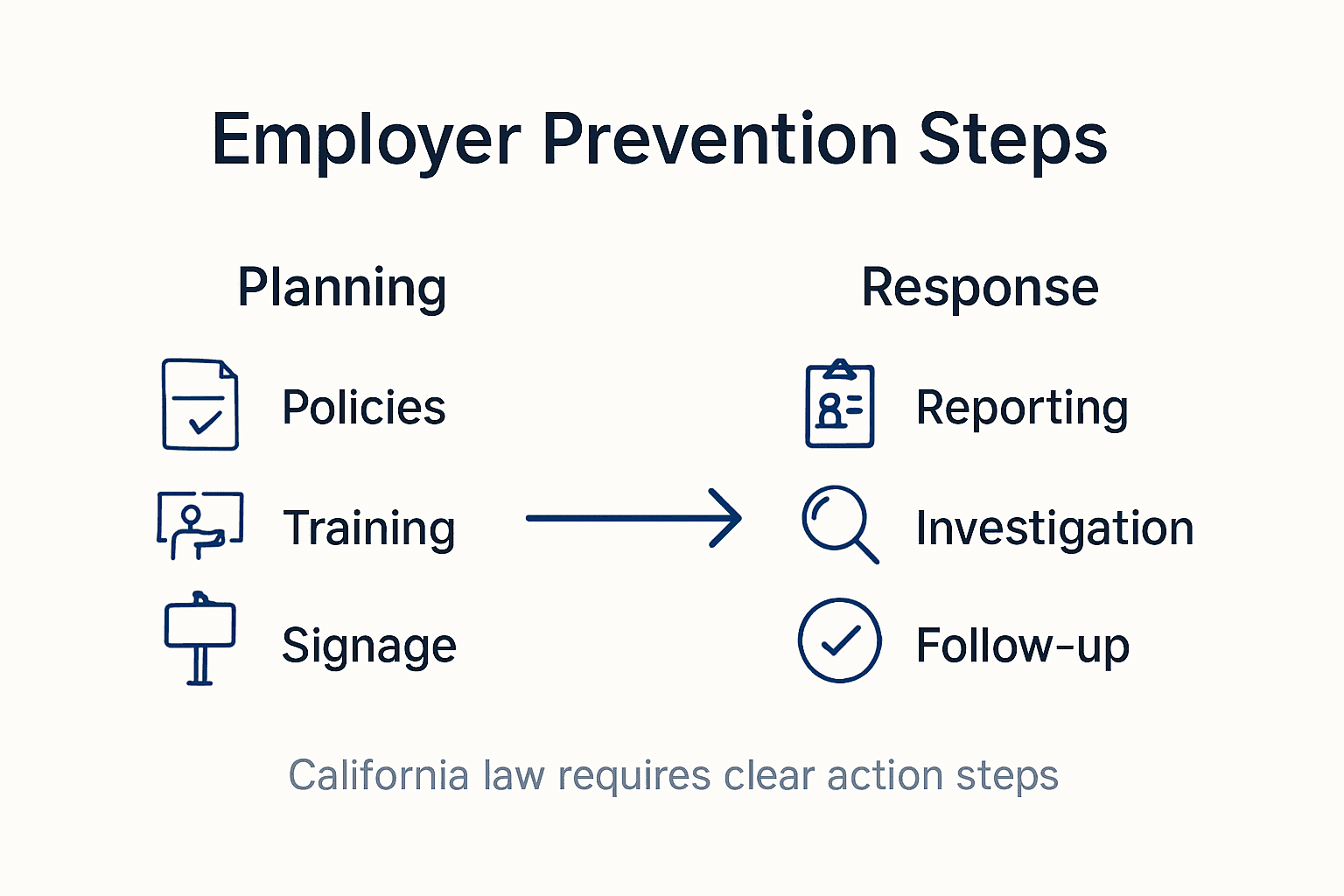
Workplace Violence Prevention Plans represent a comprehensive framework for protecting employee safety. These plans typically include detailed protocols for identifying workplace hazards, establishing emergency response procedures, and creating transparent communication channels. Supervisors play a crucial role in these prevention efforts, with a specific responsibility to promptly report and address any observed harassment incidents. Effective plans incorporate both preventative measures and responsive strategies that demonstrate an organizational commitment to maintaining a respectful, safe work environment.
Pro tip: Create a confidential and accessible reporting system that allows employees to document potential harassment incidents without fear of professional repercussions, ensuring multiple communication channels are available for reporting concerns.
Legal Options for Affected Employees
Employees experiencing workplace harassment in Placentia manufacturing plants have multiple legal avenues to address and seek remedy for their experiences. Employees can file a Charge of Discrimination with the Equal Employment Opportunity Commission, which serves as a critical first step in pursuing legal recourse for harassment based on protected characteristics.
Legal pathways in California are comprehensive and designed to protect workers. Employees can simultaneously file complaints with state agencies like the Labor Commissioner’s Office, which provides robust protections against workplace misconduct. These legal mechanisms allow workers to seek various remedies, including monetary compensation, reinstatement, workplace policy changes, and potential punitive damages against employers who fail to prevent harassment.
Under California law, workers are explicitly protected from retaliation when reporting harassment. State labor regulations guarantee workers’ rights to file complaints and access resources without fear of professional repercussions. These protections extend to documenting incidents, seeking legal counsel, and pursuing administrative or civil legal actions against employers who permit or fail to address harassment in the workplace.
Here is a summary of key California legal protections and employee actions for workplace harassment claims:
| Protection or Action | Description | Benefit to Employee |
|---|---|---|
| FEHA Legal Protections | Broad anti-harassment laws | Shields against discrimination |
| Mandatory Prevention Training | Required annual sessions | Increases harassment awareness |
| Internal Reporting Mechanisms | Company grievance processes | Enables formal complaint handling |
| Filing with State or Federal Agencies | Legal recourse via EEOC or Labor Office | Empowers pursuit of remedies |
Pro tip: Preserve all documentation related to harassment incidents, including emails, witness statements, and personal notes, as these can serve as crucial evidence in potential legal proceedings.
Protect Your Rights Against Workplace Harassment in Placentia Manufacturing Plants
Workplace harassment creates a hostile environment that can deeply affect your safety and career. Understanding employer liability and your legal protections under California law is crucial if you face harassment, retaliation, or discrimination at your manufacturing job. If you have experienced verbal abuse, physical intimidation, or any form of workplace harassment, you do not have to face it alone.
At Serendib Law Firm, we specialize in employment law and offer dedicated support to employees navigating these challenges. Visit our Harassment Archives | Serendib Law Firm for detailed insights and to learn how your situation fits within California’s legal framework. We provide personalized legal advocacy to help you document incidents, understand employer responsibilities, and pursue the justice and compensation you deserve.
Take control of your workplace safety and legal rights today. Reach out to us at https://www.serendiblaw.com/ to schedule a free consultation. Empower yourself with knowledgeable representation that fights for your dignity and a safe work environment. Learn more about your protections and next steps on our CA Employment Law Archives | Serendib Law Firm. Do not wait—ensure your voice is heard and your rights are defended now.
Frequently Asked Questions
What constitutes workplace harassment in manufacturing?
Workplace harassment in manufacturing includes various hostile interactions, such as physical intimidation, verbal abuse, discrimination, and systemic marginalization based on protected characteristics like gender, race, and age.
How can employers mitigate liability for workplace harassment?
Employers can mitigate liability by implementing comprehensive anti-harassment policies, conducting regular training sessions, and promptly addressing any reported harassment through thorough investigations.
What legal protections do employees have against harassment in the workplace?
Employees are protected under laws such as the Fair Employment and Housing Act (FEHA), which prohibits harassment based on protected characteristics and ensures that workers can seek remedies without fear of retaliation.
What steps should employees take if they experience harassment?
Employees should document all harassment incidents meticulously, report the behaviors through designated channels, and consider filing a charge of discrimination with appropriate state or federal agencies.