

Most people are surprised to learn that eligible employees in California can access up to seven months of job-protected leave for pregnancy and bonding with a new child. Pregnancy leave laws like CFRA and FMLA are powerful tools, but their details and differences can cause confusion for expecting parents at work. Understanding how these legal protections overlap could make a big difference in how much time you take off and the peace of mind you enjoy during this important life change.
Table of Contents
- Defining Pregnancy Leave, CFRA, and FMLA
- Eligibility Criteria for Each Type of Leave
- How Leave Periods and Protections Overlap
- Employee Rights and Employer Obligations
- Common Pitfalls and Legal Remedies
Key Takeaways
| Point | Details |
|---|---|
| Understanding Legal Protections | Pregnancy Leave, CFRA, and FMLA provide crucial protections for employees during pregnancy and bonding periods. Knowing which laws apply is essential for leveraging workplace rights. |
| Eligibility Criteria | Each leave type has specific eligibility requirements based on factors like work duration and company size. Employees must assess their situation to qualify properly. |
| Overlap of Leave Types | Pregnancy Disability Leave, FMLA, and CFRA can overlap, potentially allowing for extended time off. Understanding how these leaves interact is vital for maximizing available leave. |
| Employee Rights and Employer Duties | Employees have rights to job protection and accommodations, while employers must provide clear information and avoid discrimination. Awareness of these obligations fosters a supportive work environment. |
Defining Pregnancy Leave, CFRA, and FMLA
Understanding pregnancy leave and related legal protections can feel overwhelming, but knowing your rights is crucial for expecting mothers in the workplace. Pregnancy Leave, CFRA (California Family Rights Act), and FMLA (Family and Medical Leave Act) represent critical legal provisions designed to protect employees during significant life transitions.
According to UC Davis Health, these legal frameworks provide comprehensive protection for employees experiencing pregnancy, childbirth, and related medical conditions. The key distinctions between these leave types are essential to understand:
- Pregnancy Disability Leave: Specifically covers physical limitations related to pregnancy and childbirth
- CFRA: Provides job-protected leave for bonding with a new child or caring for family members
- FMLA: Offers similar protections at the federal level, with some variations in coverage
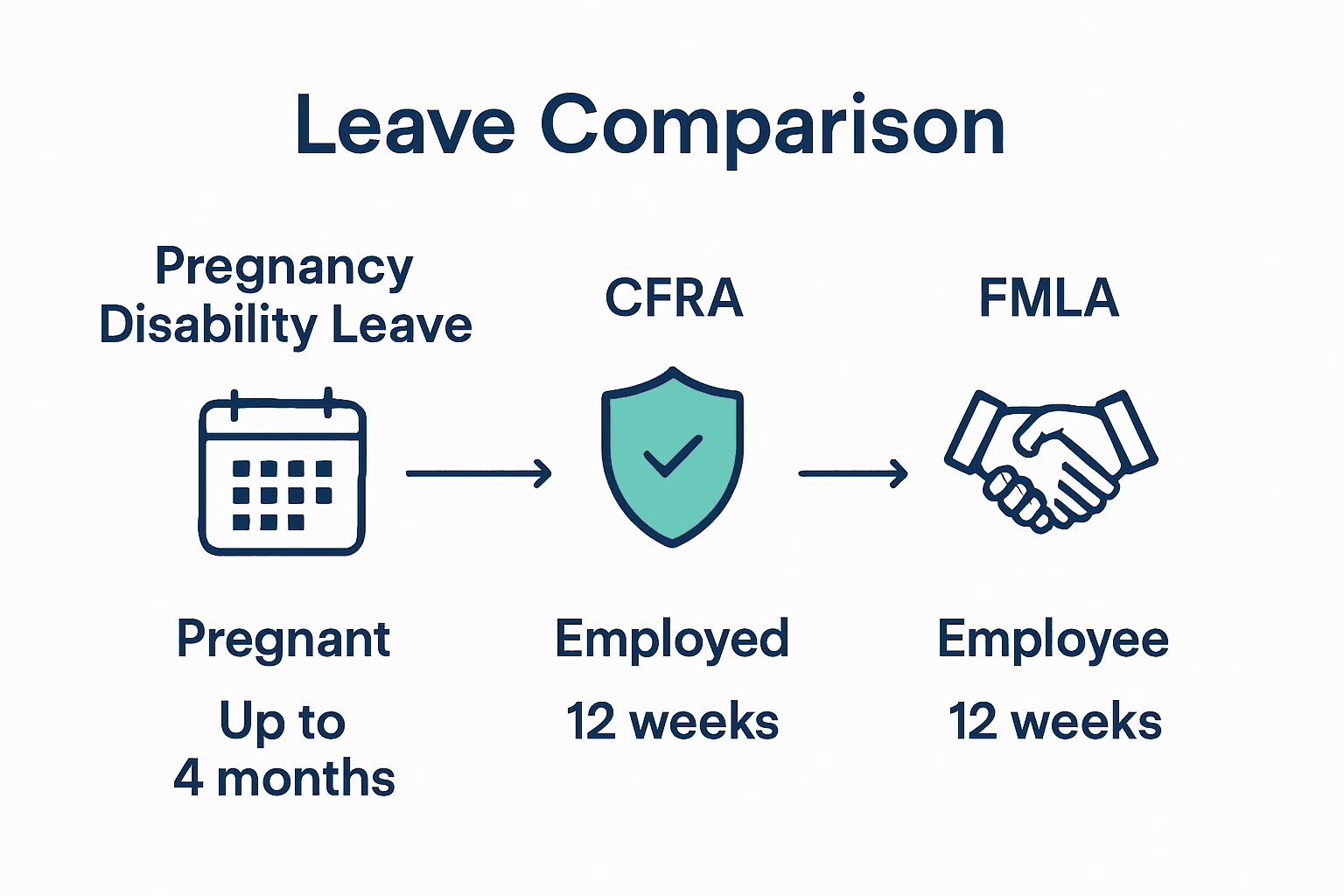
As CalHR explains, these leave provisions ensure that employees can take necessary time off without fear of losing their job or facing workplace discrimination. For instance, under these laws, eligible employees can typically take up to four months of disability leave for pregnancy and an additional 12 weeks for baby bonding. Learn more about overlapping leave requests with our comprehensive guide on CFRA vs. FMLA.
The specific eligibility requirements can vary based on factors like company size, employee tenure, and the type of leave requested. Generally, to qualify for CFRA or FMLA, employees must have worked for their employer for at least 12 months and completed 1,250 hours of work in the previous year. Understanding these nuances is crucial for expecting parents navigating workplace leave policies.
Eligibility Criteria for Each Type of Leave
Not every employee automatically qualifies for pregnancy-related leave, and understanding the specific eligibility requirements is crucial for expecting parents navigating workplace protections. Each type of leave – Pregnancy Disability Leave, CFRA, and FMLA – has unique criteria that determine an employee’s right to take time off.
According to LA County HR, the qualifying conditions for leave can vary significantly. Here’s a breakdown of the key eligibility requirements:
Pregnancy Disability Leave (PDL):
- Applies to employees in California
- No minimum hours or tenure requirement
- Available to employees who are physically unable to work due to pregnancy
- Covers conditions like severe morning sickness, prenatal care, bed rest
CFRA (California Family Rights Act):
- Must work for employer with 5 or more employees
- Minimum 12 months of employment
- Worked at least 1,250 hours in previous 12 months
- Provides up to 12 weeks of unpaid leave for baby bonding
FMLA (Family and Medical Leave Act):
- Applies to companies with 50+ employees
- Minimum 12 months of employment
- Worked at least 1,250 hours in previous 12 months
- Provides 12 weeks of unpaid, job-protected leave
Employees should carefully review their specific situation and consult with their HR department to confirm their exact eligibility. Dive deeper into understanding overlapping leave requests with our comprehensive CFRA vs. FMLA guide. Different employers may have additional requirements or more generous leave policies, so it’s essential to understand the nuances of your individual workplace protections.

How Leave Periods and Protections Overlap
Navigating the complex landscape of pregnancy-related leaves can be challenging, with multiple legal protections that sometimes run concurrently or independently. Understanding how these different leave types interact is crucial for expecting parents to maximize their workplace protections.
According to Berkeley Lab EHS, the interaction between Pregnancy Disability Leave (PDL), FMLA, and CFRA can be quite nuanced. Here’s a critical breakdown of how these leaves overlap:
- FMLA and PDL: These typically run concurrently, allowing employees to utilize their job-protected leave simultaneously
- CFRA and PDL: These are treated as separate entitlements, potentially extending total leave time
- Total Potential Leave: Employees might access up to 4 months of PDL plus an additional 12 weeks of CFRA bonding leave
California Civil Rights emphasizes that the separate nature of CFRA and PDL can provide significant advantages. For example, an employee might use 4 months of PDL for pregnancy-related medical conditions, and then take an additional 12 weeks of CFRA leave for baby bonding – effectively creating up to 7 months of total protected leave.
The key takeaway is that these leave protections are designed to be complementary, not restrictive. Learn more about the intricacies of overlapping leave requests in our comprehensive CFRA vs. FMLA guide. Employees should carefully document their leave, communicate with their HR department, and understand how these different protections can work together to support their unique family needs.
Employee Rights and Employer Obligations
Pregnancy-related workplace protections create a complex landscape of legal responsibilities for both employees and employers. Understanding these rights and obligations is crucial for maintaining a fair, supportive work environment during significant life transitions.
According to Pepperdine Community, employees are entitled to specific protections during pregnancy and parental leave. Key employee rights include:
- Job protection during approved leave periods
- Maintenance of existing health benefits
- Restoration to the same or equivalent position upon return
- Protection from discrimination based on pregnancy status
- Reasonable accommodations for pregnancy-related medical conditions
California Civil Rights emphasizes that employers have corresponding obligations to support these rights. Specifically, employers must:
- Provide clear information about leave policies
- Process leave requests consistently and without bias
- Hold the employee’s job or provide an equivalent position
- Continue health benefit contributions during leave
- Avoid any retaliatory actions against employees requesting leave
The intricate balance of rights requires careful navigation. Explore our comprehensive guide on employee rights to better understand your workplace protections. Ultimately, successful implementation depends on open communication, mutual respect, and a clear understanding of legal requirements by both employees and employers.
Common Pitfalls and Legal Remedies
Navigating pregnancy-related workplace leave can be a minefield of potential legal complications that can quickly escalate if not handled carefully. Employees and employers alike must be vigilant about understanding their rights and potential pitfalls during this sensitive period.
According to UC Berkeley HR, several common pitfalls can compromise an employee’s leave protections:
- Improper Documentation: Failing to provide required medical certifications
- Miscommunication: Not notifying employers within specified timeframes
- Misunderstanding Leave Limits: Exceeding approved leave durations
- Discrimination Risks: Experiencing negative treatment after requesting leave
- Benefit Interruption: Unexpected changes in health insurance or other benefits
Legal remedies for these issues typically involve:
- Filing complaints with state or federal labor departments
- Pursuing workplace discrimination claims
- Seeking reinstatement to previous position
- Recovering lost wages and benefits
- Obtaining compensation for emotional distress
Understanding how to protect yourself against potential legal missteps is crucial. When employers violate leave protections, employees have multiple avenues for recourse. Documenting every interaction, maintaining clear communication, and seeking legal counsel early can prevent many potential conflicts and protect your workplace rights.
Protect Your Rights Around Pregnancy Leave in Fountain Valley
Navigating pregnancy leave and understanding your rights under CFRA and FMLA can feel overwhelming, especially when job security and fair treatment hang in the balance. If you are facing confusion about eligibility, overlapping leave periods, or employer obligations, you are not alone. These challenges can create stress during an already delicate time when you deserve support and peace of mind.
Our experienced team at Serendib Law Firm is dedicated to guiding you through these complex workplace laws with personalized care. Whether you need help understanding your pregnancy disability leave options or ensuring your CFRA and FMLA protections are honored, we stand ready to protect what matters to you. Don’t wait until uncertainty turns into a legal problem. Visit our Leaves Archives | Serendib Law Firm to learn more and take the first step. Connect with us today at https://serendiblaw.com for a free consultation to secure your rights in Fountain Valley and beyond.
Frequently Asked Questions
What is Pregnancy Disability Leave, and who is eligible for it?
Pregnancy Disability Leave (PDL) is a form of leave specifically for employees who are physically unable to work due to pregnancy-related conditions. It applies to employees in California with no minimum hours or tenure requirement.
How do CFRA and FMLA leave periods overlap?
CFRA (California Family Rights Act) and FMLA (Family and Medical Leave Act) can run concurrently in many situations, particularly for pregnancy-related medical leave. Employees may access up to 4 months of PDL plus an additional 12 weeks of CFRA bonding leave, effectively extending their total leave time.
What are my rights as an employee on pregnancy leave?
Employees on pregnancy leave have rights including job protection during approved leave, maintenance of health benefits, restoration to the same or equivalent position upon return, and protection against discrimination based on pregnancy status.
What should I do if I encounter issues with my employer regarding pregnancy leave?
If you experience complications related to pregnancy leave, such as discrimination or improper denial of leave, you should document all interactions, communicate clearly with your HR department, and consider seeking legal counsel to protect your rights.
One Response