

Over 50 percent of american tech workers report witnessing or experiencing some form of workplace misconduct related to gender or sexuality. This troubling trend exposes a side of the industry that clashes with its reputation for creativity and forward thinking. Understanding how sexual harassment plays out in tech startups helps leaders, employees, and investors build safer environments where respect and professionalism truly matter.
Table of Contents
- Defining Sexual Harassment in Tech Startups
- Legal Precedents: Cotran V. Rollins Hudig Hall
- Employer Obligations and Risk Mitigation Strategies
- Employee Rights and Legal Remedies
- Common Pitfalls and Defense Tactics
Key Takeaways
| Point | Details |
|---|---|
| Understanding Sexual Harassment | Sexual harassment in tech startups includes unwelcome advances, inappropriate comments, and creates hostile work environments, often exacerbated by power dynamics and informal hierarchies. |
| Legal Standards and Employer Responsibility | Employers must conduct fair investigations based on reasonable beliefs and comprehensive documentation before taking any disciplinary actions regarding harassment claims. |
| Proactive Risk Mitigation | Effective risk management requires comprehensive training and clear reporting mechanisms to create a culture that emphasizes respect and accountability against harassment. |
| Employee Rights and Legal Avenues | Employees have robust legal protections allowing them to file complaints and pursue action against harassment, ensuring a workplace free from discrimination and misconduct. |
Defining Sexual Harassment in Tech Startups
Sexual harassment in tech startups represents a complex and pervasive workplace challenge characterized by unwelcome sexual advances, inappropriate comments, and systemic gender power dynamics. While tech environments pride themselves on innovation, many struggle with deeply entrenched discriminatory behaviors that create hostile work environments. The Dave rule symbolizes this systemic gender imbalance, where achieving meaningful representation becomes a statistical joke rather than a serious commitment to workplace equity.
Under legal definitions, sexual harassment encompasses two primary categories: quid pro quo and hostile work environment. Quid pro quo harassment occurs when employment benefits are explicitly or implicitly contingent upon sexual cooperation, such as a manager suggesting career advancement in exchange for romantic or sexual engagement. Hostile work environment harassment involves persistent, unwelcome sexual conduct that creates an intimidating, offensive, or degrading workplace atmosphere. In tech startups, this might manifest through inappropriate jokes, unwanted physical contact, sexual comments, or persistent romantic pursuit despite clear rejection.
Tech startup environments often amplify harassment risks through several unique cultural characteristics. Young, male-dominated teams with minimal HR infrastructure, startup culture’s informal hierarchy, and persistent power imbalances between founders, investors, and employees create fertile ground for inappropriate behaviors. These dynamics frequently silence victims through fears of professional retaliation or being perceived as disruptive to the company’s growth. Professional networks become both a career lifeline and a potential minefield, where speaking out against harassment could potentially damage future employment opportunities.
Recognizing sexual harassment requires understanding its nuanced expressions beyond stereotypical scenarios. It includes digital communications, after-hours work events, and subtle power manipulations that extend beyond physical workplace boundaries. Tech professionals must cultivate proactive awareness, establish clear reporting mechanisms, and create organizational cultures that prioritize respect, consent, and professional boundaries. Sexual harassment FAQs can provide additional guidance for employees navigating these complex workplace interactions.
Legal Precedents: Cotran v. Rollins Hudig Hall
The Cotran v. Rollins Hudig Hall International, Inc. case represents a landmark legal decision that fundamentally reshaped employer standards for workplace investigations and termination procedures, particularly in scenarios involving sexual harassment and professional misconduct. Legal precedents established by this case critically defined the parameters of reasonable employer conduct when addressing potential workplace misconduct.
At its core, the California Supreme Court’s ruling introduced a nuanced standard for evaluating employer decisions. The court determined that an employer’s termination decision could be justified if three critical conditions were met: conducting a fair investigation, maintaining an honest belief in the employee’s misconduct, and demonstrating reasonable investigative processes. This standard shifted the legal landscape from requiring absolute proof of misconduct to emphasizing the reasonableness of the employer’s investigation and good-faith belief.
In tech startup environments, the Cotran precedent becomes especially significant given the often informal and rapidly evolving workplace cultures. The ruling provides a critical framework for addressing potential sexual harassment claims by establishing that employers must implement thorough, objective investigations before taking disciplinary action. This means startups cannot rely on rumors, incomplete evidence, or biased investigations when making termination decisions. Sexual harassment FAQs can offer additional context for understanding these complex legal standards.

The case’s lasting impact extends beyond immediate termination proceedings, creating a broader standard of workplace fairness. It requires employers to document investigative processes, interview relevant parties, maintain neutrality, and make decisions based on substantive evidence rather than subjective perceptions. For tech professionals and startup leaders, the Cotran precedent underscores the importance of developing robust HR practices, maintaining detailed documentation, and ensuring transparent, equitable workplace investigations that protect both employee rights and organizational integrity.
Employer Obligations and Risk Mitigation Strategies
Tech startups face complex challenges in preventing sexual harassment, requiring comprehensive and proactive risk mitigation approaches that extend far beyond traditional compliance measures. Workplace investigations represent the critical first line of defense, where employers must implement rigorous protocols that protect both employees and organizational integrity. Employer retaliation strategies become particularly crucial in maintaining a fair and transparent investigative process.
Effective risk mitigation demands a multilayered approach. Conducting fair investigations requires employers to systematically listen to all parties, provide employees opportunities to present their perspectives, and ensure decisions stem from reasonable, well-documented conclusions. This means creating structured reporting mechanisms, maintaining strict confidentiality, protecting whistleblowers, and implementing unbiased investigative protocols that thoroughly examine all aspects of potential misconduct.
Tech startups must develop comprehensive sexual harassment prevention strategies that integrate robust training, clear communication protocols, and immediate accountability. This includes mandatory sexual harassment training for all employees, establishing explicit workplace conduct guidelines, creating transparent reporting channels, and implementing swift, consistent disciplinary actions for verified misconduct. Leaders must cultivate a workplace culture that actively challenges power dynamics, promotes respect, and demonstrates zero tolerance for inappropriate behaviors.
Organizational risk mitigation extends beyond immediate investigations to long-term cultural transformation. Successful strategies involve regular policy reviews, anonymous feedback mechanisms, diverse leadership representation, and ongoing education about professional boundaries. Tech startups must view sexual harassment prevention not as a compliance checkbox, but as a fundamental organizational value that directly impacts innovation, employee retention, and overall company reputation. By proactively addressing potential misconduct and creating supportive, inclusive environments, companies can significantly reduce legal risks while fostering more productive, respectful workplace ecosystems.
Employee Rights and Legal Remedies
In tech startups, employees possess robust legal protections against sexual harassment that extend beyond simple workplace policies. Employee rights fundamentally guarantee a workplace environment free from discriminatory and sexually inappropriate behaviors, providing multiple avenues for legal recourse when violations occur. Workers have the right to file complaints, seek investigative processes, and pursue legal action without fear of professional retaliation.
Legal precedents emphasize employees’ critical rights to a harassment-free workplace, including the opportunity to present their perspectives during formal investigations. These rights encompass several key protections: filing internal complaints with human resources, reporting incidents to state or federal agencies like the Equal Employment Opportunity Commission (EEOC), and pursuing civil litigation against employers who fail to address systemic harassment. The legal framework recognizes that sexual harassment is not just a personal conflict, but a structural workplace issue demanding comprehensive remedies.
Historically, collective action has played a pivotal role in advancing employee protections. Advocacy movements like Working Women United have been instrumental in highlighting workplace harassment and expanding legal remedies for impacted workers. Modern employees can leverage multiple strategic approaches: internal grievance mechanisms, administrative complaints, mediation processes, and formal lawsuits seeking financial compensation, reinstatement, or mandated organizational changes. These legal remedies are designed not just to provide individual relief, but to create systemic accountability and prevent future misconduct.
Navigating sexual harassment legal remedies requires understanding nuanced strategies and potential outcomes. Employees should document every incident meticulously, preserve communication records, report incidents through official channels, and seek legal counsel specializing in employment discrimination. While each case presents unique challenges, the legal system provides structured pathways for addressing workplace harassment, empowering workers to defend their professional dignity and challenge toxic organizational cultures that perpetuate systemic misconduct.
Common Pitfalls and Defense Tactics
Tech startups face intricate challenges when responding to sexual harassment allegations, where seemingly minor procedural missteps can escalate legal vulnerabilities. Investigative approaches demand meticulous strategic planning, recognizing that poorly managed responses can transform a challenging situation into a catastrophic legal and reputational nightmare. Retaliation risks become particularly critical when organizations fail to implement sophisticated, legally compliant response protocols.
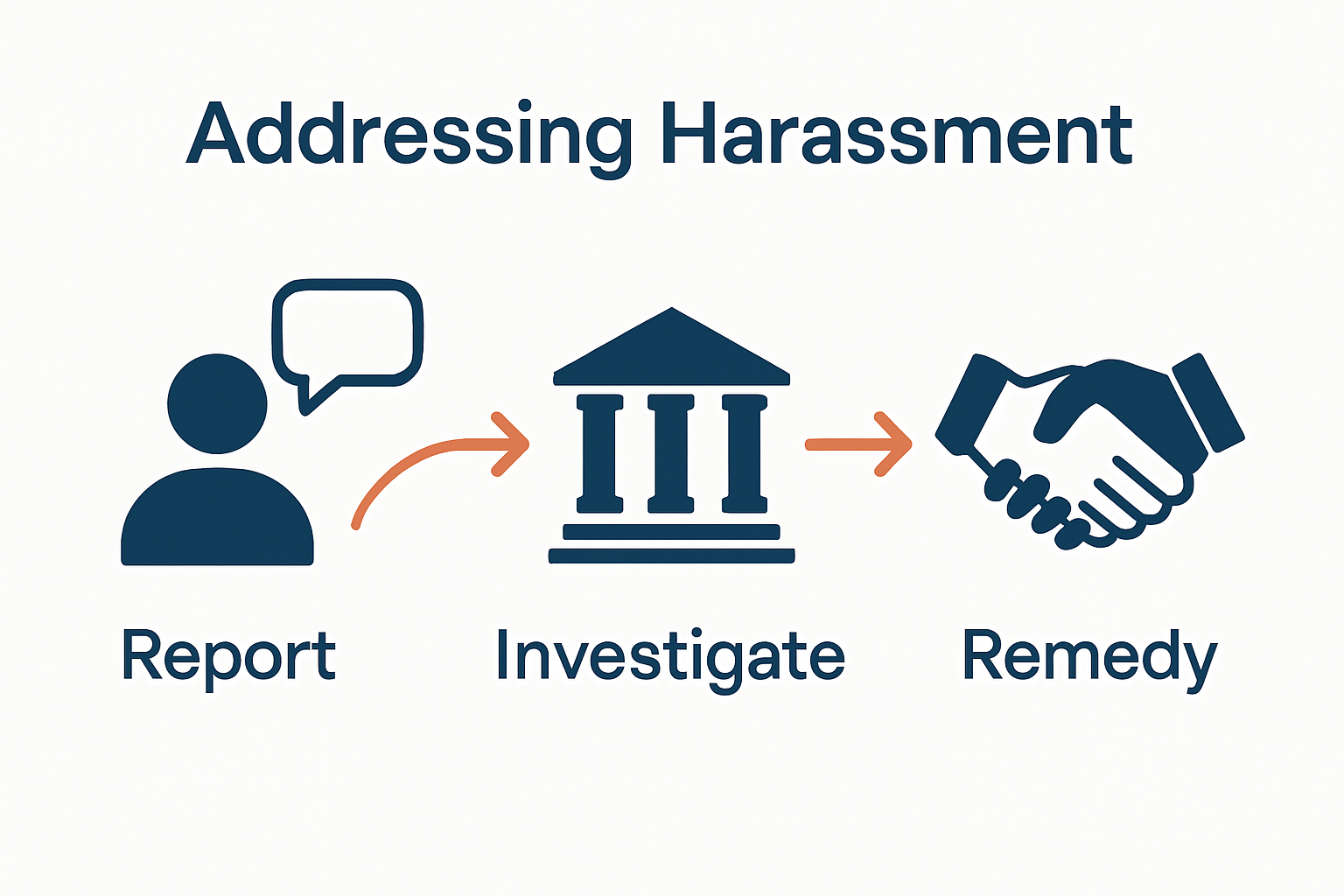
Investigative fairness requires employers to systematically approach workplace misconduct claims by listening to all involved parties, providing balanced opportunities for perspective sharing, and grounding decisions in reasonable, well-documented conclusions. Common pitfalls include rushing to judgment, protecting high-performing employees regardless of misconduct, maintaining inconsistent disciplinary standards, and failing to document investigation processes thoroughly. Successful defense tactics involve creating transparent, neutral investigation protocols that prioritize fact-finding over predetermined outcomes.
Defending against sexual harassment claims requires a proactive, multilayered approach that extends beyond immediate incident response. Organizations must develop comprehensive strategies that include robust documentation, consistent policy enforcement, regular training programs, and clear reporting mechanisms. This involves creating workplace cultures that normalize respectful interactions, empower employees to report misconduct without fear, and demonstrate unwavering commitment to addressing inappropriate behaviors systematically. Effective defense is not about avoiding accountability, but about creating environments where harassment becomes culturally unacceptable.
Navigating sexual harassment defense requires understanding the nuanced interplay between legal compliance, organizational culture, and individual accountability. Tech startups must view these challenges as opportunities for transformative cultural development, not merely legal risk management. By implementing sophisticated investigation protocols, maintaining transparent communication, and treating all allegations with serious professional attention, organizations can convert potential legal vulnerabilities into opportunities for meaningful workplace improvement and cultural evolution.
Protect Your Rights Against Sexual Harassment in Tech Startups
Navigating the challenges of sexual harassment in fast-paced tech startup environments can feel overwhelming. This article reveals how informal workplace cultures and power imbalances often silence victims and complicate investigations. If you are facing unwelcome advances, hostile work environments, or retaliation after reporting misconduct, it is critical to understand your rights and legal options for protection.
At Serendib Law Firm, we specialize in employment law with extensive experience helping employees and employers address sexual harassment issues head-on. Explore our Sexual Harassment Archives | Serendib Law Firm to learn more about how we support victims and enforce workplace accountability. If you need personalized guidance, do not wait to act. Contact us now through Serendib Law Firm for a free consultation and take the first step toward securing a safe, respectful workplace. We are dedicated to protecting your rights and ensuring fair treatment every step of the way.
Frequently Asked Questions
What constitutes sexual harassment in tech startups?
Sexual harassment in tech startups includes unwelcome sexual advances, inappropriate comments, and behaviors that create a hostile work environment. It can be categorized into quid pro quo harassment and hostile work environment harassment.
How can tech startups mitigate the risk of sexual harassment?
Tech startups can mitigate sexual harassment risk by implementing comprehensive training, creating clear reporting channels, establishing robust investigative protocols, and fostering a workplace culture of respect and accountability.
What are the employee rights regarding sexual harassment in the workplace?
Employees have the right to a harassment-free workplace, which includes filing complaints, reporting incidents to relevant agencies, and pursuing legal action against employers who fail to address harassment.
What are common pitfalls tech startups face in handling sexual harassment allegations?
Common pitfalls include rushing investigations, failing to document processes, inconsistent disciplinary actions, and prioritizing high-performing employees over fair procedures. It’s crucial for startups to approach harassment claims systematically and neutrally.
Recommended
- Whistleblower Retaliation in Tech Startups: Employee Rights | Serendib Law Firm
- Understanding Sexual Harassment Claims in Hospitality Post-#MeToo | Serendib Law Firm
- Understanding High-profile Whistleblower Cases in Silicon Valley Startups | Serendib Law Firm
- Sexual Harassment Settlements: High-Profile Executives Guide | Serendib Law Firm