
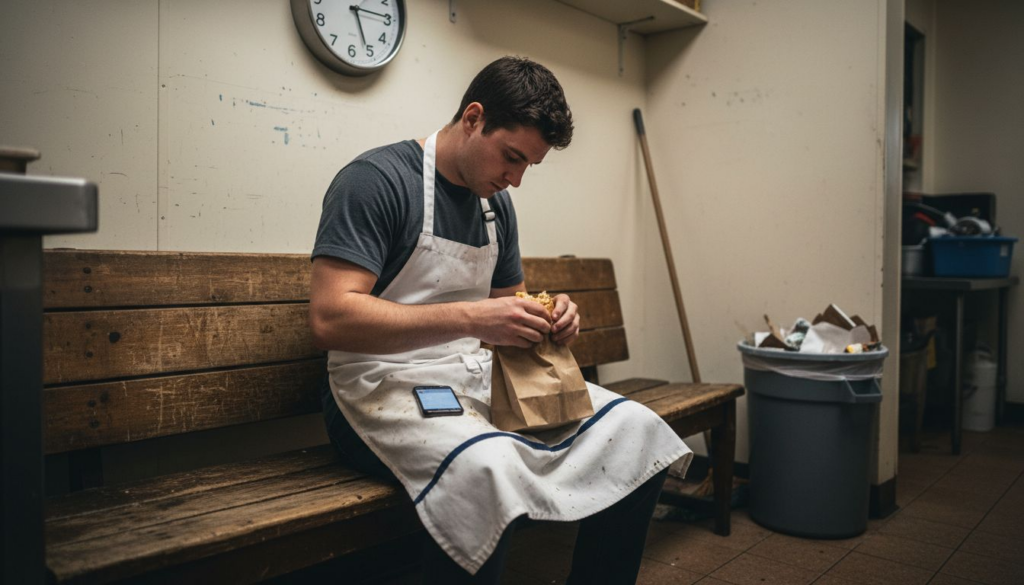
Read on to learn more about break-time law violations. Over 80 percent of American restaurant workers report stress from not getting proper rest or meal breaks during their shifts. For those in California, statewide labor laws offer strong protections, especially for staff facing long hours in busy kitchens. Knowing your rights can help prevent fatigue, improve daily work experiences, and shield you from costly legal risks if breaks are overlooked.
Table of Contents
- Rest And Meal Break Rules In California
- Types Of Break-Time Violations In Restaurants
- Legal Rights Of Tustin Restaurant Employees
- Employer Responsibilities And Compliance Standards
- Risks, Penalties, And Filing Claims
Key Takeaways
| Point | Details |
|---|---|
| Meal Break Requirements | Employees are entitled to a 30-minute unpaid meal break for shifts over 5 hours and a second break for shifts over 10 hours. |
| Rest Break Entitlements | Workers receive a paid 10-minute rest break for every 4 hours worked to maintain health and safety. |
| Documentation Importance | Accurate documentation of break times is crucial for both employees and employers to ensure compliance and protect against legal claims. |
| Legal Risks for Employers | Failure to provide mandated breaks can lead to significant wage penalties and legal action from employees. |
Rest and Meal Break Rules in California
California labor laws provide clear protections for restaurant workers regarding rest and meal breaks. California regulations mandate specific guidelines that employers must follow to ensure worker rights and workplace fairness. These rules apply to non-exempt employees across various industries, with particular significance for restaurant staff who often work long and demanding shifts.
Under state law, employees are entitled to specific break periods depending on their total hours worked. For shifts exceeding five hours, workers must receive a 30-minute unpaid meal break, which allows them to step away from work duties and recharge. When shifts extend beyond ten hours, a second meal break becomes mandatory. Additionally, workers are guaranteed a paid 10-minute rest break for every four hours worked, or major fraction of that time period. These breaks are critical for maintaining worker health, preventing fatigue, and ensuring safe working conditions in high-stress restaurant environments.
Restaurant managers must carefully track and document break times to remain compliant with California small business break regulations. Failure to provide required breaks can result in significant legal penalties, including potential wage compensation for employees. Workers should understand their rights and document any instances where employers systematically deny mandated rest or meal periods. Documentation becomes crucial evidence if legal action becomes necessary to address workplace violations.
Here’s a summary of California restaurant worker break requirements and their business impacts:
| Requirement | What It Involves | Business Impact |
|---|---|---|
| 30-minute meal break | Unpaid break for shifts over 5 hours | Reduces fatigue, ensures compliance |
| Second meal break | Required for shifts over 10 hours | Additional scheduling complexity |
| 10-minute rest break | Paid break for every 4 hours worked | Promotes health, reduces violations |
| Break documentation | Accurate records of all break times | Protects against legal claims |
| Compensation for violations | One hour extra pay per missed break | Can increase payroll costs, legal risk |
Pro Tip: Document Your Breaks: Keep a personal log of your work shifts and breaks, including dates, times, and any instances where you were unable to take mandated rest periods. This record can serve as critical evidence if you need to file a workplace complaint or seek legal recourse for break law violations.
Types of Break-Time Violations in Restaurants
Restaurant break-time violations represent significant legal risks for employers in the food service industry. Meal and rest break compliance requires careful attention to multiple complex regulations that protect worker rights. Common violations often emerge from systematic failures to properly implement and document mandated break periods.
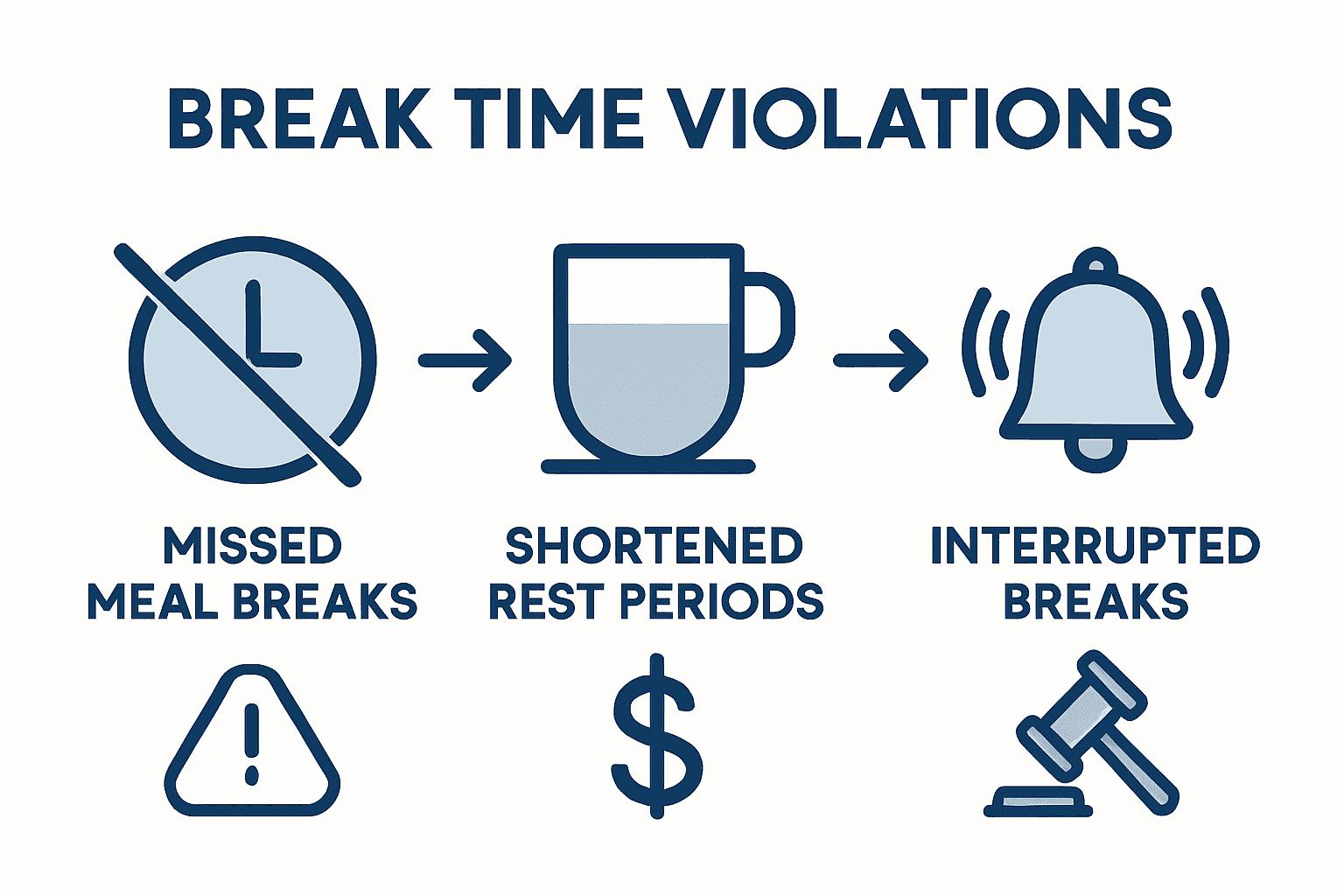
Several distinct types of break-time violations frequently occur in restaurant settings. These include failing to provide full 30-minute uninterrupted meal breaks, preventing employees from leaving work areas during designated break times, and requiring workers to remain on-call or perform duties during their mandated rest periods. Some employers attempt to circumvent break requirements by pressuring staff to work through breaks or manipulating scheduling to avoid providing legally required rest intervals. Such practices not only violate labor codes but can also expose businesses to potential wage claims and legal penalties.
Documentation and timing represent critical aspects of break-time compliance. Restaurants must establish clear systems for tracking and verifying that employees receive breaks at appropriate intervals during their shifts. This includes ensuring breaks occur within specific timeframes based on total hours worked, maintaining accurate records of break times, and creating workplace policies that explicitly support workers’ rights to uninterrupted rest periods. Systematic violations can result in significant financial consequences, including potential class-action lawsuits and substantial monetary penalties for repeated infractions.
Below is a quick comparison of common break-time violations and their consequences:
| Violation Type | Description | Potential Consequence |
|---|---|---|
| Missed meal break | No 30-minute break given | Wage penalties per day |
| Interrupted rest period | Required duties during break | Additional wage owed |
| Prevented from leaving work area | Employee kept onsite during break | Violation of break law |
| Poor record-keeping | Inadequate documentation of breaks | Burden of proof shifts to employer |
| Systematic denial of breaks | Ongoing lack of required breaks | Class action, large fines possible |
Pro Tip: Break Tracking Strategy: Create a personal break log documenting the exact times, duration, and any interruptions to your mandated rest periods, which can serve as crucial evidence if you need to pursue legal action against workplace break-time violations.
Legal Rights of Tustin Restaurant Employees
Tustin restaurant employees possess robust legal protections designed to safeguard their workplace rights and ensure fair compensation. Worker rights under California law provide comprehensive guidelines that specifically address meal breaks, rest periods, and compensation for time worked. These legal protections are particularly critical in the demanding restaurant industry, where long shifts and high-stress environments can lead to potential workplace violations.
Under state regulations, restaurant workers are entitled to specific protections that go beyond basic wage requirements. Employees have the right to receive uninterrupted meal breaks, paid rest periods, and compensation for any time where mandated breaks are denied. When employers fail to provide these legally required breaks, workers can claim additional compensation, typically one hour of pay at their regular rate for each workday where a break violation occurs. This compensatory mechanism serves as a critical deterrent against systematic workplace rights infringements.
Local Tustin restaurant employees have multiple avenues for protecting their workplace rights. This includes documenting break violations, reporting non-compliance to appropriate labor authorities, and seeking legal counsel when persistent violations occur. The legal framework supports workers in challenging unfair practices, with potential remedies ranging from monetary compensation to mandatory workplace policy changes. Employers who consistently violate break time regulations may face significant financial penalties and potential legal action from affected employees.
Pro Tip: Documentation Strategy: Maintain a detailed personal log of your work shifts, including exact break times, any interruptions, and instances where mandated breaks were not provided, which can serve as crucial evidence if you need to pursue workplace rights enforcement.
Employer Responsibilities and Compliance Standards
Restaurant employers in Tustin must adhere to strict legal standards governing employee break times and workplace protections. Workplace break regulations establish clear guidelines that mandate specific responsibilities for businesses in managing employee rest and meal periods. These compliance standards are designed to protect workers from excessive work demands and ensure adequate opportunities for rest during extended shifts.
Critical employer responsibilities include providing uninterrupted 30-minute unpaid meal breaks for shifts exceeding five hours and paid 10-minute rest breaks for every four hours worked. Employers must actively create workplace policies that enable employees to take these mandated breaks without penalty or interference. When breaks are not provided, businesses become legally obligated to compensate employees with additional wages, typically one hour of pay at the employee’s regular rate for each workday where a break violation occurs.

Documentation and proactive management represent key components of break time compliance. Employers must implement robust tracking systems that verify employees receive mandated breaks, maintain accurate records of break times, and create transparent workplace policies. Systematic failure to comply with break regulations can result in significant financial penalties, potential legal action, and damage to the business’s reputation. Restaurant managers must train supervisors to recognize and support employee break rights, ensuring consistent adherence to state labor regulations.
Pro Tip: Compliance Documentation: Develop a comprehensive break tracking system that logs employee break times, creates clear documentation of break policies, and provides a transparent mechanism for employees to report any break time violations.
Risks, Penalties, and Filing Claims
Restaurant break-time violations carry substantial legal and financial risks for employers in Tustin and throughout California. California wage and hour law exceptions reveal complex penalties that can dramatically impact a business’s financial stability. Systematic break time violations can lead to significant monetary consequences, including potential class-action lawsuits and substantial wage compensation claims.
The financial penalties for break-time violations can accumulate rapidly. Employers may be required to pay one additional hour of wages at the employee’s regular rate for each day a mandated break is not provided. These penalties can compound across multiple employees and pay periods, potentially resulting in thousands of dollars in unexpected financial exposure. Restaurant owners could face additional legal challenges, including potential civil penalties, attorney fees, and potential reputation damage that extends beyond direct monetary penalties.
Filing a break-time violation claim involves several critical steps. Workers must document specific instances of break violations, including dates, times, and specific circumstances where mandated breaks were denied or interrupted. Employees can file complaints with the California Labor Commissioner’s Office, pursue individual legal action, or potentially join class-action lawsuits. The burden of proof typically rests on the employer to demonstrate compliance with break-time regulations, which creates a favorable legal environment for workers seeking to enforce their workplace rights.
Pro Tip: Evidence Collection: Create a detailed, contemporaneous log of every work shift, including exact break times, any interruptions, and specific instances where mandated breaks were not provided or were inadequate, which can serve as crucial documentation if you decide to pursue a legal claim.
Take Control of Your Break-Time Rights in Tustin Restaurants
If you are a restaurant employee facing missed or interrupted meal and rest breaks in Tustin, you are not alone and help is within reach. This article highlights common challenges such as denied 30-minute meal breaks, interrupted rest periods, and pressure to work through legally mandated breaks. These violations cause unfair stress and financial harm but you have strong protections under California law. Understanding your rights and documenting break-time issues is the first step toward reclaiming fair treatment and compensation.
At Serendib Law Firm, we specialize in fighting for employees dealing with meal and rest break violations and broader wage violations within the Tustin area. Our experienced attorneys provide personalized advocacy designed to hold employers accountable for break-time law violations and secure the unpaid wages you deserve. Do not wait until these violations escalate into costly damages. Visit our main site at serendiblaw.com today to schedule your free consultation and explore your legal options.
Empower yourself with expert legal guidance now and protect your workplace rights. Learn more about your local resources in Tustin here and take the first step toward justice.
Frequently Asked Questions
What are the meal and rest break requirements for restaurant workers?
In California, restaurant workers are entitled to a 30-minute unpaid meal break for shifts over 5 hours, and a paid 10-minute rest break for every 4 hours worked. A second meal break is required for shifts over 10 hours.
What happens if an employer fails to provide mandated breaks?
If an employer fails to provide required breaks, they are typically obligated to compensate employees with an additional hour of pay for each workday where a break was not provided.
How can restaurant employees document break-time violations?
Employees can document break-time violations by keeping a personal log that includes dates, times, and specifics of any instances where required breaks were denied or interrupted.
What legal actions can restaurant staff take for break-time violations?
Restaurant staff can file complaints with the California Labor Commissioner’s Office, pursue individual legal action, or join class-action lawsuits if their mandated break rights are violated.