

Feeling targeted because of your religious beliefs or struggling to get time off for observances is a reality for many employees in Westminster, California. Discrimination can show up through missed promotions, denied accommodations, or unfair scheduling demands that overlook spiritual commitments. If you are facing these challenges, understanding your rights to reasonable accommodations and workplace protections can empower you to demand fair treatment and protect your dignity.
Table of Contents
- Defining Religious Discrimination in The Workplace
- Types Of Scheduling Conflicts Based On Religion
- California Laws Protecting Religious Practices At Work
- Employee Rights And Employer Obligations
- Addressing And Preventing Workplace Discrimination
Key Takeaways
| Point | Details |
|---|---|
| Awareness of Religious Discrimination | Religious discrimination involves unfair treatment based on an individual’s religious beliefs or practices, which must be addressed and prevented in the workplace. |
| Legal Protections | Employees are protected under various laws, including the Fair Employment and Housing Act in California, which mandates reasonable accommodations and prohibits discriminatory practices. |
| Reasonable Accommodations | Employers are required to engage in good faith interactive processes to find workable solutions that respect employees’ religious practices without causing undue hardship. |
| Proactive Communication | Open dialogue between employees and employers about religious scheduling conflicts and accommodations is essential for fostering a respectful workplace culture. |
Defining Religious Discrimination in the Workplace
Religious discrimination in the workplace represents a serious violation of employee rights and legal protections. It occurs when an individual experiences unfair treatment due to their religious beliefs, religious practices, or spiritual affiliations. Religious discrimination involves treating someone unfavorably because of their sincerely held religious, ethical, or moral convictions.
The legal framework protecting employees encompasses a broad spectrum of religious expressions and beliefs. This protection extends beyond traditional organized religions to include:
- Non-theistic belief systems
- Moral or ethical perspectives with the strength of religious views
- Individual spiritual practices
- Religious attire and observance requirements
Discrimination can manifest in multiple workplace contexts, including:
- Hiring and recruitment processes
- Promotion opportunities
- Job assignments
- Compensation decisions
- Workplace harassment
Reasonable accommodations are a critical aspect of preventing religious discrimination. Employers must make genuine efforts to support employees’ religious practices, such as scheduling adjustments for religious observances or allowing specific religious attire, unless such accommodations would create undue hardship for the business.
Religious discrimination is not just about overt actions, but also about creating an environment that respects diverse spiritual beliefs and practices.
Workplace protections cover scenarios where employees might face negative treatment, including:
- Being denied employment
- Experiencing hostile work environments
- Facing harassment related to religious identity
- Being excluded from opportunities due to religious background
Pro tip: Document any instances of potential religious discrimination carefully, including dates, specific incidents, and potential witnesses to strengthen your potential legal case.
Types of Scheduling Conflicts Based on Religion
Religious scheduling conflicts emerge when employees’ spiritual practices and workplace expectations intersect, creating potential tensions in professional environments. Scheduling conflicts require careful navigation by both employers and employees to ensure legal compliance and mutual respect.
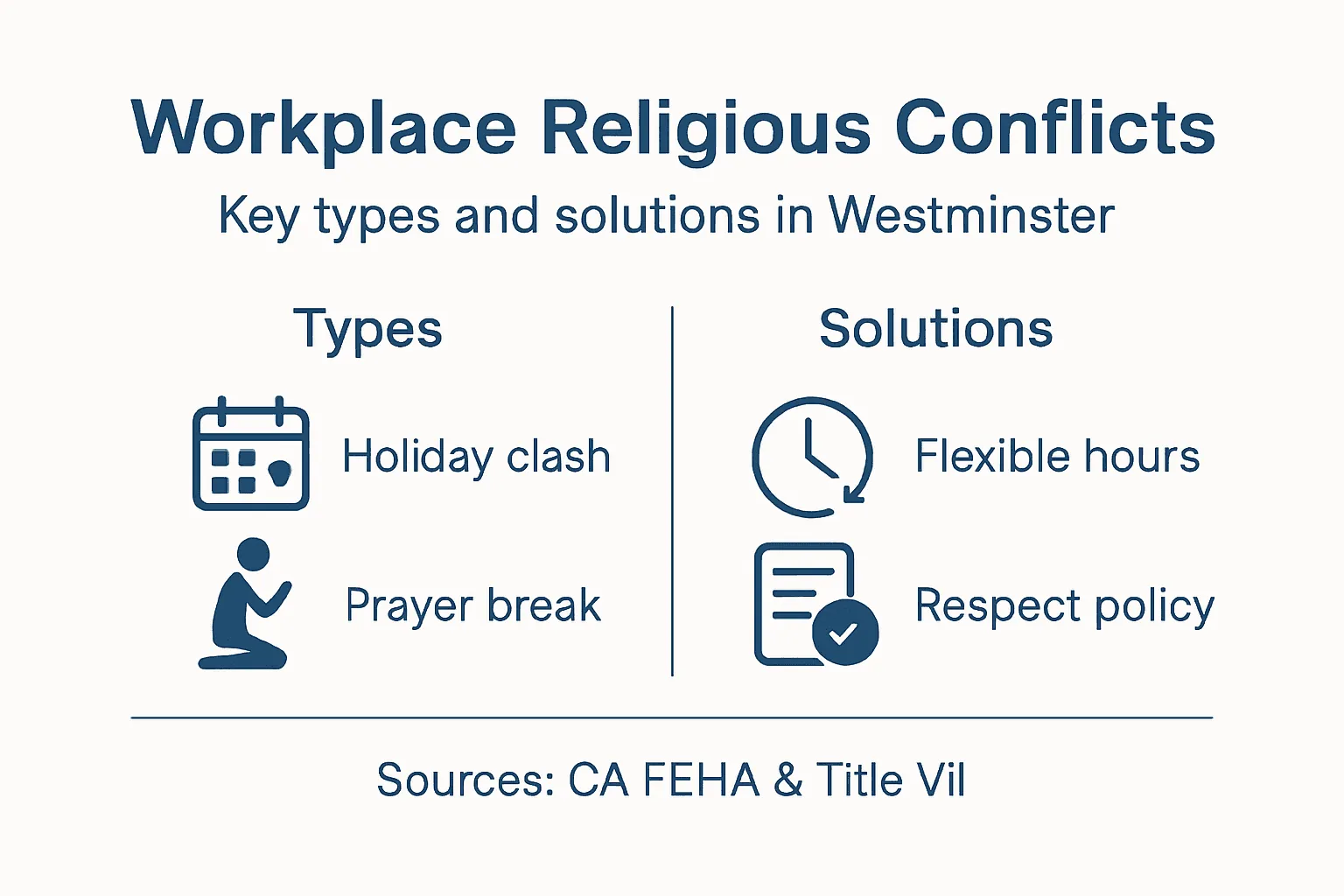
Typical religious scheduling conflicts often involve several key scenarios:
- Sabbath Observances: When an employee’s religious tradition requires complete rest or worship on specific days
- Holiday Celebrations: Religious holidays that may not align with standard company work calendars
- Prayer Times: Regular daily prayer requirements that might interrupt standard work schedules
- Fasting Periods: Religious observances like Ramadan that impact work performance and energy levels
The most common types of scheduling conflicts include:
- Weekly Worship Day Conflicts
- Annual Religious Holiday Accommodations
- Daily Prayer Schedule Adjustments
- Religious Fasting Period Considerations
- Ceremonial and Ritual Observance Requirements
Workplace accommodations play a crucial role in resolving these scheduling challenges. Employers must demonstrate flexibility and engage in a good faith interactive process to find reasonable solutions that respect both religious practices and business operational needs.
Religious scheduling conflicts are not about choosing between faith and work, but finding harmonious ways to honor both professional and spiritual commitments.
Potential accommodation strategies might include:
- Flexible shift trading
- Adjusted work hours
- Unpaid time off for religious observances
- Remote work options during specific religious periods
- Shift swapping with colleagues
Pro tip: Communicate proactively with your employer about potential religious scheduling conflicts, providing advance notice and potential solution proposals.
Here’s a summary of how employers can address different religious scheduling conflicts:
| Type of Conflict | Example Impact | Possible Accommodation |
|---|---|---|
| Weekly Worship Day | Missed Saturday work | Flexible scheduling |
| Religious Holiday | Time off needed | Unpaid leave or shift trade |
| Daily Prayer Time | Breaks required | Designated prayer breaks |
| Fasting Period | Lower energy | Adjusted workload or breaks |
| Ceremonial Observance | Special attire time | Relaxed dress code |
California Laws Protecting Religious Practices at Work
California offers robust legal protections for employees’ religious practices through the Fair Employment and Housing Act (FEHA), which goes beyond federal standards in safeguarding religious rights. Religious accommodation laws provide comprehensive workplace protections that ensure employees can practice their faith without workplace discrimination.
Key protections under California law include:
- Broad definition of religious beliefs
- Mandatory reasonable accommodations
- Protection against discriminatory practices
- Comprehensive coverage of religious expressions
- Interactive accommodation processes
The legal framework establishes several critical requirements for employers:
- Recognize diverse religious beliefs
- Provide reasonable workplace adjustments
- Engage in good faith accommodation discussions
- Avoid discriminatory employment decisions
- Respect religious attire and observance practices
Workplace religious accommodations can take multiple forms, including schedule modifications, dress code exceptions, and providing dedicated spaces for religious observances. Employers must demonstrate flexibility while maintaining operational efficiency.
California law recognizes that religious diversity strengthens workplace culture and individual employee dignity.
Specific legal protections encompass various aspects of employment:
- Hiring processes
- Promotion opportunities
- Work schedule arrangements
- Dress and grooming standards
- Religious expression and observance
Pro tip: Document all interactions regarding religious accommodations and maintain clear, respectful communication with your employer to protect your workplace rights.

This table highlights the main differences between federal and California religious accommodation laws:
| Protection Area | Federal Law (Title VII) | California FEHA |
|---|---|---|
| Scope of Beliefs | Traditional religions | Includes broad moral beliefs |
| Accommodation Standard | Reasonable if minimal cost | Stronger, favors accommodation |
| Dress Code Rules | Case-by-case | Explicitly covered |
| Reporting Enforcement | EEOC | DFEH and Courts |
Employee Rights and Employer Obligations
Workplace religious protections establish a critical balance between employee rights and employer responsibilities, ensuring fair treatment and respect for diverse spiritual beliefs. Employee rights protect against religious discrimination through comprehensive legal frameworks that safeguard individual religious expressions.
Employee rights in religious discrimination cases include:
- Freedom from discriminatory treatment
- Right to reasonable religious accommodations
- Protection against workplace harassment
- Ability to observe religious practices
- Safeguards against retaliatory actions
Employer obligations encompass several key responsibilities:
- Provide reasonable workplace accommodations
- Prevent religious discrimination
- Maintain a harassment-free environment
- Address religious accommodation requests fairly
- Avoid discriminatory employment decisions
Workplace protections require employers to demonstrate flexibility and understanding regarding employees’ religious practices. This includes potential adjustments like modified schedules, dress code exceptions, and dedicated spaces for religious observances.
Religious workplace rights are not about preference, but about fundamental human dignity and respect.
Critical legal requirements for employers include:
- Consistent and non-discriminatory policies
- Interactive accommodation discussions
- Documented resolution of religious conflict
- Prompt investigation of religious harassment claims
- Neutral evaluation of religious accommodation requests
Pro tip: Maintain detailed documentation of all religious accommodation communications and interactions to protect your legal rights and demonstrate good faith efforts.
Addressing and Preventing Workplace Discrimination
Workplace discrimination prevention requires a comprehensive, proactive approach that systematically addresses potential religious bias and creates inclusive environments. Best practices help eradicate religious discrimination by establishing clear policies and fostering mutual understanding.
Key strategies for preventing religious discrimination include:
- Developing comprehensive anti-discrimination policies
- Implementing consistent training programs
- Creating transparent reporting mechanisms
- Promoting cultural awareness
- Establishing fair accommodation procedures
Organizational prevention methods encompass multiple critical components:
- Comprehensive policy development
- Regular employee training
- Confidential complaint processes
- Ongoing cultural sensitivity education
- Prompt and neutral investigation procedures
Workplace communication plays a pivotal role in discrimination prevention. Employers must create environments where employees feel safe discussing religious differences and requesting reasonable accommodations without fear of retaliation or judgment.
Preventing religious discrimination is not just a legal obligation, but a fundamental commitment to human dignity and mutual respect.
Essential prevention tactics for organizations include:
- Conducting regular diversity and inclusion workshops
- Developing clear anti-harassment guidelines
- Implementing bias-free hiring practices
- Creating multicultural support networks
- Establishing transparent grievance resolution processes
Pro tip: Document every interaction related to religious accommodation requests, maintaining detailed records to protect both employee rights and organizational transparency.
Protect Your Rights Against Religious Discrimination in Westminster Workplaces
Religious discrimination in the workplace creates a difficult environment where your fundamental rights and spiritual beliefs may be under threat. If you are facing issues like unfair scheduling conflicts, denial of reasonable accommodations, or hostile treatment due to your faith, you need a trusted advocate who understands these challenges deeply. Our team at Serendib Law Firm is committed to helping employees in Westminster navigate complex legal protections around religious discrimination, including rights under California’s Fair Employment and Housing Act.
Don’t let workplace religious discrimination go unresolved. Explore our Religious Discrimination Archives for insights and proven strategies. If you are looking for localized support in your community, our Westminster Archives provide focused resources tailored to your area’s legal landscape. Take control of your situation today by reaching out to our experienced team for a free consultation at Serendib Law Firm. Protect your rights and workplace dignity before it is too late.
Frequently Asked Questions
What constitutes religious discrimination in the workplace?
Religious discrimination occurs when an individual is treated unfairly due to their religious beliefs, practices, or affiliations. This includes unfair treatment in hiring, promotions, job assignments, and workplace harassment.
How should employers accommodate employees’ religious practices?
Employers must make reasonable accommodations for employees’ religious practices, which may include schedule adjustments for worship, allowing religious attire, or providing flexible break times for prayer, unless doing so creates undue hardship for the business.
What are the employee rights regarding religious discrimination?
Employees have the right to work without discriminatory treatment based on their religious beliefs, to request reasonable accommodations, to practice their religion freely, and to be protected from harassment or retaliation related to their religious identity.
What steps can employers take to prevent religious discrimination?
Employers can prevent religious discrimination by implementing comprehensive anti-discrimination policies, conducting regular training for employees, establishing clear reporting mechanisms for complaints, and promoting an inclusive workplace culture that respects diverse religious beliefs.