

Losing your job after raising concerns about workplace misconduct can feel overwhelming, especially when you know you did the right thing. Orange County employees often face wrongful termination for engaging in protected activities like reporting discrimination or unsafe conditions, actions that are legally safeguarded under state and federal laws. This guide clarifies your rights, outlines which workplace actions trigger legal protection, and shows how to gather evidence for a strong wrongful termination claim.
Table of Contents
- Defining Wrongful Termination And Protected Activities
- Types Of Hr Violations That Trigger Protection
- Legal Protections For Whistleblowers In California
- Reporting Processes And Evidence Requirements
- Risks, Challenges, And Common Employer Defenses
- Remedies And Next Legal Steps For Workers
Key Takeaways
| Point | Details |
|---|---|
| Understanding Wrongful Termination | Wrongful termination occurs when an employer dismisses an employee for illegal reasons violating employment rights. |
| Protected Activities | Employees are protected from retaliation when reporting misconduct or engaging in specified workplace actions. |
| Documentation is Key | Comprehensive documentation strengthens wrongful termination claims and aids in legal proceedings. |
| Legal Remedies Available | Employees may seek remedies such as monetary damages, reinstatement, or attorney fee recovery after wrongful termination. |
Defining Wrongful Termination and Protected Activities
Wrongful termination represents a significant legal challenge for employees in Orange County, occurring when an employer fires a worker for illegal reasons that violate fundamental employment rights. Wrongful termination laws protect workers from unjust dismissal based on discriminatory, retaliatory, or unlawful grounds.
In legal terms, protected activities are specific workplace actions that employees can take without fear of adverse employment consequences. These activities typically include:
- Reporting workplace discrimination
- Participating in official workplace investigations
- Whistleblowing about unsafe or illegal company practices
- Discussing wage disparities with colleagues
- Refusing to engage in illegal workplace activities
- Filing complaints with human resources or government agencies
Employers cannot legally retaliate against workers who engage in these legally protected workplace actions. When an employee is terminated after reporting workplace violations or participating in protected activities, they may have grounds for a wrongful termination lawsuit.
Understanding the nuanced legal landscape requires recognizing that not all terminations qualify as wrongful. The dismissal must directly result from an employee exercising their legal rights or reporting genuine workplace misconduct. This means the termination must be demonstrably linked to the protected activity, creating a clear causal relationship between the employee’s actions and their subsequent job loss.
Pro tip: Document every interaction and communication related to your workplace complaint or protected activity to strengthen potential legal evidence.
Types of HR Violations That Trigger Protection
Employees in Orange County are protected by comprehensive labor laws that safeguard their rights against various workplace misconduct. Wrongful termination claims arise from several specific types of HR violations that fundamentally breach employee protections and legal standards.
The most common HR violations that can trigger legal protection include:
- Discrimination based on protected characteristics
- Race
- Gender
- Age
- National origin
- Disability status
- Sexual orientation
- Retaliation for reporting workplace misconduct
- Sexual harassment
- Denying legally mandated accommodations
- Wage and hour law violations
- Pregnancy or medical leave discrimination
Employees experiencing these violations have significant legal recourse. California employment regulations require employers to maintain consistent, non-discriminatory practices and provide clear documentation for any employment actions, especially terminations.
Here’s a quick comparison of protected activities and the typical legal remedies available to employees who experience wrongful termination:
| Protected Activity | Legal Protection Triggered | Common Legal Remedy |
|---|---|---|
| Reporting discrimination | Protection from employer retaliation | Monetary compensation |
| Whistleblowing unsafe acts | Safeguard against firing or demotion | Job reinstatement |
| Requesting accommodations | Right to non-discriminatory treatment | Attorney fee recovery |
| Discussing wage fairness | Legal shield against retaliation | Emotional distress damages |
The complexity of HR violations often stems from their nuanced nature. Not every workplace disagreement constitutes a legal violation, but systematic patterns of misconduct can create strong grounds for legal action. Employers must carefully navigate these regulations, ensuring that performance evaluations, disciplinary actions, and termination decisions are based on legitimate, documented business reasons rather than discriminatory or retaliatory motives.
Pro tip: Collect and preserve all relevant workplace communication, performance reviews, and incident reports as potential evidence for potential legal proceedings.
Legal Protections for Whistleblowers in California
California offers robust legal safeguards for employees who courageously report workplace misconduct. Whistleblower protection laws ensure that employees who expose illegal activities are shielded from potential retaliation by their employers.
The key protections for whistleblowers in California encompass several critical dimensions:
- Protection from termination
- Protection from demotion
- Protection from harassment
- Legal recourse for retaliatory actions
- Confidentiality of reporting
- Financial incentives for reporting serious violations
- Fraud
- Safety hazards
- Legal non-compliance
These protections extend across both public and private sector employment, covering a wide range of potential violations. U.S. whistleblower laws provide comprehensive safeguards that allow employees to report misconduct without fear of professional consequences.
The legal framework is designed to encourage transparency and accountability. Employees are protected even if their reported violation is ultimately found to be mistaken, provided they had a reasonable belief that misconduct was occurring. This nuanced approach ensures that well-intentioned employees can speak up about potential wrongdoing without risking their professional careers.
Pro tip: Document every detail of the misconduct you’re reporting, including dates, specific incidents, and any potential witnesses to strengthen your whistleblower protection case.
Reporting Processes and Evidence Requirements
Navigating the complex landscape of wrongful termination claims requires meticulous documentation and strategic reporting. Wrongful termination reporting demands careful compilation of evidence that substantiates an employee’s legal claim.
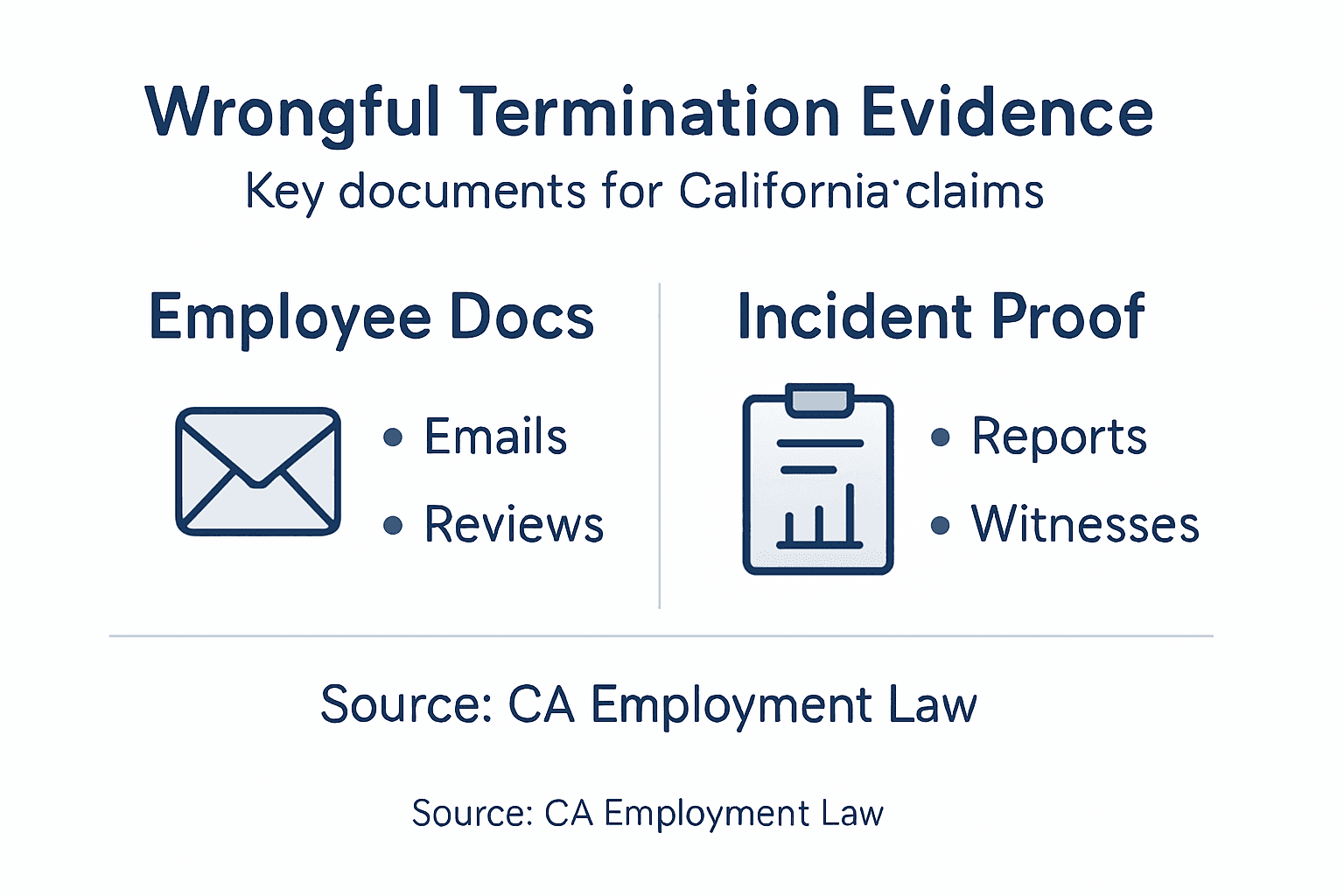
Critical evidence for a strong case typically includes:
- Termination letter and related correspondence
- Employment contract
- Performance reviews
- Email communications
- Witness statements
- Internal complaint records
- Disciplinary action documentation
- Chronological timeline of events
The reporting process involves several key steps for employees in Orange County:
- Gather comprehensive documentation
- Identify appropriate reporting agency (EEOC or state agency)
- Complete official intake forms
- Submit supporting evidence
- Participate in potential mediation proceedings
Employers must maintain rigorous documentation standards to protect themselves from potential legal challenges. This includes maintaining transparent, consistent records of performance evaluations, disciplinary actions, and termination rationales.
Successful claims often hinge on the quality and comprehensiveness of evidence presented. Employees must demonstrate a clear connection between their protected activities and the subsequent adverse employment action, requiring a nuanced approach to documentation and legal strategy.
This table summarizes documentation types and their significance in wrongful termination claims:
| Document Type | Use in Legal Case | Importance Level |
|---|---|---|
| Termination letter | Proves reason for dismissal | Critical |
| Email communications | Tracks sequences and context | High |
| Performance reviews | Establishes work history and merit | High |
| Witness statements | Corroborates employee account | Supportive |
Pro tip: Create a dedicated, organized digital folder with all relevant workplace documents, ensuring easy access and preservation of critical evidence for potential legal proceedings.
Risks, Challenges, and Common Employer Defenses
Wrongful termination cases in Orange County are complex legal battles where employers deploy strategic defenses to counter employee claims. Employer defenses often rely on demonstrating legitimate, non-discriminatory reasons for termination that withstand legal scrutiny.
Common employer defense strategies include:
- Proving documented poor performance
- Demonstrating consistent policy enforcement
- Highlighting legitimate business reasons for termination
- Showing absence of retaliatory motivation
- Proving adherence to at-will employment doctrine
- Presenting comprehensive disciplinary records
The most prevalent legal defenses employers utilize are:
- Legitimate performance issues documentation
- Consistent workplace policy application
- Business necessity justifications
- Lack of connection to protected activities
- Adherence to employment contract terms
Legal standards for termination require employers to maintain meticulous documentation that objectively justifies their employment decisions. Courts examine whether termination decisions stem from genuine business concerns or potentially discriminatory motivations.
Navigating these challenges requires employees to build robust cases that clearly demonstrate the connection between their protected activities and subsequent adverse employment actions. Employers will aggressively defend against wrongful termination claims by presenting comprehensive evidence of legitimate workplace performance issues.
Pro tip: Maintain a contemporaneous, objective record of all workplace interactions and performance evaluations to counter potential employer defense strategies.
Remedies and Next Legal Steps for Workers
Employees facing wrongful termination in Orange County have multiple legal avenues to pursue justice and compensation. Wrongful termination claims require strategic navigation through complex legal processes to secure appropriate remedies.
Potential remedies for workers include:
- Monetary damages
- Back pay
- Front pay
- Lost benefits
- Compensation for emotional distress
- Reinstatement to previous position
- Attorney fee recovery
- Punitive damages in cases of extreme misconduct
- Job reference restoration
- Career rehabilitation support
The typical legal steps for pursuing a wrongful termination claim involve:
- Document gathering and preservation
- Consulting with an employment attorney
- Filing administrative complaints
- Participating in mediation
- Potential litigation
California statute limitations require workers to act promptly, with most discrimination and retaliation claims needing filing within specific timeframes. Understanding these deadlines is crucial to preserving legal rights and potential compensation.
Successful claims often depend on comprehensive documentation, clear evidence of illegal termination motivations, and expert legal representation that can effectively challenge employer defenses.
Pro tip: Consult an employment attorney immediately after termination to preserve evidence and understand your precise legal timeline.
Protect Your Rights After Wrongful Termination in Orange County
Facing wrongful termination after reporting workplace misconduct can feel overwhelming and isolating. You deserve knowledgeable legal advocates who understand the complexities of protected activities, retaliation, and HR violations. At Serendib Law Firm, we specialize in Employment Law cases that address retaliation, discrimination, and wrongful termination claims backed by strong evidence and legal strategy.
If you have been terminated after engaging in protected activities such as reporting discrimination or whistleblowing, do not wait. Visit our Orange Archives | Serendib Law Firm to learn how we have helped employees in similar situations. Our team is committed to personalized and zealous advocacy to get you the compensation and justice you deserve. Contact us today at Serendib Law Firm for a free consultation and take the first step toward reclaiming your professional future.
Learn more about related workplace challenges like Harassment and protect yourself with expert legal guidance.
Frequently Asked Questions
What is wrongful termination after HR reports?
Wrongful termination occurs when an employer dismisses an employee for illegal reasons, such as retaliation for reporting workplace misconduct or participating in protected activities.
What are protected activities in the workplace?
Protected activities include actions such as reporting discrimination, participating in investigations, whistleblowing about unsafe practices, discussing wages, and filing complaints with HR or government agencies.
How can I prove wrongful termination in my claim?
To prove wrongful termination, you need to gather evidence that demonstrates a connection between your protected activity and your dismissal, including documentation such as performance reviews, email communications, and witness statements.
What remedies are available for wrongful termination in California?
Possible remedies include monetary damages (back pay, front pay), job reinstatement, attorney fee recovery, and compensation for emotional distress related to the wrongful termination.