
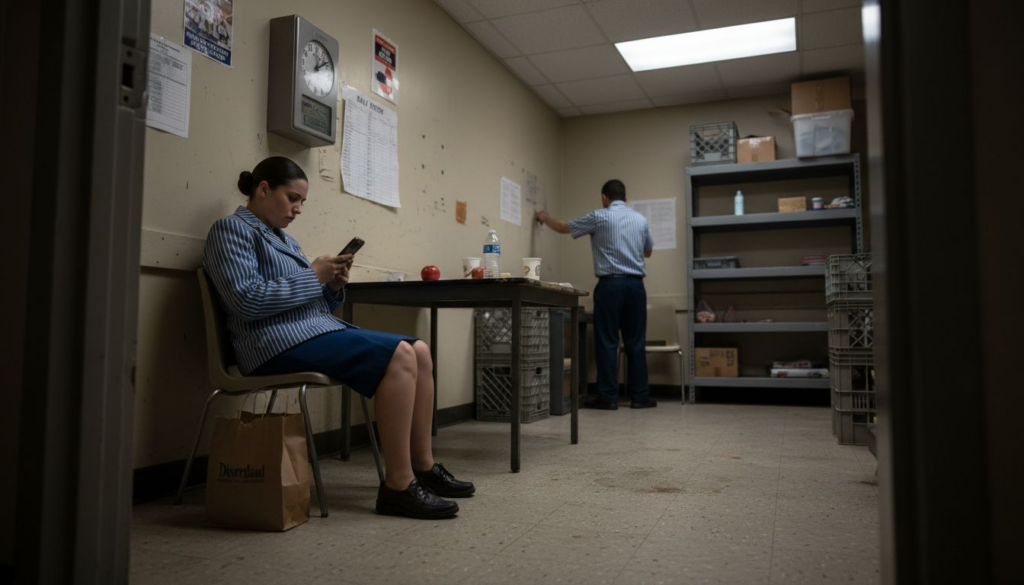
Working at Disneyland Resort in Anaheim can feel rewarding, but wage and hour violations turn that satisfaction into frustration. Cast members often face unpaid minutes before shifts, missed breaks, or incorrect overtime pay, directly impacting your earnings and rights. California labor law and the federal Fair Labor Standards Act protect your paycheck and work conditions. This guide explains how these rules apply to you and how legal representation can help address violations at Disneyland Resort.
Table of Contents
- What Are Wage and Hour Violations?
- Key Laws Affecting Disneyland Cast Members
- Common Violations at Disneyland Resort
- Legal Rights and Remedies for Cast Members
- Best Steps to Protect Your Workplace Rights
Key Takeaways
| Point | Details |
|---|---|
| Understanding Wage Violations | Wage and hour violations occur when employers fail to compensate workers as required by law, affecting overall earnings. |
| Key Legal Protections | The Fair Labor Standards Act and California state laws provide crucial protections, including minimum wage and overtime pay. |
| Documentation is Essential | Keeping accurate records of work hours and tasks performed strengthens your claims when violations occur. |
| Know Your Rights | Employees have the right to report violations without retaliation and should seek legal guidance if necessary. |
What Are Wage and Hour Violations?
Wage and hour violations happen when employers fail to pay workers what they legally owe. At Disneyland, cast members should understand exactly what these violations look like and how they affect your paycheck.
The federal Fair Labor Standards Act (FLSA) sets the rules for how employees must be paid. Under this law, employers must meet specific obligations regarding minimum wage, overtime compensation, and accurate record keeping.
Core Types of Violations
The most common wage and hour violations include:
- Failing to pay minimum wage for all hours worked
- Denying overtime pay when hours exceed 40 per week
- Misclassifying workers as exempt to avoid paying overtime
- Rounding time down to reduce total hours paid
- Off-the-clock work that goes uncompensated
- Not paying for breaks or requiring unpaid work during shifts
- Withholding final paychecks when an employee leaves
At theme parks like Disneyland, violations often involve cast members working before clocking in for shift setup or staying after clocking out for cleaning duties.
The Fair Labor Standards Act requires employers to compensate workers for all hours worked and pay overtime at one and a half times the regular rate for hours over 40 per week.
How Disneyland’s Issues Differ
Theme park employment presents unique wage violation patterns. Cast members frequently perform unpaid prep work before their official shift starts. You might arrive at your costume fitting area or equipment station 15 minutes early, but that time doesn’t count toward your pay.
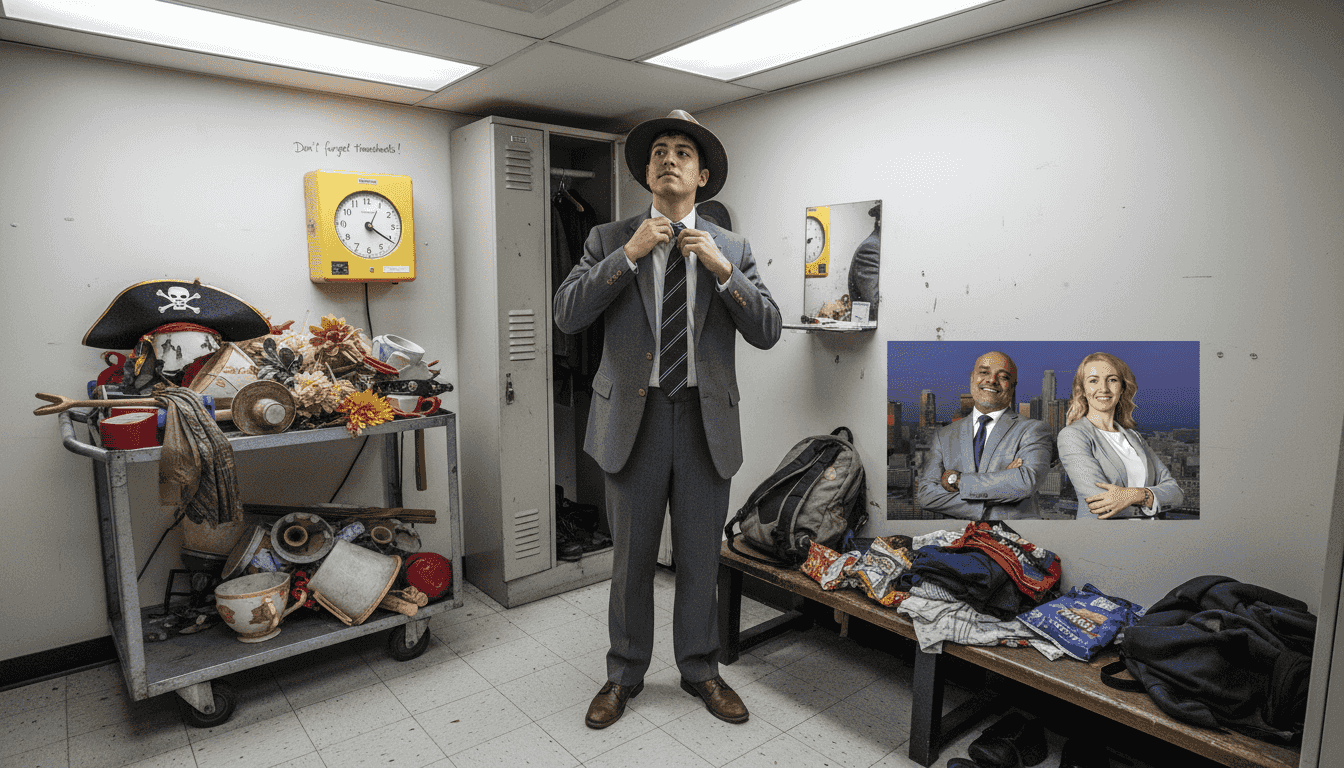
Similarly, end-of-shift cleanup often happens after clocking out. You’re still working, but the system shows you’ve already left for the day.
Disney properties have faced significant legal scrutiny. The company settled major wage theft claims affecting thousands of employees across California properties. Understanding these violations helps you recognize when your own pay might be short.
California’s Additional Requirements
California state law is stricter than federal law. Employers must pay overtime when daily hours exceed 8 hours, not just weekly totals. Wage theft in amusement park settings often involves these daily overtime violations that federal law alone wouldn’t catch.
Your employer must also:
- Pay for all time worked, no matter how short
- Provide meal and rest breaks with compensation if breaks are missed
- Keep accurate records of every hour you work
- Provide final paychecks promptly upon termination
Recognition Matters
Many cast members don’t realize they’re experiencing violations. Small amounts add up quickly across weeks and months of work. If you’re regularly working unpaid minutes or skipping paid breaks, you likely have a claim.
Your employment paperwork matters too. If you’re classified as exempt when you actually perform hourly duties, that’s a violation.
Pro tip: Keep personal records of your actual work hours, including time you spend setting up before clocking in and cleaning after clocking out, as this documentation strengthens any wage claim you file.
Key Laws Affecting Disneyland Cast Members
Multiple layers of law protect your rights as a Disneyland cast member. Federal rules set the floor, California state laws build higher protections, and local regulations add additional safeguards. Understanding which laws apply to you strengthens your ability to recognize violations.
You’re protected by more than just one set of rules. These laws overlap and work together, with California often providing stronger protections than federal standards alone.
Federal Laws That Apply
The Fair Labor Standards Act (FLSA) is the foundation of wage and hour protection nationwide. This law requires minimum wage payment and overtime compensation for all covered workers, including theme park employees.
Other federal laws affecting your work at Disneyland include:
- Title VII of the Civil Rights Act – Protects you from discrimination based on race, color, religion, sex, or national origin
- Family and Medical Leave Act (FMLA) – Provides unpaid, job-protected leave for qualifying medical situations
- Occupational Safety and Health Act (OSHA) – Ensures your workplace is safe and free from hazards
- Americans with Disabilities Act (ADA) – Requires reasonable accommodations for disabilities
These federal protections apply to most Disneyland positions regardless of whether you’re full-time or part-time.
California’s Stronger Protections
California state law goes further than federal requirements. The state sets its own minimum wage, which is currently higher than the federal minimum. Daily overtime rules are stricter too—you earn overtime after 8 hours in a single day, not just 40 hours per week.
California also mandates:
Here’s a comparison of federal and California wage laws relevant for Disneyland cast members:
| Legal Standard | Federal (FLSA) Rules | California State Rules |
|---|---|---|
| Minimum Wage | $7.25/hour nationwide | Higher, currently $16.00/hour |
| Overtime Eligibility | After 40 hours/week | After 8 hours/day or 40/week |
| Breaks Requirement | Not specifically required | Paid rest & unpaid meal breaks |
| Final Paycheck Timing | No specific requirement | Immediate payment upon termination |
- Meal and rest breaks – Paid 10-minute breaks and unpaid 30-minute meals when working 6+ hours
- Wage theft protections – Specific laws against underpaying or withholding wages
- Final paycheck rules – All wages must be paid immediately upon termination
- Pay stub accuracy – Detailed documentation of hours worked and deductions
California’s labor laws provide some of the strongest worker protections in the nation, and they apply to all cast members working at Disneyland in Anaheim.
Why Disneyland Cast Members Need to Know This
Theme park work has unique characteristics that create violation opportunities. Your shifts might involve setup work before clocking in, costume changes that take unpaid time, or cleaning after your shift ends. These situations fall under state and federal wage laws.
Union representation adds another layer. Some cast members have union protections that provide additional rights beyond what non-union employees receive.
Your classification as hourly or exempt matters enormously. Many Disneyland positions that should be hourly are incorrectly classified as exempt, eliminating overtime pay eligibility.
Local and Industry Standards
Anaheim has local labor protections in addition to state and federal law. Some provisions are negotiated through union contracts, which create enforceable rights for covered employees.
The combination of federal, state, and local rules creates comprehensive protection. However, employers often violate these laws through intentional misclassification or careless timekeeping practices.
Pro tip: Document which laws your employer cites in your employee handbook and compare them against actual state requirements—inconsistencies often reveal where violations are occurring.
Common Violations at Disneyland Resort
Disneyland has a documented pattern of wage and hour violations affecting cast members across multiple departments. Understanding the specific ways violations occur at this property helps you recognize when your pay is being stolen.
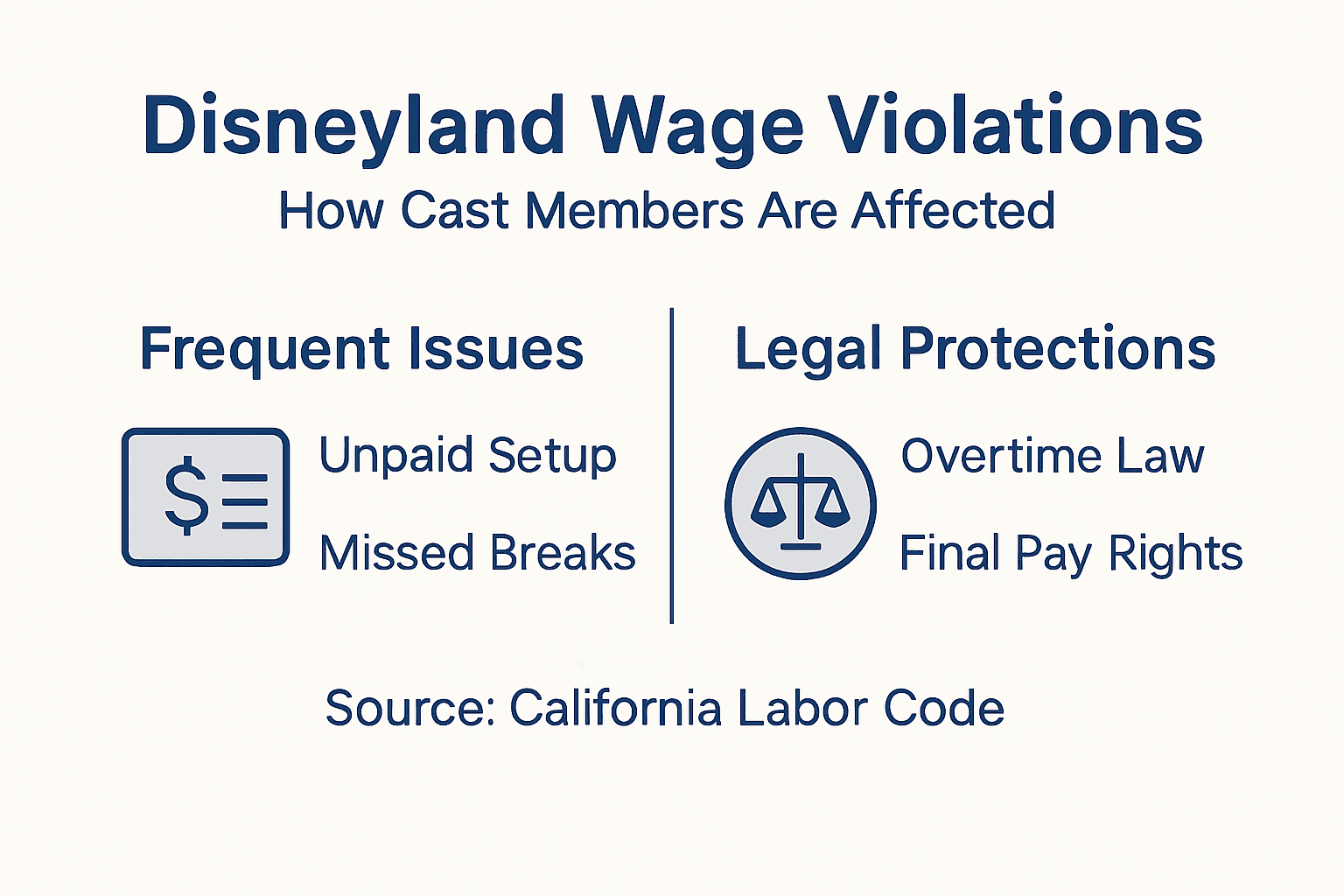
These aren’t accidental errors. They’re systematic practices that reduce labor costs at the expense of worker earnings.
Unpaid Work Before and After Shifts
The most common violation at Disneyland involves work performed outside paid hours. Cast members arrive early for costume fittings, equipment checks, or role briefings that aren’t compensated.
This happens consistently:
- Arriving 10-15 minutes before shift start for costume or appearance adjustments
- Completing setup tasks for your work area before clocking in
- Staying after clocking out to clean equipment or your work station
- Attending mandatory pre-shift briefings unpaid
- Waiting in lines for security checks without compensation
Your employer must pay for all time worked. If you’re regularly working unbilled minutes, those add up to hundreds of dollars monthly.
Improper Break Handling
Disneyland frequently violates meal and rest break requirements. Cast members are denied breaks, required to work through breaks, or given breaks too late in their shift.
California law is clear: you must receive meal and rest breaks within specific windows. A 10-minute paid rest break is required in each 4-hour segment. For shifts over 6 hours, an unpaid meal break must occur between hours 2 and 5.
Violations include:
- Not providing breaks because you’re too busy
- Requiring you to stay on property during breaks
- Offering breaks outside the legally mandated time windows
- Failing to pay for missed breaks
Misclassification and Overtime Denial
Many Disneyland positions should be classified as hourly and eligible for overtime, but employees are incorrectly classified as exempt. This eliminates overtime pay entirely.
Your position might be exempt only if you primarily perform management functions and earn above the threshold salary. Most cast member roles don’t meet these standards.
Overtimes violations also include improper shift scheduling practices that intentionally keep hours under 40 per week to avoid overtime obligations.
Recordkeeping Failures
Employers must maintain accurate records of all hours worked. Disneyland’s timekeeping systems sometimes “round down” minutes, showing you worked less than you actually did.
Other recordkeeping violations include:
- Deleting punch records without explanation
- Failing to record all hours actually worked
- Not providing itemized pay stubs showing hours and deductions
- Refusing to provide copies of time records when requested
Common wage and hour violations at theme parks include failure to pay for all work performed, improper overtime calculations, and inadequate record documentation.
Final Paycheck Issues
When cast members leave, Disneyland sometimes withholds portions of final paychecks or delays payment. This violates California law requiring immediate payment of all earned wages.
Final paycheck violations include holding back accrued vacation time, deducting for equipment allegedly lost, or simply not paying until weeks after termination.
Why These Violations Persist
These practices are intentional cost-cutting. The company saves money by not compensating work time. Individual violations might seem small, but across thousands of cast members and months of employment, they accumulate into millions of dollars.
Pro tip: Take screenshots of your time clock punch records immediately after each shift and photograph any written schedules—electronic records can be altered, but your documentation creates independent evidence.
Legal Rights and Remedies for Cast Members
You have powerful legal rights as a Disneyland cast member experiencing wage and hour violations. The law provides specific remedies that go beyond simply recovering unpaid wages—you can recover damages and hold your employer accountable.
Understanding your rights is the first step toward getting paid what you’re owed.
Your Core Rights
The Fair Labor Standards Act guarantees you the right to minimum wage and overtime compensation for all hours worked. This right exists regardless of what your employment contract says or how your employer classifies you.
You also have these fundamental protections:
- The right to accurate timekeeping and pay stubs
- Protection from retaliation for reporting violations
- The right to inspect your own employment records
- The right to organize with coworkers for better conditions
- The right to file complaints without fear of punishment
These rights cannot be waived. You cannot agree to give them up, even if your employer asks you to sign a document saying so.
Available Financial Remedies
When violations occur, you’re entitled to multiple types of compensation. Back wages cover all unpaid hours and overtime you worked. This is the foundation of any wage claim.
Beyond back wages, California law provides:
- Liquidated damages – An additional penalty equal to the unpaid wages
- Penalties for violations – Per-violation fines that the employer must pay
- Attorney’s fees – Your employer covers legal costs when you win
- Interest – Your unpaid wages earn interest from when they were due
If Disneyland violated break requirements, you may recover one hour of pay at your regular rate for each day the violation occurred. These add up quickly across months of employment.
How to File a Complaint
You have multiple paths to pursue your claim. California’s Division of Labor Standards Enforcement investigates wage theft cases directly. Filing a wage claim with the state agency is free and doesn’t require an attorney.
The federal Wage and Hour Division also investigates FLSA violations. You can file with either agency or both simultaneously.
Private lawsuits are another option. An employment attorney can file a case on your behalf, potentially as a class action if multiple cast members experienced similar violations.
Protection Against Retaliation
Your employer cannot punish you for asserting your legal rights. This means no firing, demotion, reduced hours, or other negative actions in response to:
- Filing a wage complaint
- Refusing to work unpaid hours
- Requesting your time records
- Speaking to a lawyer about violations
- Organizing with coworkers
Retaliation is itself a violation with additional remedies available. If your employer takes negative action after you complain, you have a separate legal claim.
You are protected from retaliation when exercising your labor law rights, and violations of this protection carry significant legal consequences for employers.
Union and Collective Protections
If you’re part of a union, your union contract provides additional protections. Union representation ensures greater negotiating power for wage disputes and grievance procedures.
Union members can file grievances through their union, which often resolves violations faster than government agencies.
Why You Should Act
Violations don’t stop on their own. Employers continue the same practices until forced to change. Filing a claim creates a record and stops future violations for you and potentially others.
The statute of limitations for wage claims is lengthy, giving you time to gather documentation and seek legal representation.
Pro tip: Before filing any complaint, consult with an employment attorney who specializes in wage and hour law—they can identify all violations in your situation and maximize your total recovery.
Best Steps to Protect Your Workplace Rights
Protecting your rights requires active documentation and clear communication. Start now, while you’re still employed, to build a strong record of violations. This documentation becomes critical evidence if you later file a complaint or lawsuit.
Your actions today determine what you can prove tomorrow.
Document Everything Systematically
Keep detailed records of your actual work hours, not what your time clock shows. Write down arrival and departure times daily, noting any unpaid work before or after shifts.
Your documentation should include:
- Daily arrival and departure times with dates
- Tasks performed before clocking in and after clocking out
- Breaks you were denied or worked through
- Screenshots of time clock records immediately after shifts
- Copies of pay stubs with hours and calculations
- Emails or messages about work assignments
- Names of witnesses to violations
Store these records safely outside the workplace. Use a personal email or cloud storage that your employer cannot access. Take photos of physical documents to create backups.
This table summarizes practical evidence to document wage violations for stronger claims:
| Evidence Type | Description | Impact on Case |
|---|---|---|
| Daily Work Log | Written arrival/departure times | Shows actual hours worked |
| Time Clock Screenshots | Photos after each shift | Reveals discrepancies in records |
| Pay Stub Copies | All pay stubs with calculations | Validates wage and break payments |
| Witness Names | Coworkers observing violations | Supports credibility of your claims |
Understand Your Rights Under Law
Understanding your employment rights and protections is fundamental to protecting yourself. Read your employee handbook carefully and compare it against actual California labor law requirements.
Know these core protections:
- Right to minimum wage for all hours worked
- Right to overtime compensation over 8 hours daily
- Right to paid breaks and meal periods
- Right to accurate pay stubs
- Right to inspect your employment records
- Right to refuse unpaid work without retaliation
Your handbook cannot override state law. If it says something contradicts California requirements, the state law controls.
Communicate Concerns Clearly
Report violations to your supervisor or HR in writing. Send emails, not just verbal complaints. This creates a documented record that you raised concerns before filing external complaints.
Be specific. Instead of “I’m not getting paid enough,” write: “I arrived 15 minutes early on January 10 for costume fitting but did not clock in. This is unpaid work that should be compensated.”
Keep copies of all communications with your employer.
Know When to Stop and Seek Help
Don’t wait for violations to resolve themselves. Once you recognize a pattern of unpaid work or denied breaks, consult an employment attorney. Many offer free initial consultations.
An attorney can review your specific situation, identify all violations, and explain your options. This early consultation protects you and ensures you don’t miss important deadlines.
Document violations immediately as they occur, and seek legal guidance before too much time passes—early intervention strengthens your position significantly.
Protect Against Retaliation
Your employer cannot punish you for asserting legal rights. If negative actions occur after you file a complaint or consult a lawyer, that’s retaliation—another legal violation.
Document any retaliation:
- Schedule changes after you report violations
- Reduced hours or sudden demotions
- Negative performance reviews after complaints
- Hostile treatment from management
- Exclusion from shifts or opportunities
Stay Informed and Connected
Join with coworkers experiencing similar violations. Collective action is protected by law. Union representatives can provide additional support and guidance specific to Disneyland operations.
Attend union meetings and stay informed about labor standards. Know your rights before violations occur.
Pro tip: Create a shared document with trusted coworkers documenting daily violations across your department—collective evidence is more powerful than individual complaints and shows a pattern the employer cannot dismiss.
Protect Your Rights Against Disneyland Wage and Hour Violations
If you are a Disneyland cast member experiencing unpaid work, denied breaks, or misclassification, you do not have to face these challenges alone. Wage and hour violations such as unpaid pre-shift setup time, missed meal breaks, and improper overtime denial directly affect your hard-earned wages and your well-being. You deserve legal advocates who understand the complex protections under federal and California law and will fight to secure the full pay and damages you are owed.
At Serendi Law, our experienced team is dedicated to helping Disneyland employees hold their employers accountable. We provide personalized employment law representation and offer free consultations to evaluate your claim. Don’t wait until your wages have been stolen for months or years. Act now to protect your rights, recover unpaid wages, and stop retaliation before it worsens. Start your path to justice today by contacting us at Serendi Law for trusted guidance on your wage and hour concerns.
Frequently Asked Questions
What are common wage and hour violations that affect Disneyland cast members?
Common violations include failing to pay minimum wage, denying overtime pay, misclassifying workers as exempt, rounding down work hours, requiring unpaid off-the-clock work, not compensating for breaks, and withholding final paychecks.
How does California law protect Disneyland cast members regarding wage and hour violations?
California law offers greater protections than federal law, including higher minimum wage standards, daily overtime rules, and requirements for meal and rest breaks. Employers must also keep accurate work records and pay final wages promptly upon termination.
What should I do if I believe I am experiencing wage and hour violations at Disneyland?
Document your actual work hours, including unpaid time before and after shifts. Report your concerns in writing to your supervisor or HR. You can file a complaint with California’s Division of Labor Standards Enforcement or consult an employment attorney for guidance on your options.
Are there any protections against retaliation for reporting wage violations at Disneyland?
Yes, you are protected from retaliation for asserting your rights related to wage and hour violations. This includes actions like being fired, demoted, or having your hours reduced in response to your complaint.
Recommended
- Disneyland Shift Scheduling Lawsuits: Why Anaheim Workers Should Care
- Wage Theft in Buena Park – Impact on Amusement Workers | Serendib Law Firm
- Unpaid Overtime Claims in Anaheim Hospitality – Employee Rights and Employer Duties | Serendib Law Firm
- Disneyland Union Contract Talks—Protections for Cast Members | Serendib Law Firm
- Accessibility Workflow For Guests: Ensuring Inclusive Visits | Flight Of Aloha
- Vocal Disorders in Performers – Protecting Your Career – TMRG Solutions