
TL;DR:
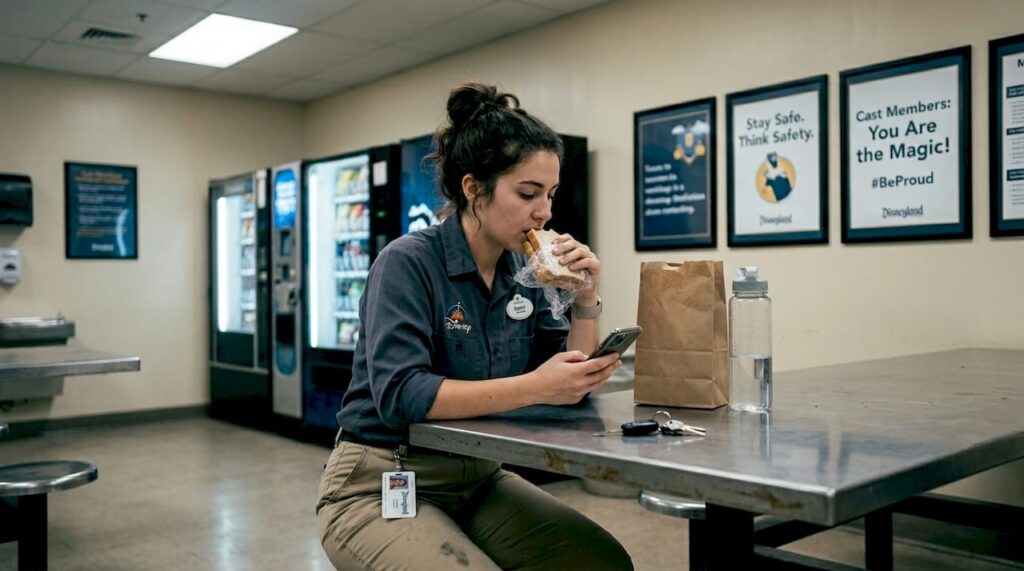
- Disneyland cast members are often pressured to skip or delay legally required meal breaks despite union protections.
- Violations include late, interrupted, or missed breaks, leading to fatigue and increased injury risk.
- Employees should document violations, report to unions, and seek legal help to enforce their meal break rights.
Most Disneyland Resort cast members assume that between their union card and Disney’s polished HR policies, their meal breaks are locked in. The reality is messier. Theme park environments create edge cases and systemic compliance gaps that written rules alone cannot fix. Supervisors face relentless guest volume pressure. Coverage gaps appear without warning. And many employees quietly skip breaks rather than risk conflict with management. This guide breaks down your actual legal rights, how union contracts apply, what violations look like in practice, and exactly what to do when your breaks are being denied.
Table of Contents
- Understanding meal break laws at Disneyland Resort
- Common meal break violations and their impact
- How union contracts influence break enforcement
- What to do if your meal break is violated
- The hidden pressures behind meal break violations: What most guides miss
- Get legal help for meal break violations in Anaheim
- Frequently asked questions
Key Takeaways
| Point | Details |
|---|---|
| Union contracts are not a guarantee | Even with union agreements, employees can face meal break violations due to operational pressures. |
| Document every violation | Keeping detailed records of missed breaks strengthens your complaint and legal case. |
| Legal help is available | Employment law attorneys can guide you through union complaints and provide representation if your rights are ignored. |
| Know your complaint steps | Reporting through both union channels and state law is crucial for resolving meal break issues. |
Understanding meal break laws at Disneyland Resort
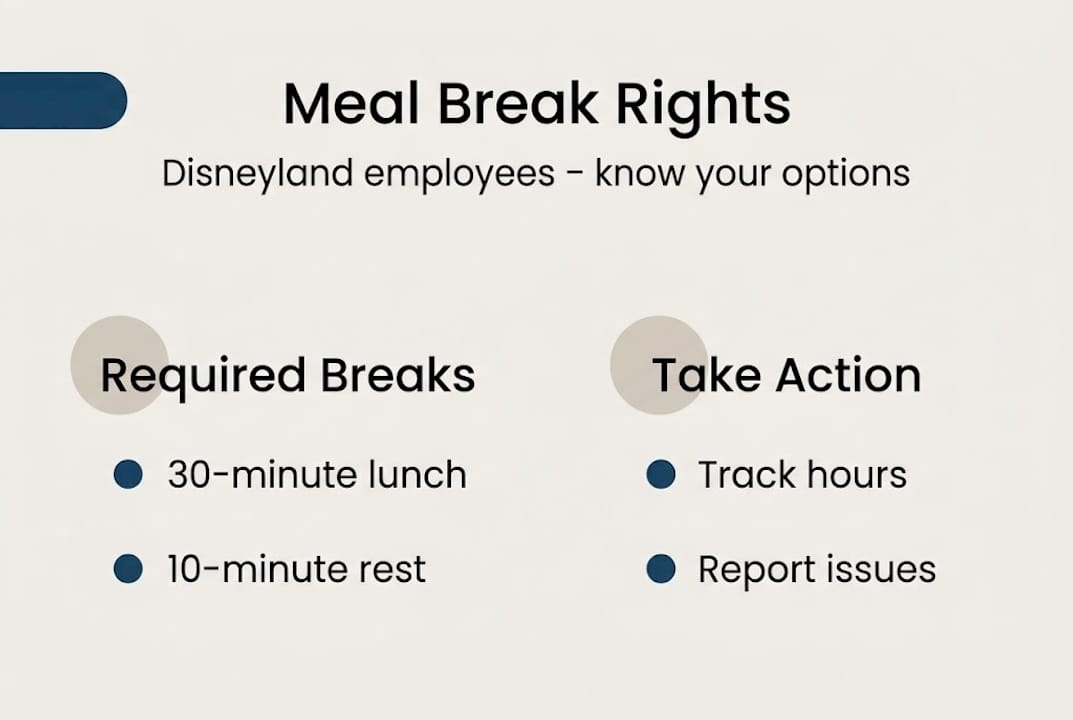
California sets a clear floor for meal breaks. Under state law, any employee working more than five hours in a shift is entitled to a 30-minute, uninterrupted meal break. Shifts over ten hours trigger a second 30-minute break. These aren’t suggestions. They are enforceable legal rights, and if your employer fails to provide them, you are owed one hour of additional pay at your regular rate for each missed break. That penalty is called a “premium pay” obligation.
California meal break laws set a baseline, but Disneyland employees often have added protections layered on top through union agreements. The UFCW (United Food and Commercial Workers) contract covering Disneyland Resort for 2024 through 2027 outlines break procedures in detail, specifying timing, scheduling, and relief coverage. On paper, that sounds comprehensive.
Here is the gap: high guest volume, short-staffed shifts, and unspoken workplace culture create consistent pressure that pulls cast members away from breaks they are legally owed. The break violations in hospitality industry are not always dramatic. They are often quiet, repeated, and normalized over time.
Key protections California law and the UFCW contract provide:
- A 30-minute unpaid meal break for shifts exceeding five hours
- A second meal break for shifts exceeding ten hours
- Premium pay (one hour at your regular rate) for each break violation
- Union grievance procedures if breaks are routinely denied or delayed
- Protection against retaliation for asserting your break rights
Understanding union contract protections is critical because many employees mistakenly believe that if Disney is not explicitly telling them to skip breaks, nothing illegal is happening. Indirect pressure, inadequate coverage, and shift design can all constitute violations.
Pro Tip: Save your pay stubs and shift records. If breaks are being skipped, your pay records are your first line of evidence when filing a claim.
Disney’s own employee FAQ page addresses scheduling and benefits, but it does not give cast members a full picture of their legal rights when violations occur. Knowing both the legal framework and your union agreement puts you in a far stronger position.
Common meal break violations and their impact
Violations at Disneyland Resort do not always look like a manager saying “you cannot take a break.” Most of the time, they are quieter and more corrosive. Understanding what they actually look like is the first step toward recognizing when your rights are being undermined.
Common violations cast members report:
- Breaks starting 45 minutes to an hour late due to coverage gaps
- Supervisors asking cast members to “hold off” on breaks during peak hours
- Meals interrupted by guests, supervisor requests, or operational needs
- No clear break schedule communicated at the start of a shift
- Employees returning from breaks early because of peer or management pressure
Systemic break violations are reported despite Disney’s claimed compliance with its own policies. That gap between policy and practice is exactly where legal liability lives.
| What the union contract says | What employees often report |
|---|---|
| Breaks scheduled at defined intervals | Breaks pushed back during peak hours |
| Uninterrupted 30-minute meal break | Breaks cut short by operational demands |
| Relief coverage arranged in advance | No replacement available when break time arrives |
| Grievance procedure available for violations | Fear of retaliation for filing complaints |
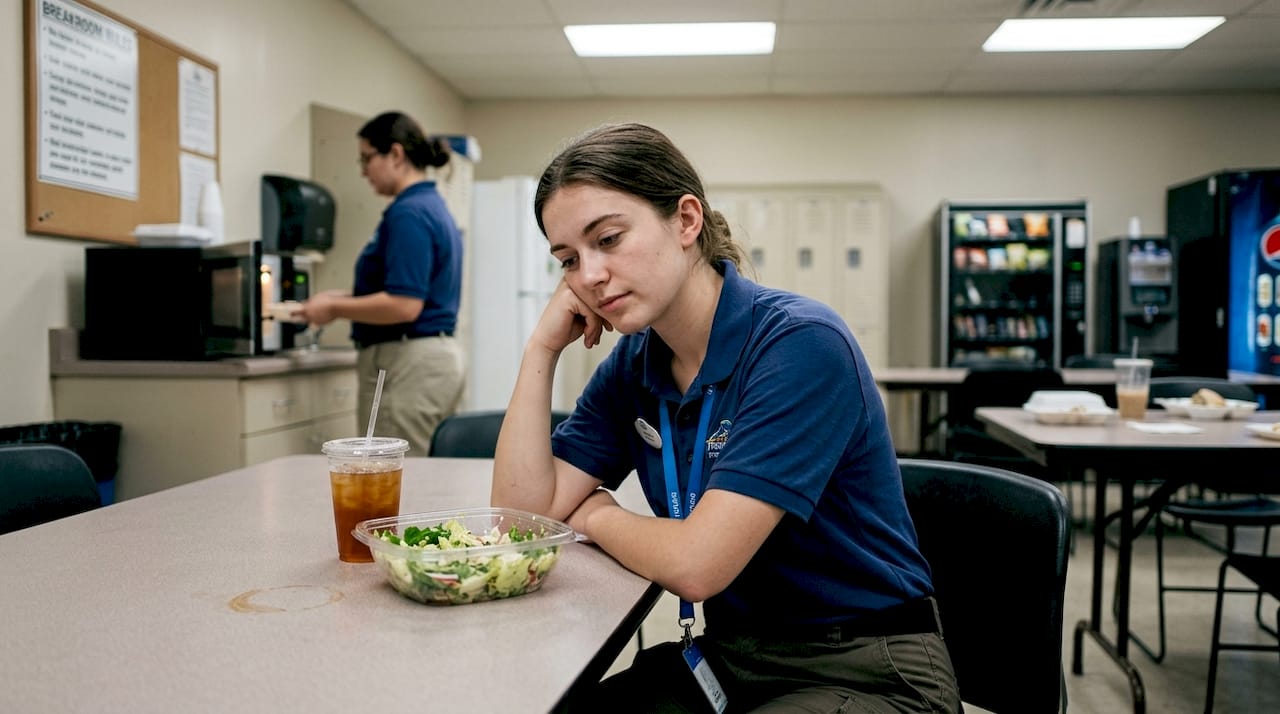
The physical and emotional toll of missed breaks is real. Cast members in physical roles, like those in attractions, custodial, or food service, face fatigue, dehydration, and injury risk when breaks are skipped. Over weeks and months, this contributes to burnout and higher turnover. Disneyland wage and hour violations follow a pattern: individual cast members feel alone in the experience, but the problem is often structural.
Looking at similar situations at other theme parks is instructive. Knott’s Berry Farm break violations have surfaced with strikingly similar patterns, confirming this is an industry-wide issue and not isolated to one employer.
Pro Tip: If your break is late or missed, note the exact time, the reason given, and the name of the supervisor on duty. Brief written records, even in your phone’s notes app, become powerful documentation in a legal claim.
The Disneyland union contract sets out the intended standard. The gap between that standard and daily operations is where most violations live.
How union contracts influence break enforcement
The UFCW 2024 to 2027 contract is a detailed document that covers pay, scheduling, benefits, and grievance procedures for thousands of Disneyland cast members. When it comes to meal and rest breaks, the contract does provide meaningful protections. But a contract is only as strong as its enforcement.
Union contract stipulations on break rights are clear, but reports from employees indicate systemic pressure and frequent violations in practice. Here is how the enforcement dynamic typically plays out.
Key contract provisions on meal breaks:
- Defined break timing windows tied to shift length
- Employer obligation to arrange relief coverage
- Grievance process for employees to report violations
- Escalation procedures if initial complaints are ignored
- Protections against retaliation for using grievance procedures
| Reported violation type | Contract protection | Enforcement challenge |
|---|---|---|
| Late breaks | Timing requirements specified | Proof of pattern required |
| Skipped second meal break | Second break mandated for 10+ hour shifts | Employees often don’t track shift length |
| Interrupted breaks | Uninterrupted break required | Difficult to document in real time |
| No relief coverage | Employer must arrange coverage | Coverage gaps treated as operational normal |
“Even with a strong union contract in place, the day-to-day pressure on cast members to keep operations running can quietly override what the contract guarantees. Knowing you have a grievance right and actually using it are two very different things.”
Filing a union grievance can feel intimidating, especially in a workplace where cast members worry about being labeled as troublemakers. That fear is understandable. But the union grievance process exists precisely because violations happen, and union reps have both the training and the standing to push back on management on your behalf.
Disney’s official response to break compliance questions points to its policies and systems. Employee accounts, however, describe a workplace where operational demands routinely take priority. Union contract discussions with a knowledgeable attorney can help you understand whether what you are experiencing qualifies as a legal violation, not just a procedural inconvenience.
The Disney employee FAQ confirms that policies exist, but cast members navigating violations need more than a policy document. They need to know what recourse looks like in practice.
What to do if your meal break is violated
If your meal breaks are being missed, delayed, or cut short, taking action is not just possible. It is necessary. Union procedures and employment law both provide recourse for employees dealing with persistent break violations. Here is a clear, step-by-step path forward.
- Document every violation. Write down the date, shift time, break time you should have received, actual break time (if any), the reason given for the delay or denial, and the supervisor present. Do this immediately after each incident, while details are fresh.
- Report to your direct supervisor. Put the complaint in writing when possible, even a brief email. A paper trail matters. This step creates a record that you raised the issue before escalating.
- Contact your union representative. Your UFCW rep is your first formal advocate. They can review the UFCW contract provisions that apply to your situation and initiate the grievance process on your behalf.
- File a formal union grievance. If verbal complaints go nowhere, file a written grievance through UFCW’s established process. This creates an official record and triggers Disney’s obligation to respond within a set timeframe.
- Consult an employment attorney. If grievances are ignored, denied, or result in retaliation, filing meal break complaints through the legal system becomes the most powerful option. California’s Labor Commissioner and civil courts can order premium pay and penalties.
- Explore wage lawsuit options. Disneyland wage lawsuits have been filed over exactly these types of violations. An attorney can assess whether your situation warrants individual or class action claims.
Pro Tip: Never waive your break rights verbally or in writing. Some employees are asked to sign documents acknowledging they voluntarily skipped a break. If this happens, speak to an attorney before signing anything.
Taking these steps protects you now and strengthens any future legal claim. The combination of your documentation, the union grievance record, and legal counsel creates a complete picture of what you experienced.
The hidden pressures behind meal break violations: What most guides miss
Most articles about meal break violations focus on the rules. California law says this. The union contract says that. Follow these steps. What rarely gets discussed is the cultural machinery that makes violations so persistent even in heavily regulated environments like Disneyland Resort.
The pressure is rarely explicit. It is a shift that starts understaffed. A supervisor visibly stressed about guest wait times. A coworker who never takes their full break without comment. Over time, these signals teach cast members that skipping or shortening breaks is what “good” employees do. That is not compliance. That is workplace conditioning.
Theme park environments create unique labor compliance edge cases that generic HR checklists do not account for. The guest-facing nature of the work, the unpredictability of crowd surges, and the team-pressure culture combine to create conditions where individual rights quietly erode. Internal complaints alone rarely fix structural problems.
This is why seeking outside legal guidance matters even before things feel serious. Shift scheduling lawsuits at Disneyland have revealed that individual experiences of unfairness often reflect employer-wide patterns. An employment attorney can identify whether what you are experiencing is a one-off or part of a larger, actionable trend. You deserve more than a policy promise.
Get legal help for meal break violations in Anaheim
If you are a Disneyland Resort cast member dealing with missed, delayed, or pressured breaks, you do not have to navigate this alone. At Serendib Law Firm, we represent theme park and hospitality workers across Orange County who are tired of having their rights quietly disregarded. Our employment lawyers in Anaheim understand the specific dynamics of Disneyland’s work environment, from union contract enforcement to California’s strict wage and hour laws. We offer free consultations and handle select employment cases on contingency, meaning you pay nothing unless we recover for you. Reach out to our employment law attorneys today and find out exactly where you stand.
Frequently asked questions
What should I do if my supervisor pressures me to skip meal breaks at Disneyland Resort?
Document each incident in writing with the date, time, and supervisor’s name, then report it to your union rep. If pressure continues, union procedures and legal options are both available to protect you.
Does the union contract at Disneyland guarantee meal breaks for all employees?
The UFCW contract outlines meal break rights and grievance procedures clearly, but employees continue to report real-world violations despite those written protections.
Are meal break violations at Disneyland Resort a widespread problem?
Reported violations suggest systemic issues, particularly during high guest volume periods, though large-scale official data tracking these incidents remains limited.
How can I file a complaint about a meal break violation at Disneyland Resort?
Start with your union’s formal grievance process using the UFCW contract procedures, and contact an employment attorney if the issue is ignored or you face any form of retaliation.