
TL;DR:
- Language discrimination in Garden Grove manufacturing includes promotion denial, English-only rules, and accent harassment.
- Laws like Title VII and FEHA protect workers regardless of immigration status, offering remedies like back pay and damages.
- Document incidents early, report internally, and file complaints within legal deadlines to seek justice effectively.
Many manufacturing workers in Garden Grove assume that workplace discrimination only becomes a legal issue when someone uses a racial slur or fires you outright. The reality is far more layered. Language-based promotion denials, English-only policies, and accent harassment are all recognized forms of national origin discrimination under both federal and California law. Garden Grove’s manufacturing sector draws workers from dozens of linguistic backgrounds, making language-related conflicts more common and more complex than most employees realize. This guide walks you through what language discrimination actually looks like on the factory floor, what the law says, how to build your case, and what steps to take next.
Table of Contents
- Understanding language discrimination in manufacturing jobs
- Laws that protect you from language discrimination
- Recognizing and documenting language discrimination on the job
- How to address language discrimination: Filing complaints and seeking remedies
- A hard truth about language discrimination claims in Garden Grove manufacturing
- Connect with experienced employment law advocates
- Frequently asked questions
Key Takeaways
| Point | Details |
|---|---|
| Language discrimination is illegal | Both federal and California law ban discrimination based on language or accent at work. |
| Diverse workplaces still face issues | Even in Garden Grove’s multilingual manufacturing, unfair language policies can occur. |
| Document and act quickly | Keep records of discrimination and seek support promptly for the best results. |
| Remedies are available | You can win back pay, job reinstatement, and changes in company policy if your claim is successful. |
Understanding language discrimination in manufacturing jobs
Language discrimination is not a standalone legal category. It sits under the broader umbrella of national origin discrimination, which is illegal under both federal and California law. When your employer treats you differently because of your accent, your primary language, or your fluency level, that treatment is tied to where you come from and who you are. That connection is what makes it actionable.
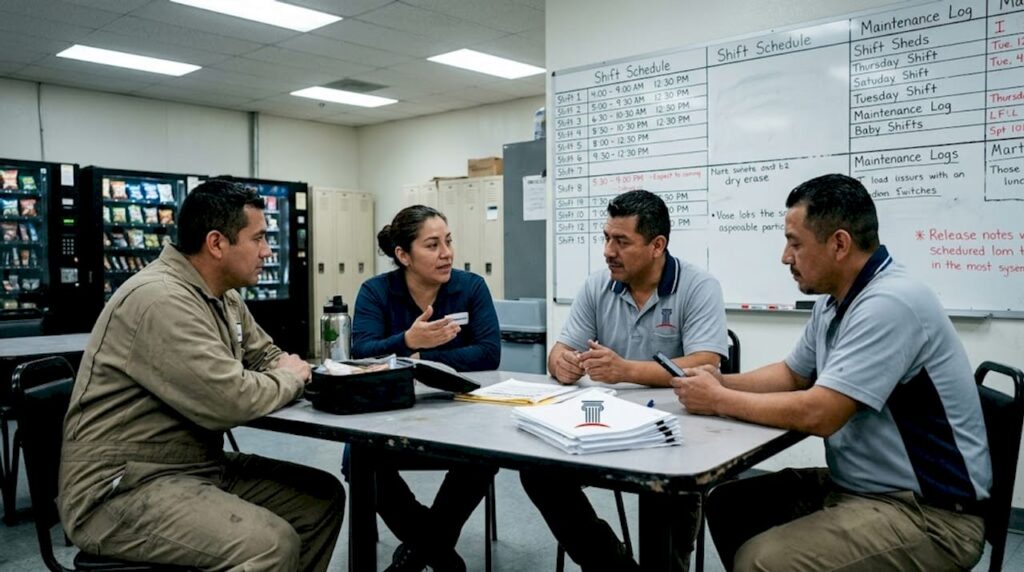
In Garden Grove manufacturing plants, this discrimination shows up in specific ways. A supervisor might pass you over for a lead position and tell you that your accent makes communication too difficult. A manager might enforce an English-only rule on the production floor but apply it selectively, only to workers from certain backgrounds. You might be moved to a less desirable shift after speaking your native language with coworkers. A colleague might mock your pronunciation in front of others, creating a hostile work environment. These are not minor workplace grievances. They are legally significant events.
Garden Grove’s manufacturing workforce reflects the broader California picture. California manufacturing is approximately 60% minority, with Hispanic workers making up around 34% and Asian workers between 14% and 22%. This diversity is a strength, but it also creates conditions where language bias can thrive if employers are not actively working against it.
“While no specific public cases on language discrimination have been reported in Garden Grove manufacturing, general vulnerabilities in diverse workplaces are well documented.” Understanding those vulnerabilities is the first step toward protecting yourself.
Here is a quick comparison of how the law defines language discrimination versus how it actually appears at work:
| Legal definition | Real-world example |
|---|---|
| Adverse action tied to national origin | Denied promotion due to accent |
| Non-essential English-only policy | Told to speak only English on break |
| Hostile work environment | Coworkers mocking your pronunciation |
| Disparate enforcement of rules | Policy applied only to certain ethnic groups |
Common scenarios workers report include:
- Being told a role requires “clearer English” with no formal language requirement on file
- Receiving lower performance reviews after speaking a language other than English
- Being excluded from safety trainings that were not offered in your language
- Facing jokes or comments about your accent from supervisors or coworkers
For a broader look at national origin claims overview and how they connect to language issues, it helps to see the full legal picture before deciding how to act.
Laws that protect you from language discrimination
Knowing what happened to you is one thing. Knowing what law backs you up is another. Several overlapping legal frameworks protect manufacturing workers in Garden Grove from language discrimination.
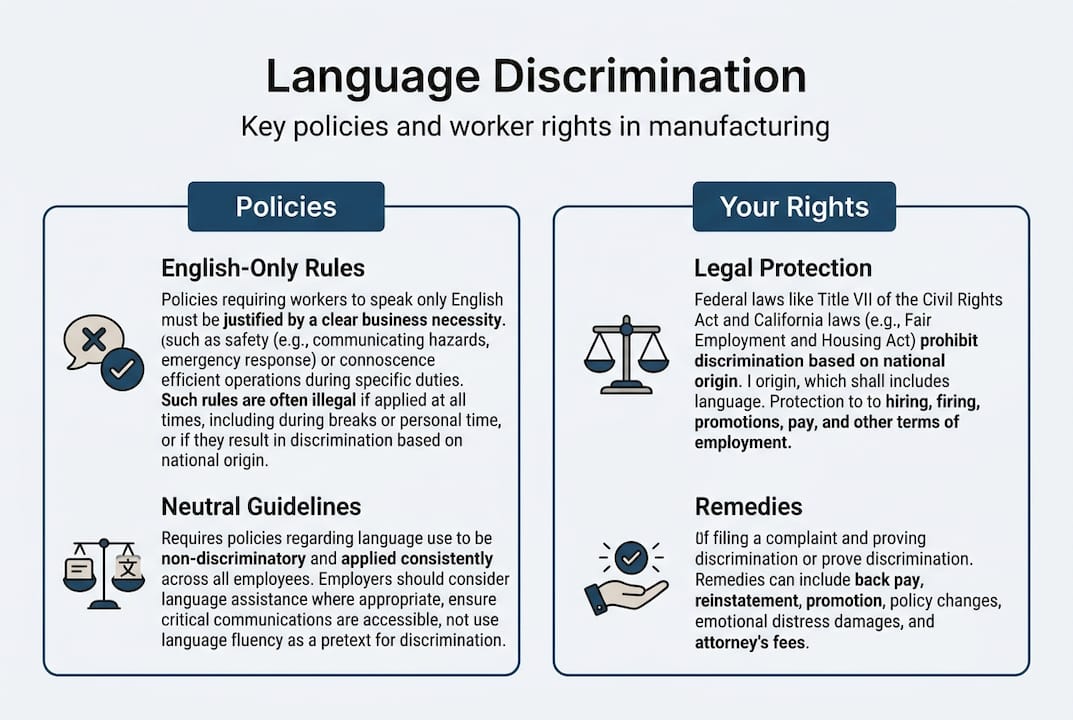
Title VII of the Civil Rights Act of 1964 is the federal foundation. It prohibits employment discrimination based on national origin, which courts and the EEOC (Equal Employment Opportunity Commission) have consistently interpreted to cover language-based treatment. California’s FEHA (Fair Employment and Housing Act) goes further, offering broader protections and covering employers with five or more employees. The CRD (Civil Rights Department, formerly DFEH) enforces FEHA at the state level.
One of the most important facts about language-based discrimination protections in California is that they apply to everyone, regardless of immigration status. Undocumented workers are protected under FEHA, which means your employer cannot use your status as a reason to ignore your rights or threaten you into silence.
Here is a summary of your key filing options and remedies:
| Agency | Deadline to file | Potential remedies |
|---|---|---|
| EEOC (federal) | 180 to 300 days from incident | Back pay, reinstatement, damages |
| CRD (California) | 1 to 3 years depending on claim | Back pay, policy changes, emotional distress damages |
Your key legal rights as a manufacturing employee in Garden Grove:
- The right to be free from discrimination based on your accent or primary language
- The right to work under English-only policies only when they are genuinely necessary for safety
- The right to receive workplace accommodations for language barriers where reasonable
- The right to file a complaint without fear of retaliation
- The right to seek back pay, reinstatement, and damages if discrimination is proven
California courts have also interpreted employee legal rights broadly, meaning that even subtle patterns of language-based treatment can form the basis of a valid claim. Workers in cities like Little Saigon face similar issues, and Little Saigon discrimination rights cases offer useful precedent for Garden Grove employees.
Pro Tip: Do not wait until you are fired or demoted to speak with an attorney. Many claims are stronger when you consult a lawyer early, before evidence disappears and deadlines pass.
Recognizing and documenting language discrimination on the job
Understanding your rights is only part of the battle. You also need to recognize discrimination when it happens and put your case together the right way.
Some signs are obvious. Others are subtle. Watch for these patterns:
- You are passed over for advancement while less experienced coworkers who speak English as a first language are promoted
- Your employer suddenly enforces an English-only rule after you filed a complaint or joined a union
- You receive written warnings for behavior that English-speaking coworkers do without consequence
- You are excluded from meetings or briefings conducted in English without translation support
When you notice these patterns, start documenting immediately. Documentation should include dates, witnesses, and emails, and early legal consultation is especially valuable for building a strong record.
Here is a step-by-step approach to building your documentation:
- Write down what happened as soon as possible, including the exact date, time, location, and what was said or done
- Note the names of anyone who witnessed the incident, even if they did not intervene
- Save any written communications, including texts, emails, or posted notices related to the incident
- Keep copies of your performance reviews, schedules, and any disciplinary notices
- Record any changes to your shift, pay, or job duties that followed a language-related event
- Keep a personal log outside of work, not on a company device
Strong evidence types to gather include:
- Text messages or emails from supervisors referencing your language or accent
- Witness statements from coworkers who saw or heard the discrimination
- Copies of English-only policies posted in the workplace
- Payroll records showing pay differences between you and similarly situated coworkers
- Your own written notes with specific dates and details
For more on documentation best practices and what courts look for in discrimination cases, reviewing those standards early can save you significant trouble later.
Pro Tip: Store your documentation somewhere your employer cannot access, like a personal email account or a folder at home. Losing evidence because it was saved on a work computer is a preventable mistake.
Reaching out to employment lawyer support before filing anything gives you a clearer picture of what your evidence is actually worth.
How to address language discrimination: Filing complaints and seeking remedies
Once your evidence is together, you are ready to take action. Here is how the complaint process works and what you could realistically achieve.
- Report internally first. File a written complaint with your HR department or a supervisor above the person who discriminated against you. Keep a copy of everything you submit.
- File with the EEOC or CRD. If internal reporting does not resolve the issue, file a charge with the EEOC within 180 to 300 days, or with the CRD within 1 to 3 years. Filing with the EEOC or CRD can lead to remedies like back pay, reinstatement, changes to policies, and financial damages.
- Cooperate with the investigation. Both agencies will investigate your claim. Provide all documentation you have gathered and be consistent in your account.
- Consider mediation. Both the EEOC and CRD offer mediation as a faster path to resolution. Some cases settle here without going further.
- Pursue litigation if necessary. If the agency process does not resolve your claim, you may receive a right-to-sue letter and can file a lawsuit in court.
Potential remedies available to you include:
- Back pay for wages lost due to discrimination
- Reinstatement to your former position or a comparable one
- Changes to workplace policies that caused the harm
- Compensatory damages for emotional distress
- Punitive damages in cases of especially egregious conduct
One critical protection: retaliation for speaking out or participating in an investigation is prohibited under both federal and California law. If your employer cuts your hours, reassigns you, or creates a worse work environment after you file a complaint, that retaliation is itself a separate legal violation.
Connecting with workplace harassment lawyers or retaliation legal help early in this process can make a real difference in the outcome.
A hard truth about language discrimination claims in Garden Grove manufacturing
Most guides on language discrimination stop at explaining the law. Here is what they leave out.
The vast majority of language discrimination cases never make headlines. They are settled quietly, or they never get filed at all because workers are afraid. In a manufacturing environment where many employees depend on the same employer for their livelihood and where word travels fast on the floor, speaking up carries real personal risk. That fear is rational. But silence has costs too, and those costs fall entirely on the worker.
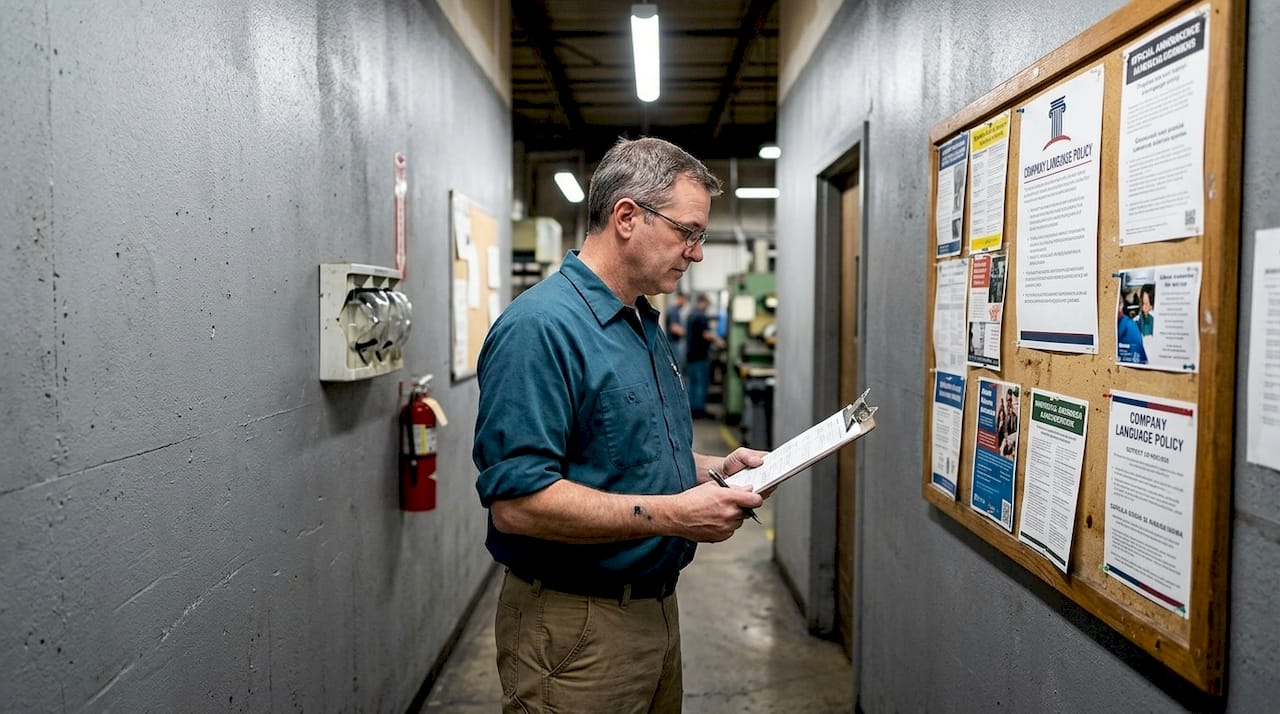
Here is something worth thinking about: policies neutral on their face may still discriminate if they are not essential to the job. Employers often argue business necessity, but that argument has limits. A blanket English-only rule that applies during lunch breaks, or one that is enforced only against workers of certain backgrounds, does not meet the legal standard.
Consider a realistic scenario. A Garden Grove assembly plant posts an English-only policy after a new manager arrives. The rule is applied strictly to Spanish-speaking workers on one shift but ignored on another. A worker who raises concerns is moved to a less desirable shift the following week. Each of those events, taken together, builds a pattern that a skilled attorney can use.
The workers who succeed in these cases are usually the ones who documented early, consulted a lawyer before filing, and understood that the process takes patience. Understanding the national origin impacts of these policies is not just academic. It is what gives you leverage.
Connect with experienced employment law advocates
If you believe you have experienced language discrimination at your manufacturing job in Garden Grove, the most important step you can take right now is getting informed legal advice before deadlines pass. Our employment law services are built around workers in exactly your situation, people navigating complex workplace discrimination in Orange County’s diverse manufacturing sector. Our Orange County legal team offers free consultations and handles select cases on contingency, meaning you pay nothing unless we win. We are bilingual, local, and ready to help you understand your options and fight for the outcome you deserve.
Frequently asked questions
What counts as language discrimination at work in Garden Grove manufacturing?
Language discrimination includes being treated unfairly because of your accent, facing English-only rules that serve no real job purpose, or experiencing harassment tied to your primary language. These are all recognized forms of national origin discrimination under California and federal law.
Are undocumented workers protected from language discrimination in California?
Yes. California’s FEHA protects undocumented employees with the same rights as any other worker, meaning your immigration status cannot be used to deny you legal protection from language-based discrimination.
How long do I have to file a complaint for language discrimination?
You have 180 to 300 days to file with the EEOC at the federal level, or up to 1 to 3 years to file with California’s CRD, depending on the nature of your claim.
Can my employer enforce an English-only policy in our manufacturing plant?
Yes, but only when it is genuinely necessary for safety or essential job functions, and never during breaks or non-work time. Blanket or selectively enforced rules are far more vulnerable to legal challenge.
What remedies are available to victims of language discrimination in manufacturing?
Possible remedies include back pay, reinstatement, changes to discriminatory workplace policies, and financial damages for emotional distress or punitive purposes depending on the severity of the conduct.
Recommended
- Language Discrimination and National Origin Claims in Garden Grove | Serendib Law Firm
- Language-Based Discrimination in Garden Grove Jobs – Employee Rights and Legal Protections | Serendib Law Firm
- Experienced Garden Grove Workplace Discrimination Lawyers
- National Origin Discrimination—Impacts in Garden Grove Manufacturing | Serendib Law Firm