
If you’ve been injured in a motorcycle accident in Stanton, California, the decisions you make in the hours and days after the crash will directly shape your ability to recover compensation. California law gives injured riders meaningful rights, but those rights depend on acting quickly, preserving evidence, and understanding how fault and insurance rules actually work.
Here is what every injured rider in Stanton needs to know:
- California’s pure comparative negligence rule means you can recover damages even if you were partly at fault. Your compensation is reduced by your percentage of fault, not eliminated.
- Helmet laws matter to your claim. California Vehicle Code §27803 requires helmet use. Not wearing one doesn’t bar your claim, but it can reduce compensation for head injuries.
- Uninsured riders face severe limits. Under Proposition 213, an uninsured motorcyclist cannot recover non-economic damages like pain and suffering, even when the other driver is entirely at fault.
- Evidence disappears fast. Skid marks, surveillance footage, and witness memories fade within days. Immediate action protects your case.
- Stanton’s roadways and intersections present specific hazards, from left-turn collisions on Beach Boulevard to road defects on local streets.
- Consulting an attorney early preserves evidence, controls what you say to insurers, and positions your claim for the strongest possible outcome.
What injuries do motorcycle accident victims in Stanton typically suffer?
Motorcycle crashes produce injuries that are far more severe than those in most other vehicle collisions, because riders have no structural protection between themselves and the road or another vehicle.
Common injuries include:
- Broken bones, particularly to the arms, legs, wrists, and collarbone from impact and bracing
- Road rash, which ranges from surface abrasions to deep tissue damage requiring skin grafts
- Traumatic brain injury (TBI), even when a helmet is worn, due to rotational forces
- Spinal cord injuries, which can result in partial or complete paralysis
- Internal trauma, including organ damage and internal bleeding that may not be immediately apparent
- Amputations in the most severe crashes
Many of these injuries require surgeries, extended rehabilitation, and long-term care, creating financial burdens that compound the physical trauma. Medical records documenting the diagnosis, treatment, and prognosis are the single most important link between the crash and your compensation claim. Gaps in treatment give insurers grounds to argue that injuries were pre-existing or unrelated.
What causes most motorcycle accidents in Stanton and across California?
The causes of motorcycle crashes in Stanton follow patterns seen across California, though local road conditions and traffic patterns add specific risks.
- Left-turn collisions are the most frequent multi-vehicle crash type. Under California Vehicle Code §21801, a left-turning driver must yield to oncoming traffic, including motorcycles. When drivers misjudge a rider’s speed or simply fail to see them, fault typically rests with the turning driver.
- Lane changes and dooring incidents occur when a driver merges into a motorcycle’s lane or opens a car door into a rider’s path. Witness accounts and vehicle damage patterns are critical in these cases.
- Rear-end collisions are disproportionately dangerous for motorcyclists, who have no crumple zone. Insurers sometimes argue the rider stopped too suddenly, making documentation of road conditions and brake light function important.
- Road hazards including potholes, gravel, uneven pavement, and missing signage cause many single-vehicle crashes. When a government entity is responsible for the hazardous condition, a separate claims process applies with its own deadlines.
- Intersection failures, including red-light running and failure to observe a motorcyclist, produce some of the most serious injuries on Stanton’s busier corridors.
California motorcycle accident claims, liability, and your compensation rights
California’s legal framework for motorcycle accident claims is built on three pillars: comparative fault, helmet law effects, and insurance requirements.
Pure comparative negligence governs how fault is divided. Under this rule, your compensation is reduced by whatever percentage of fault is assigned to you, but you are not barred from recovery. A rider found partly at fault still recovers damages proportionate to the percentage of fault not assigned to them. This comparative fault system was established through California case law and applies to every motorcycle accident claim in the state.
Proposition 213 is the rule that surprises riders most. California Civil Code §3333.4 bars uninsured motorcyclists from recovering non-economic damages, including pain and suffering, emotional distress, and loss of enjoyment of life, even when the other driver bears 100% of the fault. Many riders mistakenly assume their auto policy covers their bike. It does not. Every motorcycle must carry its own liability coverage.
Types of recoverable damages include:
- Medical bills, past and future, including surgery, rehabilitation, and mobility aids
- Lost wages and reduced earning capacity
- Property damage to the motorcycle and gear
- Pain and suffering (for insured riders)
- Emotional distress and loss of enjoyment of life (for insured riders)
UM/UIM coverage is often the most critical protection a rider can carry. When the at-fault driver has no insurance or insufficient limits, uninsured/underinsured motorist coverage may be the only realistic path to full compensation for catastrophic injuries.
Essential steps to take after a motorcycle accident in Stanton
The actions you take immediately after a crash in Stanton can make or break your claim. Here is what to do:
- Seek medical attention right away. Concussions, internal trauma, and soft-tissue injuries often show symptoms hours or days later. A prompt medical record ties your injuries directly to the crash.
- Call the police and request an official report. Police reports document the scene, officer observations, and witness contacts, and they form the baseline insurers use to evaluate fault.
- Photograph everything. Capture vehicle positions, skid marks, road defects, traffic signals, your injuries, and your gear. This scene evidence disappears within days.
- Gather witness information. Names and phone numbers from bystanders who have no stake in the outcome are among the most valuable assets in a disputed claim.
- Preserve your helmet, clothing, and damaged gear. These items are physical evidence. Do not repair or discard them.
- Notify your insurer promptly but carefully. Stick to the facts. Ask your agent specifically about UM/UIM and med-pay coverage.
- Avoid recorded statements about fault. Adjusters use unguarded statements to assign comparative fault. You are not required to give a recorded statement to the other driver’s insurer.
Pro Tip: Contact a motorcycle accident attorney before giving any recorded statement to an insurance adjuster. Counsel can send preservation letters for surveillance footage, which is typically overwritten on a 7–30 day cycle, and can control the narrative before adjusters build a comparative fault argument against you.
How Serendib Law Firm supports injured motorcycle riders in Stanton, CA
Serendib Law Firm represents injured riders throughout Orange County, including Stanton, with a focus on personal injury claims that demand both legal precision and genuine advocacy. The firm handles motorcycle accident cases on a contingency basis, meaning you pay no fees unless we recover compensation for you. Free consultations are available, so there is no barrier to getting clear answers about your rights.

Our team provides bilingual services in English and Spanish, which matters in a community as diverse as Stanton. Whether you are navigating a disputed liability claim, dealing with an uninsured driver, or facing the complexities of a government road defect claim, we bring the same commitment to every case. You can learn more about our Stanton personal injury services or explore how we handle motorcycle accidents in Irvine for broader California legal context.
What is the statute of limitations for motorcycle accident claims in California?
California’s general personal injury statute of limitations is two years from the date of the crash, under Code of Civil Procedure §335.1. If you miss that deadline, the court will almost certainly bar your claim entirely, regardless of how strong the evidence is.
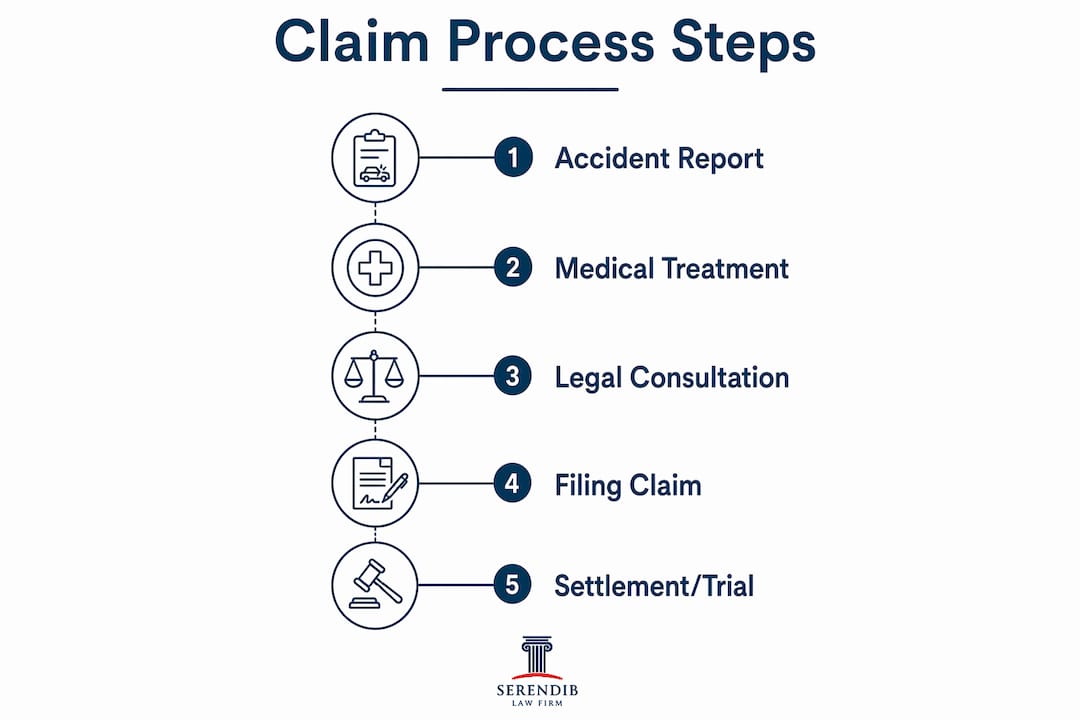
Government entity claims carry a much shorter window. If a road defect, missing signage, or poor maintenance contributed to your crash, you must file a written government tort claim within six months of the incident. Missing that deadline can permanently eliminate your right to recover from the responsible public agency.
The practical reality is that the deadlines that matter most are far shorter than two years. Surveillance footage is overwritten in weeks. Witnesses become unreachable. Physical evidence at the scene disappears within days. Applicable statutes of limitations should always be evaluated on a case-by-case basis with an attorney, because tolling exceptions and specific circumstances can affect the timeline in ways that are not obvious.
When should you consult a motorcycle accident attorney?
The short answer: as soon as possible after the crash. Early legal consultation is not just about filing a lawsuit. It is about preserving the evidence that makes a lawsuit winnable.
An attorney can send preservation letters to businesses and municipalities to secure surveillance footage before it is overwritten. Counsel can retain an accident reconstruction expert to document the scene while physical evidence is still present. A lawyer also controls the communication with insurance adjusters, preventing the kind of improvised recorded statements that adjusters routinely use to manufacture comparative fault arguments against riders.
For serious injuries, disputed liability, uninsured drivers, or any crash involving a government-maintained road, consulting a personal injury attorney is not optional if you want to protect your full recovery. Even in seemingly straightforward cases, insurers investigate aggressively and look for any basis to reduce what they pay.
How do California’s helmet laws affect your injury claim?
California Vehicle Code §27803 requires all motorcycle riders and passengers to wear a helmet that meets state and federal safety standards. Riding without a helmet is a violation of state law.
Not wearing a helmet does not bar your personal injury claim. California’s pure comparative negligence system means you can still recover damages. However, the defense will argue that your failure to wear a helmet worsened your head injuries, and a jury or adjuster may assign you a percentage of fault on that basis, reducing your total recovery proportionally.
The practical effect depends on the nature of your injuries. For a rider who suffered leg fractures and road rash, helmet non-use may have no impact on the claim at all. For a rider with a traumatic brain injury, the defense will press the helmet issue hard. Carrying a properly certified helmet and wearing it every ride is the clearest way to eliminate this vulnerability from your claim.
Key Takeaways
Injured motorcyclists in Stanton, California have strong legal rights under California law, but protecting those rights requires immediate action, proper insurance, and experienced legal counsel.
| Point | Details |
|---|---|
| Pure comparative negligence applies | You can recover damages even if partly at fault; your compensation is reduced by your fault percentage, not eliminated. |
| Helmet non-use reduces but doesn’t bar claims | Under California Vehicle Code §27803, riding without a helmet can lower your recovery for head injuries through comparative fault. |
| Proposition 213 limits uninsured riders | Uninsured motorcyclists cannot recover pain and suffering damages, even if the other driver is entirely at fault. |
| Evidence preservation is urgent | Surveillance footage is overwritten in 7–30 days; scene evidence disappears within days of the crash. |
| Government road defect claims have short deadlines | Claims against public entities for dangerous road conditions require a written tort claim filed within six months of the incident. |