
Pedestrians injured by a vehicle in Costa Mesa can generally seek compensation, most often through the at-fault driver’s liability insurance, or through their own uninsured/underinsured motorist coverage (UMBI/UIM) when the driver has none. California’s pure comparative negligence rule means you can recover damages even if you were partly at fault. The most protective step you can take right now is to preserve evidence, get medical care, and speak with a Costa Mesa personal injury lawyer before insurers begin asking questions.
TL;DR:
- Pedestrian injury claims often rely on medical documentation, witness evidence, and surveillance footage to establish fault and damages.
- California’s pure comparative negligence allows recovery even if the pedestrian is partly at fault, with damages reduced by the percentage of fault assigned.
- Early medical care and thorough evidence preservation critically impact the strength of a claim, especially in complex cases involving serious injuries.
- Uninsured or hit-and-run crashes require prompt police reports and checking for coverage limits or gaps in rideshare policies.
- Working with a bilingual lawyer who specializes in pedestrian accidents can streamline evidence collection, negotiate settlements, and protect claim timelines.
Table of Contents
- What types of compensation can pedestrian victims recover in Costa Mesa?
- How is fault decided in California pedestrian cases?
- Why evidence and early medical care shape your claim’s outcome
- How the pedestrian injury claims process works in Costa Mesa
- Uninsured drivers, hit-and-run crashes, and rideshare coverage gaps
- How Serendib Law Firm helps Costa Mesa pedestrians pursue compensation
- How to start: what to bring to your first consultation
- A local lawyer’s perspective: common mistakes and what to do first
- Contact Serendib Law Firm for a free case review
- Sources
- FAQ
What types of compensation can pedestrian victims recover in Costa Mesa?
California law allows injured pedestrians to pursue both economic and non-economic damages, and understanding each category helps you build a stronger claim from the outset.
Economic damages cover the measurable financial toll of the crash: medical bills, anticipated future treatment, lost wages, and diminished earning capacity if your injuries limit the work you can do going forward. Insurers expect documentation for each item, so itemized bills, pay stubs, and a treating physician’s prognosis all carry weight. Non-economic damages compensate for pain and suffering, emotional distress, and loss of enjoyment of life. Adjusters often estimate these using a multiplier applied to economic losses or a per diem rate, though the final figure depends heavily on the severity and permanence of the injury.
Punitive damages are rare in ordinary pedestrian crashes and generally require proof of malice or conscious disregard, such as a driver who was intoxicated or fleeing the scene.
- Medical bills and future care estimates from treating providers strengthen the economic damages claim.
- Pay stubs and employer statements document lost wages and reduced earning capacity.
- Expert reports on long-term prognosis often increase settlement value for non-economic damages.
Recent CDC surveillance found a significant number of pedestrian-injury emergency department visits nationwide between January 2021 and December 2023 source, a volume that underscores how often documented medical treatment becomes the backbone of a pedestrian injury claim.
How is fault decided in California pedestrian cases?
California Vehicle Code §21950 requires drivers to yield the right of way to pedestrians in marked and unmarked crosswalks, and jury instructions drawn from this statute shape how CACI guides comparative negligence findings in pedestrian crash litigation. Even so, pedestrians also carry duties, such as not suddenly leaving a curb into the path of a vehicle that cannot reasonably stop.
California applies pure comparative negligence, which means a jury can assign a percentage of fault to each party and still allow the pedestrian to recover the remaining share. If a court finds you 20% at fault for crossing mid-block, your total award is reduced by that percentage rather than eliminated entirely.
- A crosswalk crossing generally favors the pedestrian, since drivers must yield under §21950.
- A mid-block crossing outside a crosswalk can shift a larger share of fault toward the pedestrian.
- Comparative negligence still allows recovery of your remaining percentage of damages, even when you share some blame.
Because California’s comparative negligence rule is pure rather than modified, insurers cannot deny a claim outright just because you were partly responsible, though they will use any shared fault to push the settlement lower during negotiations.
Why evidence and early medical care shape your claim’s outcome
The strength of a pedestrian injury claim usually comes down to what you documented in the hours and days after the crash. Insurers scrutinize gaps in treatment, so seeking care immediately, even for symptoms that seem minor, protects both your health and your claim.
- Get the police report number and request a copy once it is filed.
- Photograph the scene, your injuries, and any vehicle damage before conditions change.
- Collect names and contact information for witnesses who saw the crash.
- Check for nearby surveillance or dashcam footage before it is overwritten.
- Keep every medical record, bill, and diagnostic report, including CT or MRI results tied to your injury.
Common pedestrian injuries, fractures, traumatic brain injury, spinal damage, and internal trauma, often require ongoing specialist care, and each additional diagnostic report or referral adds documented weight to your future-care damages.
Pro Tip: Preserve the clothing and footwear you wore during the crash, and avoid giving a recorded statement to the other driver’s insurer until your attorney has reviewed the facts.
How the pedestrian injury claims process works in Costa Mesa
After a crash, your first calls should be to 911 and then to a doctor, followed by documentation of the scene before you speak with any insurance adjuster.
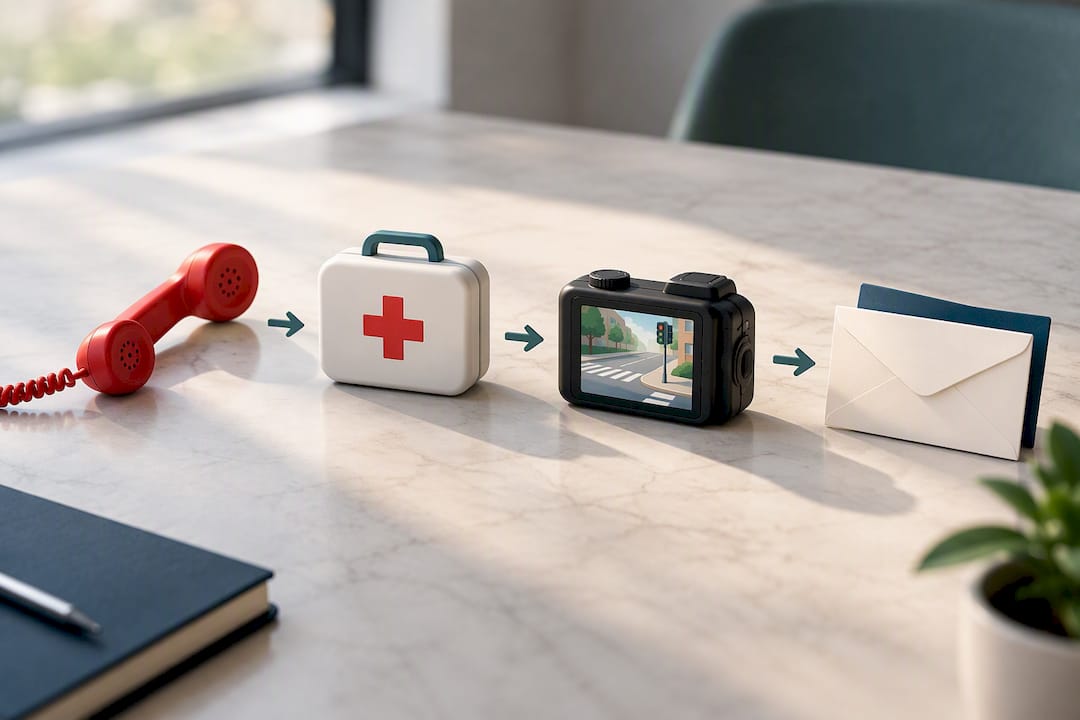
Once treatment begins, your attorney typically opens a claim with the at-fault driver’s insurer, compiles a demand package summarizing medical records and damages, and negotiates a settlement. Straightforward claims with clear liability can resolve in a matter of months, while cases involving serious injury, disputed fault, or a reluctant insurer often take considerably longer and may require filing a lawsuit.
California’s standard statute of limitations for personal injury claims is two years from the date of the crash, though claims against a government entity require a much shorter notice period, and cases involving minors follow different rules. Consulting counsel early preserves these deadlines.
- Adjusters often request recorded statements early to lock in details that can later limit your claim.
- Low initial settlement offers are common before the full extent of injuries is known.
- Delay tactics can pressure injured claimants into accepting less than their claim is worth.
Uninsured drivers, hit-and-run crashes, and rideshare coverage gaps
Not every driver carries adequate insurance, and California’s auto insurance consumer guide explains that uninsured and underinsured motorist coverage (UMBI/UIM) allows you to recover from your own policy when the at-fault driver’s insurance is missing or insufficient.
- File a police report immediately in any hit-and-run, since it creates the official record needed for a UMBI claim.
- Check nearby businesses and traffic cameras for footage that might identify the fleeing vehicle.
- Confirm whether your own auto policy includes UM/UIM coverage before assuming you have no recovery path.
Rideshare crashes add another layer of complexity. California’s Department of Insurance has warned TNC drivers and riders that coverage often depends on the driver’s app status at the moment of the crash, and that personal policies may exclude UM/UIM or medical payments while the driver is logged into the app. Confirming which policy phase applies is often the first task counsel handles in a rideshare pedestrian case.
How Serendib Law Firm helps Costa Mesa pedestrians pursue compensation
Costa Mesa pedestrians working with Serendib Law Firm get an Orange County based team that handles pedestrian injury claims with bilingual English and Spanish support and a free initial consultation. Representation is offered on a contingency-fee basis in qualifying personal injury matters, which means you owe no attorney fee unless the firm recovers compensation for you.
From the first call, the firm focuses on the details that determine claim value:
- Securing the police report, scene photos, and witness statements before they disappear.
- Coordinating with treating physicians and specialists to document the full extent of your injuries.
- Drafting a demand package built on medical records and documented losses.
- Negotiating directly with insurance adjusters, and filing suit when a fair settlement is not offered.
Author Maya Serkova brings this same approach to pedestrian injury cases handled out of the firm’s Orange County practice.
How to start: what to bring to your first consultation
A short amount of preparation before your first meeting with an attorney can speed up your claim significantly.
- Bring your police report number, if one was filed, along with any photos or video from the scene.
- Gather medical records and billing statements from every provider you have seen so far.
- Locate your own auto insurance information, including UM/UIM coverage details.
- Bring recent pay stubs if you missed work, and any witness names or contact information.
- Ask about attorney fees, the likely timeline, and whether bilingual staff are available if needed.
Serendib Law Firm’s free consultation lets you go through this checklist with an attorney at no cost, and contingency representation means fees are only owed if your case recovers money.
A local lawyer’s perspective: common mistakes and what to do first
The pedestrians I see run into trouble not because their case was weak, but because they waited too long to see a doctor or gave a recorded statement before anyone reviewed the facts with them. Insurance adjusters are trained to ask questions that sound routine but can undercut a claim later. Get checked out even if you feel fine, and lock down witness contacts and evidence while memories and footage are still fresh. Time is the one thing you cannot get back in these cases.
— Maya Serkova
Contact Serendib Law Firm for a free case review
If you were hurt as a pedestrian in Costa Mesa, the firm offers a free consultation and contingency-fee representation, so there is no upfront cost to find out where you stand. Bilingual staff handle the details that matter most in the first days after a crash.
- Reviewing your police report and medical records to establish the timeline of your injury.
- Preserving evidence, including scene photos, witness statements, and any available surveillance footage.
- Sending timely notice to the at-fault driver’s insurer to protect your claim from delay tactics.
Reach out through the firm’s contact page to schedule your free consultation and start building your personal injury claim today.
Sources
- Emergency Department Visits for Pedestrians Injured in Motor Vehicle Traffic Crashes — United States, January 2021–December 2023
- CACI / California court instructions (motor vehicles and highway safety excerpts)
- California Department of Insurance — Automobile insurance consumer guide
This article is general information, not a substitute for advice from a qualified lawyer. Consult a qualified legal professional about your own circumstances before acting on anything here.
FAQ
How long does a pedestrian accident settlement take?
Settlement timelines vary widely depending on injury severity and whether liability is disputed. Straightforward claims can resolve in a few months, while cases involving serious injuries or contested fault often take considerably longer, especially if a lawsuit becomes necessary.
Can a pedestrian be liable for an accident?
Yes, a pedestrian can share fault, for example by crossing mid-block outside a crosswalk. California’s pure comparative negligence rule still allows recovery of the remaining percentage of damages even when the pedestrian bears some responsibility, based on standards explained in CACI jury instructions.
What is the average payout for a pedestrian hit by a car in California?
There is no single statewide figure, since payouts depend heavily on injury severity, documented medical costs, lost income, and disputed liability in each case. An attorney can review your specific medical records and losses to estimate a realistic range for your claim.
What is the average amount of money a personal injury settlement gets in California?
Personal injury settlement amounts in California vary too widely by injury type, treatment cost, and fault allocation to state a single average. A free consultation with a personal injury attorney is typically the fastest way to get an informed estimate based on your documented damages.