Constant digital surveillance is becoming the new reality for remote employees in Costa Mesa. The shift to remote work has pushed organizations to adopt advanced monitoring technologies that impact how workers experience privacy and trust. For those navigating workplace disputes, understanding the legal and ethical boundaries of employee monitoring empowers you to protect your rights and respond effectively to employer practices.
Table of Contents
- Remote Work Monitoring: Core Concepts
- Common Types of Employee Surveillance
- California Laws Governing Employee Privacy
- Transparency and Notice Requirements for Monitoring
- Employee Rights and Dispute Risks in Costa Mesa
- Best Practices for Handling Remote Privacy Issues
Key Takeaways
| Point | Details |
|---|---|
| Remote Work Monitoring | Organizations are employing various technologies to monitor employee performance, but they must balance oversight with privacy concerns. |
| Employee Privacy Rights | California laws provide robust protections against excessive monitoring and require clear consent and transparency from employers. |
| Best Practices for Employees | Workers should document surveillance practices, understand their rights, and communicate openly with employers about monitoring policies. |
| Psychological Impact | Intrusive monitoring can negatively affect employee morale and trust, highlighting the need for ethical monitoring approaches. |
Remote Work Monitoring: Core Concepts
Remote work monitoring has become increasingly complex as organizations navigate digital workplace technologies and employee privacy concerns. The technological landscape has dramatically transformed how companies track employee performance and engagement, particularly in the wake of widespread remote work adoption.
Modern monitoring practices encompass a range of technological approaches, revealing nuanced workplace dynamics. These strategies can involve multiple tracking mechanisms:
- Screen recording software
- Productivity tracking applications
- Time logging systems
- Network access monitoring
- Performance analytics platforms
The core challenge in remote work monitoring lies in balancing organizational oversight with employee privacy and trust. Research indicates that intrusive monitoring can significantly impact employee morale and engagement. Post-COVID workplace attitudes demonstrate considerable variation in how workers perceive surveillance technologies.
Employee Monitoring Technology Spectrum:
- Passive monitoring (basic system logs)
- Active performance tracking
- Comprehensive digital surveillance
- Invasive personal data collection
The legal and ethical considerations surrounding remote work monitoring are increasingly nuanced. Employers must navigate complex terrain, considering not just technological capabilities but also employee consent, privacy expectations, and potential psychological impacts.
Here’s a comparison of different remote work monitoring types and their typical impact on employee privacy:
| Monitoring Approach | Oversight Level | Privacy Impact | Common Use Case |
|---|---|---|---|
| Passive system logging | Low | Minimal intrusion | Device security |
| Productivity tracking | Moderate | Moderate intrusion | Task management |
| Comprehensive surveillance | High | Significant intrusion | High-security industries |
| Personal data collection | Very high | Major privacy concerns | Misuse risk, legal review |
Pro tip: Always review your organization’s monitoring policies and understand your rights as an employee, ensuring transparent communication about digital workplace tracking practices.
Common Types of Employee Surveillance
Remote work has ushered in sophisticated employee surveillance technologies that go far beyond traditional workplace monitoring methods. Companies now deploy an array of digital tools designed to track worker productivity, performance, and engagement across virtual environments.
Interactional and observational monitoring techniques represent the primary strategies organizations utilize to understand employee behavior. These approaches range from relatively transparent to potentially invasive tracking mechanisms.
Surveillance Categories:
- Keystroke logging systems
- Screen capture technologies
- Time tracking applications
- Network activity monitoring
- Performance analytics platforms
The technological landscape of employee monitoring is complex and multifaceted. Digital surveillance methods reveal intricate workplace dynamics that extend beyond simple productivity measurement. Each monitoring approach carries distinct implications for worker privacy and organizational trust.
Detailed Surveillance Methods:
- Passive tracking (background system monitoring)
- Active performance assessment
- Real-time screen monitoring
- Comprehensive digital behavior analysis
Employees increasingly recognize the psychological impact of constant digital surveillance. Modern monitoring technologies can potentially undermine workplace relationships, creating tension between organizational oversight and individual privacy expectations.
Effective monitoring balances organizational needs with employee autonomy and psychological safety.
Pro tip: Always request clear documentation about your organization’s specific monitoring practices and understand your rights regarding digital workplace tracking.
California Laws Governing Employee Privacy
California stands at the forefront of protecting employee privacy rights, establishing comprehensive legal frameworks that significantly restrict employers’ monitoring capabilities. These state-specific regulations provide robust safeguards that extend well beyond federal employment protections, particularly in the realm of digital workplace surveillance.
Employees in Costa Mesa and throughout California benefit from several key privacy protections, including whistleblower protections against workplace retaliation. The state’s legal landscape creates multiple layers of defense for workers facing potential privacy violations.
Key Privacy Protection Principles:
- Constitutional right to workplace privacy
- Limits on electronic monitoring
- Restrictions on personal information collection
- Consent requirements for surveillance
- Protection against unreasonable searches
The California Consumer Privacy Act (CCPA) and additional state regulations establish critical boundaries for employee data collection. These laws mandate that employers must:
- Provide transparent disclosure of monitoring practices
- Obtain explicit consent for data collection
- Limit surveillance to job-related purposes
- Protect collected employee information
- Allow employees to request data deletion
California law prioritizes employee dignity and personal autonomy over unchecked corporate surveillance.
Pro tip: Document and photograph any workplace surveillance practices that seem excessive or invasive, as this evidence can be crucial if you need to challenge potential privacy violations.
Below is a summary of key California employee privacy protections versus general U.S. federal standards:
| Protection Aspect | California Law | Federal Law | Employee Benefit |
|---|---|---|---|
| Consent Requirement | Explicit written consent | Often implied | Stronger individual control |
| Transparency | Mandatory detailed notice | Limited requirements | Clear understanding of surveillance |
| Data Deletion | Employees can request | Not mandated | Enhanced control over personal data |
| Monitoring Limits | Strict job relevance rule | Vague guidelines | Reduced overreach by employers |
Transparency and Notice Requirements for Monitoring
Transparency in workplace monitoring represents a critical legal and ethical standard that protects employee rights and maintains organizational integrity. California law mandates comprehensive disclosure practices that require employers to be explicit about their surveillance methods and technological tracking approaches.

Public policy protections reinforce employee rights against arbitrary or invasive monitoring practices. These legal frameworks establish clear guidelines for how and when employers can implement digital surveillance technologies.
Key Transparency Requirements:
- Written notification of monitoring practices
- Detailed explanation of surveillance technologies
- Clear description of collected data types
- Specific purposes for monitoring
- Consent documentation procedures
Employers must provide comprehensive written documentation that outlines the exact scope, purpose, and mechanisms of workplace monitoring. This documentation should explicitly address:
- Types of monitoring technologies used
- Specific data collection methods
- Duration and frequency of monitoring
- Storage and protection of collected information
- Employee rights regarding data collection
Transparency is not optional – it is a legal requirement that protects both organizational interests and employee privacy.
Pro tip: Request a detailed, written explanation of your employer’s monitoring practices and maintain a personal copy for potential future reference or legal consultation.
Employee Rights and Dispute Risks in Costa Mesa
Remote work environments introduce complex legal challenges for employees navigating privacy and monitoring disputes in Costa Mesa. Understanding the nuanced landscape of employee rights becomes critical when confronting potential workplace surveillance violations or privacy infringements.
Experienced Costa Mesa employment law attorneys can provide crucial guidance in addressing workplace monitoring disputes. Employees facing potential rights violations have multiple strategic options for protecting their professional interests.
Key Employee Dispute Risk Areas:
- Unauthorized data collection
- Excessive monitoring practices
- Violation of consent requirements
- Discriminatory surveillance techniques
- Breach of privacy expectations
Employees in Costa Mesa should be prepared to document and challenge inappropriate monitoring practices through structured legal approaches. The process typically involves:
- Gathering comprehensive evidence
- Documenting specific monitoring incidents
- Reviewing employment contracts
- Consulting with legal professionals
- Filing formal workplace complaints
Employee rights are not negotiable – they are legally protected fundamental workplace standards.
Pro tip: Maintain a detailed, timestamped record of any monitoring practices that feel invasive or inappropriate, as this documentation can be critical evidence in potential legal proceedings.
Best Practices for Handling Remote Privacy Issues
Remote workers must proactively protect their digital privacy in an increasingly complex technological landscape. Understanding and implementing strategic privacy safeguards becomes essential for maintaining professional boundaries and personal autonomy in digital work environments.
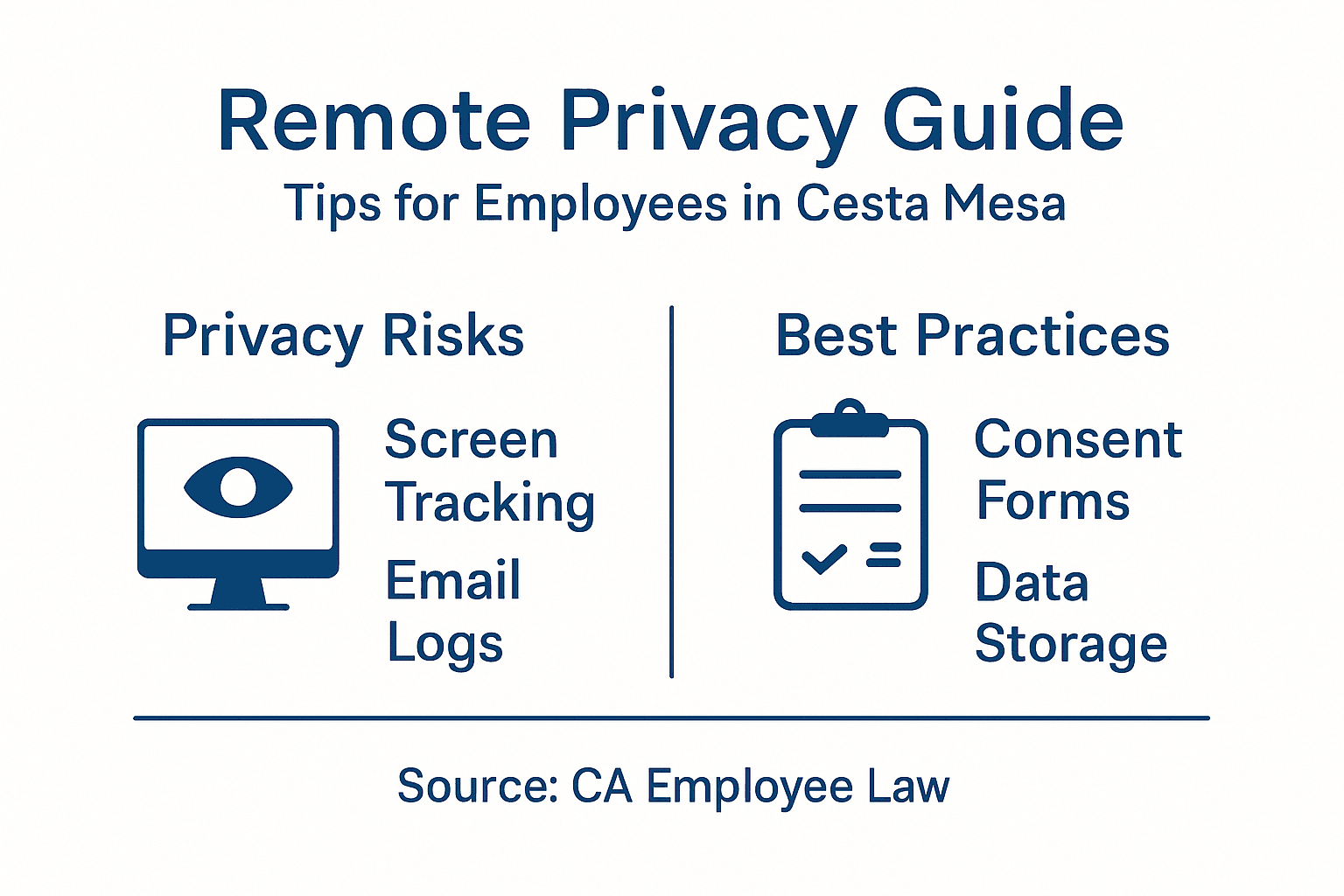
Ethical approaches to remote monitoring emphasize transparency and mutual respect between employers and employees. Establishing clear communication channels helps mitigate potential privacy conflicts before they escalate.
Critical Privacy Protection Strategies:
- Understand monitoring technologies
- Document surveillance practices
- Request explicit consent agreements
- Review employment contracts thoroughly
- Establish communication boundaries
Employees should develop comprehensive approaches to managing remote work privacy risks through systematic steps:
- Review employer monitoring policies
- Identify potential privacy vulnerabilities
- Communicate concerns professionally
- Document potential policy violations
- Seek legal consultation if necessary
Proactive communication and documented boundaries are your strongest defenses against invasive monitoring practices.
Pro tip: Create a dedicated digital folder to store screenshots, emails, and documentation related to your workplace monitoring experiences, which can serve as critical evidence if privacy disputes arise.
Protect Your Privacy and Rights in Remote Work Monitoring
Remote work monitoring raises important challenges around employee privacy, consent, and workplace trust. If you are concerned about intrusive surveillance, excessive data collection, or unclear monitoring policies in Costa Mesa or elsewhere in California, you are not alone. Understanding your rights under California’s strict employment laws is essential to protect your dignity and autonomy in the digital workplace.
At Serendib Law Firm, we specialize in navigating complex California Employment Law matters including employee privacy and retaliation claims. Our experienced attorneys are here to help you address workplace monitoring disputes with personalized guidance and strong advocacy. Do not wait until your rights are violated. Contact us today through our main website to schedule a free consultation and take control of your digital workplace privacy.
Learn more about how we defend employee rights by exploring our Retaliation Archives and CA Employment Law Archives. Your privacy and work protections deserve immediate attention.
Frequently Asked Questions
What are the common types of remote work monitoring technologies?
Common remote work monitoring technologies include screen recording software, productivity tracking applications, time logging systems, network access monitoring, and performance analytics platforms.
How does California law protect employee privacy regarding remote monitoring?
California law provides robust privacy protections by requiring explicit consent for surveillance, limiting monitoring to job-related purposes, and mandating transparency about data collection practices.
What are the potential psychological impacts of constant digital surveillance on employees?
Constant digital surveillance can undermine workplace relationships, create tension between oversight and personal privacy, and significantly affect employee morale and engagement.
How can employees document and challenge invasive monitoring practices at work?
Employees should gather evidence of excessive monitoring, document specific incidents, review their employment contracts, and consider consulting with legal professionals if they believe their privacy rights are being violated.